

At a wedding where the celebrant’s microphone suddenly went silent, guests exchanged puzzled glances. Within seconds, a seasoned sound engineer swooped in and dialled everything back into focus. This was proof that audio expertise can make or break an event.
Role Of A Sound Engineer
A sound engineer shapes every note and word so the audience hears exactly what’s intended. They’re the hands-on problem solvers behind the scenes, whether mixing live gigs or refining studio recordings.
Typical tasks include:
- Capturing live sources from vocal mics and instruments
- Balancing dozens of channels to prevent overload or drop-outs
- Polishing takes with EQ, compression and effects
- Mastering final mixes to ensure consistency across all playback systems
A true sound pro turns a tangle of feeds into crystal-clear audio that connects with listeners.
Sound engineers are the unsung heroes of the UK’s music and events scene. The This Is Music 2025 report by UK Music shows the industry now supports a whopping 220,000 full-time equivalent jobs in 2024, up from 216,000 in 2023. Read the full findings in the This Is Music 2025 report.
Below is a quick reference to the main sound engineer roles you’ll encounter:
Key Sound Engineer Roles At a Glance
Here’s a snapshot of the core positions, what they do and where you’ll find them.
| Role | Primary Responsibility | Typical Venue |
|---|---|---|
| Front Of House Engineer | Balances the audience mix live | Festivals and concert halls |
| Monitor Engineer | Ensures performers hear clear audio | Theatres and live band shows |
| System Technician | Maintains and tunes the rig | Concert tours and corporate events |
| Recording Engineer | Captures and masters audio | Studios and podcast production |
Keep this table handy when planning an event—you’ll instantly know who to call for the perfect sound setup.
Live Versus Studio Contexts
In a live setting, engineers juggle crowd noise, stage bleed and sudden feedback in real time. Think festival main stages or corporate conferences that demand crystal-clear speech reinforcement.
Studio engineers, by contrast, work in a controlled space. They layer takes, apply subtle effects and automate levels until every element sits just right—ideal for podcasts, broadcast shows and music productions.
Immediate Benefits
Bringing in a professional sound engineer early delivers tangible advantages:
- Consistent Audio Levels that match your event’s atmosphere
- On-the-spot Troubleshooting to tackle hiccups before guests notice
- Greater Audience Engagement through clear, immersive sound
Discussing technical workflows with a trusted AV hire partner like London Audio Visual Hire ensures your sound plan is fool-proof.
Summary
A skilled sound engineer transforms raw signals into memorable audio experiences. Involving one at the planning stage reduces risk, streamlines production and leaves attendees talking about your event for all the right reasons.
Understanding Signal Flow And Equipment Basics
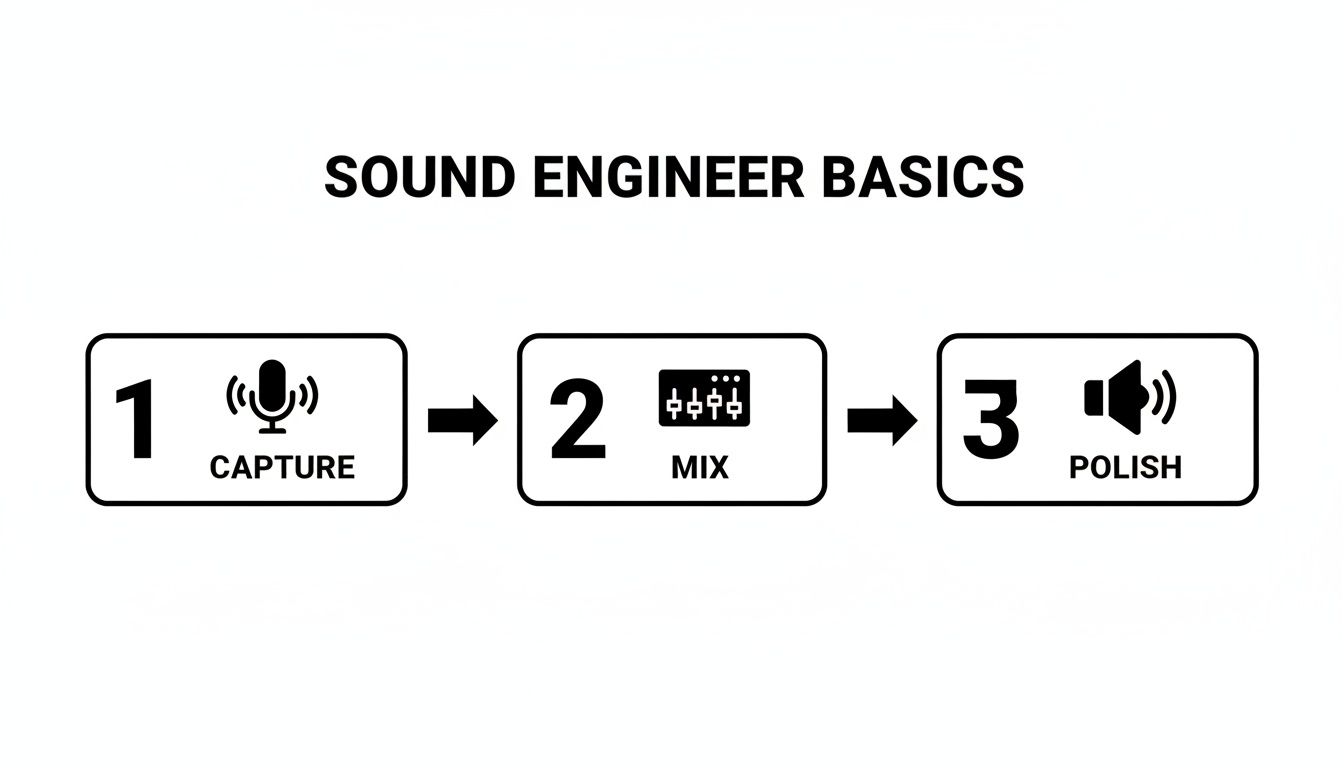
Think of an audio signal like water moving through a network of pipes—starting at the source and ending at the speaker.
Here’s a quick breakdown of that pipeline:
- Capture Stage: A microphone converts sound pressure into an electrical signal, much like water entering a pipe
- Mix Stage: A mixer blends multiple sources and sets levels, similar to merging water flows
- Polish Stage: EQ and compression fine-tune tonal balance before it moves on
- Amplify Stage: An amplifier boosts the signal, raising volume without adding unwanted noise
- Deliver Stage: The speaker disperses sound evenly, filling the room like a gentle spray
Audio Pipeline Explained
On a live rig, audio travels through each stage step by step. A microphone picks up sound waves and turns them into voltage.
Next, a mixer gives you control over each channel—adjusting levels, panning, and routing signals to processors.
Maintaining headroom helps prevent distortion and preserves dynamic peaks
Conference PA Scenario
Picture yourself setting up a PA for a corporate conference—multiple podium mics, keynote speakers and a live Q&A.
Getting the gain structure right is crucial to avoid hiss or clipping.
Steps to follow:
- Set channel gain so peaks hover around -6 dB on your input meters
- Activate phantom power (+48 V) only for condenser mics to keep them healthy
- Use a parametric equaliser to notch out feedback-prone frequencies
- Balance compression and gating to smooth dynamics without pumping
Always test each mic before doors open. Balancing EQ, compression and gain really is like tuning valves to keep the flow steady.
For a detailed list of gear and specifications, check out our guide on essential AV equipment by London Audio Visual Hire.
Next Steps
A clear signal flow is the backbone of flawless audio.
Label every channel and output on your mixer. Then, follow these best practices:
- Reserve 10 dB of headroom on each channel
- Confirm line and microphone inputs match to prevent impedance issues
- Perform a full soundcheck at least 30 minutes before guests arrive
- Colour-code cables for quick identification
If you need extra support, London Audio Visual Hire can provide experienced engineers to manage your setup from start to finish. A pre-event walkthrough with your engineer helps you spot acoustic quirks early on. Using handheld analyzers to measure SPL across the venue ensures even coverage and cuts down on phase issues.
Enjoy flawless audio performance.
Exploring Different Sound Engineer Roles
Every live event or studio session needs a certain level of expertise to capture, sculpt and deliver audio that suits the scale and style of the occasion. Sound engineers fill distinct roles, balancing audience expectations, performer feedback and the technical demands of the rig.
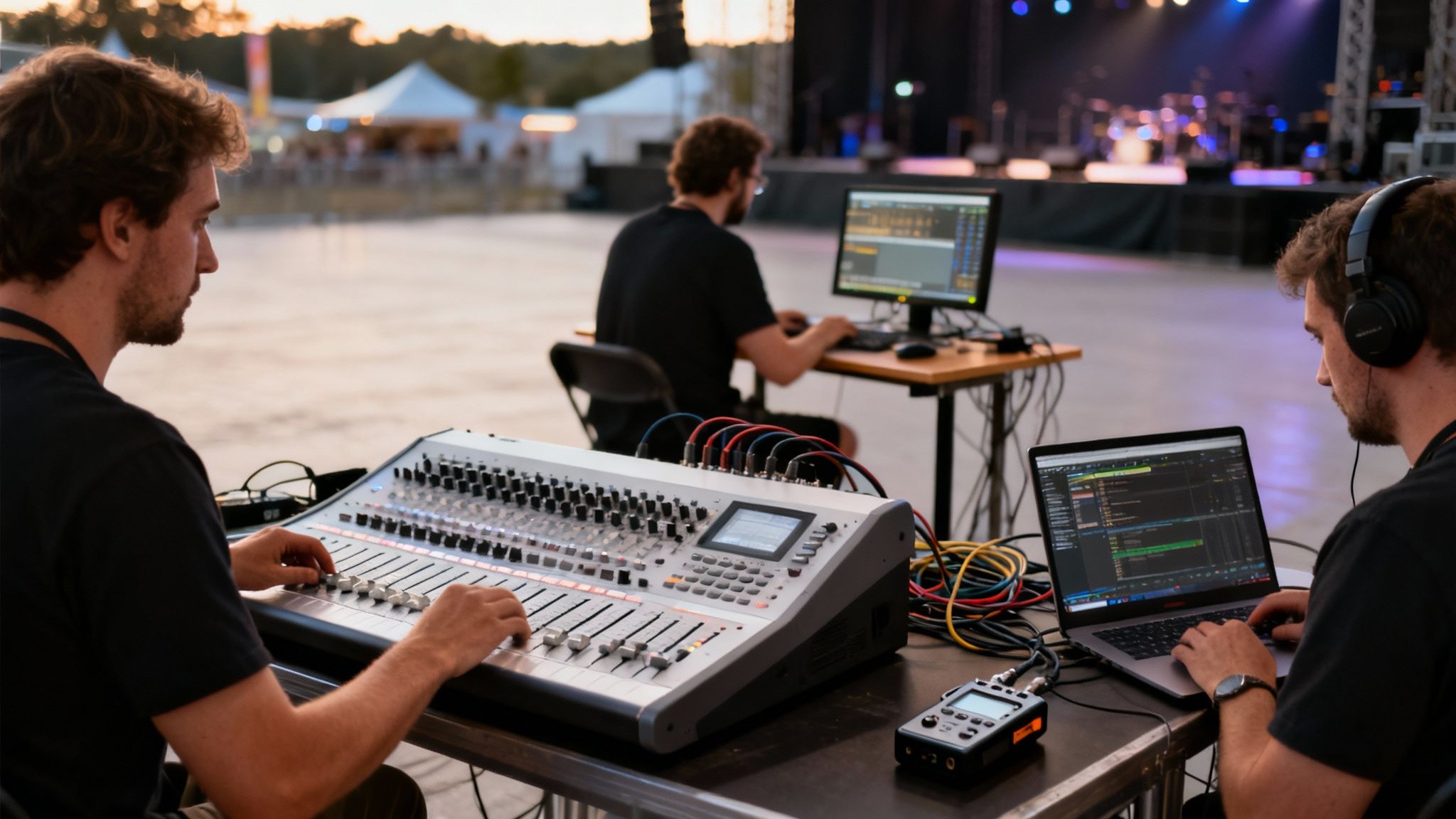
Take a West End theatre production, for instance. The Front Of House engineer settles into a balcony booth, tweaking levels so spoken lines shine through an orchestra without a hint of distortion. This position calls for split-second decisions and a finely tuned grasp of acoustics.
Key Sound Engineer Roles
- Front Of House (FOH) Engineer: Mixes audio live for the audience, adjusting balance and dynamics in real time
- Monitor Engineer: Delivers personalised stage mixes so performers hear exactly what they need
- System Technician: Installs, calibrates and troubleshoots the entire sound system before and during events
- Recording Engineer: Captures and refines audio for live releases or studio projects
On a windswept festival stage, the monitor engineer fine-tunes individual wedges and in-ear feeds so each artist can hear their vocals and instruments clearly. It’s a juggling act of submixes for soloists, band cues and personal preferences, all under unpredictable outdoor conditions.
Key Equipment And Workflows
Each role comes with its own toolkit and workflow, which scale up or down depending on the event size. From intimate club gigs to sprawling arenas, the choice of gear and signal path changes accordingly.
- FOH Equipment includes digital mixers, graphic equalisers and speaker management systems
- Monitor Setups often feature wireless in-ear transmitters, stage boxes and foldback speakers
- System Technicians carry signal generators, measurement microphones and tuning software
- Recording Engineers rely on multitrack recorders, audio interfaces and digital audio workstations (DAWs)
Working together at every stage smooths the hand-over of mixes and gear tweaks, even when the show changes on a dime.
According to IBISWorld, as of 2024 the UK sound recording and music publishing industry comprises 3,710 businesses, growing at a compound annual rate of 0.9% since 2019. Total revenue has climbed to £2.8 billion in 2024–25. Read more on IBISWorld.
Selecting The Right Specialist
Choosing the right engineer comes down to the demands of your event. If the audience experience is your top priority, an FOH specialist is essential.
- For live audience mix, hire a skilled FOH Engineer
- When performer clarity matters most, bring on a Monitor Engineer
- For rock-solid system reliability, book a dedicated System Technician
- To capture every moment, contract a Recording Engineer
Nailing these distinctions will help you collaborate effectively with London Audio Visual Hire. Book your engineer early to guarantee reliability.
Essential Skills For A Sound Engineer
Whenever event planners ask “What does a sound engineer actually do?”, they’re referring to the person who fuses creative flair with technical savvy to deliver flawless audio.
Whether it’s a company conference or a live gig, these core abilities keep every speaker and performer sounding their best.
- Equalisation: Shaping the tonal character of multiple inputs
- Compression: Controlling dynamic range without introducing artefacts
- DAW Operation: Editing, automation and multi-track mixing in Pro Tools or Logic Pro X
- Wireless Microphone Management: Frequency coordination, RF scanning and battery monitoring
Core Technical Skills
Each of these competencies plays a vital role in ensuring clarity and consistency. For instance, setting a solid gain structure before you dive into equalisation preserves headroom and keeps distortion at bay.
A Digital Audio Workstation such as Pro Tools or Logic Pro X offers advanced plugin chains, precise automation and razor-sharp editing tools.
In busy London venues, running a pre-show frequency scan on wireless systems helps you spot interference long before doors open.
“Mastering RF coordination can save an event from sudden drop-outs,” explains a senior engineer.
Having a clear tech rider—listing mic models, DI boxes and patch points—speeds up setup and avoids last-minute surprises.
Soft Skills And Evaluation
Technical know-how is only half the battle. A great engineer also needs the right people skills.
Think of them as audio diplomats: they translate performers’ requests into actionable changes on the desk.
- Clear Communication: Conveying creative feedback without confusion
- Calm Under Pressure: Fixing issues in real time when the unexpected happens
- Adaptive To Acoustics: Tailoring the mix for a brick hall, a warehouse or an outdoor marquee
- Active Listening: Spotting subtle tonal imbalances before they reach the audience
These interpersonal traits keep rehearsals on track, even when plans shift at the last minute.
To vet candidates:
- Review sample mixes delivered via a secure file transfer.
- Conduct an on-site trial during a full soundcheck.
- Verify industry credentials such as those from the Association of Sound Designers.
Check peer reviews and client testimonials to gauge reliability and rapport.
In the UK, institutions like SAE Institute, BBC Academy and BIMM offer widely recognised courses and licences. Online communities—SoundGirls UK, Gearspace and CIBAR—provide peer support and troubleshooting.
At London Audio Visual Hire, we lean on these resources to ensure every engineer arrives qualified, confident and ready to deliver exceptional audio.
When To Hire A Sound Engineer And Cost Estimates
When crisp audio can make or break an event, bringing in a sound engineer is more than a luxury; it's essential. Whether you’re organising a high-pressure corporate presentation or an outdoor music festival with unpredictable acoustics, an experienced engineer spots potential problems before they reach the audience.
Deciding when to involve a specialist often comes down to scale and complexity. A conference with multiple speakers demands smooth mic swaps and level balancing. A multi-act festival, on the other hand, requires constant rig monitoring and swift adjustments.
Getting to grips with fee structures early saves headaches later. Most engineers offer full-day rates, half-day packages or hourly charges, so you only pay for the hours you need. Budgeting should also cover travel, rig complexity and the engineer’s experience.
- Travel Expenses: Mileage or transport to the venue
- Rig Complexity: Fees rise with channel count and speaker setup
- Experience Premium: Senior engineers with specialist skills command higher rates
Cost Breakdown And Budget Tips
Full-day rates make sense for events running longer than four hours. Half-day deals can shave off around 20% compared with a standard day rate.
Below is a quick comparison of typical rates across various roles in the UK.
Typical Sound Engineer Rates
| Role | Day Rate (£) | Hour Rate (£) |
|---|---|---|
| Front Of House Engineer | £650 | £65 |
| Monitor Engineer | £550 | £55 |
| System Technician | £500 | £50 |
| Recording Engineer | £700 | £70 |
Keep in mind that travel time, setup complexity and any additional roles can push costs up by 15–30%.
Negotiation Strategies And Warning Signs
- Request an itemised quote to spot hidden fees.
- Check cancellation policies—unexpected charges can add up.
- Verify the engineer’s experience and ask for references.
- Confirm whether rehearsals and soundchecks are included.
We usually advise booking a sound engineer at least six weeks before your event. For more details, take a look at our guide on sound engineering services at London Audio Visual Hire.
A clear, transparent quote means fewer surprises on the day. With the right audio plan in place, your event will sound as professional as it looks.
Checklist For Working With An AV Supplier
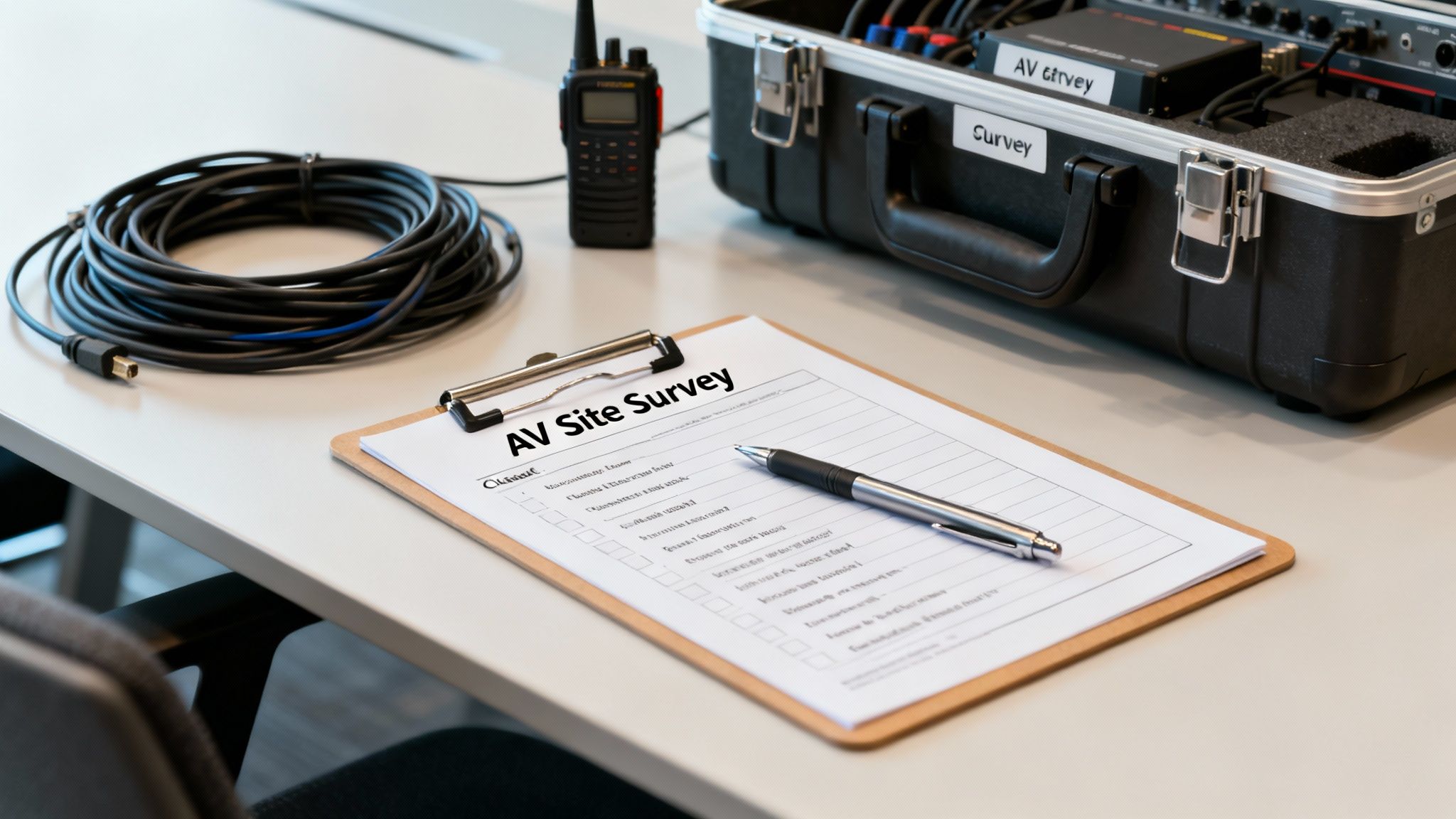
Arranging the AV behind an event often feels like coordinating a dozen moving parts. One misrouted cable or mismatched speaker, and the rhythm breaks.
This checklist guarantees nothing slips through the cracks when you partner with London Audio Visual Hire.
Pre Event Preparation
Before cables hit the floor, get a clear picture of the space. Think of it as sketching a map before a road trip.
Key preparation steps include:
- Site Survey: Identify floor plans, cable routes and acoustic hotspots.
- Floor Plan Approval: Confirm seating, speaker placement and power distribution.
- Power Assessment: Test voltage supply, backup generator capacity and UPS arrangements.
Equipment Specification And Safety
Once the venue is mapped, turn to the kit. Clarify every mic model and mixer console before the first test tone.
“A precise gear list is the foundation of a smooth event,” reflects a senior AV manager.
Use this checklist to guide your conversation:
- Inventory Accuracy: Verify serial numbers, counts and condition.
- Engineer Qualifications: Confirm certifications and live experience.
- Response Times: Agree service level agreements for on-site support.
- Cancellation Policies: Understand costs and notice periods.
- Backup Plans: Ensure duplicate rigs and spare cables.
You might be interested in our guide to essential audio visual equipment.
On Site Coordination
Event day demands precision. Schedule a quick briefing to align roles, contact methods and escalation paths.
Ensure health and safety measures are locked in:
- Risk Assessments: Cover cable runs and tripping hazards.
- PAT Testing: Confirm power equipment has passed safety checks.
- Cable Management: Use coloured ties and labels for quick fixes.
- Emergency Procedures: Agree evacuation and standby protocols.
Follow these steps on the day:
- Morning Walkthrough: Inspect stage, FOH and monitor positions.
- Soundcheck Schedule: Set slots for performers and speakers.
- Handover Documentation: Collect signed sign-off on system health.
- Debrief Meeting: Review issues and document lessons learned.
Downloadable templates and printable checklists can drastically speed up planning. Keep them on-hand for future events to save time and maintain consistency.
Touching base with your AV supplier early fosters trust and heads off last-minute surprises. A few quick check-ins can prevent a scramble when the event is about to start.
Partner For Ongoing Support
- Post Event Review: Gather feedback to refine future checklists.
Frequently Asked Questions
What Is The Difference Between Front Of House (FOH) And Monitor Engineer?
Think of the FOH engineer as the person painting the audio picture for your audience. They balance every instrument and vocal so the crowd hears a polished mix. In contrast, the monitor engineer tailors personalised mixes for performers on stage, ensuring each musician hears exactly what they need.
The FOH desk sits out front, facing the crowd. Meanwhile, the monitor station lives backstage, quietly crafting stage feeds.
When Is The Ideal Booking Lead Time?
Aim to confirm your engineer at least six weeks before the event. That window gives you enough breathing space for thorough planning. Fall behind, and you could end up rushing cable layouts or scrambling for spare kit.
Key details to share early:
- Venue Acoustics: Room dimensions, surface materials and any acoustic treatments
- Schedule Outline: Rehearsal slots, show times and break periods
- Technical Rider: Preferred microphones, DI boxes and console setup
What Essential Information Does a Sound Engineer Need Before The Day?
Send over site plans, stage layouts and a complete tech rider in advance. A clear blueprint cuts confusion, speeds up setup and keeps everyone in sync. No last-minute puzzles means more time for sound checks.
What Happens If Technical Problems Arise On the Day?
Even the best-laid plans can hit a snag. That’s why a professional engineer travels with spare cables, extra microphones and backup DI boxes. They follow a simple “diagnose, swap, test” routine to fix issues fast and keep your show on track.
“Having spares ready keeps your show running without a hitch.”
Key Takeaways
Open communication slashes risk and delivers top-quality sound. Booking early and sharing detailed specs lets your engineer anticipate challenges.
- Confirm the engineer’s insurance and health and safety compliance
- Verify equipment brands and availability of spare parts
- Clarify on-site support hours and emergency response procedures
Use this checklist to guide your discussions and safeguard your event’s audio.
Ready to secure expert audio support? Contact London Audio Visual Hire


