

Have you ever been at an event where you could not quite catch what the speaker was saying? It is a frustrating experience and the exact problem a Public Address (PA) system is designed to solve. A PA system is a powerful extension of the human voice, capturing sound and making it loud and clear for everyone in a room or across a festival field.
What is a PA System For?
At its core, a PA system tackles a simple challenge: making sound travel further and with greater clarity than it can on its own. Imagine a presenter at a large conference or the host of an awards night. Without a PA system, their voice would be lost after the first few rows. The system captures their voice, processes it for clarity, boosts its power, and then sends it out through loudspeakers so everyone can hear.
This is not just an optional extra; it is critical for a successful event. When an audience can hear every word, they remain engaged. When they cannot, the message is lost, people become frustrated, and the entire event can fall flat.
Why Crystal-Clear Audio is Non-Negotiable
The importance of good, clear audio cannot be understated, especially in the UK’s thriving events industry. The UK’s public address system market is a major player, accounting for 21.00% of Europe's total market revenue. This figure alone shows the high standards required for professional communication at corporate and live events. You can discover more insights about the UK's leading position in the European PA system market.
A professional PA system delivers three key outcomes:
- Intelligibility: It ensures every spoken word is crisp and understandable, even in a large hall with challenging acoustics.
- Coverage: It distributes sound evenly, so a person at the back has the same audio experience as someone in the front row.
- Impact: For music or sound effects, it provides the power and energy needed to build atmosphere and engage an audience.
Ultimately, the PA system is the backbone of communication at any event. It is the bridge connecting a performer or speaker to their audience, ensuring the message is not just sent, but truly heard. For any brand, agency, or event planner, achieving high-quality audio is the first, and arguably most important, step.
The Building Blocks of Professional Sound
To understand what a PA system is, we must break it down into its core components. Every professional sound setup, regardless of scale, follows a logical signal path. This is the journey that sound takes from the source, such as a person speaking or an instrument being played, to the ears of the audience. Each component in this audio chain has a crucial role to perform.
The process begins with capturing the sound and ends with projecting it loud and clear across the venue. For a professional result, every piece of equipment must work in perfect harmony. If one link fails, the entire audio experience can collapse.
This diagram illustrates the fundamental signal flow of any PA system.
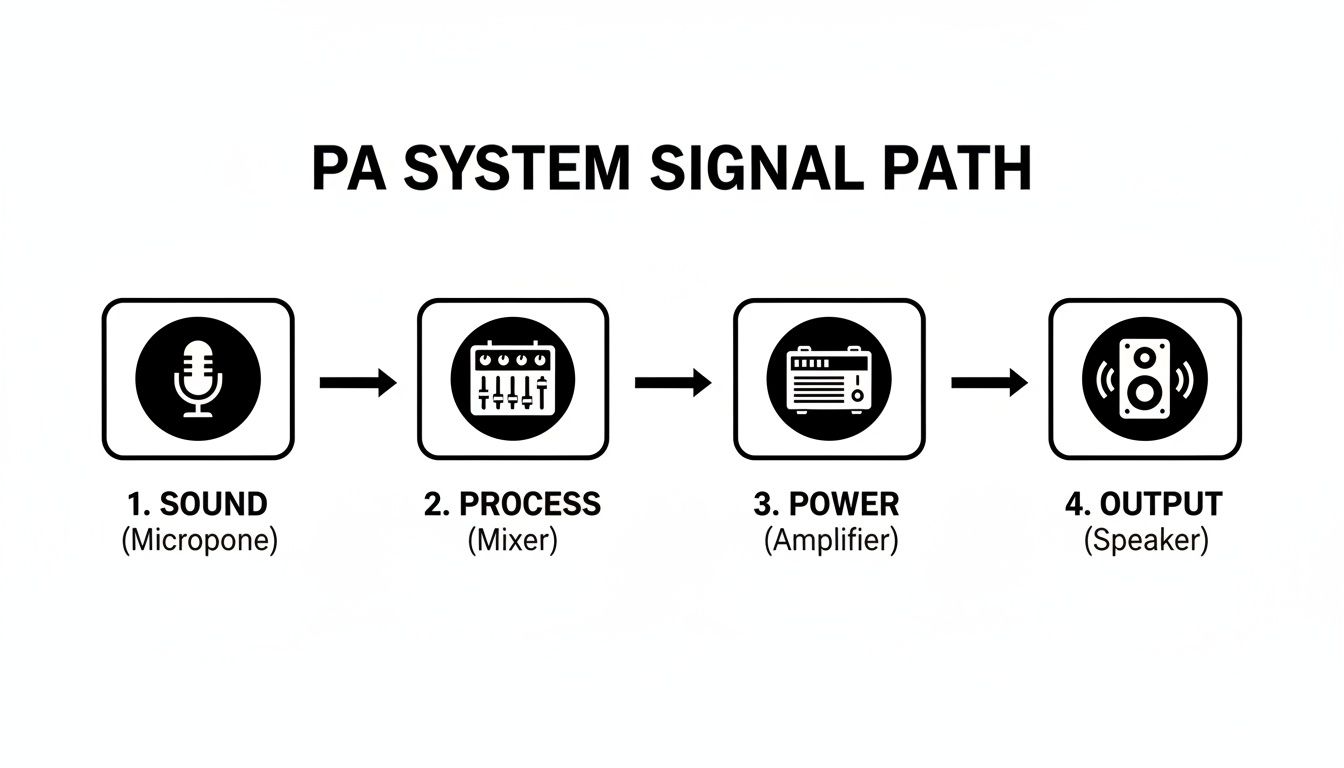
As you can see, the journey is straightforward: sound is captured, then processed and balanced, then amplified, and finally delivered to the listeners.
Microphones and Other Inputs
The first step is converting physical sound waves into an electrical signal. This is the primary function of a microphone. Selecting the correct microphone for the application is critical.
- A lectern microphone is ideal for a speaker standing at a podium during a conference. It captures their voice clearly without being obtrusive.
- A handheld wireless microphone gives a presenter or host the freedom to move around the stage or interact with the audience.
- Lapel (or lavalier) microphones are small and discreet, clipping onto clothing to provide presenters with hands-free movement.
Of course, inputs are not limited to microphones. They can also include a laptop for playing presentation audio, a media player for background music, or the full range of instruments for a live band.
The Mixing Desk
Often called the mixer, the mixing desk is the central command hub for the entire system. This is where all the individual signals from microphones and other inputs converge. A sound engineer uses the mixer to balance the levels of each source, adjust their tone with EQ (equalisation), and blend everything into a coherent, polished output.
The mixer allows an engineer to ensure one sound does not overpower another. For instance, they can subtly reduce the level of background music as soon as a speaker begins talking, ensuring their speech is always the primary focus.
Amplifiers
Once the audio signals have been mixed, they are still very weak electrical currents, insufficient to power a loudspeaker. The amplifier's job is to take this low-level signal from the mixer and give it a substantial power boost, providing the necessary energy to drive the loudspeakers.
An amplifier is the engine of the PA system. Without sufficient clean power, even the best speakers will sound quiet, weak, or distorted, completely failing to make an impact.
Today, 'active' or 'powered' speakers are common. These have an amplifier built directly into the loudspeaker cabinet, simplifying the setup and ensuring the amplifier is perfectly matched to the speaker it drives.
Loudspeakers
Loudspeakers are the final component in the audio chain. They take the powerful, amplified electrical signal and convert it back into the sound waves the audience hears. Different loudspeakers are designed for specific tasks:
- Main Loudspeakers (Tops): These handle the mid-range and high frequencies, which are essential for vocal clarity and the main body of any music.
- Subwoofers (Subs): These are specialised units built to reproduce only the deep, low-end bass frequencies that give music and video soundtracks a sense of depth and impact.
- Stage Monitors: These are the loudspeakers you see on stage pointing back at the performers. They allow musicians and speakers to hear themselves clearly over the main sound.
A well-designed PA system is key to delivering impactful Music Entertainment and creating the right atmosphere for any event.
Matching the System to Your UK Event
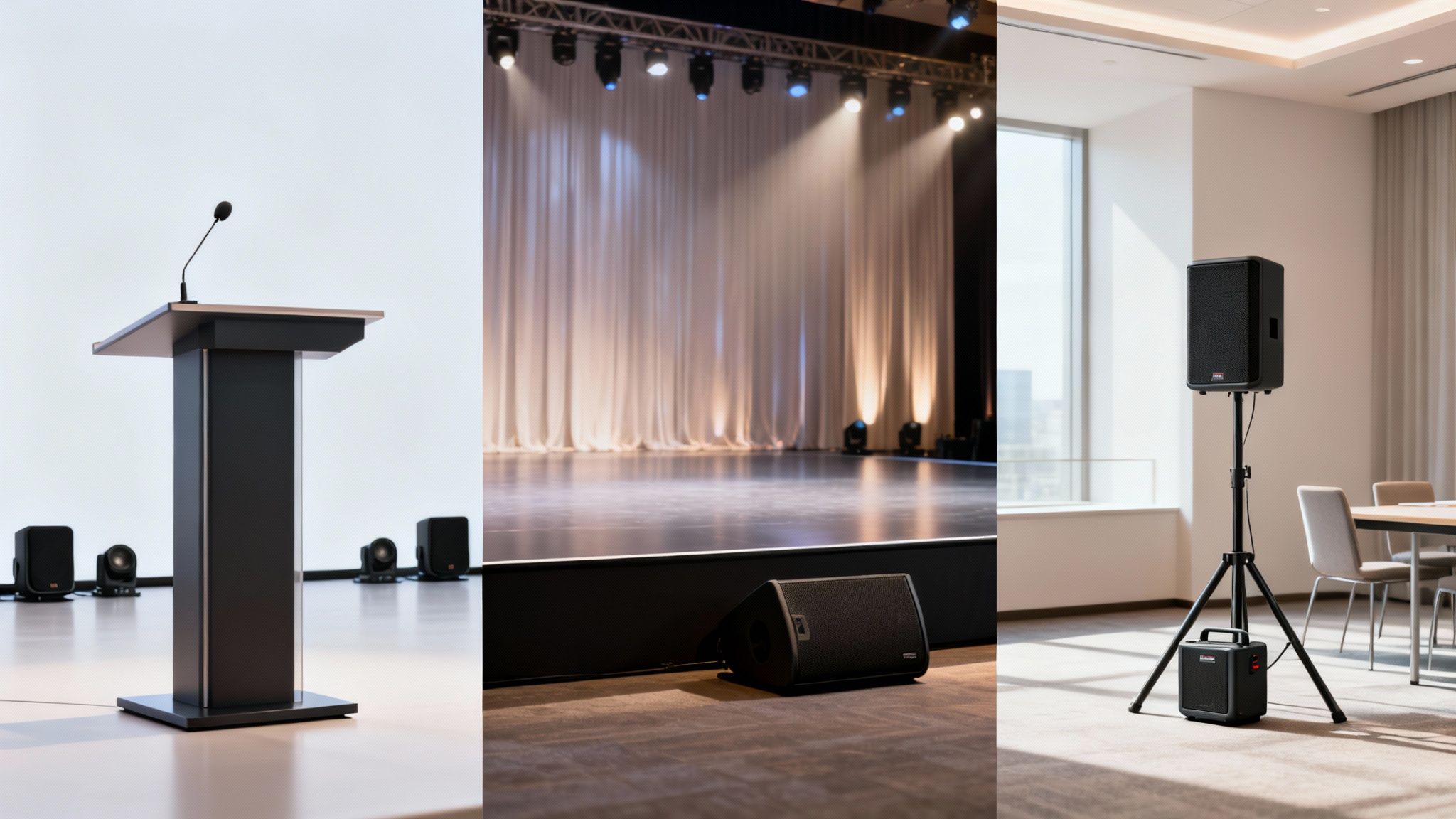
Understanding the individual components of a PA system is the first step. The real skill, however, lies in knowing how to combine them to suit a specific event. The setup required for a small workshop would be completely inadequate for a large awards dinner. The key is to match the audio equipment directly to the unique goals and environment of the event.
Let us examine a few common event scenarios in the UK. By reviewing these, you can see how the scale and configuration of a PA system shift to meet different demands, moving from abstract technical details to practical, real-world solutions.
The Corporate Conference
For any corporate conference, the top priority is always speech intelligibility. Every word from the keynote speaker, panellist, and presenter must be crystal clear for every delegate, whether they are in the front row or at the back of the hall.
The audio setup for this type of event typically includes:
- Lectern and Lapel Microphones: These are standard for clear vocal pickup. A lectern microphone is ideal for a static speaker, while a lapel microphone allows presenters to move around hands-free.
- Distributed Loudspeakers: Rather than using two large loudspeakers at the front, the sound is often distributed. Multiple smaller loudspeakers are placed strategically throughout the room to guarantee even coverage at a comfortable volume, eliminating loud and quiet spots.
- Audio from Presentations: The system must handle audio from laptops, such as video clips or background music, and mix it cleanly with live speech.
This focus on clarity and subtlety is the foundation of successful conference production. The goal is for the technology to be almost invisible, allowing the message to take centre stage.
The Gala Dinner or Awards Night
An awards night or gala dinner requires far more than just clear speech. For these events, the PA system's job is to build an atmosphere of excitement and celebration. This calls for a more powerful and dynamic setup that can handle high-energy music, dramatic video stings, and a lively host.
A typical configuration would include:
- Subwoofers: These are essential to deliver the deep, powerful bass that makes music and award announcements feel impactful. They create a full-bodied sound that fills the space.
- Wireless Handheld Microphones: These are necessary for hosts who need to move around the stage, interact with the audience, or interview award winners.
- A Robust Mixing Desk: With multiple audio sources, more inputs are needed. A larger desk is required to manage microphones for the host and lectern, background music, video audio, and potentially a live band.
For these events, the PA system is not just a tool for communication; it is a core part of the entertainment. The right sound energises the room and amplifies the sense of occasion.
The need for sophisticated systems is not limited to large events. The global public address system market is projected to reach 5.4 billion US dollars by 2033, a trend driven by major investments in public infrastructure and stricter safety standards.
The Small Breakout Session
Finally, let us consider a small breakout session or training workshop. The audience is smaller and the requirements are simpler, but professional sound is still vital for engagement.
In this scenario, a compact, all-in-one portable PA system is often the perfect solution. These units typically combine a small mixer, amplifier, and loudspeaker into a single, user-friendly package. They are ideal for ensuring a presenter can be heard clearly without the complexity of a larger setup. It demonstrates that understanding PA systems also means knowing when a smaller, more focused solution is the right choice.
How Much Power Do You Really Need?
One of the first questions event planners ask is, "How big a system do I actually need?". The answer is not as simple as picking a number. The power rating you see on a loudspeaker is only one part of a much larger picture.
Focusing solely on wattage is a common mistake. A 1000-watt loudspeaker from one manufacturer might not be as loud or clear as a 500-watt loudspeaker from a premium brand. It is like judging a car's performance purely on its engine size; it does not tell the whole story.
Understanding the factors that truly matter will enable you to evaluate quotes from AV suppliers with a more critical eye and ensure you get a system that is right for your event.
Looking Beyond the Wattage Figure
Instead of focusing on power ratings, let us discuss what truly determines how a PA system will perform in your venue. A good audio professional will consider these factors when preparing a proposal.
-
Loudspeaker Efficiency (SPL): This is far more important than wattage. Sound Pressure Level (SPL), measured in decibels (dB), indicates how effectively a loudspeaker converts electrical power into sound. A loudspeaker with a higher SPL rating is more efficient: it will be louder and clearer with less power.
-
Venue Acoustics: Every room behaves differently. A large hall with marble floors and high ceilings will be reverberant, with sound bouncing around. In contrast, a conference room with thick carpets and soft furnishings will absorb sound. Each space requires a different approach.
-
Audience Size: People absorb a surprising amount of sound. A system that sounds perfect in an empty room can feel quiet once 30-0 guests are standing in front of it. Your PA system needs enough power to reach everyone through the crowd.
It's About Coverage, Not Just Volume
The goal is not just to be loud; it is to provide even and intelligible coverage for every person in the room. This is where professional system design is crucial.
A well-designed PA system ensures the person at the back of the room has the same clear audio experience as the person in the front row. This is achieved through careful loudspeaker placement, not just by increasing the volume.
Consider a long, narrow room. Placing two large loudspeakers at the front and turning them up will be uncomfortably loud for people at the front, while those at the back may still struggle to hear.
A much better solution is to use smaller "delay" loudspeakers partway down the room. These reproduce the sound from the main stage but with a tiny electronic delay, so it arrives at the listeners' ears at the same time as the sound from the front. The result is a clear, consistent sound experience for everyone, everywhere.
To get a better idea of the components involved, you can see the kind of professional audio visual equipment we use to achieve this.
What to Ask Before You Hire a PA System
Selecting the right PA system is one thing, but finding the right company to supply and operate it is just as important. The success of your event’s audio often depends on the supplier's expertise, reliability, and on-site support. Asking a few key questions upfront can help you identify a true professional and avoid a partner who might let you down.
Before you sign a contract, you need to understand exactly what you are getting. A great AV provider is more than a delivery service; they are a technical partner. They should offer advice and identify potential issues long before they become a problem on the day.
Nailing Down the Technical and Logistical Details
First, let us discuss the practicalities. A seasoned professional will not offer a generic package. They will want to understand the specifics of your event and venue, asking you as many questions as you ask them.
Here is what you should cover:
- Venue Reconnaissance: Have they worked at your venue before? If not, will they conduct a site visit to assess the room's acoustics, power availability, and rigging options?
- Your Audio Needs: What exactly needs to be amplified? Is it just for speeches, or will there be background music? Perhaps a live band? The answer affects everything, from the type of microphones to the loudspeakers and mixing desk required.
- Contingency Plan: What happens if something fails? Always ask what backup equipment they bring. A professional supplier will always have a contingency plan.
A reliable audio partner's first step is to understand the space. They should identify potential challenges, like a reverberant hall or a shortage of power, and have a solution ready before you even have to ask.
The People Behind the Equipment
The best PA system in the world is useless without a skilled technician to operate it. You are not just hiring equipment; you are hiring expertise. Gaining clarity on who will be behind the mixing desk is essential.
Do not forget to ask about the human side of the service:
- Who is my engineer? Ensure a dedicated, experienced sound engineer will be present from the initial setup right through to the end of the event.
- What is their role? Will they run sound checks with your presenters, monitor audio levels during the event, and be ready to solve any problems instantly?
- Are setup and removal included? Check that all labour costs for delivery, installation, and removal are clearly itemised in your quote. No one likes surprise fees.
Checking for Safety and Professionalism
Finally, you need to be sure the supplier operates professionally and safely. This is not just red tape; it is about protecting you, your guests, and your reputation. Do not feel awkward asking to see their documentation.
- Insurance: Can they provide a copy of their public liability insurance certificate?
- Safety Documents: Can they provide risk assessments and method statements (often called RAMS) for the work they will be doing at your venue?
Asking these questions will help you confidently choose a partner like London Audio Visual Hire, ensuring the sound for your event is not just present, but perfect.
Why Professional Sound Engineering Is Crucial
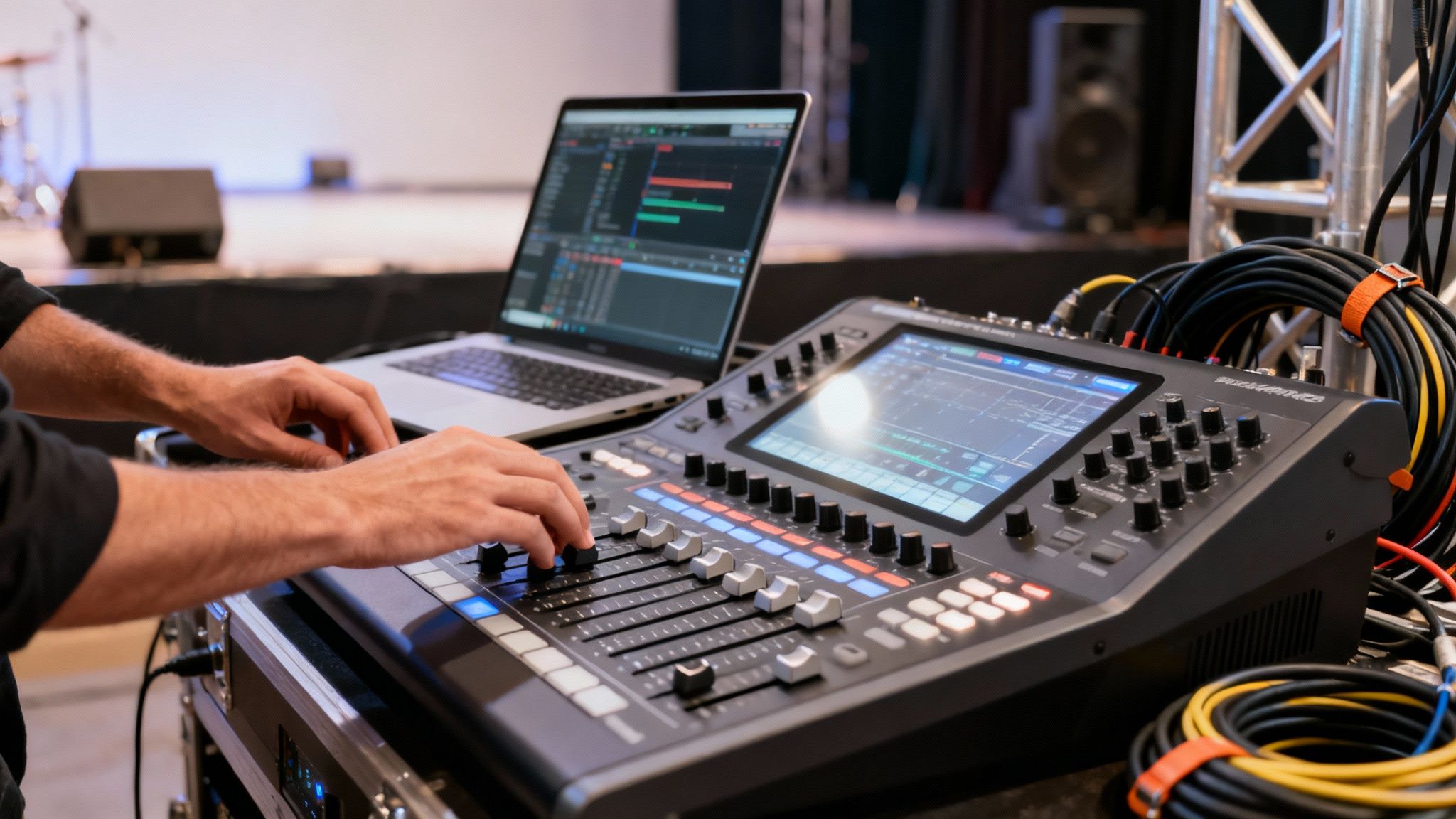
Knowing the components of a PA system is one thing, but making it perform perfectly for a live event is an art form. This is where a skilled sound engineer becomes invaluable. They do far more than just operate controls; they are the architects of your event’s soundscape, ensuring every word and note is heard exactly as intended.
Think of them as your audio guardians. Their job is a constant balance of technical skill and proactive problem-solving. They are the ones who eliminate the shriek of feedback before it happens, manage multiple wireless microphone frequencies to avoid dropouts, and react instantly to any unexpected audio issue.
It's More Than Just Mixing
The role of a professional engineer extends beyond the mixing desk into the critical realm of health and safety. Meticulous cable management is not just about looking tidy; it is about preventing trip hazards. Ensuring every loudspeaker and piece of equipment is securely rigged and positioned is fundamental to the safety of your guests, staff, and performers. This responsibility protects people and, by extension, your brand's reputation.
An expert team from a provider like London Audio Visual Hire is an investment in peace of mind. It is the difference between an event remembered for its flawless, professional sound and one remembered for the wrong reasons.
This becomes even more apparent in large-scale productions. For instance, the complex stadium technology for great fan experiences relies heavily on teams of engineers to deliver coherent sound across vast spaces.
Ultimately, a professional sound engineer ensures your message connects with your audience. They make certain every crucial announcement is crystal clear and every performance makes a real impact. If you want to discuss the specific needs of your next event, our team of experienced engineers is here to help.
A Few Final Questions About PA Systems
To help you pull the final details together, here are a few of the most common questions we are asked when people are hiring a PA system for an event in the UK.
What Is the Difference Between Active and Passive Loudspeakers?
The short answer is the amplifier. Active loudspeakers are an all-in-one package with the amplifier built into the loudspeaker cabinet. They just need power and a signal, making them very straightforward to set up.
Passive loudspeakers, on the other hand, are more traditional. They need a separate, external amplifier to drive them. While active loudspeakers offer convenience, a passive system gives an audio engineer more control and flexibility for larger, more complex events, allowing them to adjust power and sound processing from a central location. We will always recommend the right tool for the job based on your objectives.
How Can I Stop Feedback During My Event?
Feedback, that high-pitched squeal, is the sound of a microphone hearing its own output through a loudspeaker, creating an audio loop. A professional sound engineer is your best defence, and preventing it is a matter of good practice.
They stop feedback by:
- Carefully placing loudspeakers so they are not pointing towards any open microphones.
- Using the correct type of microphones, usually directional models that primarily capture sound from directly in front of them.
- Making precise adjustments to the EQ to surgically remove the specific frequencies that are causing the problem.
Do I Really Need Subwoofers for a Speech-Only Event?
For a speech-only event, almost certainly not. Subwoofers are designed to reproduce the very low bass frequencies you can feel as much as hear. They are vital for music, film soundtracks, or any time you want to create a powerful, immersive atmosphere.
For a panel discussion or a straightforward presentation, they are unnecessary. A quality pair of main loudspeakers will deliver all the vocal clarity and richness required without the low-end rumble.
Arranging the audio for your next event does not need to be a challenge. The expert team at London Audio Visual Hire has the experience and professional equipment to ensure your message is heard exactly as you intend. For calm, reliable support and a flawless result, contact us for a detailed consultation.


