

What is a lighting designer? In simple terms, they are the visual architects of an event. A lighting designer uses light as a strategic tool to build atmosphere, direct focus, and reinforce the core message of a conference, product launch, or awards ceremony. Their role goes far beyond basic illumination; they shape how an audience feels and what they see.
More Than Just Lights: The Role of a Modern Lighting Designer
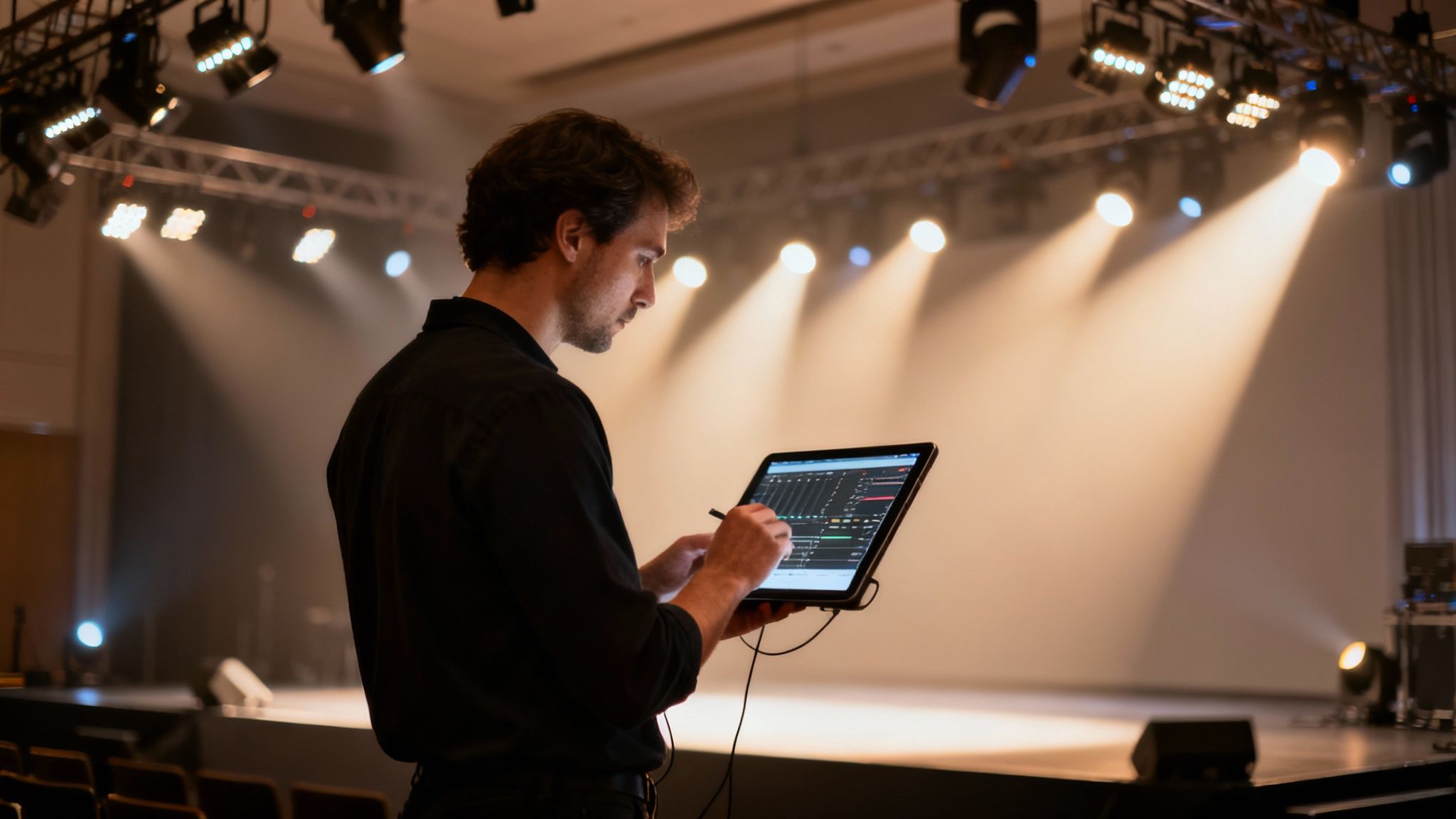
In the corporate event sector, a lighting designer is an artist, technician, and strategist combined. Their responsibility is not simply to place lights around a venue, but to develop a comprehensive lighting concept that aligns with the event's objectives.
A skilled designer can translate abstract concepts such as "an energetic atmosphere" or "a sophisticated brand presence" into a tangible visual reality. From the initial design sketches to programming the final lighting cues, they oversee the entire visual journey of an event.
What Does a Lighting Designer Actually Do?
The role is highly varied, blending creative vision with detailed technical planning and hands-on execution. When a professional designer is involved, the visual environment becomes a carefully considered element intended to deliver a specific result.
Their key duties typically fall into several core areas:
- Conceptual Development: The process begins with a consultation to understand the event's goals, brand identity, and desired atmosphere. The designer works with the client and production team to establish a clear visual direction.
- Technical Design: Once the vision is clear, they create detailed lighting plots. These technical plans specify the type and placement of all lighting fixtures, rigging requirements, and power distribution needs.
- Creating Mood and Atmosphere: Using a palette of colour, shadow, intensity, and movement, they sculpt the feel of a space. This can transform a venue from an energetic networking area to a focused presentation environment.
- Directing Audience Attention: Effective lighting tells people where to look. By precisely illuminating a keynote speaker, a new product, or an architectural feature, a designer ensures the audience's focus is always correctly placed.
- Programming and Live Operation: During the setup phase, they program the lighting console to create the various looks and dynamic cues required. For many events, they will also operate the lighting live, ensuring every transition is seamless.
A lighting designer’s primary function is to support the event’s narrative. Every choice, from the colour of an uplighter to the timing of a followspot, is made with a clear purpose: to strengthen the message and enhance the audience's experience.
Ultimately, they transform lighting from a simple utility into an active and engaging part of the event. Their expertise turns light into a powerful communication tool.
The Art and Science Behind Lighting Design
An effective lighting designer operates at the intersection of creativity and technical expertise. The role requires artistic flair combined with a deep understanding of the underlying science, a blend that turns a well-lit room into a memorable experience.
On the creative side, a lighting designer can be seen as a painter whose medium is light. They apply principles of colour theory, shadow, and composition to shape an atmosphere. They understand how warm amber light can make a large hall feel intimate, or how sharp, cool tones can create a sense of high-tech energy. Their job is to translate a client’s vision into a coherent and immersive visual environment.
Technical Mastery in Practice
Artistic vision requires technical knowledge to be realised. This is where the scientific aspect of the role becomes critical. A designer needs an encyclopaedic knowledge of their equipment, understanding not just the name of a fixture but its precise capabilities and limitations in a real-world setting.
This technical toolkit is built on several key pillars:
- Fixture Knowledge: A thorough understanding of the tools is essential. This includes everything from workhorse LED battens and parcans to the complex capabilities of intelligent moving heads and profile spots. This is as fundamental to event production as a full understanding of audio visual equipment is for the wider AV team.
- Control Systems: The lighting is controlled from a dedicated console. Mastery of complex control systems and software is non-negotiable for programming everything from slow, elegant fades for a gala dinner to the rapid, high-energy sequences needed for a product launch.
- Safety and Logistics: This often unseen aspect of the job is critical. It involves meticulous planning of power distribution, calculating electrical loads, and adhering to rigorous safety standards for rigging. Correct execution ensures the entire setup is not just impressive, but completely secure.
The designer’s task is to fuse art and science so seamlessly that the result feels effortless. The technical groundwork provides the freedom to be creative, ensuring the design is not only visually striking but also safe, practical, and perfectly executed.
How a Lighting Designer Collaborates with Your Event Team
A lighting designer does not work in isolation. They function as a central hub, connecting the creative and technical elements of an event production team. Their ability to communicate effectively with everyone from the project manager to the sound engineer is as vital as their design skills.
The process begins with a detailed review of the brief alongside the event or project manager. This initial stage establishes the core objectives, budget, and timeline, defining the practical framework within which the creative vision will be developed.
Once the foundations are set, the designer collaborates closely with other technical specialists. The goal is seamless integration, ensuring every element works in harmony to create a unified experience for the audience, rather than a disjointed collection of competing sights and sounds.
Syncing with Video and Sound
The most immersive event experiences occur at the intersection of light, video, and sound. When these elements are not synchronised, the result can be jarring. When they are, the impact can be unforgettable. A proficient lighting designer understands that these components must complement each other.
This is where their blend of artistry and technical knowledge is most apparent. They must use both creative and analytical skills to ensure all technical departments are aligned.
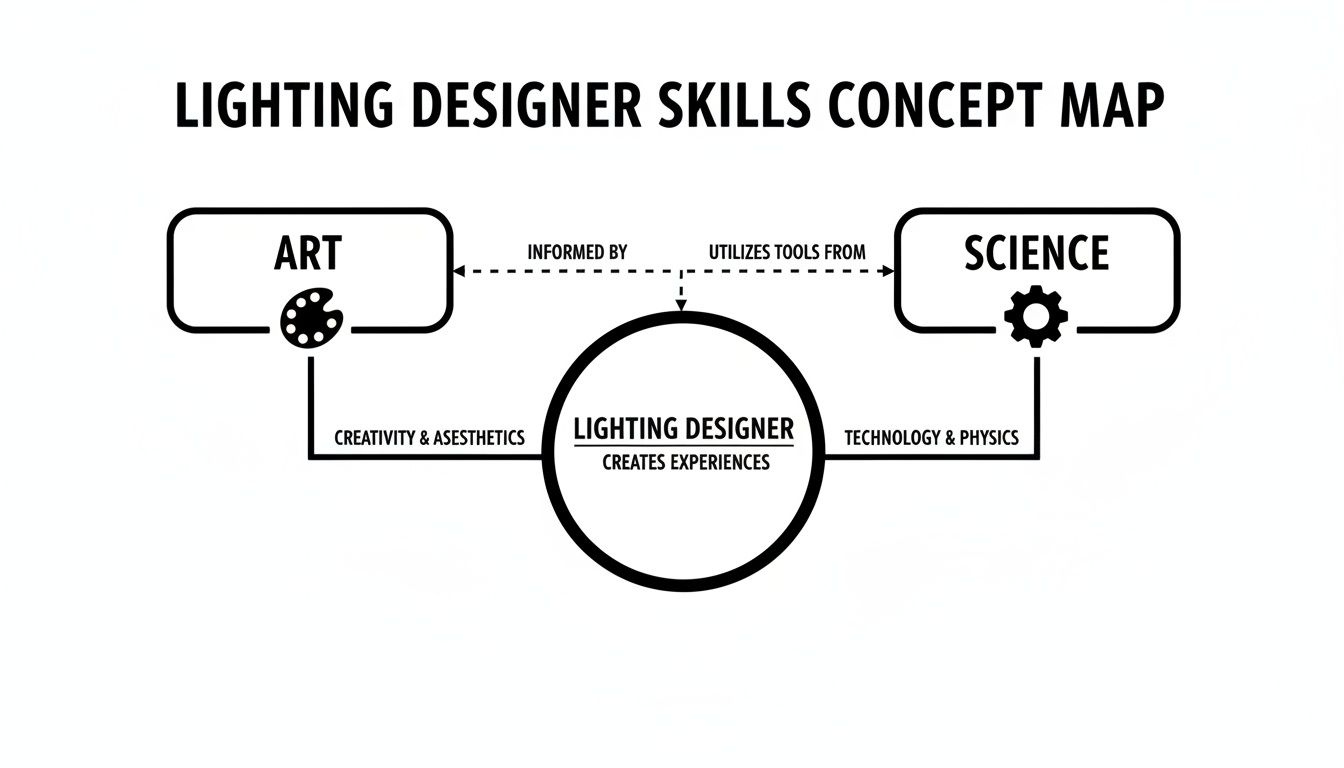
This dual skill set is evident in their collaboration with other technical teams.
-
Working with Video Technicians: A delicate balance must be struck between the ambient light in the room and the light emitted from screens. If the stage lighting is too bright, video content can appear washed out. If it is too dark, LED walls can feel harsh and disconnected. The lighting designer works with the video team to find the optimal balance.
-
Working with Audio Engineers: Timing is critical. The designer programmes lighting cues synchronised to the audio. A dramatic crescendo in the music, a specific sound effect, or a key line in a speech can all be amplified with a perfectly timed lighting state.
This continuous communication ensures a cohesive production. When the lighting swells perfectly in time with the music as a new product is unveiled on-screen, it is the result of meticulous, behind-the-scenes teamwork orchestrated by the lighting designer.
Lighting Design in Action at Corporate Events
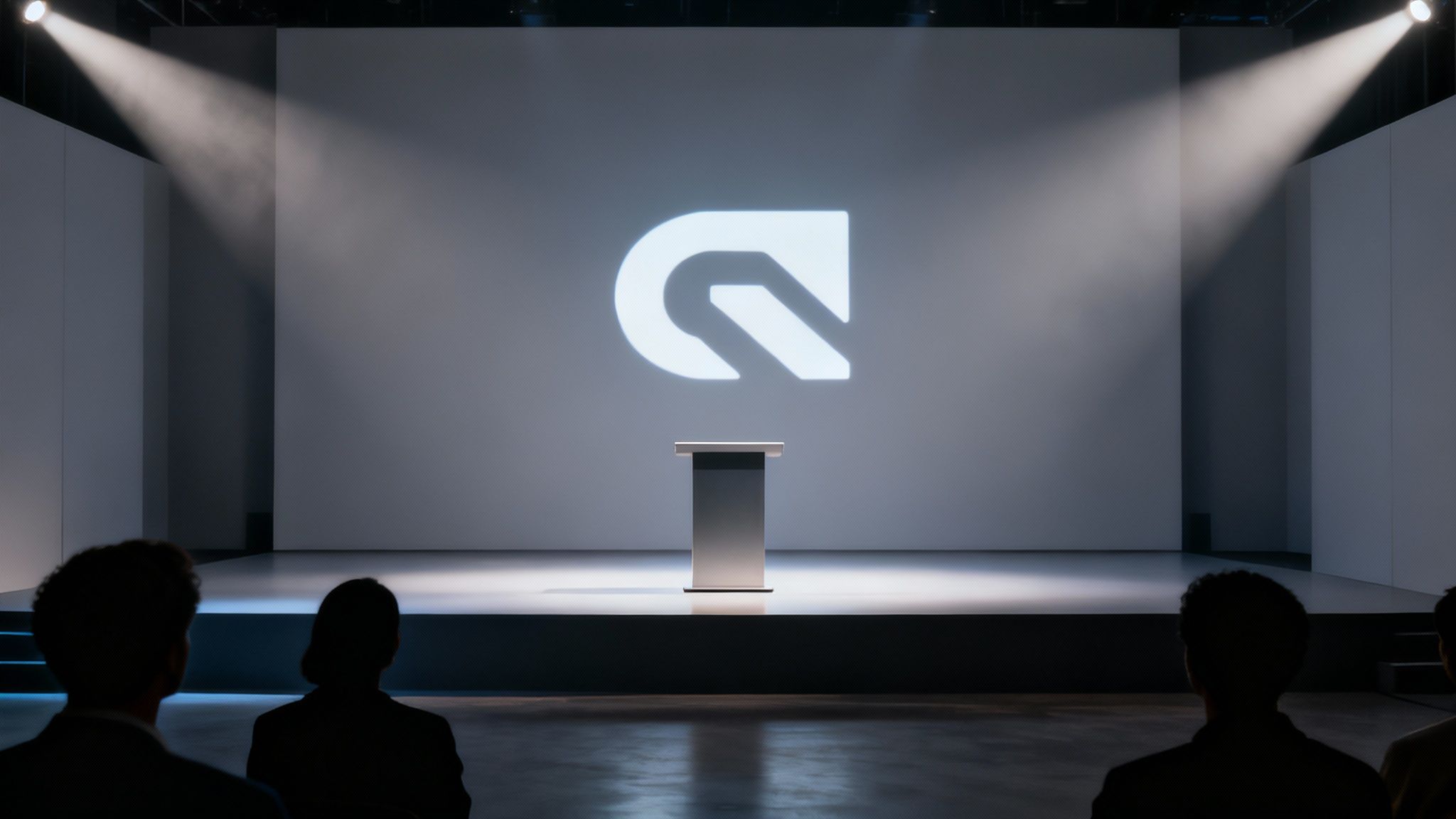
To fully appreciate what a lighting designer does, it is helpful to consider their work in practical scenarios. The concepts of colour, shadow, and texture are best understood by seeing how they can transform the atmosphere of a room and shape an audience’s perception.
Consider a high-stakes product launch. A lighting designer might use sharp, dynamic gobo projections of the company logo moving across the walls to build anticipation. When the CEO walks on stage, a crisp spotlight immediately establishes them as the centre of attention. For the product reveal, a sudden wash of bold brand colours can flood the space, amplifying the impact of the moment.
Tailoring the Atmosphere for Different Events
The lighting requirements for a gala dinner are fundamentally different from those for a multi-day conference. An experienced designer knows how to interpret the event brief to create an environment appropriate for the occasion.
This strategic thinking is a core component of effective conference production, where the lighting must serve multiple functions throughout the day.
-
For a Gala Dinner: The objective is often sophistication and intimacy. A designer might use soft, warm uplighting around the perimeter of the room to create an inviting atmosphere. Focused pin-spots could be used to highlight each table centrepiece, adding elegance without making the room feel overly bright.
-
For a Conference Keynote: Here, the focus is entirely on the stage. The designer will ensure the speaker is perfectly lit for both the live audience and broadcast cameras. Simultaneously, they will use colour washes and backdrop lighting to subtly reinforce the event's branding and maintain visual interest.
-
For Breakout and Networking Zones: The atmosphere needs to be different again. The lighting should be brighter and more functional, creating an energising environment that encourages conversation and allows attendees to read name badges and notes easily.
A lighting designer's real value lies in their ability to view the event as a series of distinct moments. They craft a visual journey, guiding the audience from one experience to the next with precision.
This human-centric approach has proven benefits. Studies on permanent installations have found that well-designed lighting can improve workplace productivity by around 6% and creative output by up to 15%. Designers apply these principles to events to keep attendees focused and engaged. You can read more about these UK LED lighting market trends.
Keeping Pace with Technology and Sustainable Design
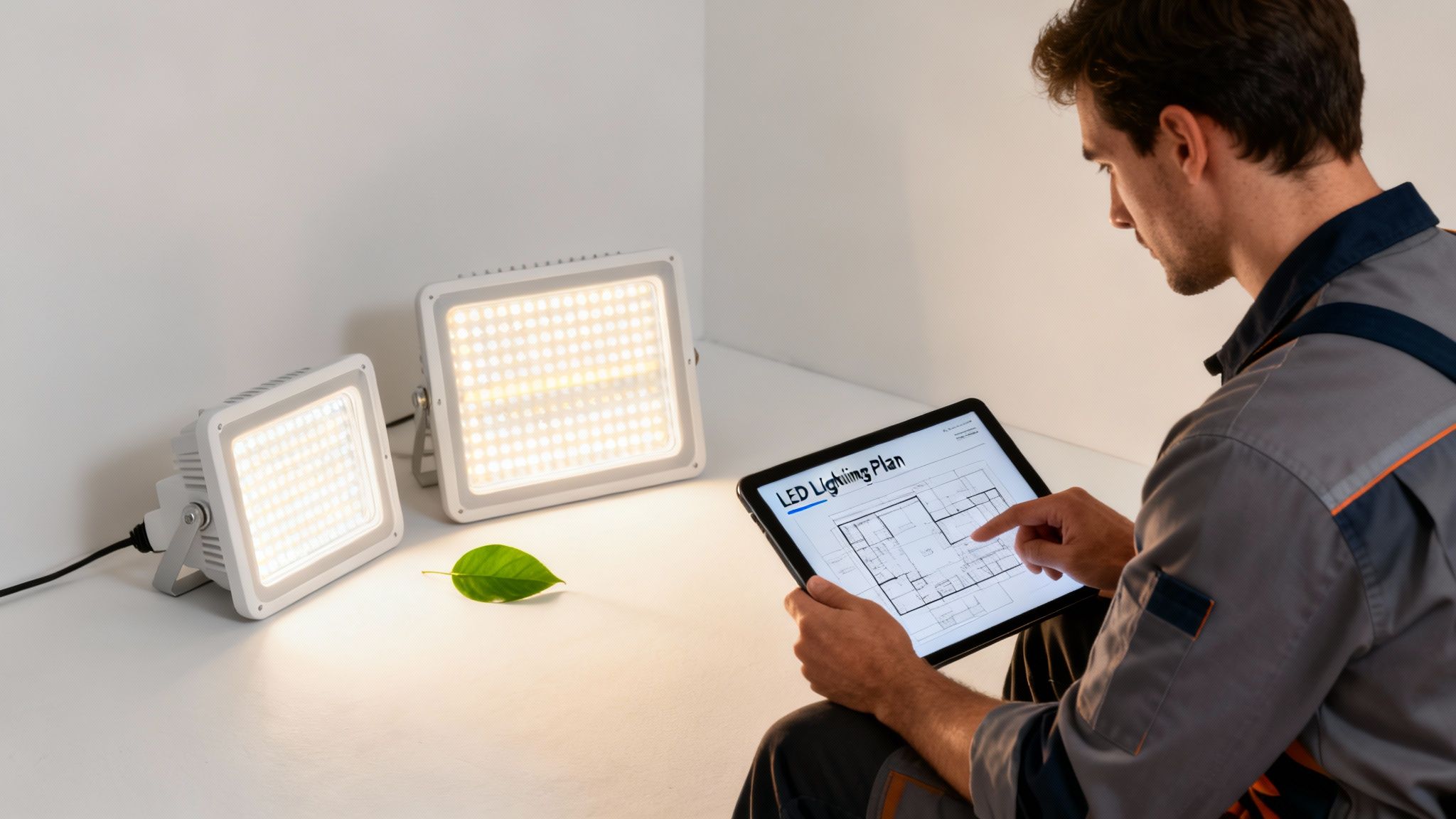
The field of event lighting is constantly evolving. A professional lighting designer must stay informed about the latest technologies and best practices. The goal is not only to create a stunning visual experience but to do so efficiently, responsibly, and with the most suitable tools.
The most significant technological shift in recent years has been the industry-wide adoption of LED technology. Moving away from power-intensive incandescent fixtures has transformed the creative possibilities while delivering tangible benefits for every event.
How LEDs Have Changed Everything
Adopting a modern, LED-based inventory has a major impact on both the creative freedom and the practical logistics of an event. The advantages are significant.
Key benefits of LED lighting include:
- Reduced Power Consumption: LED fixtures use a fraction of the electricity required by their predecessors. This can significantly reduce an event's power requirements, often leading to lower energy costs.
- Lower Heat Output: Traditional tungsten lights generate considerable heat. LEDs run significantly cooler, making them safer for use in confined spaces and helping to maintain a comfortable venue temperature.
- Expanded Colour Palette: Modern LED units can mix millions of vibrant colours dynamically, removing the need for physical colour filters and providing the designer with a virtually limitless palette.
A lighting designer in the UK now operates at the intersection of creativity and compliance. New regulations demand higher lumen-per-watt performance, and the market has shifted almost entirely to LED. A good designer not only understands this shift but embraces it. You can learn more about the UK's growing LED lighting market to see the pace of this change.
This drive for efficiency aligns with the events industry's growing commitment to sustainability. A knowledgeable lighting designer is a crucial partner in making any event more environmentally responsible.
A Strategic Partner for Unforgettable Events
Ultimately, a professional lighting designer is not just another supplier; they are a vital creative and technical partner. Their contribution extends far beyond aesthetics, directly shaping how an audience feels, perceives a brand, and engages with key messages.
Including a lighting designer in your event budget is a strategic investment. It elevates an event from being merely good to something truly exceptional. Their skill delivers a tangible return by creating a powerful atmosphere that remains with attendees long after the event concludes.
If you are considering how expert lighting could transform your next conference, product launch, or awards ceremony, you are asking the right questions. To see what is possible, you can learn more about the complete range of event production services available from London Audio Visual Hire.
Common Questions About Hiring a Lighting Designer
Even when the value is clear, some practical questions often arise. Here are answers to some of the most common queries to clarify the process.
How Early Should I Bring a Lighting Designer Onboard?
As early as possible. Ideally, a lighting designer should be involved during the venue selection process.
Engaging a designer from the outset allows them to assess a venue's potential and its limitations, such as power availability, rigging points, and unique architectural features. This ensures the lighting is integrated into the core experience rather than being a late addition, resulting in a more cohesive and creative outcome.
What Information Does a Lighting Designer Need From Me?
To begin, they require a comprehensive brief. This should include your event objectives, the desired mood, brand guidelines, the event schedule (run-of-show), and venue floor plans.
The more detail you can provide about key moments, such as a product reveal or keynote speech, and the specific feeling you want to create for your guests, the more effectively the designer can translate that vision into light.
Be prepared to discuss the budget. An experienced designer is adept at working within financial constraints. A key part of their role is to maximise the impact of the available budget, making intelligent choices on equipment and design. They might suggest using versatile, multi-purpose fixtures or a scheme that leverages the venue’s existing features to ensure every pound is used effectively.
At London Audio Visual Hire, our experienced lighting designers specialise in crafting unforgettable event atmospheres. Ready to see what is possible? Explore our event production services and let's begin planning.


