

Getting the sound right can make or break an event. Poor audio, such as screeching feedback, muffled speakers or a presenter you cannot hear, is a quick way to lose an audience. Hiring a professional sound technician removes that stress, but the key is finding the right one. That process begins long before you consider posting a job advert.
A corporate awards dinner and a live band in a pub have completely different audio requirements. You need to understand your event's specific needs first; otherwise, you risk investing in a solution without understanding the problem.
Matching Your Event to the Right Audio Expertise
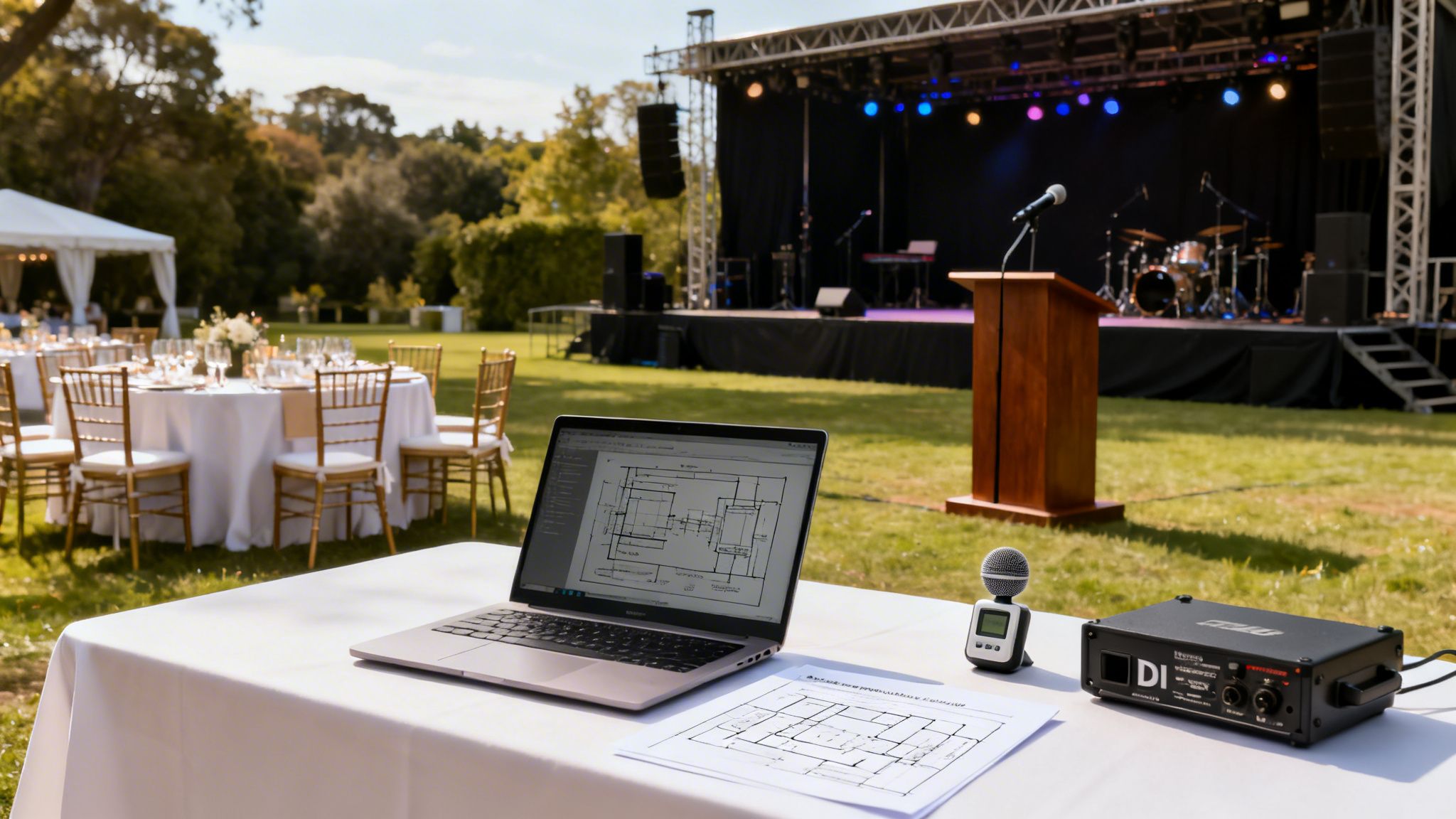
Before you begin your search, it is essential to create a technical brief. This is not as intimidating as it sounds. It is simply a document that translates your vision into a language a sound professional can understand.
This brief is your single most powerful tool. It is what separates a vague request like "we need a sound system" from a clear, professional enquiry. It helps you get accurate quotes, avoids surprises on the day and ensures the technician who arrives has the exact skills and equipment for your specific setup.
Define Your Venue and Audience
First, consider the location. The physical space is a critical factor in audio. A modern conference hall with acoustic panelling behaves very differently to a converted warehouse with high ceilings and significant echo.
Your audience size is just as important. A system that works perfectly for 50 people will be completely inadequate for a crowd of 500. Think about these key details:
- Venue Acoustics: Make a note of potential sound challenges. Are there glass walls? High, reverberant ceilings? Is it an outdoor space where sound will dissipate?
- Audience Size: Be realistic about your maximum headcount. This number directly dictates the power and quantity of speakers required.
- Layout: Will guests be seated in rows facing a stage, or will they be mingling across a large, open-plan area? The layout determines speaker placement and whether you might need smaller "delay" speakers to ensure even coverage.
Create an Input List
Next, you need to count every single source of sound you want the audience to hear. This is your "input list" and it serves as the blueprint for the entire technical setup, dictating the size of the mixing desk and the amount of equipment the technician needs. For a deeper insight into the world of sound, understanding audio production can provide a solid foundation.
Review your event's schedule from start to finish and list every audio source:
- Presenter Microphones: How many people will be speaking at once? Will they need microphones on stands, handheld ones for a Q&A, or discreet lapel microphones?
- Laptops and Devices: Do not forget the laptop for presentation slides, another for background music, or a phone for video playback. Each one is a separate sound source.
- Live Music: If you have a band, break it down. List every instrument and vocalist. A bass guitar requires a DI box, a drum kit needs multiple microphones and a singer needs a specific vocal microphone; be detailed.
A detailed input list is the cornerstone of effective audio planning. It directly informs the technician about the scale of your event, allowing them to select the correct mixing console and prepare the right equipment without any guesswork on the day.
Once you have this brief, you are no longer making a vague request; you are providing a professional specification. If you're curious about the specific gear involved, our guide on what is audio visual equipment is a great next step. Now, you are ready to approach a company like London Audio Visual Hire with the confidence that you know exactly what you need.
Finding and Vetting the Best Sound Technician
Once you have a solid technical brief, you can start the crucial process of finding the right person for the job. This is about more than reviewing a CV; it is about assessing their real-world experience and determining if they have the right temperament for a live event.
The aim is simple: find a professional who not only knows the equipment inside-out but can also remain calm when the pressure mounts. A bit of due diligence now will prevent significant technical headaches later and ensure your event runs smoothly.
Reviewing Experience and Portfolios
A technician's portfolio is your first real window into their capabilities. You are looking for a history of work on events that mirror yours in both scale and style. Someone who excels at mixing live festival bands may not be the best choice for a nuanced corporate awards night, and the reverse is also true.
As you look through their past work, keep these points in mind:
- Similar Venues: Have they worked in spaces like yours? A technician familiar with the challenging acoustics of a historic building or the demands of an outdoor marquee will be better prepared.
- Similar Events: Look for direct experience with your type of event. Conferences, weddings, product launches and concerts each have unique audio demands.
- Familiarity with Equipment: Does their portfolio show they are comfortable with the specific mixing desks, microphones and speaker systems your event requires? If you are not sure what is involved, you can explore the range of professional sound equipment available with London Audio Visual Hire to get a better idea.
The need for skilled audio professionals is undeniable. The UK's sound recording and music publishing sector is a growing field, projected to employ 10,745 people by 2026. This demonstrates the high value placed on expert audio services. You can get more details on this from industry reports by IBISWorld.
Asking the Right Questions in an Interview
Once you have shortlisted a few promising candidates, the interview is where you can gauge their problem-solving skills and on-the-job attitude. The best technicians do not just react to problems; they anticipate them. They can think on their feet and stay calm under pressure.
A great sound technician does more than just operate equipment; they anticipate problems before they happen. Their ability to troubleshoot a sudden issue with a lapel microphone mid-speech without causing a scene is as valuable as their technical knowledge.
Scenario-based questions are your most effective tool here. They reveal how a candidate would perform in practice, not just what they know in theory.
To help you get the most out of your interviews, here are some questions designed to probe their expertise.
Key Questions to Ask Potential Sound Technicians
| Category | Sample Question | What to Listen For |
|---|---|---|
| Technical Skills | "Walk me through how you would eliminate feedback from a lectern microphone in a room with high, reverberant ceilings." | A methodical, step-by-step approach. They should mention gain structure, equaliser (EQ) adjustments and microphone placement, not just "I would turn it down." |
| Problem-Solving | "The main speaker's laptop has a faulty audio output and they are due on stage in five minutes. What is your plan?" | Quick thinking and a focus on solutions. Look for answers that include backups like using a DI box, having spare cables or checking system settings. A calm response is a great sign. |
| Professionalism | "How do you prefer to communicate with the event planner and other crew during a live event?" | An emphasis on clear, direct communication. They should mention using radios and maintaining a collaborative, professional attitude, especially during stressful moments. |
These questions are not designed to trick anyone; they are about understanding how a person thinks and works in a real, high-pressure environment.
Verifying References and Certifications
This is the final, and perhaps most important, step. Always follow up on references. A short conversation with a previous client can tell you everything you need to know about a technician's reliability, punctuality and on-site conduct. Ask direct questions, such as whether they would hire them again.
While a formal degree is not always standard in this industry, certain certifications can be a true mark of quality. A qualification in Dante for audio networking or specific health and safety credentials show a commitment to professional standards. This final check provides the assurance that you are bringing a competent and trustworthy professional onto your team.
Assembling the Right Audio Crew for Your Event
For a simple presentation in a small room, a single, competent technician can probably handle everything. But as your event scales up in size and complexity, relying on one person to manage all audio aspects is a significant risk. Building a proper audio crew ensures every critical job is handled by a specialist, which is essential for a smooth, professional-sounding event.
Hiring the right team starts with understanding the different roles they perform. For a large conference or a live band, these roles are not interchangeable titles; each demands a very specific focus and skill set. If you try to get one person to cover everything, you will almost certainly end up with compromised sound quality, both for your audience and for the people on stage.
Key Roles in a Professional Audio Team
A well-organised audio team divides the responsibilities. This structure ensures nothing is missed in the heat of the moment. For most large-scale events, three core roles form the backbone of the audio department.
Front of House (FOH) Engineer: This is the person mixing what your audience hears. You will find them at a mixing desk in the main event space, focused on creating a clear, balanced and impactful mix through the main speakers (the PA system). They are in charge of the audience's entire audio experience.
Monitor Engineer: Positioned at the side of the stage is the monitor engineer, whose world revolves around the performers. They create custom sound mixes for each person on stage, sending them through speakers (wedges) or in-ear monitors. This is vital; it allows presenters or musicians to hear themselves and each other properly, which is key to a confident performance.
Systems Engineer: This is a deeply technical role that happens mostly behind the scenes before the doors open. The systems engineer designs, sets up and fine-tunes the entire PA system. They use specialised software to map the venue, ensuring sound is distributed evenly to every seat. They identify and eliminate dead spots, optimising the system long before the FOH engineer begins mixing.
This diagram shows you what to look for when you are thinking about bringing any sound professional onto your team.
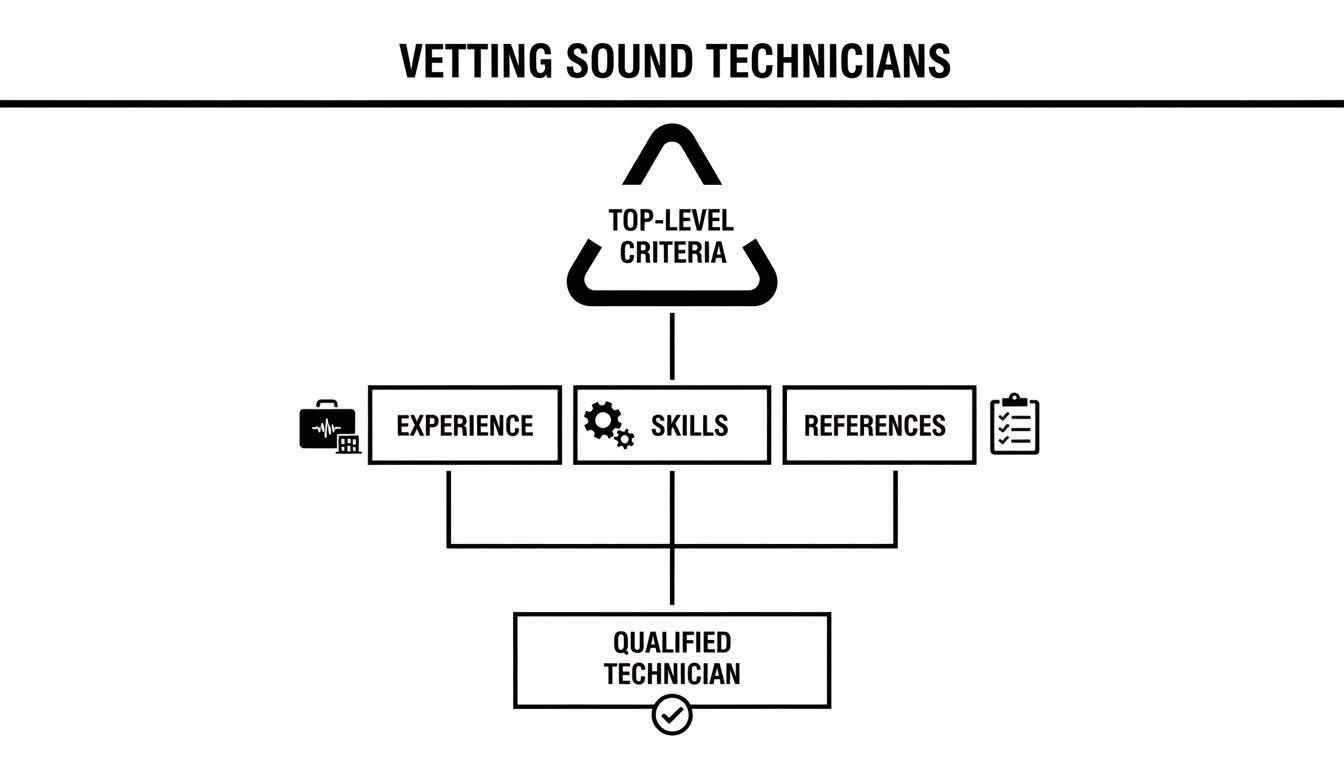
As you can see, it is not about just one thing. A truly reliable hire is someone who brings together proven experience, the right technical skills and solid references you can check.
Scaling Your Crew to Your Event
How big a crew do you need? It all comes down to the specifics of your event. For a corporate conference with a main stage, several breakout rooms and a live broadcast feed, you would likely want an FOH engineer for the main room, plus other technicians to manage the smaller spaces and the broadcast mix. For a music festival, a full team with FOH, monitor and systems engineers is not a luxury; it is the standard.
The demand for these specialised skills is significant. The UK music industry alone now supports a record 220,000 full-time equivalent roles, covering everyone from technicians to producers. You can read more about the growth of the UK music sector on bimm.ac.uk.
Knowing these different roles is not just trivia; it helps you budget properly and write a much clearer brief. Instead of just asking for "a sound person," you can specify that you need a dedicated FOH engineer with live mixing experience. This precision attracts the right kind of specialist from the start.
This clarity helps a provider like London Audio Visual Hire put together the perfect team for your specific needs. When you can define the roles you need filled, you are making sure every part of the audio puzzle, from the microphone on stage to the feed for your online audience, gets the expert attention it deserves.
To see how these audio roles fit into the bigger picture, have a look at the full range of our event production services.
Getting the Paperwork Right: Quotes, Contracts and Insurance
Once you have shortlisted your top candidates, it is time to finalise the details. This is where you move from conversation to commitment, and getting the commercial arrangements right is crucial. Clear quotes, solid contracts and proper insurance are not just administrative tasks; they are the bedrock of a professional relationship and your best defence against potential problems.
A quote is more than just a number; it is the first financial picture of what you are getting. It is important to look past the bottom line and examine the details. Any professional will provide a quote that breaks everything down clearly.
What to Look For in a Quote
A good quote leaves no room for ambiguity or later surprises. If you receive something that feels vague, do not hesitate to ask for more detail. A proper quote should clearly itemise:
- Technician Day Rates: This should define the rate for a standard working day, which is typically 10-12 hours in this industry.
- Overtime Charges: What happens if the event runs late? The quote must specify the hourly rate for any work beyond the standard day.
- Equipment Hire: If your technician is also supplying equipment, these costs should be listed separately from their labour charge.
- Travel and Accommodation: For events that require travel or an overnight stay, these costs should be outlined clearly from the start.
The Contract and Insurance: Your Safety Net
The quote sets the scene, but the contract makes it official. It is the legally binding agreement that protects both you and the technician. When you are ready to hire, a proper service contract is non-negotiable, as it turns all your discussions and the technical brief into a formal agreement.
Make sure you read the fine print, especially the scope of work, payment terms and any cancellation clauses. This document defines exactly what the sound technician is responsible for on the day, preventing any confusion. The level of professionalism here is part of a bigger picture; UK music export revenues hit a record £4.8 billion in 2024, showing how in-demand British technical and creative talent is on the world stage. You can read more about this in the latest This Is Music report.
Insurance is one thing you cannot skip. Before you sign anything, you must confirm that your chosen technician or supplier, such as London Audio Visual Hire, has current Public Liability Insurance. This protects you from financial consequences if an accident happens involving their equipment or their work.
Asking to see a copy of their insurance certificate is not rude; it is standard practice. Any true professional will have it readily available and will expect you to ask. It is a simple check that provides complete peace of mind, confirming you are partnering with a credible and responsible expert.
On-Site Management: Steering Your Audio Crew on the Day
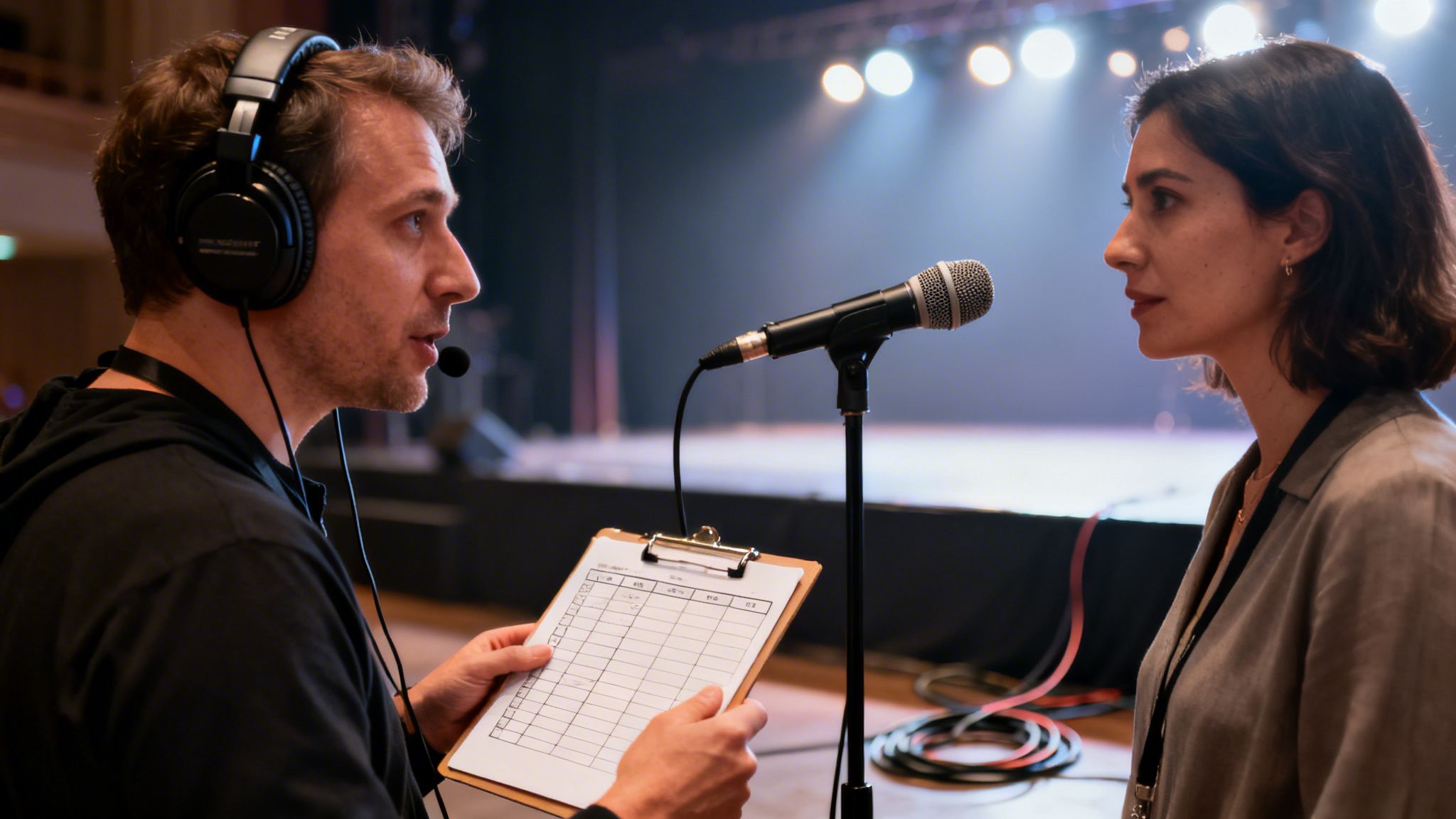
You have done all the preparation, and now it is the day of the event. How you manage your audio team on-site is just as critical as how you found them. Great on-site management turns a group of talented individuals into a coordinated team, all working towards one thing: perfect sound.
The difference between a smooth event and a stressful one often comes down to communication and planning. A disorganised load-in or a rushed sound check can easily spiral into delays and technical issues. A clear plan empowers your crew to work efficiently and solve problems before the audience even notices.
Your Schedule is Their Guide
Your sound crew needs a call sheet that is far more detailed than just "event starts at 7 pm". It needs to be their roadmap for the day. Include load-in times, the deadline for having background music running and specific, timed slots for every sound check.
It is also vital to assign a single, dedicated point of contact on your team. If the audio crew has a question or needs a quick decision, they need to know exactly who to go to. This prevents them from receiving mixed signals from different people, which is a classic recipe for confusion.
When an event goes well, it is because the technical crew feels like part of the core event team, not just an external supplier. A solid schedule and one point of contact build that partnership, creating a calm, focused environment where everyone can do their best work.
Perfect the Sound Check
The sound check is not a formality; it is your final rehearsal for the audio. It is your last chance to identify any issues in the system, so do not rush it. This is where your technician gets to hear performers and presenters in the actual room, dialling in the system to ensure everything sounds right before a single guest arrives.
A proper, structured sound check always covers a few key elements:
- Presenter Microphones: Every person speaking needs to test their microphone. Whether it is a lectern, handheld, or lapel microphone, the technician needs to hear their voice to set the correct level and identify any potential feedback.
- Playback Audio: Run through every audio cue from laptops, video clips and background music playlists. This simple step confirms all connections are secure and the volume is right for each segment of your event.
- Stage Monitors: For any musicians or panellists, this is non-negotiable. The monitor engineer will work with each person to create a custom sound mix for their on-stage speaker (the 'monitor'), so they can hear themselves and each other perfectly. This is crucial for a confident performance.
Getting this right is about being proactive. Sorting out a screeching lapel microphone or a faulty laptop cable an hour before doors open is a simple fix. Trying to solve it while a CEO is mid-sentence in front of 500 people is a nightmare.
By working closely with your hired sound technicians through these final checks, you build a foundation of trust. It means that when the event starts, the audio will not just work; it will be outstanding, allowing your content to take centre stage.
FAQs About Hiring a Sound Technician
Even if you have been planning events for years, hiring specialist technical crew can raise a few questions. This is completely normal. Getting clear answers to common queries from the start means no surprises later and helps you finalise your budget from day one.
Let's address the practical side of hiring a sound technician and clarify some of those recurring questions.
What is the Typical Rate for a Sound Technician in the UK?
This is often the first question people ask, and the answer varies. The price depends on the technician's experience and the complexity of your event.
As a general guide, a freelance sound technician in the UK will have a day rate somewhere between £250 and £450. This typically covers a standard 10-hour day.
If you are looking for a seasoned professional with specialist skills, such as broadcast mixing or designing a sound system for a large venue, you can expect to pay a premium. It is always a good idea to clarify what constitutes a 'day' and ask about their overtime policy. Those extra hours are almost always billed at a higher rate.
How Much Setup Time Do They Need?
Underestimating setup time is a common and costly pitfall. For something small, like a conference with a lectern microphone and a laptop for slides, your technician might only need one to two hours.
However, if you are organising a performance by a live band or a large-scale event with multiple audio feeds, the setup time can easily extend to four hours or more.
A rushed setup is the enemy of good sound. It is always wise to allow more time than you think you need. That buffer is invaluable. It gives the technician crucial time to resolve any unforeseen issues, such as faulty venue wiring or radio microphone interference, ensuring everything runs smoothly when you go live.
Remember, this time is not just for plugging in cables. It is for meticulously checking every input, tuning the microphones to the room's unique acoustics and conducting proper sound checks with your presenters or performers.
What Information Should I Provide Upfront?
To get an accurate quote and the right person for the job, you need to be specific. Do not just send an email with a date and time. The more detail you can provide from the start, the better.
Your initial enquiry should always include:
- A full schedule: Lay out the entire day, from load-in and sound checks to the event's end time.
- Venue specifics: Include the full address and which room or space you will be using.
- An input list: This is a list of every microphone, instrument and playback device you will be using.
- Audience size: A rough estimate of attendance is crucial for system planning.
Giving a potential supplier this level of detail allows them to gauge the technical demands of your event correctly from the outset.
At London Audio Visual Hire, our project managers and technicians have spent years working in London's top venues. We believe in providing clear, detailed quotes so you know exactly what you're getting. Our job is to make sure you have the right expert crew for a perfectly executed event. Find out more about how we can help at https://londonaudiovisualhire.co.uk.


