
Poor sound can ruin an otherwise perfect event. When an audience cannot hear properly, they disengage. When speakers crackle and pop, your brand's reputation is affected. Hiring a professional sound system is not just about renting equipment; it is about guaranteeing your message is delivered with clarity and ensuring your event is a success.
This guide will explain everything you need to know about professional sound hire in London.
Why Professional Sound Hire is Essential
As an event planner, your goal is to create a seamless experience. Professional audio hire transfers the complex responsibility of sound management to a team of experts. It is the difference between a smooth, polished event and one plagued by feedback, inconsistent audio, or complete technical failure.
A professional hire is a full-service solution. You receive a system designed specifically for your venue's unique acoustics, plus delivery, setup, and a skilled sound engineer to manage the event. This approach means the audio is perfectly tailored to your event's needs, whether it is a critical keynote speech or a live band.
The Value of an Expert Team
Partnering with a specialist company like London Audio Visual Hire means you get more than high-quality, maintained equipment. You get experience. The team can anticipate problems before they happen, from managing power requirements to navigating difficult venue logistics. This allows you to focus on your guests.
More organisers are recognising the importance of quality audio. The UK's audio equipment rental market was valued at USD 739.51 million in 2024 and is expected to almost double by 2033. This is a fundamental shift, showing a growing market-wide belief in the power of professional sound. You can review more data from Deep Market Insights.
Choosing a professional hire service is an investment in peace of mind. You ensure that every word, note, and announcement is delivered flawlessly, which reflects the quality and professionalism of your brand.
Selecting the Right Sound System for Your Event
Choosing the right sound system to hire can seem daunting, but it depends on a few core equipment types and how they fit your objectives. If you get this right, every speech will be heard clearly and every music cue will be effective.
The Standard Solution: The PA System
For most events, the standard solution is a Public Address (PA) system. A PA is ideal for anything involving spoken word or background music. It is the perfect setup for corporate conferences, panel discussions, or smaller presentations where the primary need is for the audience to hear the speaker clearly. A basic PA system includes speakers, a microphone, and a small mixer to balance the sound; it is simple, effective, and reliable.
For Larger Events: Line Arrays
For larger events such as an awards ceremony, a live band, or a product launch in a large venue, a line array system is required. Unlike a standard speaker that projects sound in a wide cone, a line array is a stack of speakers hung vertically. This design allows a technician to direct the sound with precision over long distances, ensuring people at the back hear as clearly as those in the front row. It provides controlled, consistent coverage for a large crowd.
For Mobile Use: Portable Systems
For smaller, more dynamic events, such as brand activations or pop-up shops, a portable PA system is an excellent option. These are all-in-one units built for quick setup and easy use, while still delivering professional performance. They provide high-quality sound without complexity, perfect for when you need to be flexible. If you want to learn more about the components of these systems, see our comprehensive guide to audio visual equipment.
Deciding what you need often comes down to the style of your event. Is it a formal corporate function or a more relaxed gathering? This flowchart can help you decide.
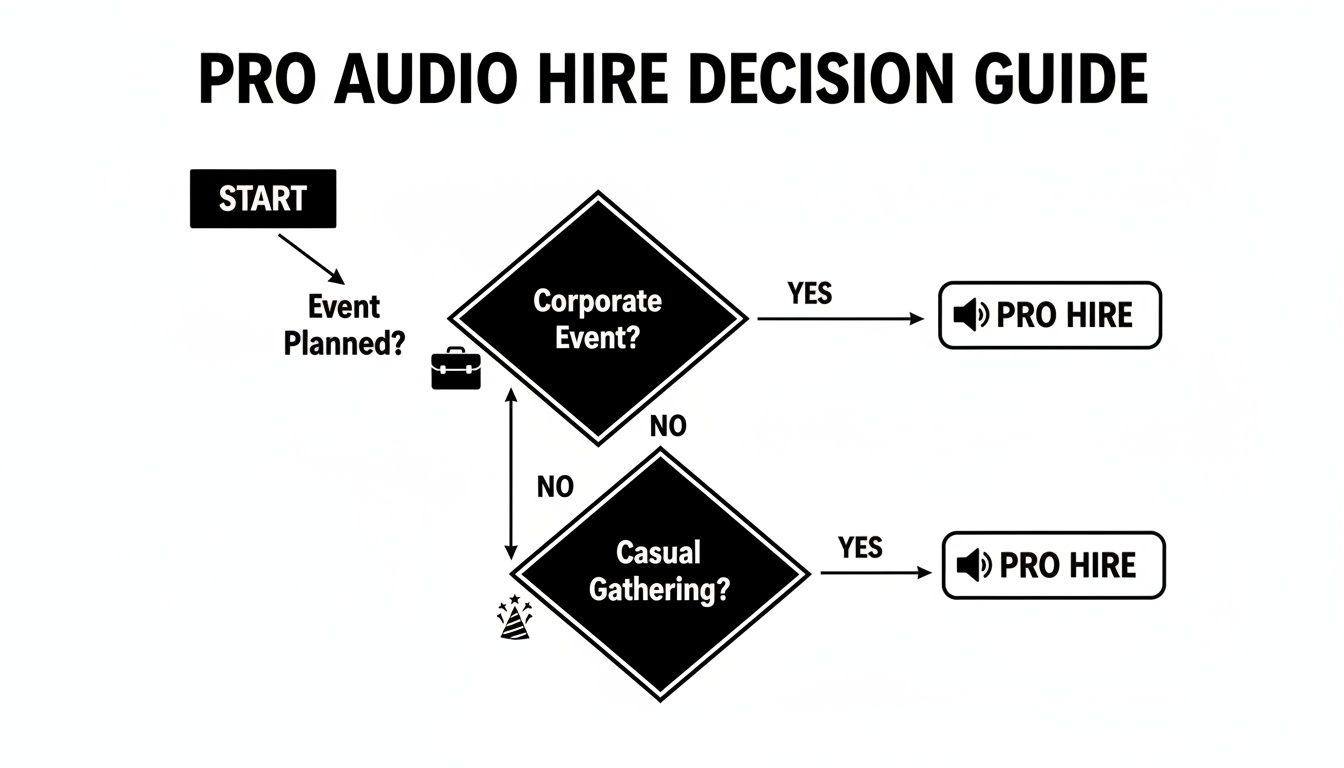
Whether it is a corporate presentation or a private party, hiring professional equipment is almost always the best way to guarantee quality and reliability.
Why Quality Hire is Important
The variety of high-quality equipment available for hire is due to a strong global market. The worldwide sound equipment rental market was valued at £4.44 billion in 2025 and is on track to reach £6.85 billion by 2032. This continuous growth means UK hire companies always have the latest speakers, mixers, and microphones ready for any type of event.
Ultimately, choosing the right system is a conversation. When you understand the basics, you can have a more effective discussion with your AV provider. You will be able to work together to ensure the equipment perfectly matches your venue, audience size, and objectives.
This informed approach helps you avoid common mistakes. For example, using a small PA in a large ballroom will leave half your guests struggling to hear. Conversely, hiring a full line array for a 20-person meeting is unnecessary expenditure.
Matching Sound Systems to Your London Event
To make things clearer, here is a quick guide to what works best for different types of events you might be planning in London.
| System Type | Best For | Audience Size | Common London Venues |
|---|---|---|---|
| Simple PA System | Corporate presentations, panel talks, speeches, background music | Up to 150 | Hotel meeting rooms, small conference centres, art galleries |
| Portable PA | Brand activations, pop-up events, small outdoor gatherings | Up to 100 | Retail spaces, exhibition stands, private gardens, rooftops |
| Large PA System | Awards dinners, galas, wedding receptions with a DJ or band | 150-400 | Ballrooms, large marquees, historic halls, banqueting suites |
| Line Array System | Concerts, large-scale conferences, festivals, product launches | 400+ | Exhibition halls (ExCeL, Olympia), concert venues, large outdoor spaces |
This table should give you a solid starting point for determining what you will need before you make an enquiry.
Real-World Scenarios
To put this into practice, let us look at a few classic event setups:
- Corporate Presentation (50-100 guests): A simple PA with two speakers on stands is all you need. Add a lectern microphone for the main speaker and a wireless handheld microphone for audience questions.
- Awards Dinner (200-400 guests): Here, you will want a more powerful PA system. This will involve several pairs of speakers placed carefully around the room to ensure everyone can hear without it being too loud for those near the front. You will also need a few wireless microphones for the hosts and winners.
- Large Conference or Live Gig (500+ guests): This requires a line array. It is the only way to deliver powerful, clean sound across a large space. You will also need subwoofers for the low-end frequencies of music and a suitable mixing desk operated by an experienced sound engineer.
By considering your event's scale and purpose from the start, you will be in a much better position to choose a sound system that delivers a flawless audio experience.
Matching Your Sound System to Your Venue
Selecting the right type of PA system is a good start, but it is only half the battle. The single biggest factor in achieving great sound is the venue itself. Its size, shape, and the materials on the walls will completely change how sound travels, meaning a setup that is flawless in one room can sound muffled in another.
You have to understand a room’s acoustic character. This goes beyond looking at a floor plan; it is about understanding acoustics, which is how sound waves interact with the space.
For example, a modern conference room with glass walls and polished floors presents an acoustic challenge. Sound will reflect off every hard surface, creating echoes that make speech difficult to understand. In contrast, an old theatre with velvet curtains, thick carpets, and cushioned seats will absorb sound, providing a clearer, more controlled audio experience.
Thinking Like a Sound Engineer: What to Look For
During a site visit, try to notice the room’s acoustic clues. A good technician from a company like London Audio Visual Hire does this automatically, but it is a great help for event planners to know the basics.
Pay attention to these key details:
- What are the walls made of? Brick, glass, and bare plasterboard reflect sound. Fabric drapes, wood panelling, and a crowd of people will absorb it.
- What is the room’s shape? High ceilings can cause echo. Awkwardly shaped rooms with alcoves can create dead spots where sound disappears.
- Will it be full or empty? A room sounds completely different when it is full of people. Human bodies are surprisingly good at absorbing sound, so an empty, echoey hall can sound much better once guests arrive.
This is where having a local AV partner is invaluable. An experienced London-based team will already know the characteristics of the city’s popular venues, from historic halls to modern ballrooms. They will know exactly what equipment is needed to manage the room’s acoustics. You can see the kind of professional sound system equipment that can be adapted for any venue.
Real-World Scenarios in London Venues
Let us look at how this works in two very different London event spaces.
Scenario 1: The Glass-Walled Ballroom
You are hosting a conference for 200 people in a hotel ballroom lined with floor-to-ceiling windows. Your main challenge here is reflections. The sound from the speakers will bounce off the glass, turning speech into an unintelligible echo.
To solve this, a sound engineer would not just use two large speakers at the front. Instead, they would use a distributed system: more, smaller speakers placed strategically throughout the room. This allows them to run the whole system at a lower volume, which drastically reduces reflections while ensuring everyone can hear clearly.
Scenario 2: The Outdoor Product Launch
Now, imagine you are launching a new product in a busy, open space like Canary Wharf. The challenges are the complete opposite. You have no walls to contain the sound, and you have to compete with traffic and general city noise.
The strategy here would be to use a powerful and highly directional system, like a compact line array. This lets you focus the sound directly at the audience. It cuts through the background noise efficiently without disturbing the general public. It is a perfect example of how the right rental equipment is essential for success.
The need for these kinds of expert solutions is driving significant industry growth. The global audio visual equipment rental market was valued at USD 35.8 billion in 2024 and is expected to climb to USD 76.3 billion by the end of the forecast period. This demonstrates how seriously events across the UK are investing in professional-grade production.
The Hidden Essentials of Event Audio
When you hire a professional sound system, it is easy to focus on the speakers. But the secret to clear and reliable sound lies in a collection of less obvious but essential components working together behind the scenes.
Understanding these pieces helps you appreciate what you are investing in. It shifts the conversation from just "how loud is it?" to the finer points of clarity, control, and polish that separate a good event from a truly great one.
The Equipment Beyond the Speakers
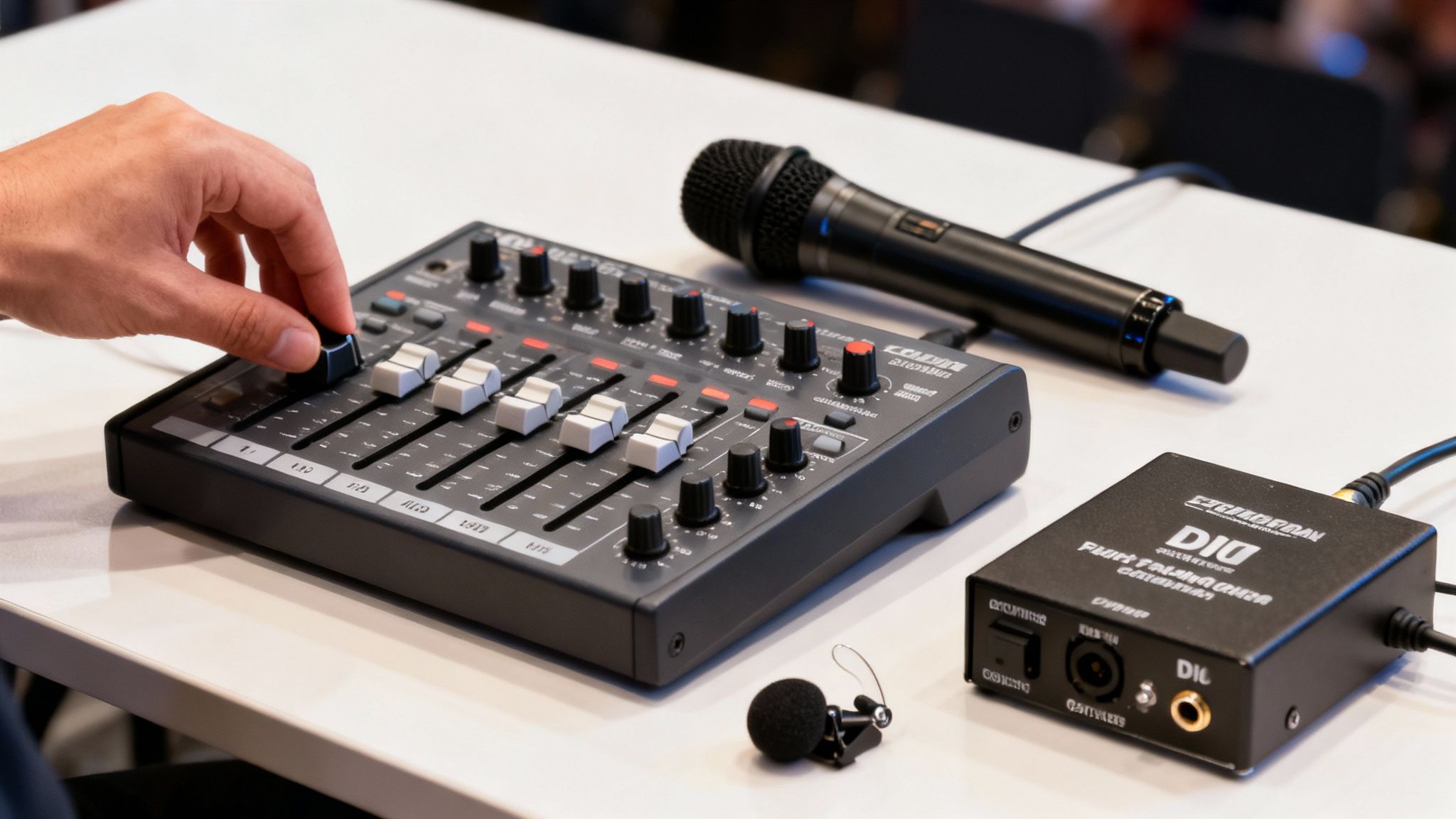
While the speakers are the voice of your event, a few key pieces of equipment are responsible for shaping and managing every sound long before it reaches your audience.
Here are the core accessories you will find in any professional sound system hire package:
- Mixing Desk: This is the central control for your event's audio. It is where every sound source, from microphones to laptops, comes together. A technician uses it to balance levels, fine-tune the tone, and direct the sound where it needs to go.
- Microphones: The right tool for the job is crucial here. A handheld wireless microphone is perfect for a Q&A, a discreet lapel microphone lets a presenter move freely, and a lectern microphone provides a solid, reliable input for keynote speeches.
- DI Boxes (Direct Injection): These small boxes are problem-solvers. When you connect a laptop, keyboard, or acoustic guitar to a large PA system, a DI box converts the signal to the correct professional level. This simple step eliminates hum and buzz, ensuring the audio is clean and clear.
The real benefit of a professional hire package is not just renting individual items; it is getting a complete, integrated system. Every component has been chosen to work seamlessly together, removing the guesswork and risk of technical problems.
The Most Important Component: A Sound Engineer
The single most critical element of any professional audio setup is the person operating it. A skilled sound engineer is your insurance against technical issues and your guarantee of achieving excellent sound.
Their job is much more than just adjusting volume. A good engineer manages the entire audio workflow, from the initial system setup and a meticulous soundcheck to actively mixing throughout the live event. They are listening constantly, making continuous adjustments to ensure every presenter is heard clearly and every musical cue has the right impact.
Why an Engineer is Non-Negotiable
Hiring a high-quality sound system without a dedicated engineer is like being given the keys to a Formula 1 car without any training. The equipment might be excellent, but it is the technician’s expertise that unlocks its potential and creates a flawless audio experience.
Here is what they do:
- System Optimisation: They "tune" the system to the room, calibrating it to the unique acoustics of your venue. This prevents feedback and ensures sound is distributed evenly.
- Live Mixing: An event is dynamic. They actively manage audio levels as it happens, for example, gently boosting a quiet speaker or lowering the background music for an announcement.
- Troubleshooting: If something goes wrong, such as a loose cable or a microphone battery dying, they will identify and solve the problem instantly, often before the audience notices.
When you partner with a provider like London Audio Visual Hire, you are not just hiring equipment; you are hiring this expertise. You are bringing an experienced professional into your team whose sole job is to make your event sound incredible.
Understanding Your Sound System Hire Budget
Budgeting for a professional sound system is a key part of planning any successful event. Getting this right from the start means no surprises later and ensures you are investing in one of the most vital parts of your event's success. The price is a direct reflection of the equipment's capability, the logistics involved, and the expertise required.
A few key factors will shape the final quote you receive. The size and specification of the equipment are the main factors, but other elements are just as important in determining the total cost.
What Shapes the Hire Price?
The final cost for your sound hire is a combination of a few key components. If you understand what they are, you can budget more accurately and have a more productive discussion with your AV provider.
- The Equipment: This is the main factor. A simple PA system for a small presentation will naturally cost less than a sophisticated line array needed for a large awards dinner with a live band. The number and quality of speakers, microphones, and mixing desks are the main cost drivers.
- Hire Duration: Most hire companies work on a standard day rate. If you are running a multi-day conference or need the crew in a day early for a complex setup, you will need to account for the extra time for both the equipment and the technicians.
- Logistics and Location: Transporting the equipment to your venue, setting it up, and removing it is all part of the service. Difficult venues in central London with limited parking or access via stairs will require more time and manpower, which will be reflected in the cost.
- The Human Element: Never underestimate the value of expertise. A 'dry hire', where you just take the equipment and operate it yourself, is the cheapest option. However, a package that includes a dedicated sound engineer is a crucial investment in quality and peace of mind.
Investing in a professional audio package is not just another line item on a spreadsheet. It is a direct contribution to your event's impact, ensuring every word is heard.
Example Budgets for London Events
To put this into perspective, here are some typical budget brackets for common corporate events in London. These are estimates, and your specific needs will determine the final price, but they are a useful starting point for your planning.
| Event Type & Size | Typical Budget Range | What is Usually Included |
|---|---|---|
| Small Presentation or Meeting (Up to 50 guests) | £250 – £450 + VAT | A compact PA system with a couple of speakers, a simple mixer, and a wired microphone. Delivery and setup are often included, but usually not an on-site engineer. |
| Medium Conference or Seminar (50-150 guests) | £600 – £1,200 + VAT | A more powerful PA, several wireless microphones (handheld and lapel for speakers), a lectern microphone, and a professional audio technician to handle setup and operation. |
| Large Awards Dinner or Gala (150-400+ guests) | £1,500 – £3,500+ + VAT | A distributed sound system for even coverage, or a small line array. Expect a full set of microphones, a digital mixing desk, and at least one senior sound engineer. |
The budget grows with the event's complexity. A small meeting just needs to make one person's voice louder. A large gala needs a sophisticated setup to seamlessly handle speeches, video soundtracks, and a live band.
When you work with London Audio Visual Hire, we provide a detailed, transparent quote. You will see exactly what you are paying for, so you can confirm your budget with confidence.
Your Pre-Event Audio Logistics Checklist
Excellent sound on the day is the result of careful planning. While the focus is often on the speakers and microphones, it is the operational details that can make or break an event. Transporting the equipment on-site, powering it up, and operating it safely is where the real work lies. Overlooking these steps often leads to last-minute problems.
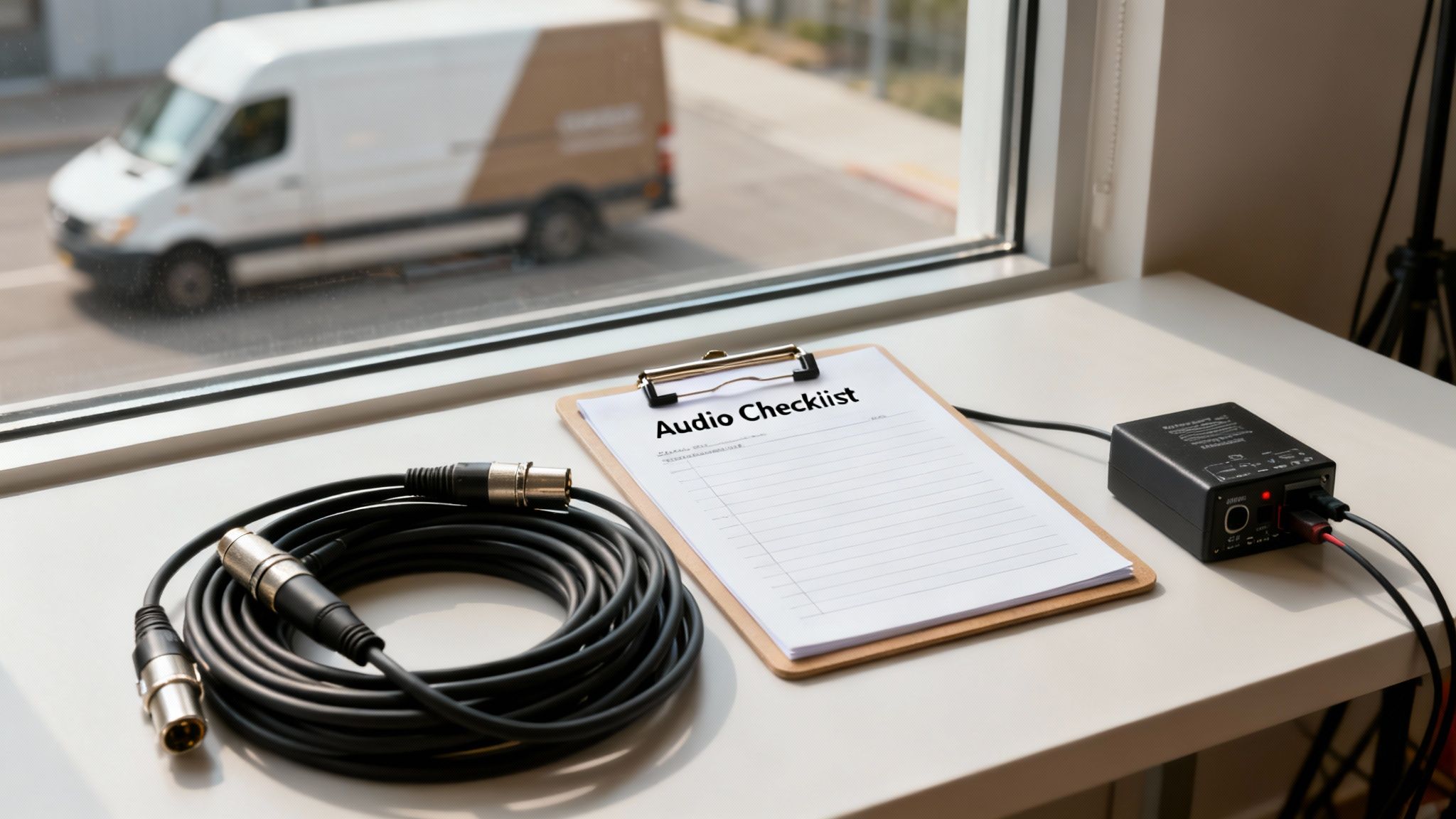
The key to seamless logistics is good communication between you, your venue, and your AV provider. A seasoned hire company like London Audio Visual Hire will lead on most of this, but understanding what is involved makes the collaboration more efficient. This checklist is your framework for ensuring every detail is covered before the event.
Venue Coordination and Power Requirements
Your first point of contact should always be the venue. Your AV crew needs specific information from them to ensure the setup is possible.
- Power Supply: Find out exactly where the power outlets are and what type they are. A large PA system requires a stable electricity supply. This often means dedicated 32-amp or 63-amp circuits, not standard wall sockets.
- Access and Loading: How will the crew get the equipment into the venue? You need to discuss loading bays, service lifts, and any difficult access points. Informing your AV team about this early saves time and effort.
- Setup and Derig Times: Agree on the exact timings for arrival, setup, soundchecks, and removal afterwards. This schedule must work with the venue’s diary to avoid clashing with other events or their staff.
Health and Safety Compliance
Professional event production is governed by health and safety regulations. Your hire company will manage the technical side of compliance, but they will need your help with the paperwork.
A significant part of what you pay for with an experienced provider is their proactive project management. They will send the venue all the required risk assessments, method statements (RAMS), and public liability insurance documents, ensuring everything is compliant and the venue manager is satisfied.
It is vital to check that your chosen company is fully insured and follows industry best practices. This protects you and your attendees and gives the venue confidence. When looking at large-scale events, understanding the details of conference AV hire in West London is particularly important, as venues in prime areas can have very strict requirements.
Final Technical and Crew Briefing
In the last few days before your event, a final briefing ensures everyone is aligned. This is your chance to confirm the final schedule, speaker order, and any specific audio cues.
- Confirm the Schedule of Events: Provide the AV team with a detailed running order. Make sure it includes precise times for speeches, video clips, panel discussions, or any live music.
- Finalise Microphone Allocation: Confirm the final number of microphones and assign them to speakers. Be specific about who needs what: a lapel microphone for the keynote, handhelds for the Q&A, or a lectern microphone for the host.
- Establish On-Site Contact: Choose one person from your team to be the single point of contact on the day. This way, the sound engineer knows exactly who to contact if they have a question.
To help you keep track of these crucial steps, here is a straightforward checklist.
Pre-Event Audio Logistics Checklist
| Checklist Item | Key Consideration | Status |
|---|---|---|
| Venue Access Confirmed | Loading bay location, service lift availability, and route to event space clear? | ☐ |
| Power Supply Verified | Location and type of power outlets confirmed with the venue (e.g., 13A, 32A). | ☐ |
| Setup & Derig Times Agreed | Specific get-in, setup, soundcheck, and get-out times confirmed with all parties. | ☐ |
| H&S Documents Submitted | Risk Assessments, Method Statements (RAMS) & PLI sent to the venue. | ☐ |
| Final Running Order Sent | Detailed event schedule provided to the sound engineer. | ☐ |
| Microphone Plan Finalised | All speakers assigned a specific microphone type. | ☐ |
| On-Site Contact Designated | A single point person for the AV team has been chosen and introduced. | ☐ |
| Parking for AV Van | Is there reserved parking for the technical crew's vehicle? | ☐ |
By methodically working through these points, you build a solid foundation for a stress-free event. This proactive planning removes the need for last-minute problem-solving, letting you focus on your guests and your message.
Frequently Asked Questions
To conclude, let us address some of the most common questions we receive from event planners. This should resolve any lingering doubts and give you the confidence to arrange your audio requirements.
How Far in Advance Should I Book?
For the best selection of equipment and to ensure our best engineers are available, you should aim to book at least four to six weeks in advance. This is especially true during busy periods like summer or the Christmas season.
If you are planning a larger event, such as a multi-day conference or a major awards night, giving us two to three months’ notice is better. It allows more time for planning, site visits, and confirming logistics. We can sometimes accommodate last-minute requests, but booking early means you get exactly what you need without compromise.
What Happens If Equipment Fails During the Event?
This is a common concern for event planners. This is precisely where hiring a professional crew demonstrates its value. Any reputable company, like us at London Audio Visual Hire, has contingency plans to prevent this from becoming a significant problem.
Here is how it works:
- High-Quality Maintenance: Our equipment is thoroughly checked, serviced, and tested before it leaves our warehouse.
- On-Site Spares: For any important event, our engineers will have backups for critical items, such as spare microphones and extra cables. This is standard practice.
- An Expert on Hand: If a problem does occur, a skilled sound engineer can troubleshoot and fix it in moments, often so smoothly that your audience never notices.
The combination of well-maintained equipment and a technician who knows it inside-out is the best insurance you can have. It turns a potential disaster into a minor issue.
Do I Need Public Liability Insurance?
We have our own comprehensive Public Liability Insurance (PLI), which covers all our equipment and our team on-site. We will always send you our certificate, as almost every venue in London will ask to see it before we are allowed to begin work.
That said, it is always advisable for you, the organiser, to have your own event insurance policy. This covers your liabilities for the event as a whole, providing a complete safety net that protects you, your guests, and all your suppliers.
What Is a 'Dry Hire' and Should I Consider It?
A dry hire simply means you are renting the equipment on its own, without delivery, setup, or an engineer. You collect it, you are responsible for setting it up and operating it, and you return it when you have finished.
While it is the cheapest way to rent equipment, I would only recommend it if you or someone on your team is a qualified audio technician who is familiar with the specific equipment you are hiring. For almost all corporate events where standards are high, the risk is not worth the small saving. A ‘wet hire’, which includes a professional engineer, is the industry standard for a reason: it guarantees a smooth, professional result.
At London Audio Visual Hire, our approach is to provide a complete, stress-free service, managing everything from the first conversation to the final pack-down. If you want to ensure your next event sounds incredible, our team is ready to help. You can explore our services and get in touch at https://londonaudiovisualhire.co.uk.