

The success of your corporate event often depends on something people rarely notice until it goes wrong: the sound. A muffled speaker, a screech of feedback, or dead air can derail a powerful presentation and ruin the atmosphere you have worked so hard to create. Professional sound system rentals are therefore a crucial part of your event plan. This guide will demystify the process and provide the practical advice needed to arrange audio hire in London.
Building the Foundations for Perfect Event Audio
Consider this your playbook for sidestepping the common audio disasters that can affect events. The difference between an amateur feel and a slick, professional production often lies in the quality of the sound. Whether it is a keynote speech, a panel discussion, or a gala awards night, every word needs to land with clarity, from the front row to the very back of the room.
We will walk through exactly how to match the right equipment to your venue so your message is heard loud and clear. Understanding the basic components is the first step. If you are new to this, our guide explaining what is audio visual equipment is a great starting point. Foundational knowledge means you can talk to suppliers with confidence and make smarter decisions.
Why You Cannot Afford to Skimp on Professional Audio Hire
Engaging the right audio partner is not just a line item on a budget; it is a direct investment in your event's success. It is about ensuring clarity, reliability, and a smooth, professional experience for every attendee. Great sound is just one piece of the puzzle, of course. It is vital to see how it fits into the broader scope of event management best practices to create a truly seamless event.
The demand for high-quality event production in London has never been higher. The UK's audio equipment rental market reached an estimated USD 739.51 million in 2024 and is only expected to climb. This statistic highlights how seriously businesses are taking professional execution, relying on specialists to deliver for their most important functions.
A well-executed sound plan is the invisible framework of a successful event. When done right, the audience does not even think about the technology, they just hear a clear, powerful message.
Getting the Sound Right Starts with Your Venue
Before you even think about a specific speaker or microphone, the first and most crucial step is to understand your venue and your audience. The physical space is the single biggest factor that will shape your sound system needs. It is not just about square footage; every room has its own acoustic personality, and ignoring it is a recipe for audio problems.
For example, a modern East London warehouse with soaring ceilings and polished concrete floors will reflect sound significantly. In contrast, a carpeted hotel conference room in Mayfair will absorb sound. These two spaces require completely different approaches to achieve clear, consistent audio.
Sizing Up the Space: Your Venue Walkthrough
The best way to understand the challenge is to walk the room yourself. A site visit can tell you more than any floor plan. As you look around, you are searching for clues that will affect your sound.
Keep an eye out for these key acoustic factors:
- Reflective Surfaces: Large glass walls, marble floors, and bare plaster reflect sound waves, creating echo and making speech difficult to understand.
- Absorptive Surfaces: Heavy curtains, plush carpets, upholstered chairs, and even a room full of people are beneficial. They absorb sound, reduce unwanted echo, and help create clarity.
- Ceiling Height: High ceilings in historic ballrooms or modern atriums can create a cavernous, cathedral-like echo. You will need a sound system that can focus the audio on the audience, not send it bouncing around the empty space overhead.
The ultimate goal is simple: ensure the person in the back corner hears just as clearly as the person in the front row. Understanding the room is the only way to make that happen.
Different Gigs, Different Gear: Two Real-World Scenarios
The perfect audio setup is never one-size-fits-all. What works for an intimate workshop would be a complete failure at a large awards gala. Let us look at a couple of common examples.
Imagine a 50-person seminar in a carpeted hotel meeting room. This is a relatively straightforward scenario. The room’s soft furnishings do a lot of the work by absorbing sound. For this, you would typically need:
- A simple PA system: usually a pair of speakers on stands.
- A microphone on the lectern for the main speaker.
- One or two wireless handheld microphones for the Q&A session.
This is a simple, effective setup because the environment is controlled and the scale is small.
Now, consider a 500-person awards dinner in a grand, historic hall with marble floors and high ceilings. This is a far more complex challenge. The sheer size and reflective surfaces demand a much smarter approach to prevent the room from sounding like a noisy train station. The solution here is more complex and might involve:
- A line array speaker system. This is the professional choice for large, difficult rooms. It allows the engineer to aim the sound with precision, focusing it on the audience and keeping it away from the walls and ceiling where it would create echo.
- Smaller ‘in-fill’ speakers distributed around the room to cover any dead spots, such as under a balcony or in an adjoining reception area.
- A host of wireless microphones for hosts, presenters, and award winners moving about the stage.
- A system that can handle background music, video soundtracks, and walk-up music for winners.
Your Pre-Hire Checklist: Key Information to Prepare
Approaching an AV provider like London Audio Visual Hire armed with the right information will make the process smoother and help you get a far more accurate quote. It shows you have done your homework and helps the technical team identify your needs from the start.
Before you make contact, try to have answers to these questions:
- The Venue: What is the name and address? Do you have a floor plan? Even rough dimensions are a great help. Make a note of any obvious acoustic issues like glass walls or high ceilings.
- The Audience: How many people are you expecting? Will they be sitting for a conference, standing at a reception, or a mixture of both?
- The Plan: What kind of event is it? A panel talk, product launch, awards night, or party? A running order or agenda is invaluable.
- The Presenters: Who needs to be heard? How many people will be speaking at once? Will they be static at a lectern or moving around? This dictates your microphone requirements.
- The Extras: Are you playing videos with sound? Do you need background music? Is a DJ or a live band part of the plan? Any sound that is not a voice needs to be accounted for.
Having this information ready makes the initial conversation incredibly productive. It sets you and your AV partner up for a successful, stress-free, and great-sounding event.
Getting to Grips with Your Sound System Rental Options
Stepping into the world of professional audio can feel like learning a new language. You will hear terms like 'line array', 'point source', and 'lavalier', but what matters is understanding what they do for your event. Let us cut through the jargon and focus on what each piece of equipment actually does.
Knowing the right tools for the job means you can have a much clearer conversation with your AV provider. It helps you understand their quotes and feel confident you are getting exactly what you need.
This flowchart gives you a quick visual on how the type of event you are running will point you towards a certain kind of setup.
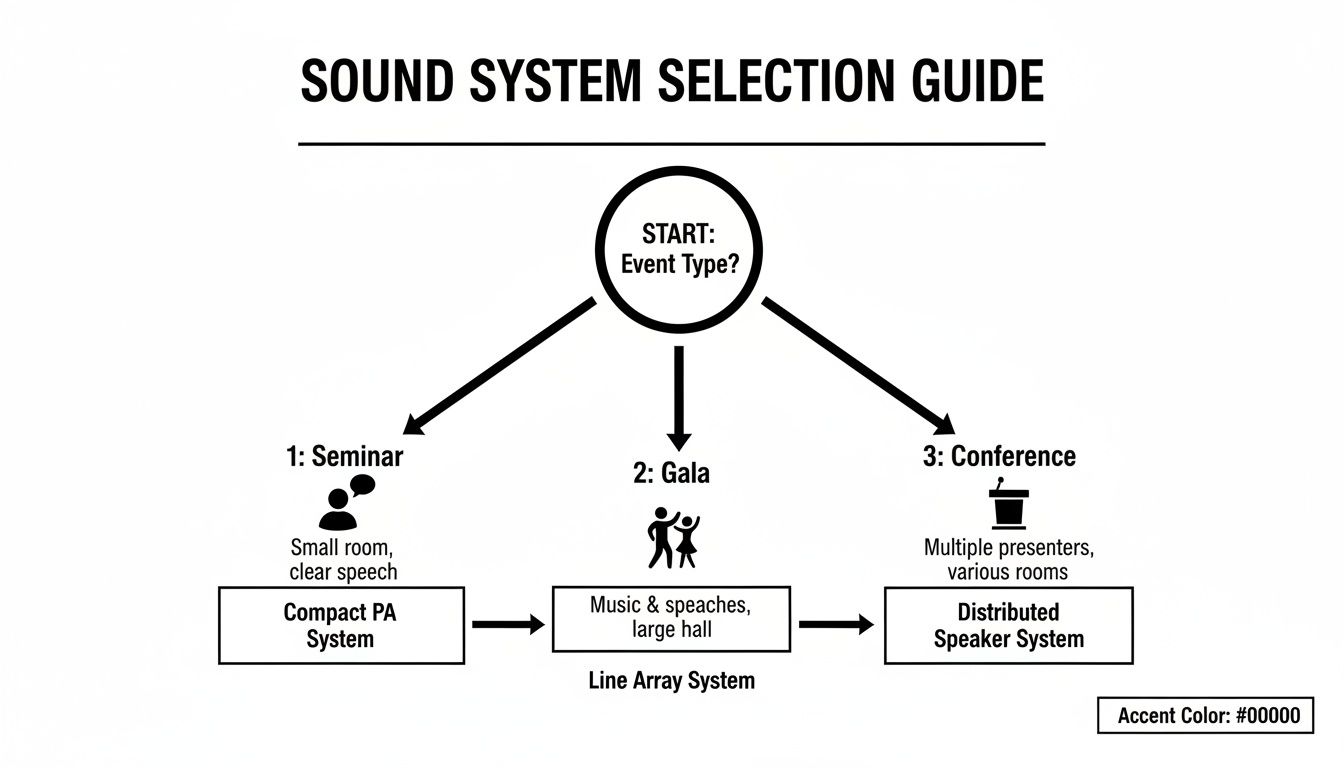
As you can see, the audio needs for a corporate conference are very different from those of a celebratory gala. It is all about tailoring the equipment to the event’s purpose.
Choosing the Right Microphones
The microphone is where it all begins: the very first link in your audio chain. Getting this part right is absolutely critical for clarity and a professional feel. The best choice comes down to who is speaking and what they will be doing.
- Lectern Microphones: The classic choice for a speaker who will be staying in one place. Perfect for keynote speeches and formal addresses where you need consistent, high-quality sound.
- Handheld Wireless Microphones: Your go-to for audience Q&A. They are also ideal for panel discussions where a microphone needs to be passed around, or for a host who needs to move about the stage.
- Lapel (Lavalier) Microphones: These are the small, discreet microphones that clip onto a shirt or jacket. They are a fantastic hands-free solution for presenters who need to gesture or handle props.
- Headset Microphones: You will often see these at big product launches or high-energy presentations. They offer total freedom of movement and guarantee consistent vocal pickup because the microphone moves with the speaker's head.
A common mistake is thinking one microphone fits all situations. A lapel microphone is brilliant for a solo presenter, but it would be a chaotic nightmare for a fast-paced audience Q&A.
Speakers: Point Source vs. Line Array Systems
Next, you need to get that sound out to your audience. The type of speaker system you hire is almost entirely dictated by the size and shape of your venue. Broadly speaking, you will come across two main types.
A point source system is what most of us picture when we think of speakers: usually a couple of speaker boxes on stands. The sound radiates out from a single point, making this a great, straightforward solution for smaller, simpler rooms.
A line array system, on the other hand, is more sophisticated. It involves multiple speaker cabinets flown from the ceiling or stacked vertically on stage. This setup gives sound engineers pinpoint control over where the audio goes, directing it towards the audience and keeping it away from echoey walls and ceilings.
This table provides a quick reference guide, matching common audio equipment with the types of events and venues where they are most effective.
Sound System Components and Their Ideal Event Applications
| Equipment Type | Primary Use Case | Best For (Event Type) | Key Consideration |
|---|---|---|---|
| Point Source Speakers | Clear sound projection in smaller, acoustically simple rooms. | Seminars, breakout sessions, small conferences, intimate receptions. | Coverage can become uneven in large or oddly shaped rooms. |
| Line Array System | Even and controlled sound distribution across large areas. | Large conferences, awards ceremonies, live music, exhibitions. | Essential for venues with high ceilings or acoustic challenges. |
| Lapel Microphones | Hands-free, discreet audio capture for a single presenter. | Keynote speeches, product demonstrations, solo presenters. | Placement is critical to avoid rustling from clothing. |
| Handheld Microphones | Flexible and robust audio capture for multiple users. | Audience Q&A, panel discussions, hosts, formal toasts. | Requires user to hold it at a consistent distance from their mouth. |
Thinking through the practical application here is key. For a large conference at a venue like ExCeL London, a line array is non-negotiable. It is the only way to ensure the people in the back row hear the same crisp audio as those in the front, avoiding the significant echo and sound loss you would get with a point source system in such a large space.
The All-Important Mixing Desk
The mixing desk, or soundboard, is the central nervous system of your entire sound setup. It is where the audio technician sits, controlling the volume and tone of every single microphone, video clip, and piece of music.
Even for what seems like a simple event, a professional mixing desk is vital. It allows the engineer to:
- Balance Levels: Ensure the presenter's voice is always clear and sits perfectly above any background music.
- Eliminate Feedback: Instantly remove the high-pitched squeal that happens when a microphone gets too close to a speaker.
- Cue Audio: Flawlessly switch between presentation audio, video soundtracks, and walk-up music for an awards show.
If you are curious about the full range of equipment involved, you can browse a detailed list of professional sound and lighting equipment available for hire. Ultimately, having a skilled technician behind a proper mixer is your guarantee that the audio will run smoothly from start to finish.
Nailing Down Your Budget and Timeline
Sorting your budget and timeline early on is crucial when planning an event's audio. The two are completely linked: a last-minute scramble almost always means higher costs and fewer choices. Let us break down what goes into the price of a sound system hire and the best time to get everything confirmed. This way, you can avoid stress and ensure everything runs smoothly.
Remember, you are not just paying for equipment. You are investing in the expertise, crew, and logistics needed to make your event sound incredible. Any quote from a professional company such as London Audio Visual Hire will lay all this out for you.
What is Really in Your AV Quote?
When a quote arrives, you will see it is more than just a list of speakers and microphones. The final figure is a package deal covering the entire service. Knowing what you are paying for helps you compare providers and make a smart choice.
Here is a typical breakdown of the main costs:
- Equipment Hire: This is the core cost for the hardware itself, from the mixing desk and speakers down to the last cable and stand. This scales with the amount and specification of the kit you need.
- Technical Crew: You are paying for the professionals on the ground. This could be a project manager, a lead sound engineer, or additional technicians, depending on the event's complexity.
- Delivery and Collection: This covers the logistics of getting heavy and delicate equipment across London to your venue and back again. It factors in the vehicle, fuel, and driver's time.
- Rigging and De-rigging: This is the labour cost for the crew to set everything up before guests arrive and then pack it all away at the end. For larger events, this can take several hours on either side.
Event planners sometimes fixate on the equipment list. However, the real value comes from the experienced technicians who install it, operate it, and fix any issues on the day. Their expertise is your best insurance policy against things going wrong.
Setting a Realistic Timeline
In a city like London, timing is everything. Good equipment and the best audio engineers are always in high demand, especially during the busy spring and autumn seasons. Leaving your sound system hire to the last minute can cause significant problems.
A proper timeline does not just help you; it allows your AV partner and the venue to coordinate everything seamlessly. It means all the small details are handled well ahead of time, preventing frantic last-minute phone calls and making sure the setup on the day is straightforward.
Here is a rough guide for clients:
- 3-6 Months Out: The moment you have confirmed your venue and date, start talking to AV companies. This is the perfect time for initial discussions, site visits, and getting a rough quote. If you are planning a large conference or awards ceremony, booking this far out is essential.
- 6-8 Weeks Out: This is when you need to finalise what equipment and crew you need. Your event's schedule should be fairly solid by now, which lets your AV project manager lock in the right number of microphones and draw up a detailed technical plan.
- 2-4 Weeks Out: Time to confirm all the logistics. Finalise load-in times with the venue, send your AV team the final running order, and share contact details for everyone who will be on-site.
- Event Week: Have a final pre-production call with your AV project manager. It is your last chance to go over the plan, flag any minor changes, and make sure everyone is on the same page for the day.
Booking your sound system rental well in advance is not just about getting the best speakers. It is about securing the best people and giving everyone the time for meticulous planning, which is what truly makes an event sound flawless.
Working with Your On-Site Audio Team
Even the best equipment in the world is useless without the right people behind the mixing desk. When you hire a sound system, you are not just renting speakers and microphones; you are bringing in an expert partner who is vital to your event's success. Think of them as your insurance policy against problems that can arise during a live event.
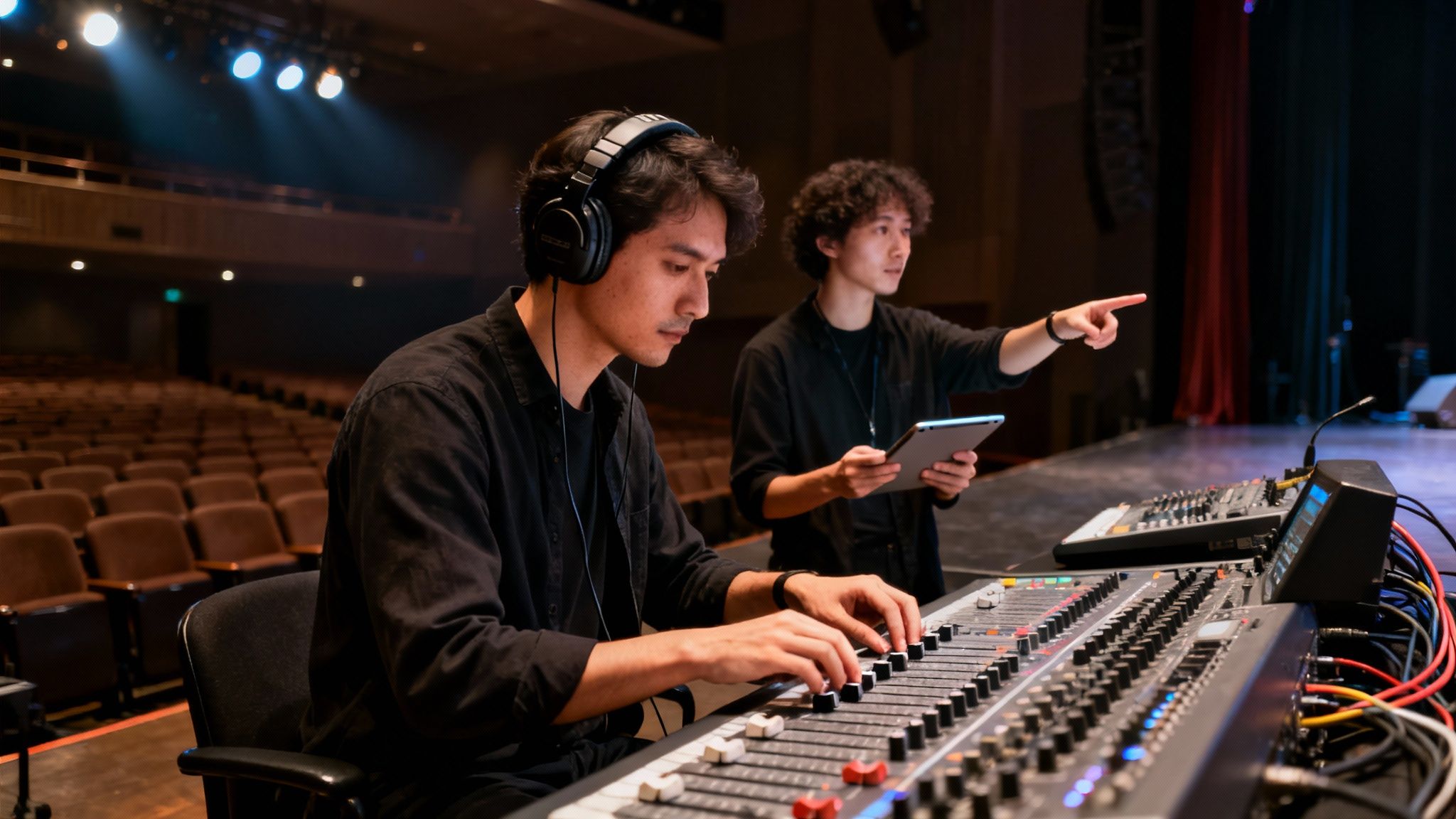
A good technical team turns a stressful day into a smooth-running production. This frees you up to focus on what matters: your guests, your speakers, and your own role. Understanding who does what and how to communicate with them is the secret to a flawless event.
Who’s Who on the AV Team
For anything beyond a simple setup, you will probably have a couple of key people on your side. The AV Project Manager is your main contact during the planning stages. They are the ones you will work with to sort out equipment, logistics, and timings in the weeks leading up to the event.
On the day, the On-Site Sound Engineer is your hands-on expert. They are responsible for the physical setup, operating the mixing desk, and resolving any technical problems that appear. For bigger events, you might have a whole crew covering sound, lighting, and video. This team-based approach is crucial for large-scale conference production, where everything has to sync up perfectly.
Briefing Your Technical Crew Like a Pro
To get the best out of your on-site team, you need to provide them with a thorough briefing. It is about more than just technical specifications; they need to understand the rhythm and purpose of your event. An engineer who knows the plan can anticipate cues and be proactive, creating seamless transitions that your audience will not even notice, which is exactly what you want.
Make sure your briefing includes:
- A Detailed Running Order: Do not just list the speakers. Include walk-in times, music cues, video playback points, and even breaks. A minute-by-minute schedule is ideal.
- A Clear Microphone Plan: Who is speaking, when are they speaking, and which microphone will they be using? Note things like switching from a lectern microphone to handhelds for the audience Q&A.
- Your Critical Cues: Pinpoint the make-or-break moments. Is there a specific slide that triggers a video? Does an awards winner get walk-up music? Tell them exactly when.
A sound engineer with a clear running order is always one step ahead. They can fade in background music at the perfect moment or have the next speaker’s microphone live before they even reach the stage. This is what separates a good event from a great one.
On-the-Day Best Practices for a Smooth Show
The collaboration does not stop once the planning is done. How you work together on the day is just as important. Clear communication and respecting the technical process will save everyone a lot of stress.
First and foremost: the soundcheck. This is non-negotiable. It needs to happen well before any guests arrive, giving the engineer time to test every single microphone, check levels for videos, and eliminate any potential feedback in the room. Many avoidable problems occur simply because this stage was rushed or skipped.
Finally, agree on a single point of contact for any last-minute changes. The last thing an engineer needs is conflicting instructions from three different people. Whether it is via a headset or a designated runner, a clear chain of command keeps everything running smoothly. When you partner effectively with your audio team, you ensure every piece of the puzzle fits together to deliver a polished, professional, and stress-free event.
Got Questions About Sound System Hire? We've Got Answers.
To wrap things up, let us tackle some of the most common questions we get from event planners. Think of this as a final check, providing the last few pieces of practical advice to help you book your sound system with total confidence.
How Far in Advance Should I Book for a London Event?
For larger, more complex events like a conference or an awards dinner, you should aim to book three to six months out. This is particularly important if your event falls during London’s peak seasons in spring and autumn. That is when the best equipment and the most experienced technicians get booked up quickly.
If you are planning something smaller, like an internal meeting or a seminar, four to six weeks is usually a safe timeframe. The golden rule is to start talking to your AV partner the moment you have the venue confirmed. It gives everyone time for site visits, proper planning, and making sure the right team is available for your date.
What is the Difference Between a PA System and a Line Array?
When most people think of a sound system, they are picturing a classic PA (Public Address) system. This is your standard setup, usually a couple of speakers on stands. It is perfect for ensuring speeches and background music are heard clearly in a straightforward room for up to 150-200 people.
A line array is a different system altogether. It is a series of speaker cabinets linked together in a vertical column, often flown from the ceiling or stacked on the stage.
The real benefit of a line array is the control it gives an engineer. It allows them to steer the sound directly at the audience, minimising reflections from walls and ceilings. This is absolutely critical for keeping audio crisp and clear in large, acoustically challenging venues like exhibition halls or concert spaces.
Do I Really Need an On-Site Technician?
For anything more complicated than a single lectern microphone and a pair of speakers, the answer is almost always yes. A technician does so much more than just set up equipment.
Throughout your event, they are actively mixing sound levels, cueing microphones for speakers, playing audio from videos, and, most importantly, are on standby to fix any problems that arise. For a high-stakes product launch or a gala dinner, having a professional on-site is not a luxury; it is your insurance policy against technical hiccups that could derail the event. For a very simple meeting, you might be able to use a 'delivery and set-up' service.
What Information Do You Need to Give Me an Accurate Quote?
The more details you can provide upfront, the more accurate your initial quote will be. It helps us avoid any last-minute surprises and ensures we are proposing a solution that genuinely fits your needs.
Before you call or email, try to have this information ready:
- The Basics: Your event date, timings, venue name, and the full address.
- Audience Size: A good estimate of how many guests will be there.
- Event Type: Is it a conference, an awards show, or a panel discussion?
- Running Order: A rough idea of the agenda, especially how many people might be speaking at once.
- Media Needs: Will you need to play audio from videos or presentations?
- Entertainment: Let us know if there is a live band, DJ, or any other performers.
Providing this information from the start helps our project managers build a quote that is accurate, making the entire process smoother for everyone.
At London Audio Visual Hire, our experienced team provides the equipment and technical expertise to ensure your event's sound is flawless from start to finish. For a detailed discussion about your next event, please get in touch with our project managers. Explore our services at London Audio Visual Hire.


