
Renting a sound system is about more than just volume; it is about delivering every word and musical note with absolute clarity. The right audio setup for one event rarely works for another. The ideal solution depends on a careful analysis of your objectives, audience, and venue.
This guide will walk you through the process of defining your audio needs to ensure a successful outcome for your event.
Defining Your Event Audio Needs
Before considering speakers and microphones, it is essential to develop a clear plan. A detailed brief ensures you secure the right equipment, avoid unnecessary expenditure, and that your audience hears precisely what is intended. This planning stage is the most critical part of the process.
First, establish the primary purpose of the audio. The technical requirements for a conference keynote are vastly different from those for background music at a drinks reception. Reproducing speech clearly demands a different approach to the full-range sound needed for a live band or DJ.
Core Questions to Ask
Begin by answering these fundamental questions. This information is what your AV partner will need to build the correct technical specification for you.
- What is the main function of the sound system? Is it for speeches, presentations, background music, a live band, or a combination of these? A system optimised for vocal clarity will lack the low-frequency impact a DJ requires.
- How many people are you expecting? A breakout session for 20 people has very different requirements to an auditorium of 500, which demands a professionally designed system to ensure those at the back have the same audio experience as those at the front.
- What is the venue like? Consider the room's physical characteristics. How large is it? How high are the ceilings? Are the surfaces hard and reflective, such as glass and concrete, or soft and absorbent, like carpet and curtains? A large, reverberant hall presents a greater acoustic challenge than a standard conference room.
- How many people will need a microphone simultaneously? This determines the number of channels required on the mixing desk and the most suitable microphone types, such as lectern, handheld, or clip-on lapel models.
It is easy to focus on the number of guests, but the type of content is often more important. A panel discussion with six participants for an audience of 100 is far more complex to manage than a single keynote speaker addressing 300 people.
From Brief to Technical Solution
Once you have these answers, you can begin to determine the equipment you will need.
For example, for a corporate awards night, your brief might specify a lectern microphone for the host, several wireless handheld microphones for award winners, and the facility to play musical stings and background music.
This level of detail enables a company like ours to recommend a precise and effective solution. If you wish to understand the terminology better, our guide on what audio visual equipment is a useful starting point. A basic understanding helps you collaborate more effectively with your technical team to deliver a flawless audio experience.
Matching Equipment to Your Venue and Event
Choosing the right sound system involves more than simply increasing the volume. The critical factor is the interaction between the equipment, your venue's acoustics, and your event's objectives. A system that sounds excellent in a marquee may perform poorly in a hotel ballroom.
It is helpful to think of the system as a complete chain, from the microphone capturing a voice to the loudspeakers delivering it to the audience. Understanding the key components allows for more productive conversations with your AV supplier and greater confidence in your decisions.
The Building Blocks of a Professional PA System
A professional Public Address (PA) system has three essential components you will find at any corporate event: microphones, a mixing desk, and speakers.
Microphones: This is the starting point, and selecting the right type is critical. A discreet lapel microphone (or lavalier) clipped to a presenter’s jacket allows freedom of movement. For a formal, static presentation, a lectern microphone is a reliable option. For audience Q&As, robust handheld wireless microphones are ideal.
The Mixing Desk: This is the central control hub of your sound setup. It is where a sound engineer adjusts the volume and tone of every audio source, from a CEO's microphone to audio from a video clip. Even for a simple two-speaker setup, a small digital mixer is essential for balancing levels and eliminating feedback.
Speakers: These are the most visible part of the system, and their placement is paramount. The goal is to achieve smooth, even sound coverage across the entire space, ensuring the person in the back row has the same clear audio experience as someone at the front.
Speaker Setups for Different Spaces
Not all speakers are the same, and the correct configuration depends on the size of your room and the number of guests.
For a small breakout room or an intimate seminar, a point-source setup is highly effective. This typically consists of two high-quality speakers on stands at the front of the room, angled to cover the audience. They are quick to set up and deliver excellent clarity for smaller crowds.
In a large conference hall or auditorium, a more sophisticated approach is required. This is where a line array system is used. These are the tall, curved stacks of speakers often seen at large concerts. They are designed to project sound over long distances with precision, maintaining consistent volume and clarity throughout the space.
Working in London presents unique acoustic challenges. We often operate in historic venues with high, ornate ceilings, marble floors, and large windows. While beautiful, these reflective surfaces can make sound muddy and indistinct. This makes professional system design and meticulous speaker placement non-negotiable.
Understanding Venue Acoustics
A room's natural acoustic character significantly influences equipment choices. A space with soft furnishings, carpets, and low ceilings will absorb sound. This requires a different strategy to a large, reverberant venue like a church or a modern, glass-walled warehouse.
An experienced sound engineer can assess a room and determine the best approach. They might use sound-dampening materials or, in a particularly long room, place 'delay' speakers further back. These are additional speakers set to a slight time delay, reinforcing the sound from the main stage and ensuring speech remains perfectly intelligible for everyone.
To provide a clearer idea, here is a summary of typical recommendations for common event types.
Sound System Components by Event Type
| Event Type | Primary Audio Need | Recommended Microphones | Speaker Configuration |
|---|---|---|---|
| Small Seminar (30-50 people) | Clear speech reinforcement | 1-2 Lapel mics, 1 Lectern mic | 2 x Point-source speakers on stands |
| Panel Discussion (50-150 people) | Multiple clear voices, Q&A | 4-6 Headset or Lapel mics, 2 Handhelds | 2-4 x Point-source speakers, front-fill if wide |
| Conference Main Stage (200+ people) | High-impact presentations, video audio | Multiple Lapel/Headset mics, Lectern mic | Small Line Array system, delay speakers for depth |
| Gala Dinner (150-300 people) | Background music, awards, speeches | 2-4 Handheld wireless mics | Distributed system (multiple smaller speakers) |
This table serves as a starting point. Every event is unique, but it illustrates how scale and format directly influence the technology required.
The demand for high-quality audio solutions is growing. The global sound equipment rental market was valued at an estimated USD 4.44 billion in 2025 and is projected to reach USD 6.85 billion by 2032. This growth reflects advancements in technology, such as networked audio and digital processing, which offer incredible flexibility. You can discover more about the trends in the global sound equipment market to see what is driving this expansion.
At London Audio Visual Hire, we monitor these trends to ensure our inventory can meet any challenge. By understanding the relationship between an event and its venue, we design sound systems that deliver flawless, reliable results. Feel free to browse our extensive audio visual equipment for hire to see the full range of possibilities.
Technical and Pre-Event Planning
Excellent sound at an event is not achieved by simply adjusting a volume knob on the day. It is the result of meticulous planning that takes place weeks in advance. This phase focuses on the details that form the foundation of a flawless event: stage plots, input lists, and power plans.
Finalising these technical points early helps to ensure a calm, professional setup and avoids last-minute complications. When you provide your audio partner, such as London Audio Visual Hire, with all the details upfront, they can arrive with a solution that is already tailored to your needs. A solid plan is the best defence against unforeseen problems.
This simple workflow shows how your event's details directly shape the equipment selection.
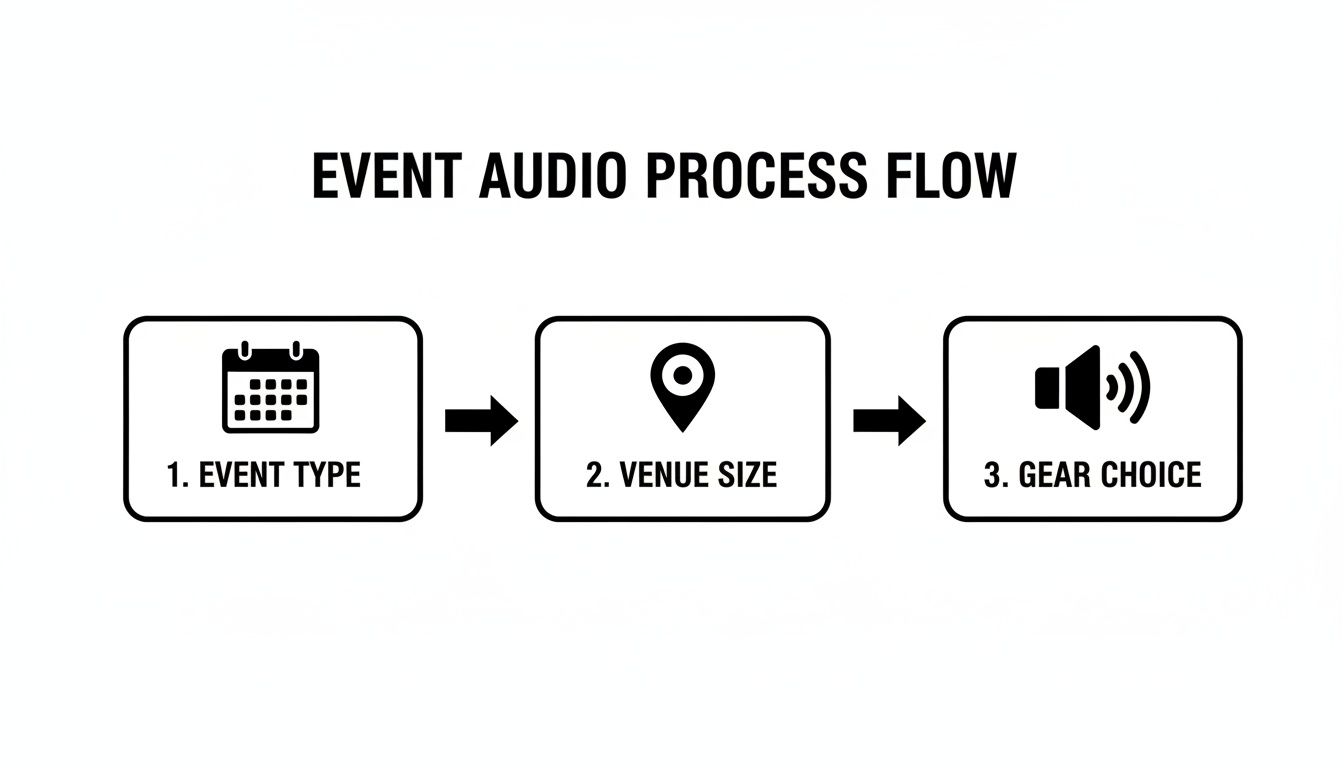
As shown, choosing the equipment is the final step. It is entirely dependent on the specific requirements of your event.
The Power of a Detailed Input List
An input list is the sound engineer's primary reference document. It is a simple spreadsheet that lists every sound source for the event, from a CEO's lapel microphone to a laptop playing a video clip. For each entry, it details the type of connection required (such as an XLR for a microphone or a DI box for a guitar) and its location on stage.
This document determines the size of the mixing desk needed and how the entire stage is cabled. A clear, finalised input list is one of the most effective tools for ensuring a quick, efficient setup.
Why Stage Plots Are Non-Negotiable
A stage plot is a simple diagram showing the placement of everyone and everything on stage. It is a vital communication tool, especially when managing multiple presenters, a live band, or a panel of speakers.
Your plot should clearly mark:
- The lectern's position.
- The location of chairs and tables for panellists.
- The location of any screens or confidence monitors.
- The placement of stage monitors (speakers that help presenters hear themselves).
Even a basic sketch is better than nothing. It allows the technical team to pre-plan cable runs, position speakers for optimal coverage, and ensure microphones are placed correctly. It is the key to avoiding untidy wires and potential trip hazards.
Pro Tip: A common oversight is failing to share the stage plot with the lighting and video teams. Coordination ensures your keynote speaker is not left in the dark or standing in the projector's path. A unified technical plan is the goal.
Liaising with the Venue: Power and Frequencies
Your technical planning must extend to the venue's infrastructure. Two of the most critical conversations you will have concern power and radio frequencies.
First, you must be certain about the venue's power supply. A large sound system, particularly one running alongside a full lighting rig, requires a significant amount of clean, reliable power. Your AV provider will specify their requirements (usually in amps), and it is your responsibility to confirm the venue has sufficient dedicated circuits near the stage and control areas. Overloading a circuit can disrupt the event and is entirely avoidable.
Second, in a busy city like London, managing radio frequencies (RF) for wireless microphones is a major consideration. The airwaves are often crowded with signals from other events, broadcasts, and security teams. This can lead to interference, manifesting as static, audio dropouts, or even picking up unrelated transmissions.
A professional AV company will perform an RF scan on-site and use properly licenced, coordinated frequencies to ensure your wireless equipment operates without interference. It is a small but critical step that protects the quality of your audio.
The Role of a Dedicated Sound Engineer
For any event more complex than a single microphone and a pair of speakers, you need a dedicated sound engineer. Their role extends far beyond simply adjusting volume.
A professional engineer is the core of the audio operation:
- They design the PA system based on the room's acoustics and your event's needs.
- They manage the setup, testing every component to ensure it is working perfectly.
- During the event, they actively mix the sound, ensuring presenters are heard clearly, music is impactful, and feedback is eliminated before the audience notices.
Their expertise delivers smooth, consistent quality from the opening remarks to the final applause. When you hire a sound system, the engineer is the person who unlocks its full potential and provides complete peace of mind.
Understanding Rental Costs and Logistics
A quotation for a sound system can seem complex at first. A professional audio-visual company will provide a clear, itemised proposal that details not just the equipment, but also the logistical work that contributes to a successful event. Understanding these costs is key to avoiding unforeseen expenses.
The final figure reflects a combination of the hardware, the technical personnel, transport, and insurance.
What is in the Quote?
When a quote from a partner like London Audio Visual Hire is provided, it will typically be divided into several key areas. Each is a crucial part of the overall service.
- Equipment Hire: This is the rental fee for every speaker, microphone, mixing desk, and cable required for your event. The price depends on the quality and quantity of equipment needed.
- Labour Costs: You are not just hiring equipment; you are hiring expertise. This covers the skilled technicians who deliver, set up, operate, and dismantle the system. Their time is calculated based on the complexity of the job and the on-site duration.
- Transport: Moving a van full of expensive audio gear across a city like London requires careful planning. This fee covers the vehicle, fuel, parking, and any congestion charges to get everything to your venue and back safely.
- Insurance: Any reputable hire company will have robust public liability and equipment insurance. This is non-negotiable and protects all parties in the event of an accident.
Do not view labour as an optional extra. An experienced sound engineer is your event's safety net. They do not just connect equipment; they actively manage the room's acoustics, solve problems in real-time, and are ultimately responsible for the clear, reliable sound your audience hears.
The Reality of Venue Logistics
Working in UK venues, especially in busy city centres, presents its own set of logistical challenges. This is where a professional crew demonstrates its value, handling the "hidden" details that can easily disrupt an event.
For instance, many London venues have strict time slots for loading and unloading. An experienced team knows this. They will have already contacted the venue manager to schedule their arrival and understand how to work within those tight windows. They are accustomed to dealing with awkward loading bays, small service lifts, and long distances from the vehicle to the event space.
This practical experience is invaluable. It means the team arrives with a solid plan, avoiding stressful delays and ensuring everything is set up and ready well before your guests arrive.
Who is Responsible for Damage?
A common question is what happens if equipment is damaged, for example, if a guest spills a drink on a mixing desk. A professional rental agreement will always have a clear section on liability.
Typically, if you have hired a full-production service with technicians, the hire company's insurance covers the equipment while it is in their care. This is a significant advantage over "dry-hiring" the equipment and taking on that risk yourself. It provides peace of mind, knowing you will not be liable for accidental damage. Always check the insurance details before signing any agreement.
The demand for high-quality event audio in the UK continues to grow. The country's audio equipment rental market was valued at USD 739.51 million in 2024 and is expected to increase to USD 1,369.99 million by 2033. This growth highlights how much events rely on professional partners for flawless sound. You can discover more about the UK audio rental market trends to see where the industry is heading.
By understanding the full picture of costs and logistics, you can budget effectively and appreciate the value an expert partner provides.
On-Site Execution: Getting It Right on the Day
All the careful planning culminates on the day of the event. The hours before guests arrive are crucial, as this is when a professional audio crew turns equipment into a flawless audio experience.
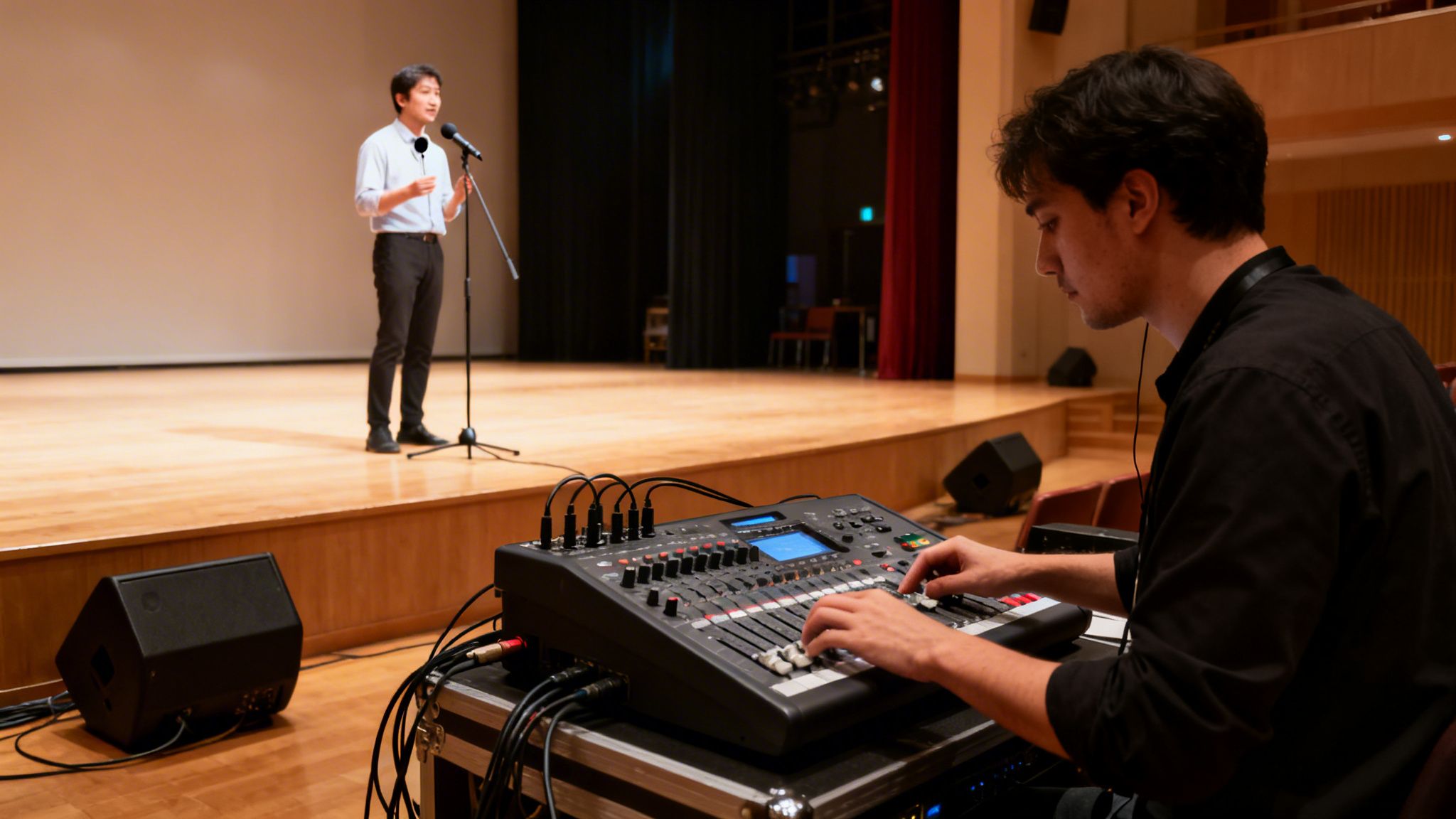
The most important part of the setup is the soundcheck. This is not just a quick "check, one-two" into a microphone. It is a methodical process that guarantees every audio element is working perfectly within the specific environment of the room. It is the key to a stress-free event for everyone involved.
What a Real Soundcheck Involves
A proper soundcheck is a comprehensive process. A dedicated technician from a company like London Audio Visual Hire will meticulously work through a detailed checklist. Their job is to identify and resolve problems before your event begins.
This is what they are doing:
- Line Checks: Each input is tested individually. The technician ensures the signal from every microphone, laptop, or video player reaches the mixing desk cleanly, without any unwanted buzz or hum.
- Gain Staging: This is a critical step. The technician carefully sets the input level for each channel to maximise clarity and prevent distortion or feedback, ensuring every speaker sounds powerful but natural.
- Ringing Out the Room: The engineer may walk around with a microphone, intentionally inducing feedback. They are identifying the specific frequencies that are problematic in that room. They then use the mixer’s equaliser (EQ) to reduce those frequencies, making the entire system more stable.
- Presenter Checks: Whenever possible, the technician will listen to each presenter speak into their assigned microphone. This allows them to adjust the EQ to suit the specific tone of their voice, which significantly improves intelligibility for the audience.
A common mistake is thinking soundchecks are only for bands. They are arguably more vital in the corporate world. A single shriek of feedback during a CEO's keynote can undermine their credibility and disrupt the entire message.
Preventing Problems Before They Occur
Even with the most detailed plan, live events can be unpredictable. An experienced technician is there not just to operate equipment, but to solve problems, often before anyone else is aware of them.
With wireless microphones, for example, the technician will have coordinated their frequencies to prevent interference. They will also carry fresh batteries and often replace them during a break, long before a microphone has a chance to fail mid-sentence.
Microphone feedback is typically caused by a microphone picking up its own sound from a nearby speaker. A professional engineer addresses this proactively. It starts with intelligent speaker placement and is refined with careful EQ adjustments during the soundcheck. They know how to position stage monitors so presenters can hear themselves without causing that piercing squeal.
The Handover
Once the system is fully configured, the final step is a clear, simple handover. If a technician is staying to operate the system, they will liaise with you or the show caller to confirm the schedule and cues.
If it is a dry hire or a simpler setup that you will be managing yourself, the technician will provide a straightforward briefing. They will show you how to control the volume for microphones and music, how to mute and unmute presenters correctly, and who to call if you encounter any difficulties. The goal is to make you feel completely in control.
This commitment to excellence on the day is a hallmark of the UK's professional event industry. The best suppliers are defined by their technical skill and their nationwide networks of certified engineers. To get a sense of the major players, you can read more about the UK's leading staging and sound hire companies. This level of dedication is what truly separates a professional sound system for rent from a simple equipment delivery.
Finding the Right Partner for Perfect Event Audio
We have covered everything from assessing your event’s needs to the details of flawless on-site execution. The key takeaway is this: excellent event audio is not accidental. It is the direct result of deliberate planning, the right equipment, and hands-on expertise.
For any important event, your most critical decision is choosing the right technical partner. To ensure you get the best possible sound system, it is worth seeking out reputable event companies that take the time to understand your objectives.
Working with an experienced team means you can offload the technical responsibilities.
Choosing a full-service partner guarantees a professional result and allows you to focus entirely on your guests and the content of your event, rather than worrying about technical issues.
Ultimately, you want to create an audio experience that is so smooth and engaging that your audience is not even aware of the technology, they just experience the clarity. That is what a specialist team provides.
Here at London Audio Visual Hire, our end-to-end event production services are designed to deliver impeccable quality and complete peace of mind, from the initial consultation through to the final pack-down.
Frequently Asked Questions
We are often asked about the practicalities of hiring a sound system in the UK. Here are some of the most common queries, with straightforward answers to help you plan your event with confidence.
How far in advance should I book?
The answer depends on the scale of your event.
For a large-scale conference or a major awards dinner in London, you should aim to book your sound system three to six months in advance. For smaller events, such as a workshop or an intimate meeting, four to six weeks is usually sufficient.
Bear in mind that the calendar fills up quickly, especially during the summer and the Christmas party season. Booking early is the best way to ensure you secure the right equipment and a first-rate crew for your date.
What is the difference between "dry hire" and "full production"?
Understanding this distinction is crucial as it determines the level of support you receive.
- Dry Hire: This is an "equipment-only" service. You rent the equipment and are responsible for its collection, setup, operation, and safe return. This option is suitable only for those who are experienced with professional audio equipment.
- Full Production: This is an all-inclusive service. It covers everything from the initial consultation and system design to delivery, setup, on-site engineers to operate the show, and subsequent collection.
For any professional event where the sound must be perfect, a full production service is the recommended choice. It removes the technical burden from your shoulders and ensures everything runs smoothly from start to finish.
Do you work with a venue's in-house AV team?
Yes, absolutely. Collaborating with a venue's own technical team is standard practice for us. It is our preferred way of working, as it guarantees a smooth, cooperative setup on the day.
Our project managers will contact the venue's technical lead well before the event to coordinate everything from power distribution to how our system integrates with theirs. This partnership prevents last-minute surprises and contributes to a more efficient and professional event for everyone.
At London Audio Visual Hire, our approach is built on calm, expert support and meticulous planning. We handle the technical details so you can focus on what is important: your guests and your message. Explore our event production services to learn how we can support your next event.