

You have booked your spot at an exhibition. The organiser will likely offer one of two choices: a ‘space-only’ plot or a ‘shell scheme’ stand. A shell scheme is the standard, pre-built booth that most trade shows provide. It is a ready-made package with walls, flooring, and a name board, allowing you to walk in and get started.
What Exactly Is a Shell Scheme Stand?
Think of it as renting a furnished flat instead of an empty one. When you arrive at the hall, instead of a bare patch of concrete, you find your designated space already built. It has walls, a carpet, and basic lighting. This is the benefit of a shell scheme – it handles the construction for you.
This modular system is the backbone of most UK exhibitions. It allows organisers to build hundreds of identical stands quickly and efficiently, creating a neat and easy-to-navigate show floor. For exhibitors, it is a straightforward and budget-friendly way to get a foothold at a trade show, sidestepping the significant costs and logistics of a fully custom-built stand.
What Is Included?
Packages can differ slightly from one event to the next, but a standard shell scheme deal almost always includes the same core elements. It is the basic canvas on which you will build your brand.
You can usually expect:
- An Aluminium Frame: This is the skeleton of your stand, a simple pole-and-panel system.
- Plain Wall Panels: These are usually white or grey infill panels that form the back and side walls of your booth.
- A Fascia Board: This is the panel running across the top-front of your stand where the organiser will print your company name and stand number.
- Basic Lighting: You will typically get a couple of spotlights to light up your space.
- Carpet: The floor area of your stand will be covered with standard-issue carpet tiles.
The Go-To Choice for a Reason
The shell scheme's popularity is not by chance. It is a highly practical and accessible option, especially for small to medium-sized businesses, first-time exhibitors, or international companies that cannot easily ship a custom stand across the world.
This convenience has made it the default for countless events. In fact, shell schemes are the dominant choice at UK trade shows, with over 60% of exhibitors opting for them at regional and national events. When you consider that the average UK business trade show features around 153 exhibitors, you can see why this efficient, one-size-fits-all package is so vital for organisers. You can read more about these UK event industry statistics to get a better sense of the landscape.
By removing major logistical challenges, the shell scheme frees you to concentrate on what wins business: creating stunning graphics, perfecting your AV setup, and engaging with people on the day.
You are starting with a simple box. But that is also its secret weapon. The constraints of a shell scheme force you to be creative. It is a challenge to see how you can use clever graphics, smart lighting, and well-placed tech to make your 'box' the one that everyone remembers. In this guide, we will show you exactly how to do that.
Choosing Between a Shell Scheme and a Space-Only Build
When planning an exhibition, one of the first major decisions you will face is whether to opt for a shell scheme or a space-only plot. This is not just a minor detail; it sets the entire tone for your project, shaping everything from your budget and design options to the level of hands-on management required.
Think of it as the difference between renting a furnished apartment and buying a plot of land to build your dream house.
A shell scheme stand is your ready-to-go, turnkey solution. The event organiser provides the basic structure – walls, a floor, and often some basic lighting and a name board. It is a pre-built booth, ready for you to move in and add your branding.
On the other hand, a space-only booking is exactly as it sounds: a completely empty patch of floor space in the exhibition hall. From there, you are on your own. You have to design, build, and install every element of your stand from the ground up.
Weighing the Key Differences
For most businesses, the choice boils down to a classic balancing act between resources and ambition. Shell schemes are built for speed and simplicity. With the core structure already sorted, the logistical burden and upfront planning time are massively reduced. This makes them an excellent option for first-time exhibitors or companies short on time and personnel.
A space-only build, however, is a blank canvas. It gives you unlimited potential to create a truly unique, immersive brand experience that can stop people in their tracks. But all that freedom comes at a price. It demands a serious investment in design, fabrication, transport, and the on-site build crew, not to mention a mountain of health and safety paperwork.
This decision tree gives you a quick visual guide to help you determine which path is right for you. It walks you through the key questions around customisation, budget, and convenience.
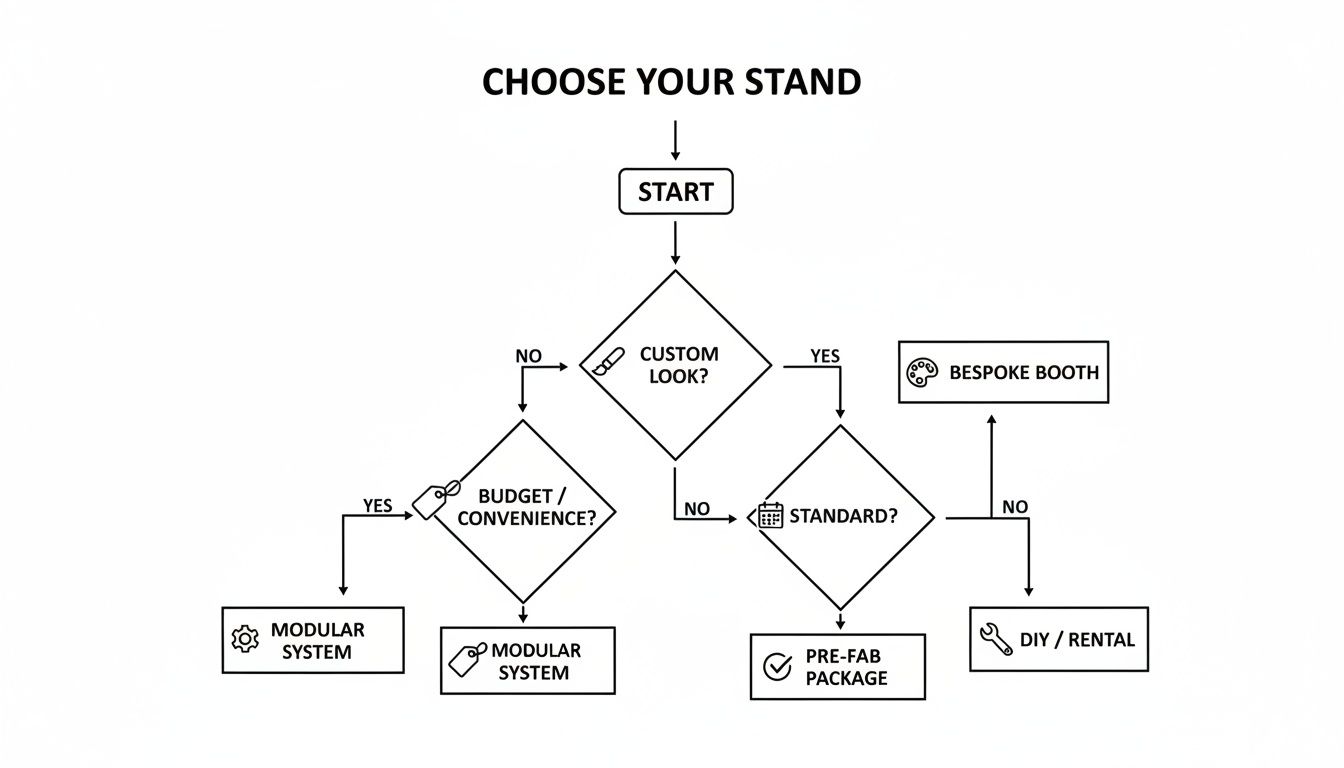
As you can see, if a one-of-a-kind look is your top priority and you have the budget to match, space-only is the clear winner. If not, a shell scheme offers a much more practical, standardised solution.
Shell Scheme vs Space-Only Stands at a Glance
To make the right call, you need to put these two options side-by-side and look at the practical and financial realities. Each has its own set of pros and cons that will either align with your goals or create a serious mismatch with what you're trying to achieve.
Understanding these trade-offs is crucial. It helps you put your resources where they will have the most impact, whether your main goal is a stunning bespoke build or simply establishing a professional presence with minimal fuss.
The table below breaks down the most critical differences.
| Factor | Shell Scheme Stand | Space-Only Stand |
|---|---|---|
| Initial Cost | Lower initial investment, as the basic structure is included in your booking fee. | Higher upfront cost. You are paying for the floor space and must fund all design and construction yourself. |
| Setup Time | Very little setup time needed. The focus is on applying graphics, setting up AV, and arranging products. | A significant amount of setup time is required for the full construction, often needing several days before the show opens. |
| Project Management | Fairly straightforward. You are mainly coordinating with a few suppliers for graphics, AV, and furniture. | Incredibly complex project management. You will be juggling stand designers, builders, logistics firms, and venue services. |
| Design Freedom | You are limited by the standard frame and panels. Creativity comes from how you customise the surfaces. | Total creative freedom to design a unique structure, with the only limits being your budget and the venue's rules. |
| Ideal for Exhibitors | First-timers, businesses with smaller budgets, or anyone attending multiple shows and needing a simple solution. | Established brands aiming for maximum impact, launching a major new product, or needing a large, custom-built environment. |
| Hidden Costs | Fewer surprises, though you will almost always have to pay extra for electricity and internet. | The potential for many extra costs is high. Think rigging, waste disposal, and complex electrical work. |
A shell scheme gives you a framework, which means your creativity is focused on what you put on the walls. A space-only build has no constraints, so the structure itself becomes part of your brand story – but that comes with a much bigger commitment of time, money, and energy.
Ultimately, your strategic goals should guide your decision. If you are there for efficient lead generation and networking on a tight budget, a well-dressed shell scheme is a brilliant tool. But if your mission is to make a huge brand statement and create an experience people will not forget, the investment in a space-only build could be well worth it.
Designing A High-Impact Shell Scheme Stand
A standard shell scheme stand is convenient, but it is not going to win any design awards straight out of the box. The good news is you should not see it as a creative dead end. Think of it as a blank canvas. With smart planning, you can transform that simple box into a professional and memorable space that stands out on a busy exhibition floor.
The trick is to work with the structure, not against it. Your main goal is to completely hide the standard aluminium frame and plain panels, creating an immersive world that feels entirely custom. It is an excellent way to show that a powerful presence comes from creativity, not necessarily a colossal budget.
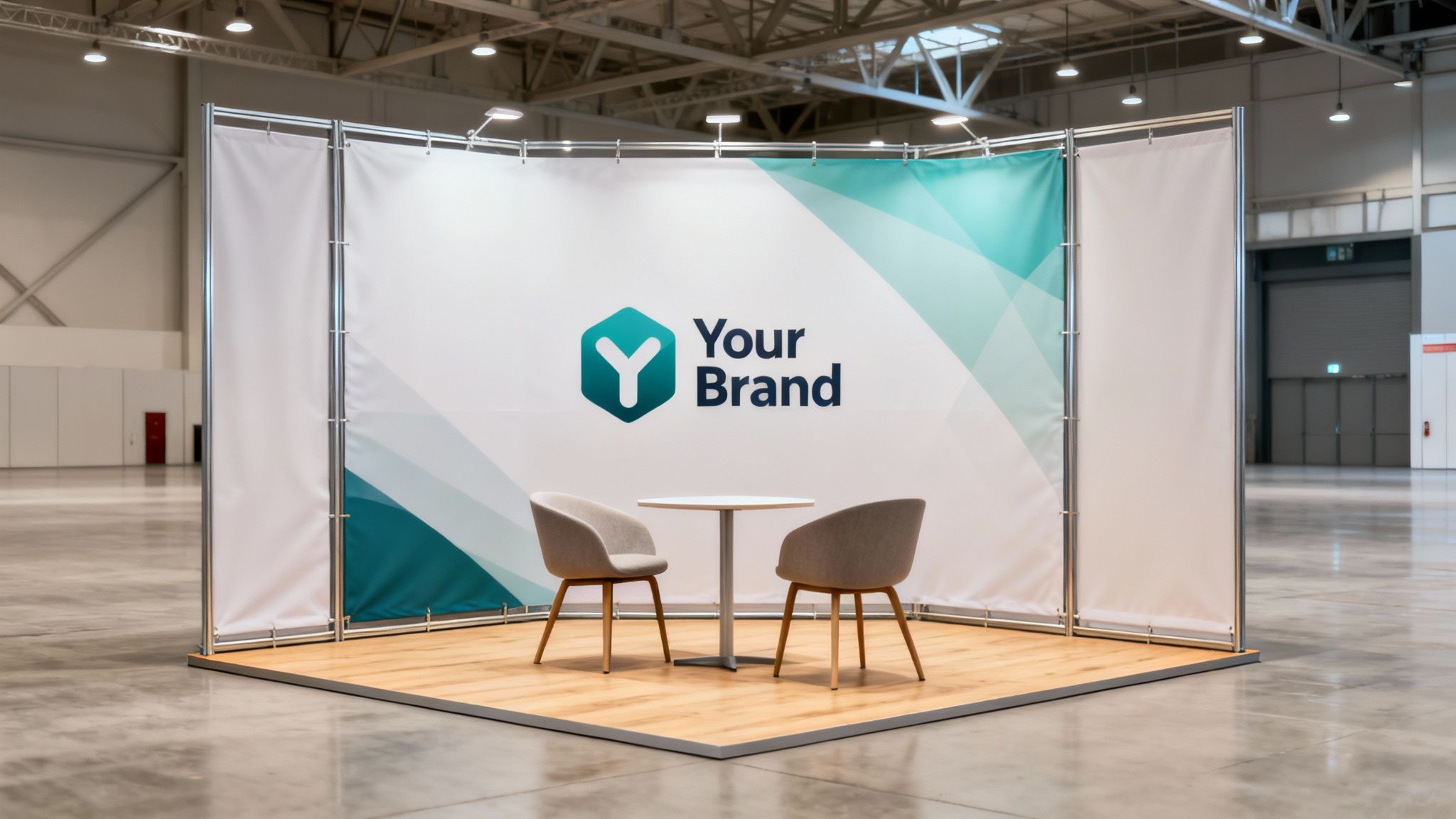
Creating Immersive Walls With Graphics
Your walls are your biggest asset. They offer the largest surface area for branding and are the most effective tool for a complete transformation. Forget simply sticking up a few posters; modern solutions can completely cover the shell scheme’s construction, giving you a seamless, high-end finish.
There are two excellent ways to achieve this:
- Seamless Graphic Panels: These are custom-printed panels, either rigid or semi-rigid, that are cut to fit perfectly inside the shell scheme frame. They usually attach with magnetic tape or hook-and-loop strips, creating a stunning floor-to-ceiling mural that makes the metal poles and panel gaps vanish.
- Tensioned Fabric Walls: This system is highly effective. A lightweight fabric graphic is stretched across a thin frame that sits just in front of the shell scheme walls. The result is a smooth, vibrant, and completely crease-free display with a premium, non-reflective finish that looks excellent in photos.
Crucially, both of these options are completely non-destructive and comply with venue rules. You get an incredible-looking stand without leaving a single mark on the organiser’s equipment. This approach is central to any successful brand activation, turning a generic plot into a compelling physical experience for your business.
Defining Your Space With Flooring And Furniture
Flooring is one of those details that people often overlook, but it is a powerful tool for setting the tone and defining your stand’s territory. Most shell schemes come with a standard-issue grey or blue carpet, but laying your own flooring on top makes a world of difference. A custom-printed vinyl floor with your branding, or even a simple wood-effect laminate, immediately elevates the whole space.
Furniture choice is just as vital for creating a functional and inviting layout.
- Create Zones: Use your furniture to carve out distinct areas. A small high-top table and stools can create a spot for a quick chat, while a couple of comfortable armchairs signal a more relaxed zone for deeper conversations.
- Prioritise Function: Ensure every piece serves a purpose. A branded counter can act as both a welcome desk and a lockable storage unit.
- Maximise Space: Steer clear of bulky furniture that will make your stand feel cramped. Minimalist, modern designs are your best friend here, keeping the area feeling open and easy to enter.
A well-designed shell scheme stand does not just display your brand; it invites engagement. The right combination of graphics, flooring, and furniture creates a welcoming environment that encourages visitors to step inside, stay longer, and start a conversation.
To push your shell scheme from basic to brilliant, think about investing in a few key trade show products that boost both appearance and practicality. This could be anything from pop-up banners and literature racks to integrated screens. When all these elements work together, you create a cohesive and professional presence that grabs attention and gets your message across effectively. By focusing on these non-structural upgrades, you can achieve a custom-built look within the simple, cost-effective framework of a shell scheme.
Weaving in AV and Lighting Technology
A shell scheme gives you the basic structure, but it is technology that brings it to life. Smartly integrating audio-visual (AV) and lighting is what turns a simple booth into a magnetic brand experience that can stop people in their tracks in a hectic exhibition hall.
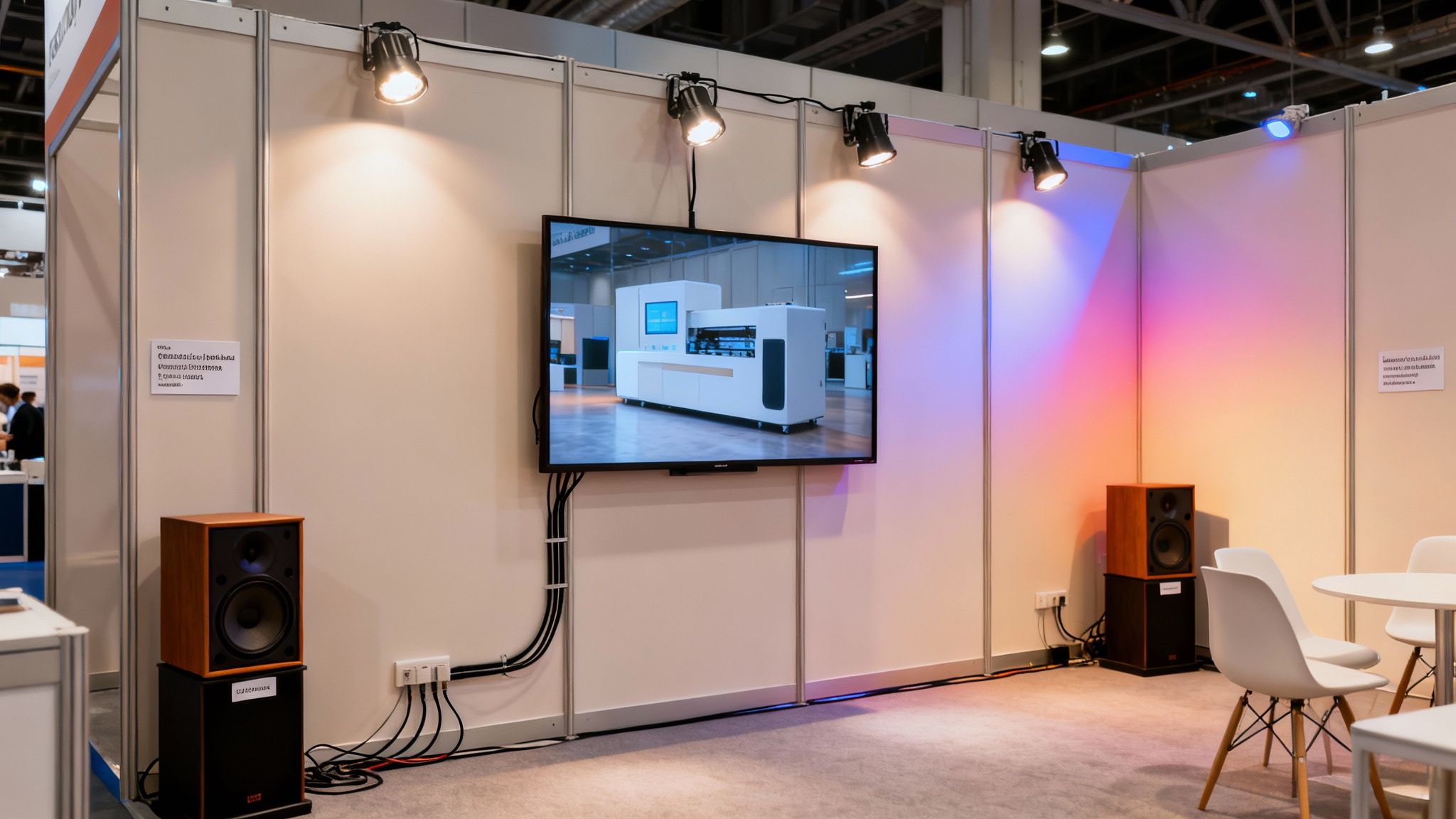
This is not just about placing a TV in the corner. Getting it right means thinking carefully about sightlines, power requirements, and the ambient environment to ensure every element contributes. The aim is a polished, seamless presentation that strengthens your message, rather than distracting from it.
Strategic Screen Placement and Mounting
Screens are excellent for showing product demos, brand stories, and presentations. The problem is that floor space is at a premium within a shell scheme’s tight footprint, and freestanding screen mounts can be clumsy trip hazards.
The most practical solution is to mount screens directly onto the shell scheme frame. Professional AV providers like London Audio Visual Hire have specialised clamps that grip the aluminium posts securely without leaving a mark. This lifts your screen to the perfect viewing height for passers-by, grabbing their attention while keeping your floor clear for conversations.
A few key points to remember for screens:
- Optimal Height: Aim to have the centre of the screen at average eye level – about 1.5 metres from the floor is a good rule of thumb.
- Sightlines: Ensure the screen is easily seen from the main aisle to draw people in.
- Content Loop: Have a short, punchy video on a loop (around 60-90 seconds) that can run without sound. It needs to be visually interesting enough to catch someone's eye and make them curious.
Planning Your Power Requirements
Running out of power is one of the most common and avoidable disasters for an exhibitor. Calculating your electricity needs correctly before the show is crucial. Every item, from your laptop and phone chargers to large screens and lights, adds to your total power consumption.
Start with a simple list of everything you will be plugging in. Find the power rating (usually in watts) on each device and tally them up. It is always wise to order slightly more capacity than you think you need to account for any last-minute additions. You will order your power directly from the event’s official contractor, and sorting this out in advance is far cheaper than making a panicked on-the-day request.
A well-planned stand accounts for every single watt. Guessing your power needs can lead to tripped circuits and a dark stand at the worst moment, while ordering too much is a waste of money. This is one area where being precise pays off.
Creating Atmosphere With Layered Lighting
The standard spotlights that come with a shell scheme are functional, but they are rarely flattering. They tend to cast harsh shadows and create a flat, uninviting light. By bringing in your own lighting, you can create a real atmosphere, guide people’s attention, and make your stand feel far more premium.
Think about your lighting in three layers:
- Ambient Lighting: This sets the overall mood. LED battens or uplighters can wash a wall in your brand colours, creating an immersive feel that makes your space stand out from your neighbours.
- Task Lighting: This is about function. Use clamp-on spotlights fixed to the shell scheme to illuminate your key products, graphics, or your welcome desk. It ensures the important elements are seen.
- Accent Lighting: This is for adding flair. Small, focused pin spots can highlight a single product feature, and a backlit logo adds a touch of class that catches the eye.
To make your shell scheme stand truly shine, consider incorporating the right technology. A comprehensive guide can help you choose the essential audio visual equipment for events that will make the biggest impact.
Using Sound Effectively and Respectfully
Sound can be an excellent tool for engagement, but you must use it wisely in a noisy exhibition hall. Your goal is to draw visitors on your stand deeper into your world, not to blast your neighbours with noise.
Instead of broadcasting sound across the aisle, think about using directional speakers or even headphones for your product demos. This creates a much more intimate and focused experience for people who are genuinely interested. If you are running presentations, a small, subtle PA system will ensure your message is heard clearly within your stand. Our guide offers more detail on what audio visual equipment entails, helping you select the right tools. By carefully integrating these technologies, you can elevate a standard shell scheme into a highly effective marketing tool.
Budgeting for Your Shell Scheme Project
Every great exhibition stand begins with a realistic budget. The fee you pay the organiser for the shell scheme package is the price of admission; it gets you the basic structure, but it is the additions that turn that simple box into a space that people will remember.
Thinking through your finances from the start saves a world of headaches later. It is about knowing where every pound is going so you can invest it wisely, from the eye-catching graphics to the essential services that keep your stand running smoothly.
Deconstructing Your Stand Costs
Once you have paid the organiser for the space, you need to think about everything else that brings your stand to life. Each of these elements plays a role in how professional and effective you look on the show floor, so it is worth allocating your funds carefully.
Here is a realistic breakdown of what you should be budgeting for:
- Graphic Production: This will likely be your biggest investment after the space itself. It covers the design, print, and installation of your wall graphics, whether you opt for seamless panels or stretched fabric systems. This is what creates your branded environment.
- AV and Lighting Hire: Technology is key for grabbing attention. The cost of hiring screens, speakers, and extra lighting can vary hugely, so it is best to get a detailed quote from a professional supplier like London Audio Visual Hire based on exactly what you need.
- Furniture and Flooring: Do not underestimate the power of a good counter, comfortable chairs, or stylish flooring. Hiring these pieces helps create distinct zones on your stand and makes it a more welcoming place for conversations.
- Essential Services: It is easy to forget the basics, but you cannot run a stand without them. Power, internet access, and daily cleaning are almost always ordered separately from the official contractor, and they are non-negotiable.
- Contingency Fund: This is a vital one. Always set aside 10-15% of your total budget for the unexpected. A graphic might get damaged in transit, or you might realise you forgot a crucial cable. This fund is your safety net.
The Value of Reusable Modular Elements
Think of your stand investment as something that can pay you back long after the show ends. More and more exhibitors are moving towards modular graphic systems, and for good reason – it is a smart move for both your budget and the environment. When you invest in high-quality graphic panels or fabric systems that are easy to transport, you are building an asset you can use again and again.
This approach dramatically cuts your costs over time. In fact, both cost and sustainability are pushing UK exhibitors to favour these modular upgrades. Recent industry reports suggest that transforming a standard shell scheme into a branded, reusable stand can cut your capital spend by 40–60% compared to a one-off custom build, and you can get anywhere from 3–10 shows out of it. It is fascinating to see how exhibition stand design has evolved to meet these modern needs.
Investing in a reusable graphics kit for your shell scheme stand is not just a cost-saving measure for one event; it is a long-term strategy that lowers the cost-per-show and ensures brand consistency everywhere you exhibit.
Creating a Practical Project Timeline
A solid timeline is just as crucial as a solid budget. Why? Because missing deadlines almost always costs money. Suppliers charge hefty rush fees that can deplete your contingency fund instantly. Keeping everyone in the loop – from your graphic designer to your AV crew – is the secret to a smooth, stress-free build.
As soon as you book your space, sit down and map out your key dates. Think of it as a roadmap that keeps you and all your suppliers heading in the right direction, ensuring everything arrives on time.
- 12 Weeks Out: Lock in your stand design concept. Now is the time to book your key suppliers for graphics, AV, and furniture.
- 8 Weeks Out: Your artwork for all graphics needs to be finalised and sent to the printer.
- 6 Weeks Out: Review the exhibitor manual and order all your essential services, like electricity and internet.
- 4 Weeks Out: Contact all your suppliers to confirm delivery and installation schedules. Avoid surprises.
- 1 Week Out: Time to pack your on-site kit. Get all your product samples, brochures, and team essentials ready to go.
Navigating Venue Rules and Safety Compliance
Exhibiting successfully is not just about flashy designs and clever marketing; it is about playing by the rules. Every exhibition hall operates under a strict set of regulations designed to keep everyone safe, and understanding these is essential for a stress-free event. Your guide for this is the exhibitor manual – the document from the organiser that contains everything you need to know.
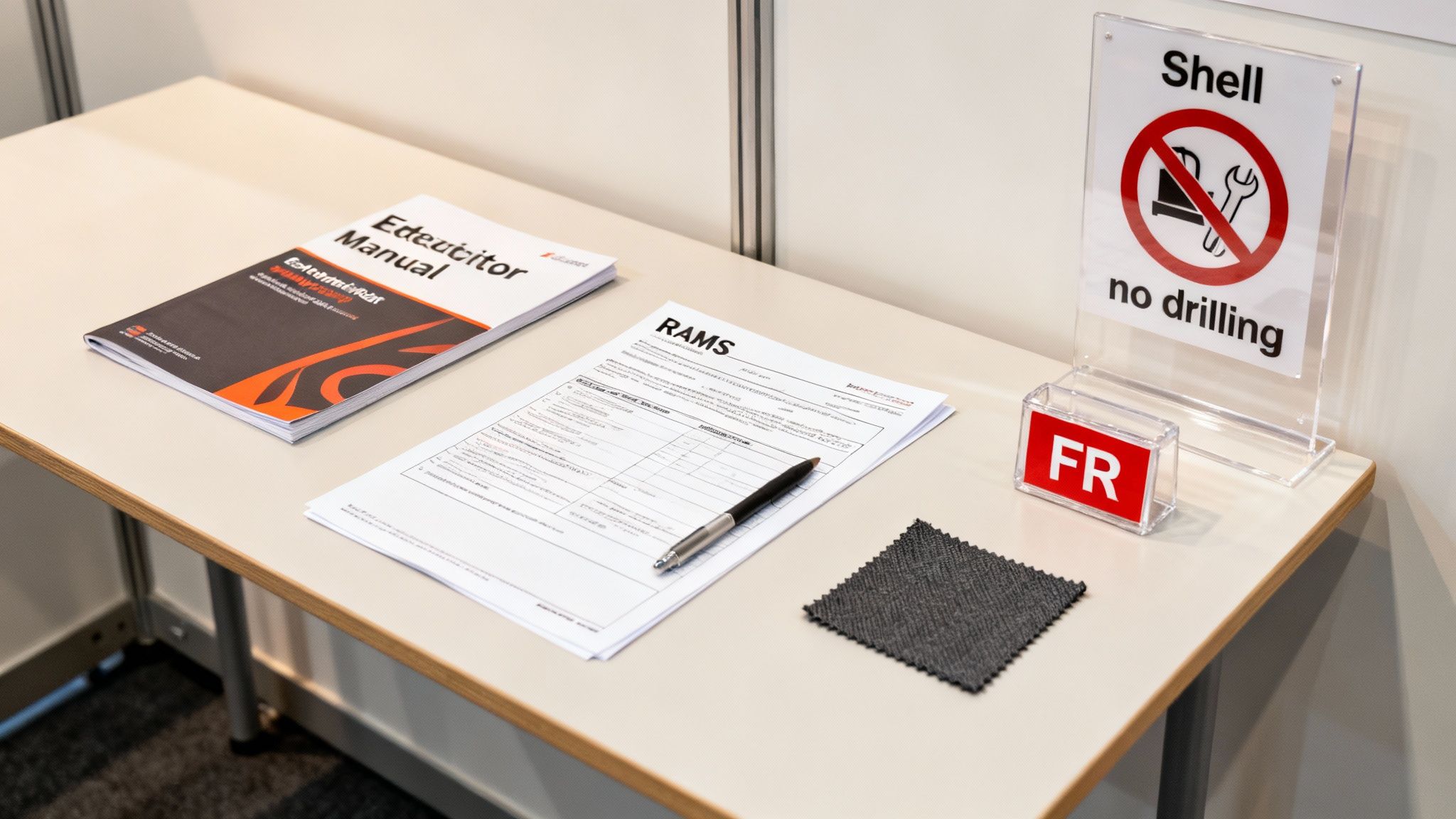
Treat this manual as your roadmap. It details the specifics that will directly shape your shell scheme design, from the maximum height for your branding to the fire safety specification for your graphics. Get this wrong, and you could be facing last-minute, on-site changes or, in a worst-case scenario, being told to dismantle your stand.
Understanding Key Restrictions
The shell scheme system itself has some hard-and-fast rules. The main one? You cannot permanently alter the structure. That means absolutely no drilling into the panels, no painting the walls, and no using adhesives that leave a mark. You have to work with what you have, using approved methods like clamps, magnetic tape, or hook-and-loop fasteners to attach graphics and AV equipment.
You will also typically find rules covering:
- Height Limits: There is always a ceiling on how high your branding can go. This ensures fair play and keeps sightlines clear across the hall.
- Fire Safety: Any materials you bring in, especially fabrics for backdrops or printed graphics, must be certified as fire-retardant.
- Rigging Regulations: If you want to hang anything from the hall ceiling, do not attempt it yourself. This is a tightly controlled process that requires specialist contractors and official sign-off.
The Importance of Health and Safety Paperwork
This brings us to the paperwork, specifically your Risk Assessment and Method Statement (RAMS). It sounds daunting, but it is just a formal document that shows you have thought about potential hazards and have a safe plan for building and running your stand. It might feel like a box-ticking exercise, but it is a legal requirement that proves you are taking your responsibilities seriously.
Do not be late with your RAMS. Failing to submit it on time can genuinely delay or even prevent you from entering the hall to build. It is a non-negotiable step that shows you are committed to a safe event for everyone.
This is where a good supplier is worth their weight in gold. A professional partner like London Audio Visual Hire already knows the procedures. They understand the specific rules for different exhibition centres and can provide all the correct documentation for their equipment and installation methods. Partnering with suppliers who know the quirks of specific London venues and their unique requirements can save you significant trouble. When you put safety and compliance first, you are not just ticking boxes – you are making sure your stand is impressive for all the right reasons.
Common Shell Scheme Questions Answered
Even the most seasoned exhibitors encounter practical questions on-site. When working with a shell scheme, a few common queries always seem to arise. Here are some quick, straightforward answers to the problems you are most likely to face.
Can I Paint or Drill Into the Shell Scheme Walls?
The short answer is no. Organisers and venues are very strict about this – you cannot make any permanent changes to the panels. Forget drilling, painting, or using any glue that might leave a mark.
The smart way around this is to think temporarily. You can completely transform the look with seamless graphic wraps or tension fabrics that stretch across the panels. For lighter displays or branding, you can rely on approved fixings like strong magnetic tape or hook-and-loop fasteners. These give you a professional finish without damaging the structure.
How Do I Order Electricity for My Stand?
Power is not something you can sort out on the day. You will need to order it in advance, directly from the official event contractor. This is usually done through an online exhibitor portal that the organiser will give you access to.
Before you order, do your research. Add up the wattage of every item you plan to plug in – from the spotlights and screens down to the laptop chargers. Getting this calculation right and ordering the correct supply beforehand will save you from hefty on-site fees and the headache of last-minute power failures.
What Is the Best Way to Add Lighting?
Good lighting can make or break a shell scheme stand. The easiest and most effective option is to use clamp-on spotlights. These attach directly to the top frame of the shell scheme, letting you aim light precisely where you need it, like on a key product or a hero graphic.
If you are looking to create more atmosphere, freestanding LED uplighters are an excellent choice. You can place them at the base of the walls to wash the space in your brand colours, which adds a sense of depth and makes your stand far more inviting.
How Can I Make My Small Stand Feel Bigger?
Shell schemes can feel a bit cramped, but there are some classic design tricks to create an illusion of space.
- Go Light and Bright: Using light colours in your graphics is a simple but powerful technique. It makes the space feel more open and airy by reflecting light around the booth.
- Choose Clever Furniture: Do not crowd the floor. Opt for minimalist, perhaps multi-functional, furniture that serves its purpose without consuming valuable space.
- Use Lighting Strategically: Well-placed lights do more than just illuminate; they can draw the eye upwards and outwards. This simple trick can make the whole area feel significantly larger than it is.
Transforming a standard shell scheme requires not just great design, but also flawless technical execution. The team at London Audio Visual Hire are experts in integrating lighting and AV technology seamlessly into any exhibition stand, ensuring your message is seen and heard.


