
Renting a sound system is a practical decision for any professional event. It provides access to high-quality, professionally maintained equipment without the significant capital outlay of purchasing. More importantly, it transforms a complex logistical challenge into a managed service, placing your event's audio in the hands of specialists. This approach is not simply about hiring equipment; it is about securing technical expertise and ensuring a successful outcome.
Why Renting a Sound System is a Strategic Choice
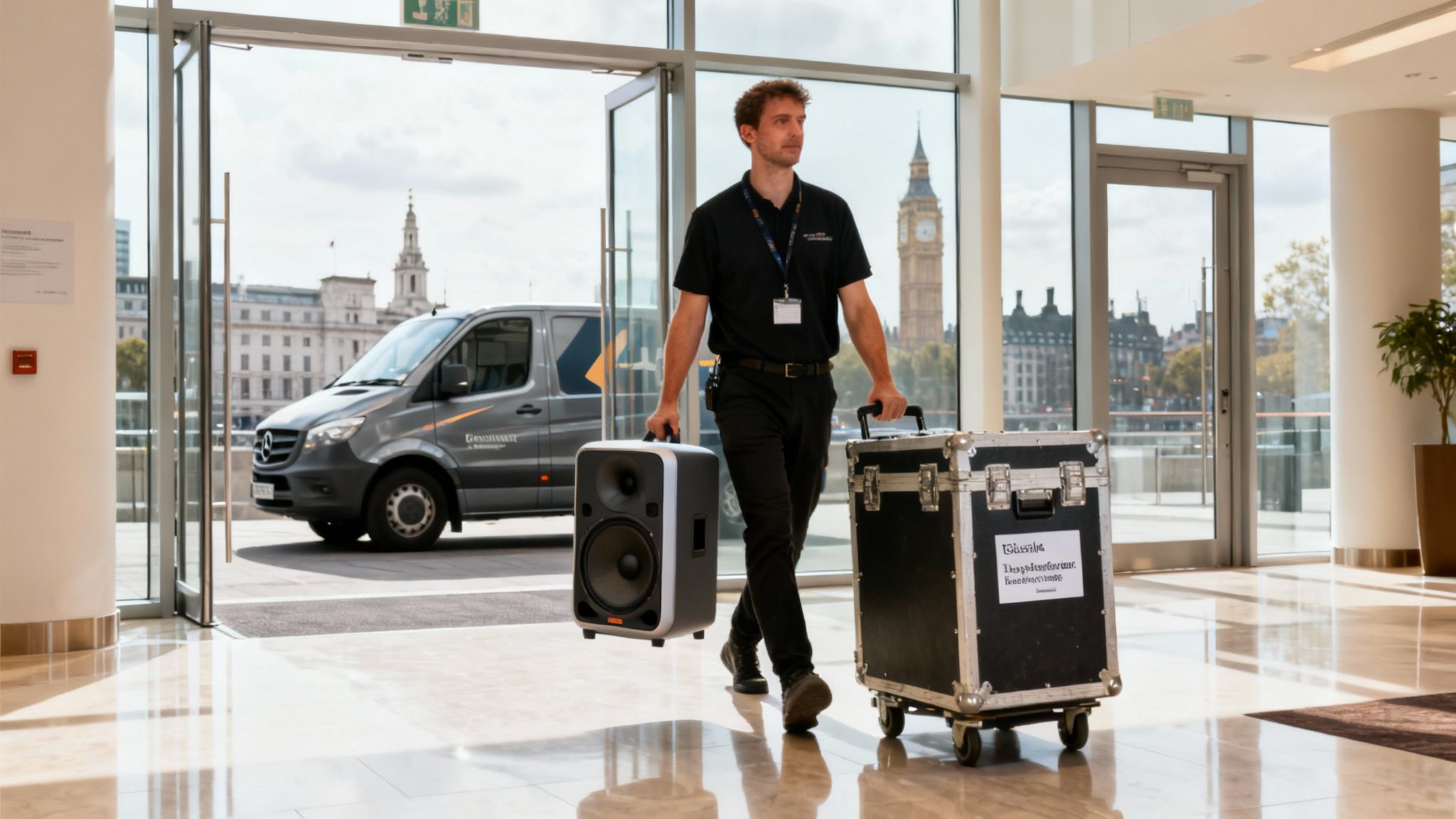
The 'buy versus hire' debate is a familiar one for event planners. While owning equipment may seem appealing, the reality involves far more than the initial purchase. Renting a sound system offers numerous advantages suited to the demands of professional events. This is not just about cost saving; it is a strategic decision that provides access to better technology, expert support, and efficient logistics.
For corporate event planners, marketing agencies, and anyone organising a high-stakes event, the objective is flawless execution. Hiring your audio-visual equipment is a significant step towards achieving this, removing the considerable burdens of ownership.
- Access to Current Technology: The audio-visual industry evolves rapidly. Renting from a professional supplier like London Audio visual Hire ensures you are always using the latest, high-performance equipment without being committed to a constant and expensive upgrade cycle.
- No Maintenance or Storage Overheads: Professional sound equipment requires appropriate, secure storage. It also needs regular maintenance and PAT testing to remain safe and reliable. When you rent, these responsibilities are handled by the supplier.
- Expert Technical Support: A key benefit of hiring is the availability of experienced sound engineers. Their expertise in system setup, acoustic tuning, and live operation is invaluable, particularly in London's varied and sometimes acoustically challenging venues.
Financial and Operational Benefits
Beyond the practical advantages, the financial case for renting is compelling. It converts a large capital expenditure into a predictable operational cost. This frees up budget for other critical event components, from catering to guest speakers. For agencies and planners managing multiple projects, this flexibility is highly beneficial.
This approach is standard practice in London's events industry. The UK audio equipment rental market was valued at USD 739.51 million in 2024 and is projected to grow, indicating strong demand for quality, reliable audio solutions. A clear industry trend shows corporate planners allocating 68% of their budgets towards audio-visual rentals to create more immersive experiences. For further details, you can explore market insights on the growth of audio equipment rental.
Choosing to rent is about more than speakers and microphones. It is an investment in a guaranteed outcome, ensuring every word of a keynote speech is clear and all music has the intended impact.
Minimising Risk and Ensuring Quality
Ultimately, renting a sound system is about risk management. An in-house system might seem convenient until it fails minutes before a key presentation. A professional hire company provides equipment that has been meticulously maintained and tested, along with the technical crew to resolve any unexpected issues on the spot.
For any event where brand reputation is at stake, this level of reliability is not just desirable; it is essential.
Defining Your Audio Requirements
Selecting the right sound system does not require extensive technical knowledge. It depends on three key factors: your audience, your venue, and your content. By defining these elements, you can have a productive discussion with any audio-visual provider and secure equipment that is perfectly matched to your objectives. An incorrect assessment can lead to an underpowered system where the message is lost, or an oversized one that is an inefficient use of budget.
The goal is to move beyond estimation and create a clear brief. The simple PA system suitable for a 50-person seminar will not suffice for a 300-guest gala dinner with a live band. Defining your needs from the outset prevents last-minute complications and ensures a consistent, high-quality audio experience for every attendee.
This shift to precise, needs-based rental is prevalent across the UK events industry. While the retail market for audio equipment is contracting, the rental market is thriving. For corporate planners, the logic is clear: 85% now opt for rentals to avoid ownership costs that can exceed £50,000, while gaining access to the latest technology. This trend underscores the value of flexibility and expertise.
Assess Your Audience and Venue Size
The first question any sound engineer will ask is, "How many people are attending?" The audience size directly influences the power and number of speakers required for clear, even sound coverage. It is not just about volume; a large crowd absorbs more sound, a critical detail a professional will account for.
The venue is equally important. A marquee in an open field has completely different acoustic properties to a historic London ballroom with high ceilings and reflective marble floors.
Consider these environmental factors:
- Indoor vs. Outdoor: Outdoor events almost always require more powerful systems to compensate for the lack of natural sound reflection. Equipment may also need to be weather-resistant.
- Room Dimensions and Shape: A long, narrow room presents a common challenge. It will likely require additional 'delay' speakers partway down the space to ensure those at the back hear as clearly as those at the front.
- Acoustic Materials: Hard surfaces like glass, wood, and stone create reverberation, which can make speech sound unclear. In contrast, soft furnishings such as heavy curtains, carpets, and upholstered chairs absorb sound, which may necessitate a different audio strategy.
A professional site visit is essential for acoustically complex venues. An experienced technician can identify potential issues and design a system that works with the space, not against it.
Match the System to Your Content
The nature of the audio content is as vital as the venue. The requirements for a keynote speech are very different from those for a live band.
- Speech-Focused Events: For conferences, panels, and presentations, the primary goal is clarity and intelligibility. Microphone choice is critical. Lapel microphones are suitable for presenters moving on stage, lectern microphones for formal speeches, and handheld microphones for audience Q&A sessions.
- Background Music and Ambience: At a reception or dinner, the sound system should create a pleasant atmosphere without overpowering conversation. Using multiple, smaller speakers placed strategically is often more effective than two large speakers at the front.
- Live Performances: A live band or DJ requires a full-range system with powerful subwoofers to reproduce deep bass frequencies. This is a more complex setup, requiring a mixing desk for the engineer and on-stage monitors for the performers. To understand the specifics further, our guide on what is audio-visual equipment is a useful resource.
The following table provides a quick reference for common event setups.
Sound System Recommendations by Event Type
| Event Type | Audience Size | Key Audio Needs | Recommended Equipment |
|---|---|---|---|
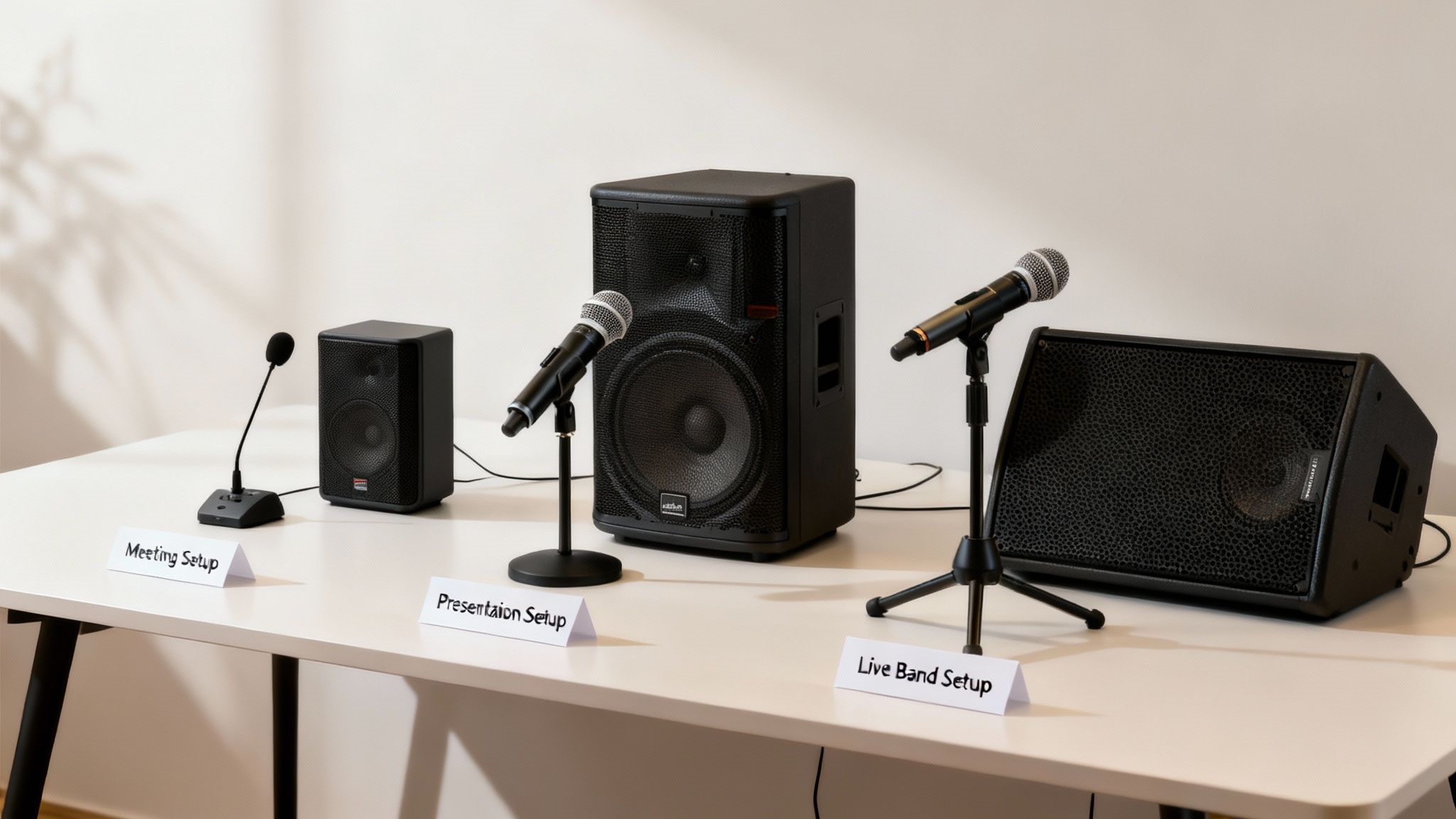
| Corporate Meeting/Presentation | 10-50 | Speech clarity, minimal setup | 2 x Active Speakers on stands, 1-2 x Wireless Handheld/Lapel Mics, Small Mixer |
| Conference/Panel Discussion | 50-200 | Intelligibility, audience Q&A | 4+ Speakers (with delays for larger rooms), Lectern Mic, Panel Mics, Handheld Mics |
| Gala Dinner/Awards Night | 100-500 | Background music, clear announcements | Distributed Speaker System, Wireless Mics for host/awards, Music Playback Source |
| Live Band/DJ Performance | 50-500+ | High-impact, full-range audio | Full PA System with Subwoofers, Digital Mixing Desk, Stage Monitors, Mic Package |
This table serves as a solid foundation for your planning. By considering your audience, venue, and content, you can approach the rental process with confidence, ensuring you secure a solution that is both effective and efficient.
Understanding the Technical Details
Excellent sound at an event is the result of meticulous, early-stage planning. Hiring a sound system involves more than selecting speakers; it is a technical process that begins with a venue assessment and concludes with a flawlessly executed event.
Engaging an audio-visual partner at the start of your planning process is a prudent step. This allows for the development of a comprehensive plan covering everything from power requirements to room acoustics, establishing a clear path to a successful event.
The Importance of a Site Visit
The site visit is a foundational step. It is where a theoretical plan is tested against real-world conditions, allowing a sound engineer to identify challenges and opportunities not apparent on a floor plan.
During a site visit, a technician will assess several key areas:
- Power Availability: We will identify all available power sources. We need to determine if standard 13A sockets are sufficient, or if we need to use the venue's higher-capacity 32A or 63A supplies. This assessment prevents circuit overloads and ensures the equipment receives the clean, stable power required for optimal performance.
- Loading and Access: We will map the route from the delivery vehicle to the performance area. Any narrow corridors, flights of stairs, or service lifts must be identified to plan logistics and allocate appropriate manpower.
- Acoustic Profile: The engineer will assess the room's acoustic characteristics. A historic London venue with stone walls and high ceilings behaves differently to a modern, carpeted conference room. Each requires a tailored audio approach.
A thorough site survey is the best insurance against last-minute problems. It resolves unknowns and allows us to tailor the entire setup perfectly to the space.
This is not a box-ticking exercise; it is the basis for designing a system that delivers clear sound to every person in the room.
Liaising with the Venue Team
Effective communication with the venue's in-house team is essential. Your audio-visual partner should take the lead, liaising directly with the venue manager or their technical contact to finalise all arrangements.
Discussions will cover where speakers can be safely rigged, the best routes for running cables to avoid trip hazards, and confirming setup and de-rig times. This professional-to-professional communication streamlines the process, ensuring we adhere to the venue’s regulations while meeting your event's specific needs.
Assembling the Technical Checklist
Following the site visit and venue liaison, we create a master plan. This document is the blueprint for the entire audio setup, detailing every piece of equipment and its purpose. It will specify microphone allocation, loudspeaker placement for optimal coverage, and how any band or DJ inputs will be managed.
This is not simply a list of equipment. It is a carefully considered strategy to ensure all components work together seamlessly. If you are interested in the components of a professional setup, you can explore the range of professional audio equipment available for hire. This level of detailed preparation is what distinguishes an amateur setup from a polished, professional production.
How to Read Your Rental Quote and Contract
When you receive a quote for a sound system, it can appear to be a technical document filled with industry-specific terms. However, understanding each line item is crucial for avoiding unforeseen issues on the day of your event. This is where a professional hire company demonstrates its value.
A clear, itemised quote is a sign of a reputable provider. It should break down every element of the service, from the specific speakers and microphones to the cost of the technical crew. If a quote is vague or unclear, you should request further detail; a provider's inability to do so is a significant concern.
Deconstructing the Quote Line by Line
A well-structured quote will be organised into logical sections, showing exactly how the total cost is calculated. While the format may vary, you should always expect a clear breakdown of the main cost components.
Typically, this will include:
- Equipment Costs: This section should list every piece of equipment, including specific speakers, microphones, mixers, and cabling. A generic entry like "PA System" is insufficient; you need to see model names or types to understand what you are hiring.
- Labour and Technical Staff: This covers the skilled professionals on-site. It should detail the number of technicians or engineers, their roles (e.g., Project Manager, Sound Engineer), and their estimated working hours.
- Transport and Logistics: This is the cost of delivering the equipment and crew to your London venue and back. It covers fuel, vehicle costs, and the time required for loading and unloading.
A detailed quote is more than a price list; it is a statement of intent. It shows that the provider has thoroughly considered your event's unique requirements and has a robust plan to deliver the service.
Scrutinising the Rental Contract
Once you are satisfied with the quote, the contract is the next critical document. This is a legally binding agreement designed to protect both you and the hire company. Understanding the standard terms of equipment lease rentals can provide useful context before you review the specifics of your sound system agreement.
Pay close attention to these key clauses:
- Payment Terms: Note the deposit amount required to confirm the booking and the deadline for paying the final balance.
- Cancellation Policy: Circumstances can change, so you need to understand the financial implications of cancellation or postponement. Most companies use a sliding scale, where the fee depends on the proximity to the event date.
- Liability and Insurance: The contract must clearly state who is responsible for equipment damage. A reputable company like London Audio Visual Hire will have its own comprehensive insurance, but it is vital to understand your own responsibilities.
- Contingency Plans: A robust contract may also outline the provider’s commitment to providing backup equipment and on-site support, formalising their promise of a reliable service.
This technical planning process leads to a detailed and accurate quote.
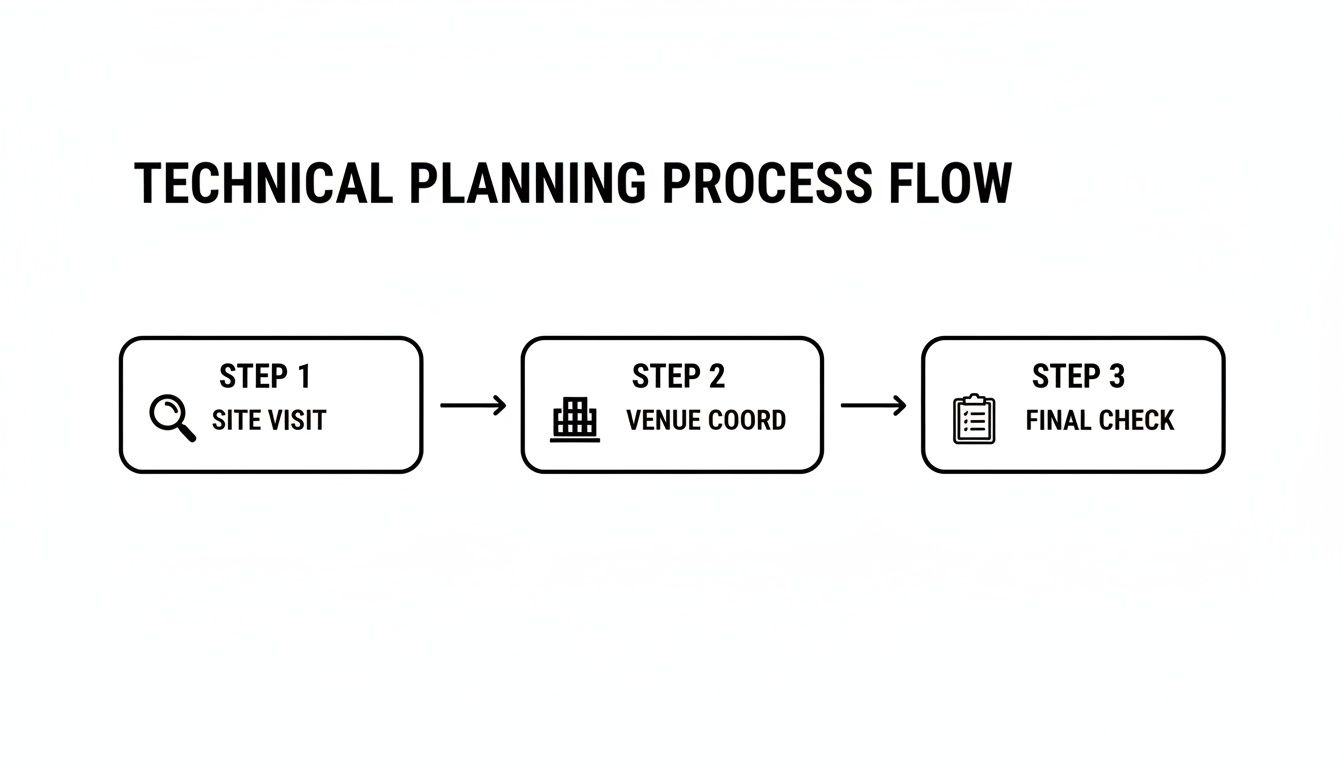
From the initial site visit to the final checks, each step gathers the information needed to build a quote and contract you can trust.
Spotting Hidden Costs and Comparing Fairly
A transparent quote should not contain hidden costs. Any additional charges for out-of-hours crew, parking at difficult London venues, or special power requirements should be discussed and included from the outset. When comparing quotes from different companies, ensure you are comparing like-for-like. A lower price might seem appealing but could signify less equipment, fewer staff, or no contingency plan.
The move towards professional hire is supported by compelling data. In the UK, 70% of trade show organisers now rent equipment rather than buying, often saving up to 60%. It is a sound financial decision that reflects a growing market. By taking a methodical approach to quotes and contracts, you can select a partner who delivers genuine value and peace of mind.
Ensuring Flawless On-Site Execution
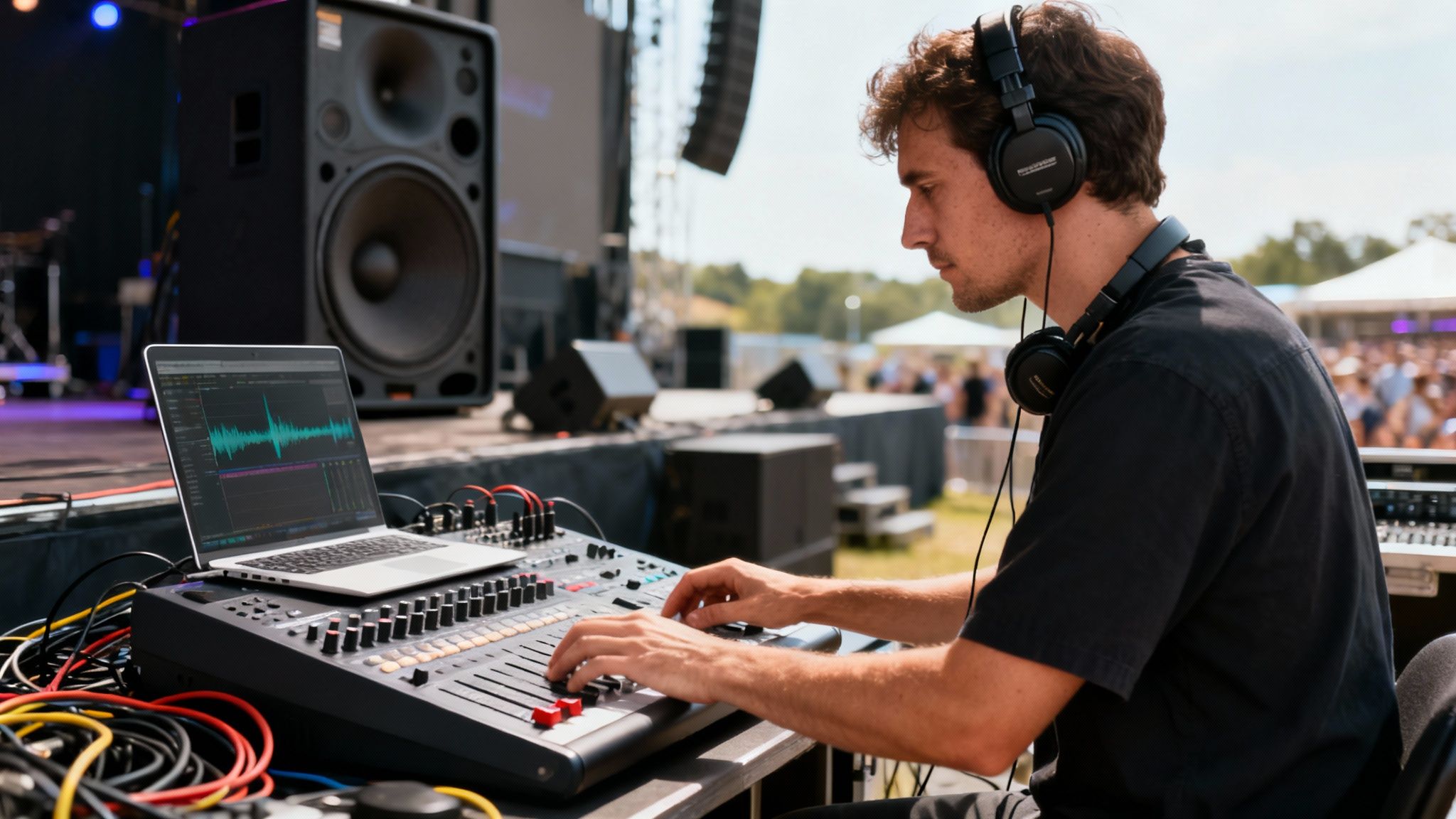
All planning culminates on the day of the event. This is when a professional audio-visual team demonstrates its value, transforming technical diagrams and equipment lists into a seamless audio experience. On-site execution is not just about connecting equipment; it is a methodical process managed by experienced technicians who operate effectively under pressure.
From the moment equipment arrives, the process should be calm and controlled. An experienced crew, such as the team at London Audio Visual Hire, works with a quiet confidence that comes from years of experience in London's most demanding venues. This level of professionalism elevates an event from adequate to exceptional.
Delivery, Rigging and Setup
Installing the sound system is a technically demanding task. The crew will arrive at the agreed time, fully briefed on the venue’s access points, loading bay procedures, and any potential obstacles. Safety is the first priority; all equipment must be handled correctly and all cables secured to eliminate trip hazards.
Rigging, the process of suspending speakers from a venue's ceiling or support structure, is a highly specialised skill. This must be performed by certified professionals who understand load-bearing limits and safety protocols. For ground-stacked systems, placement is equally critical. Technicians will position each speaker according to the audio design, ensuring sound is distributed clearly and evenly throughout the room.
The goal is to build a system that delivers excellent sound while being visually unobtrusive, integrating with your event's aesthetic. This is more than heavy lifting; it is the physical implementation of a detailed acoustic strategy.
The Critical Role of the Soundcheck
Once all speakers are positioned and every cable is connected, the soundcheck begins. This is arguably the most important part of the on-site process. It is a systematic test of every component in the audio chain, from microphone to mixer to speaker.
During the soundcheck, the engineer will:
- Test every input signal: This involves checking that each microphone, laptop, and music source is connected correctly and sending a clean, interference-free signal to the mixing desk.
- Tune the system to the room: Using specialist software and their trained ear, the engineer adjusts the system’s equalisation (EQ). This process compensates for the room's unique acoustic characteristics, controlling echoes and eliminating the risk of feedback.
- Set appropriate volume levels: They will balance the levels of all audio sources, ensuring speech is perfectly intelligible and music has impact without being uncomfortably loud.
A thorough soundcheck is non-negotiable. It is the final quality control check that identifies potential issues long before guests arrive, guaranteeing flawless audio on the day.
This is especially important for events with live presenters or musicians. It provides them with an opportunity to hear themselves through the monitors and feel confident that they will be heard clearly by the audience. This meticulous preparation is equally vital for more complex productions, such as those involving a combined live and virtual audience. You can learn more about how we manage this in our guide to hybrid event streaming.
The On-Site Sound Engineer
For any event where audio quality is critical, a dedicated on-site sound engineer is essential. This person is responsible for the audio throughout the event. Their work continues long after the soundcheck is complete.
During the event, the engineer actively mixes the sound in real-time. They will adjust microphone levels as different people speak, execute music cues precisely, and maintain a consistent, high-quality sound from start to finish. If a presenter moves away from a lectern microphone, a skilled engineer can seamlessly switch to a backup or adjust their level without the audience noticing.
Crucially, they are the first line of defence against technical problems. Equipped with spare parts and backup units, an experienced engineer can troubleshoot and resolve most issues in seconds. Their calm, professional presence allows you and your speakers to focus on delivering your content, confident that the sound is in expert hands.
Common Questions About Hiring a Sound System
Even with a detailed plan, questions often arise as an event approaches. Here are clear, straightforward answers to some of the most common queries we receive from clients.
How Far in Advance Should I Book?
For large-scale London events such as conferences, awards nights, or major product launches, it is advisable to book your sound system three to six months in advance. This is particularly important if your event falls during the busy summer months or the Christmas party season.
Booking early provides sufficient time for us to conduct proper site visits, design an optimal system, and coordinate with the venue's team. It also ensures you have access to the best equipment and our most experienced engineers for your chosen date.
For smaller events, such as an internal company meeting, two to four weeks' notice can be sufficient. However, the sooner you make contact, the better. As soon as you have a confirmed date, it is wise to get in touch with an initial brief.
What is the Contingency Plan if Equipment Fails?
This is a common concern for event planners and is precisely why you hire a professional company. We are focused on preventing problems before they occur. Every item, from a cable to a loudspeaker, is rigorously checked and PAT tested before it leaves our warehouse. This is our first line of defence.
For any critical event, our on-site engineers will always have backups of key items as standard practice. This typically includes:
- Spare microphones: A selection of wired and wireless models, in case of accidental damage or battery failure.
- Extra cables: For every essential connection within the system.
- Backup playback: A second laptop or device, ready to ensure background music or presentation audio continues without interruption.
Your on-site technician is your best insurance policy. They are trained to identify and resolve potential issues in seconds, often before the audience is aware of any problem. The objective is to maintain a seamless experience.
Do I Need to Arrange Power at the Venue?
Power requirements depend entirely on the scale of your setup. A simple pair of speakers for a presentation may only need a couple of standard 13A plug sockets.
However, a larger system for a conference with a full lighting rig, or an event with a live band or DJ, will have significantly higher power demands. This may require 32A or 63A power supplies, and sometimes three-phase connections. Most large London venues are equipped with these, but this cannot be assumed in smaller or more unique spaces.
This is not something you need to resolve. A core part of our process is to liaise directly with the venue's technical manager to confirm power availability. We then design the entire audio-visual system to operate safely within the venue's capacity and manage all power distribution ourselves. This removes a significant technical responsibility from you.
Can You Accommodate Outdoor Events?
Yes. We regularly supply sound for a wide range of outdoor events, from corporate summer parties and brand roadshows to small festivals. However, outdoor events present a unique set of challenges.
We must consider weatherproofing, power supply in remote locations, and sound containment. We use IP-rated equipment designed to withstand rain, and if mains power is unavailable, we can provide super-silenced generators.
Sound control is also crucial. We carefully plan speaker placement to deliver perfect clarity to your audience while minimising sound spillage to neighbouring areas. This is vital for compliance with local authority regulations. For any outdoor event, a site visit is essential; it is the only way to properly assess the logistics and potential challenges.
At London Audio Visual Hire, our team is available to answer any other questions you may have. We believe that detailed planning and calm, expert support are the keys to ensuring your event audio is a complete success.
Find out how our audio visual hire services can support your next London event.