
When you are organising an event, every detail matters. Nothing compromises an event faster than poor sound. Deciding to rent audio equipment is more than a logistical choice; it is a strategic move that grants you access to professional kit and technical knowledge without the significant cost of ownership.
This guide will walk you through everything you need to know to achieve flawless audio for your next event in London.
Why Renting Audio Equipment is a Smart Move
For most event organisers, the "buy vs. rent" debate for AV gear comes down to practicality and risk management. Buying professional-grade audio equipment is not just a substantial upfront cost; you also have to consider storage, regular maintenance, and the fact that technology becomes outdated quickly.
When you choose to rent, those responsibilities fall to the supplier. This approach offers significant advantages, whether you are planning a corporate conference, a wedding, or a major product launch.
Access Premier Technology and Expertise
The greatest benefit of renting is gaining access to an extensive inventory of high-end equipment that would be financially impractical for most to buy outright. A professional supplier like London Audio Visual Hire constantly updates their stock, which means your event benefits from the latest in sound technology.
Renting also provides the invaluable support of experienced technicians and sound engineers. These are the professionals who handle everything from designing the right system for your space to setting it all up and operating it live. They identify and solve problems before they have a chance to disrupt your event, providing a crucial safety net so you can focus on your guests.
A common pitfall is underestimating the complexity of audio. A muffled keynote speech or inconsistent sound levels can derail an otherwise perfect event, reducing audience engagement and damaging your reputation.
Financial and Operational Efficiency
The rental model converts what would be a large capital expense into a predictable, manageable operational cost. This makes budgeting far simpler. In a competitive market like the London events scene, the UK's AV equipment rental sector has become an indispensable partner for planners.
The numbers support this. Europe's AV equipment rental market was valued at around USD 1.3 billion in 2023 and is expected to grow. This trend is fuelled by businesses that need flexible, high-quality solutions for their most important events without incurring excessive costs. For a deeper dive, you can explore further analysis on the AV equipment rental market and see where the industry is heading.
Defining Your Event's Audio Needs
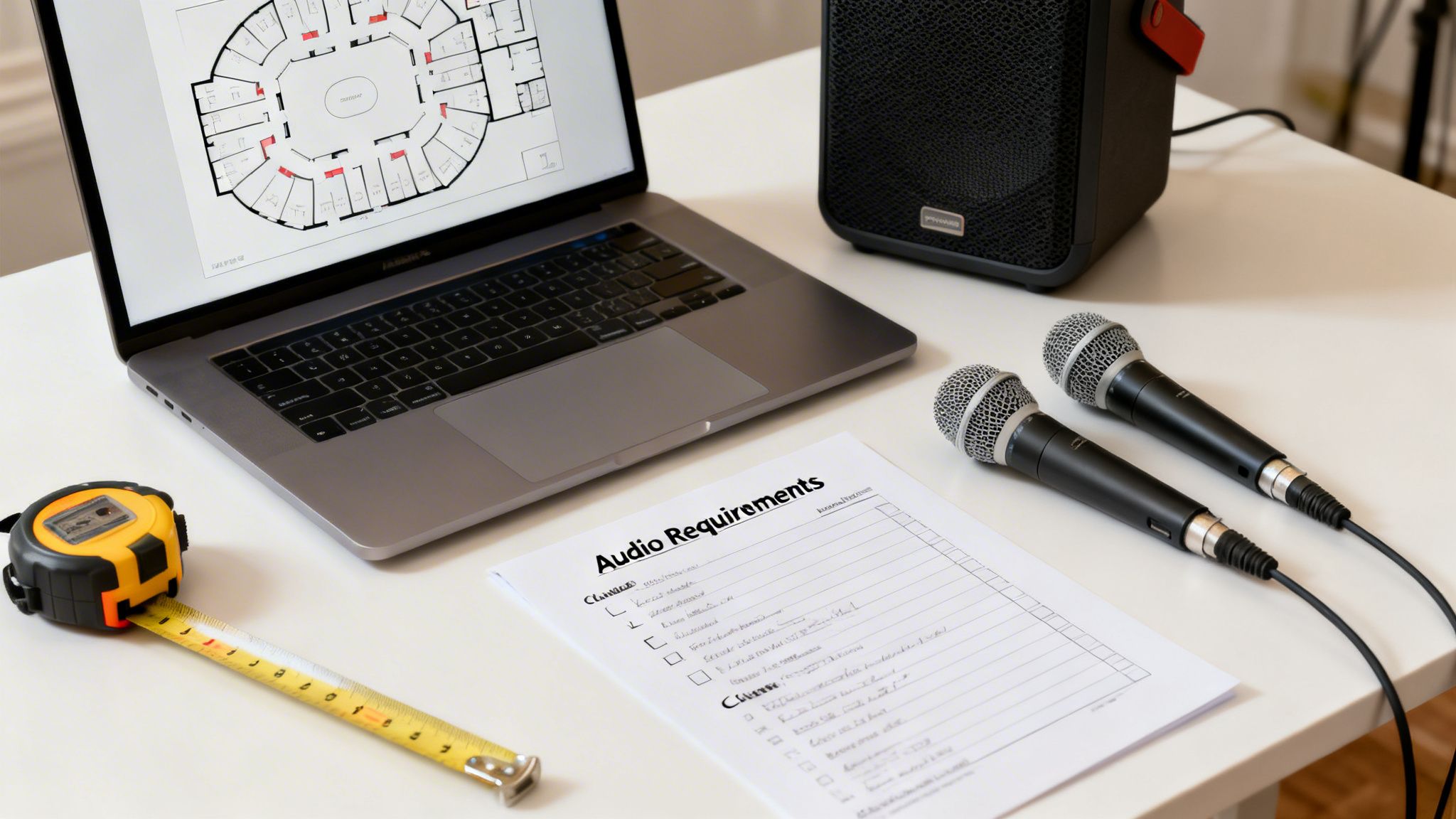
Before you consider making an enquiry to rent audio equipment, you need a clear picture of your requirements. Assembling a solid brief is not just about getting an accurate initial quote; it is the foundation of your event's technical success.
A vague request for "a PA system" is insufficient. It leaves too much to guesswork and can easily result in a setup that is either too quiet or unnecessarily powerful and expensive. Your goal is to translate your creative vision into a concrete technical plan, giving your supplier the details they need to deliver the right solution.
Understand Your Venue and Audience
The space itself is arguably the single biggest factor shaping your audio setup. The acoustics in a historic London hall with high, reverberant ceilings are very different from those in a modern, purpose-built conference centre. You have to work with the characteristics of the space.
Start by walking the venue and considering these points:
- Venue Acoustics: Is the room full of hard surfaces like glass, polished concrete, and plaster? These surfaces cause sound to reflect, which can reduce clarity. Or is it filled with soft furnishings, thick carpets, and acoustic panelling that absorb sound? A 'live' room will need a more carefully controlled sound system to prevent it from becoming a blur of echoes.
- Audience Size and Layout: How many people are attending, and where will they be? A theatre-style setup for 200 guests needs sound projected in one direction. A standing reception for 500 people spread across a main room and a breakout area needs much wider, more distributed coverage.
- Background Noise: Is your event in a sealed, quiet room? Or are you competing with the low hum of an adjacent exhibition or the rumble of London traffic outside? The more ambient noise you have, the more powerful your sound system needs to be to cut through it.
Defining these details allows a supplier to choose speakers with the right power and dispersion, ensuring the person in the back corner hears just as clearly as the one in the front row.
Consider Your Content and Presenters
What is happening on stage? The answer dictates every choice, from microphones to playback equipment. A common mistake is underestimating how many different sound sources will need to be managed simultaneously.
For instance, a panel discussion with a moderator and four panellists means you need five microphones live at once. That requires a more sophisticated mixing desk, and a skilled engineer to balance the levels and prevent feedback, than a single presenter speaking from a lectern.
Creating a detailed audio brief is not about becoming a sound engineer overnight. It is about giving your AV partner the 'what, where, who, and how' of your event so they can design the perfect technical solution. A five-minute conversation about your running order can save hours of troubleshooting on-site.
This level of detail is essential. If you are new to this, it is worth looking through the different types of equipment available from London Audio Visual Hire to get a feel for the options.
Building Your Comprehensive Audio Brief
To get an accurate quote from the start, you need to turn your thoughts into a structured brief. This checklist approach eliminates guesswork and ensures no small but crucial detail is missed. When you provide this information upfront, a company like London Audio Visual Hire can return a proposal that is already 90% of the way there.
Before you send your enquiry, run through the following table. It is a simple way to ensure you have covered all the key bases.
Audio Needs Assessment Checklist
| Consideration | Key Questions to Ask | Example Scenario |
|---|---|---|
| Speaker Requirements | How many presenters are speaking at once? Will they be stationary or moving around the stage? | A dynamic CEO presentation requires a wireless headset microphone for freedom of movement, unlike a static lectern mic for an awards host. |
| Audience Interaction | Will there be a Q&A session with the audience? If so, how will questions be managed? | For a large town hall meeting, two wireless handheld microphones for 'runners' are needed to capture audience questions clearly. |
| Multimedia Content | Are you playing videos, presentation audio, or background music? What are the audio formats? | A product launch with a high-impact video reveal needs a stereo PA system capable of delivering cinematic sound, not just speech reinforcement. |
| Special Requirements | Are there any live musical performances or a DJ? Is there a need for stage monitors for performers? | A charity gala with a live band requires a full mixing console, individual monitors for each musician, and specific microphones for instruments and vocals. |
Answering these questions transforms a simple enquiry into a professional brief. It is the first, and most important, step towards an event where every word and every note is heard perfectly.
Choosing the Right Sound Equipment
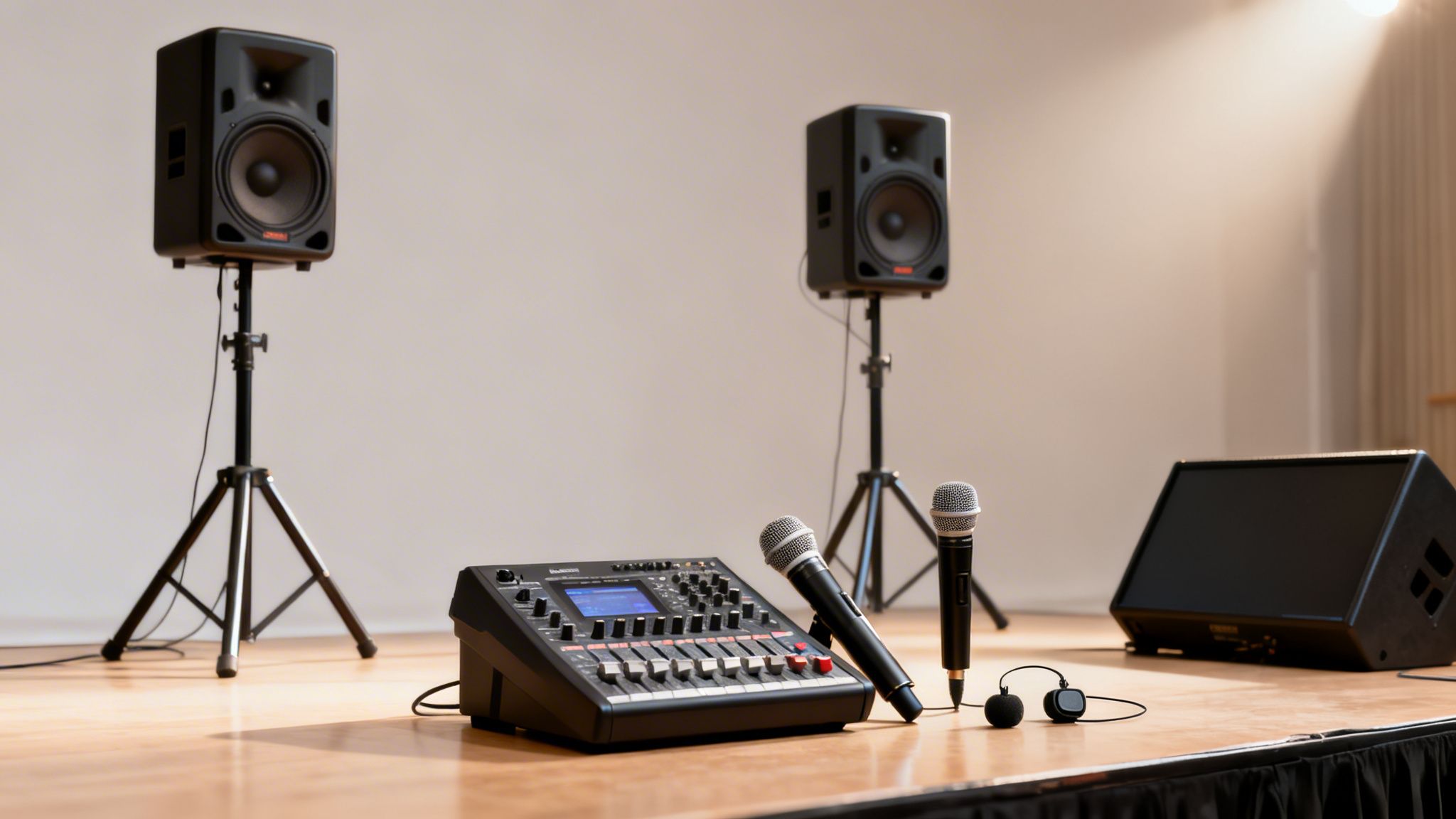
Once you have a solid event brief, it is time to consider the equipment. When you rent audio equipment, you are not just selecting speakers and microphones. You are assembling a system where every component has a vital role.
Familiarising yourself with these components does more than just satisfy your curiosity. It empowers you to have much clearer, more productive conversations with your AV partner. You will be able to review their proposal and understand exactly what is on it and, more importantly, why it is there.
Demystifying PA Systems
The Public Address (PA) system is the core of your event's sound. Its main job is to ensure every person in the room can hear everything, from the keynote speech to the background music. A full PA system is comprised of speakers, amplifiers, and usually a mixing desk to integrate all the elements.
The biggest decision is matching the PA system's power and coverage to your specific venue and audience. This is not just about increasing the volume; it is about delivering clear, even sound across the entire space.
Gala Dinner Scenario: Imagine a gala for 300 guests spread across round tables. The sound needs to be perfectly clear without being overpowering. A distributed system, with several smaller speakers placed strategically, will provide even coverage. This ensures guests at the back hear just as well as those near the stage, all without being too loud for the front rows.
Trade Show Stand Scenario: A small stand at a large exhibition centre like ExCeL London is a completely different challenge. Here, you are competing with a high level of background noise. The audio needs to be sharp and focused to cut through the general noise, attract the attention of passers-by, and keep them engaged without spilling over into neighbouring stands.
Understanding Microphones and Their Uses
The microphone is the first link in the audio chain. Choosing the right one is not just about sound quality; it is about what is practical for your presenters. There is no single "best" microphone; each type is a tool for a specific job.
Common Microphone Types for Events:
- Handheld Microphones: The versatile all-rounder. These are perfect for roving Q&A sessions, passing between speakers, or for quick announcements. Modern wireless versions give presenters complete freedom of movement.
- Lapel (Lavalier) Microphones: These tiny, discreet microphones clip onto clothing, leaving the speaker's hands free. They are the standard choice for keynote speakers, panel discussions, or any presenter who needs to gesture or move around naturally.
- Lectern Microphones: As the name suggests, these are fixed to a lectern. They are ideal for formal speeches or award ceremonies where the speaker remains in one spot, providing excellent, consistent sound.
Often, the choice comes down to logistics. If a speaker is clicking through slides and needs their hands free, a lapel microphone is the logical choice. For a lively panel discussion, you might give each panellist a lapel microphone but also have a handheld one ready for the moderator to manage audience questions.
The Role of the Mixing Desk and Sound Engineer
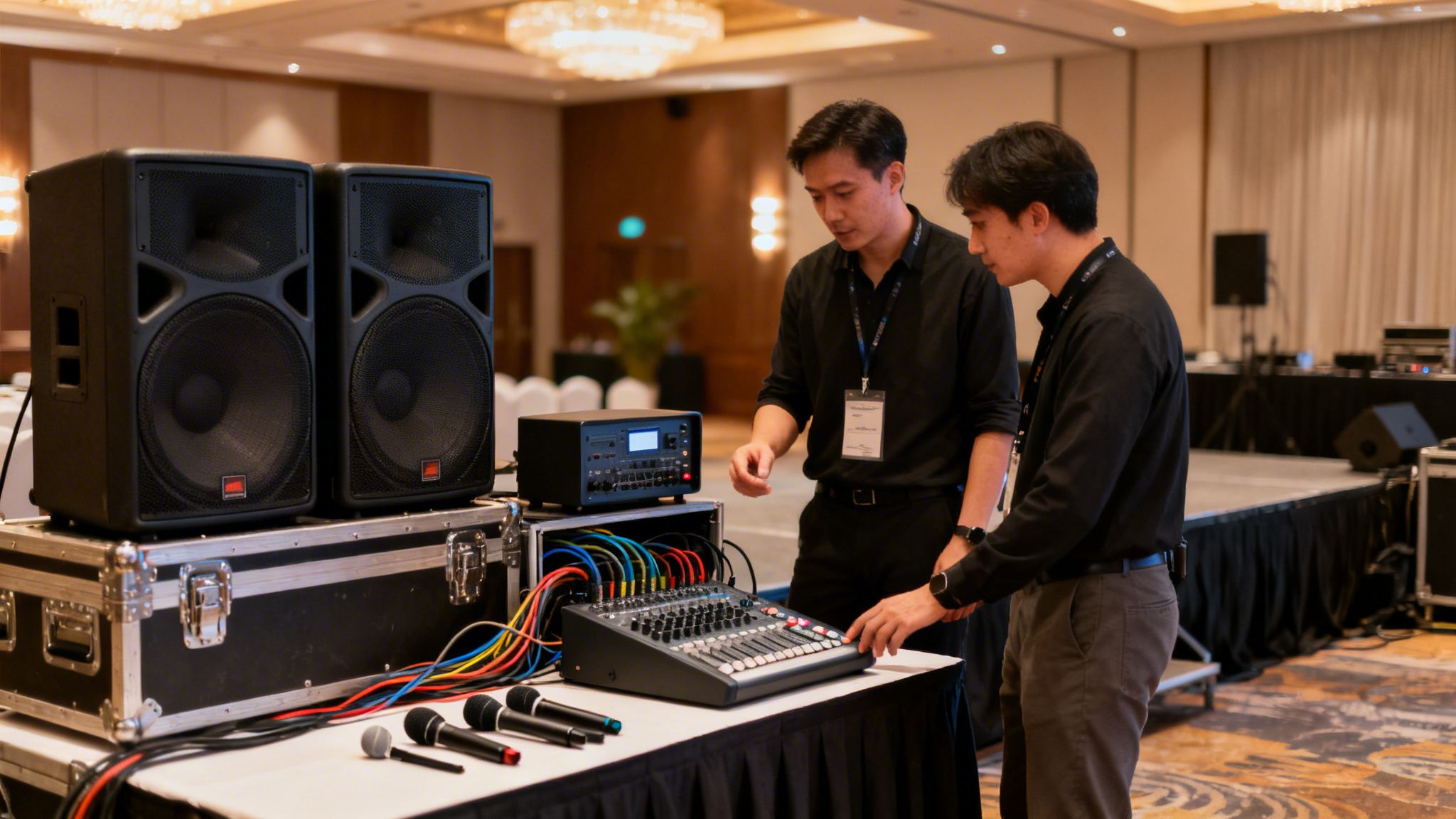
The mixing desk, or sound mixer, is the central command hub for all your audio. Every sound source, every microphone, every video clip, and all the background music connects to it. This is where a sound engineer manages the audio, blending everything into one smooth, balanced output.
For any event using more than a couple of microphones, a professional sound engineer is not a luxury, they are essential. Their role goes far beyond just connecting equipment.
An engineer is responsible for:
- Balancing Levels: Ensuring no single voice or music track is too loud or gets lost in the mix.
- Eliminating Feedback: Getting rid of the high-pitched squeal that occurs when a microphone gets too close to a speaker.
- EQ & Dynamics: Artfully adjusting the tone of each input to make voices sound clear and music sound rich.
- Handling Monitors: Sending a custom audio mix back to the stage so performers and presenters can hear themselves properly.
If you are keen to dive deeper into the technical side, our guide on what is audio-visual equipment breaks down how all these components fit together.
Ultimately, having an experienced engineer at the mixing desk is your best assurance of quality. It provides peace of mind, knowing that a professional is on hand to tackle any audio issue instantly. They are the human element that transforms a collection of equipment into a flawless experience for your audience.
Budgeting for Your Audio Equipment Rental
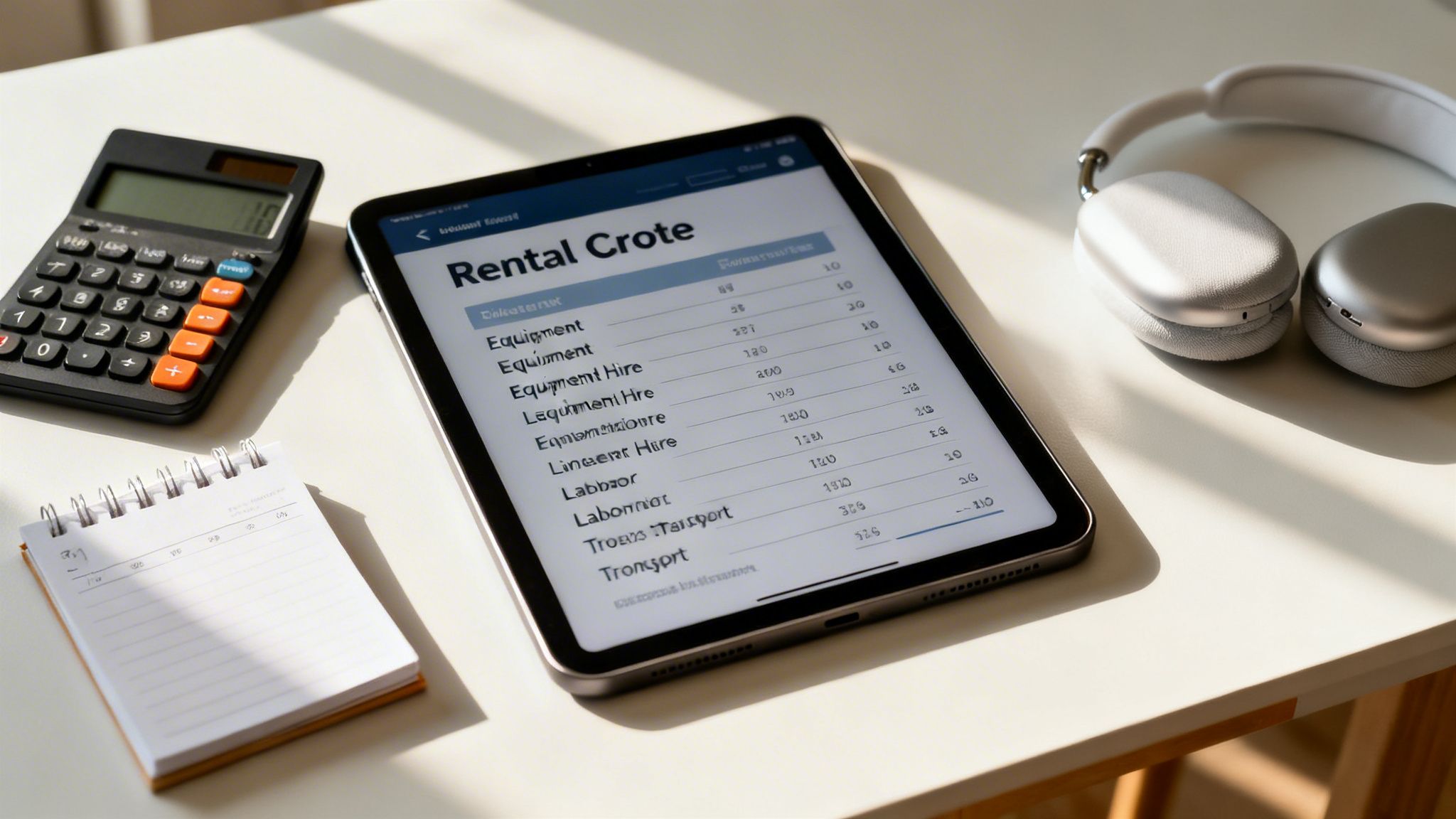
Setting a realistic budget is one of the first tasks when you decide to rent audio equipment. While hiring will always be more cost-effective than buying outright, understanding the logic behind a rental quote helps you allocate funds wisely and justify the investment. A good, transparent quote is not just a list of prices; it is the financial blueprint for your event's technical success.
The main advantage of renting is gaining access to high-quality equipment without the high purchase price. For example, a full sound system for a charity gala could be worth over £50,000. Renting makes that level of quality accessible for a fraction of the cost, and that usually includes insurance and expert engineers on-site. The entire events industry is built on this model, which is reflected in the UK market size for audio retailers.
Breaking Down a Typical Rental Quote
A professional quote from a company like London Audio Visual Hire will not be a single, opaque figure. It will be detailed and itemised, so you can see exactly where every pound is allocated.
Here are the main components you should expect to see:
- Equipment Hire Fee: This is the base cost for the physical equipment itself, from the PA system and mixing desk down to every microphone and cable. It is usually priced per day or for the entire event.
- Labour Costs: This covers the time and expertise of the technical crew. It includes everything from pre-production planning and system design to on-site setup (rigging), operation during the event, and breakdown (de-rigging) afterwards.
- Transport and Logistics: This fee accounts for getting all the equipment and the crew to and from your venue. It factors in elements like mileage, vehicle running costs, and any specific hurdles like central London's congestion charges.
Seeing these separate line items is a good sign. It shows you are not just hiring equipment, but investing in a complete technical service designed to deliver a flawless result.
How to Manage Costs Without Compromising on Quality
You should never compromise on audio quality, as it is one of the first things an audience will notice. However, there are smart ways to manage your budget. Proactive planning is your most effective tool here.
Here are a few practical tips:
- Book Well in Advance: The earlier you can confirm your booking, the better the availability of both equipment and crew. Last-minute requests often come with premium rates because the supplier has to reallocate resources.
- Bundle Your Services: If you also need lighting, video, or staging, try to source it all from a single supplier. Consolidating often leads to a better package price and simplifies your logistics with a single point of contact.
- Be Clear About Timings: Give your supplier a precise schedule for setup and breakdown. If your venue has strict rules that require a late-night or early-morning de-rig outside of standard working hours, this will almost always add labour costs to your quote.
The real value comes from a supplier who believes in clear, upfront pricing. A partner who takes the time to walk you through your quote ensures there are no surprises, giving you the confidence to sign off on the budget.
Navigating Potential Hidden Costs
No one likes unexpected charges on an invoice. Any reputable hire company will be transparent about all potential charges, but it pays to be aware of what can cause the final figure to increase.
Last-minute changes are the most common cause. Adding an extra speaker, needing another microphone for an unexpected guest, or changing the event schedule can all have cost implications.
The best approach is to discuss these "what-if" scenarios with your supplier from the start. Knowing the cost of potential additions ahead of time allows you to make quick, informed decisions on the day. This kind of collaboration turns your supplier into a genuine partner, equally invested in delivering an excellent event within your budget.
Your Rental Journey: From Booking to Event Day
The process to rent audio equipment can seem complex, but a good supplier will have a straightforward process to guide you. Knowing what to expect demystifies the operation, giving you confidence that everything is being handled professionally from the first enquiry to the final breakdown.
It all begins when you send your event brief. An experienced project manager will review it and likely call you to clarify any details before preparing a formal quote. That initial conversation is invaluable; it is how we ensure the suggested equipment is the right fit for your objectives.
From Quote to Technical Planning
Once you have approved the quote, we move into the technical planning stage. This is where the detailed behind-the-scenes work starts. If we have not worked at your venue before or if the setup is particularly complex, we will often schedule a site visit. This allows the project manager and lead engineer to see the space for themselves, check acoustics, locate power supplies, and map out cable runs.
At the same time, we will talk directly with the venue’s management team. Your AV partner should handle all logistical communication, submitting the necessary paperwork and arranging load-in times. Completing this early prevents any last-minute surprises or access issues on the day.
A significant part of this phase is creating detailed technical specifications and stage plans. These serve as the master blueprint for the event, ensuring everyone, from the sound engineer to the stage manager, is working from the same document.
This is also the point where we address essential health and safety documentation, especially for corporate events. A professional hire company like London Audio Visual Hire will manage all this for you as a matter of course.
- Risk Assessments and Method Statements (RAMS): These documents show we have considered potential hazards and have a solid plan to prevent them, keeping your guests, staff, and our crew safe.
- Public Liability Insurance: We will provide proof of our comprehensive insurance, which gives both you and the venue complete peace of mind.
- PAT Testing Certification: Every piece of electrical equipment we supply is fully PAT tested. It is a legal requirement, but more importantly, it guarantees the equipment is safe to use.
These items are non-negotiable. If a supplier is hesitant to provide them, it is a major red flag about their professionalism.
Onsite: From Load-In to Live Operation
On the event day, all that meticulous planning comes to fruition. Our technical team arrives at the agreed load-in time with all the equipment, which has already been prepared and tested at our warehouse. The crew chief will check in with your venue contact and begin work, rigging everything according to the plan.
Once the PA system is in place and the mixing desk is powered on, the sound engineer begins one of the most critical pre-show tasks: the soundcheck. This is far more than just tapping a microphone and saying "check, one, two." It is a methodical process.
First, the engineer will ‘ring out’ the room, a technique used to find and eliminate any feedback frequencies before they become a problem. Then, they will work with each speaker to set their microphone levels, making sure every voice sounds clear, natural, and sits perfectly in the mix. Any audio from video clips or background music is also tested, ensuring seamless transitions.
Throughout the event, the sound engineer remains at the mixing desk, actively managing the audio. Their job is to make constant, subtle adjustments, cue music at the right moments, handle microphones for audience Q&A, and maintain a flawless audio experience from start to finish. Having that dedicated expert on hand means any small issue is resolved instantly, often without the audience ever knowing. If you're keen to see the full scope of what is involved, you can explore the full range of our technical production services.
When the last guest has left, our team handles the de-rig with the same care and efficiency as the setup, leaving the venue exactly as we found it. It is this complete, end-to-end management that turns a simple equipment hire into a fully supported and smoothly executed event.
Your Audio Rental Questions, Answered
Even the most experienced event planners have questions when it comes to hiring audio equipment. To conclude, here are some of the most common queries we receive from organisers, along with straightforward advice to help you move forward with your plans.
How Far in Advance Should I Book?
For most standard corporate events or private parties in London, try to confirm your audio equipment booking at least three to six weeks beforehand. This is especially true if you are planning an event during the busy summer months or the Christmas period.
If you are organising a larger-scale production, such as a conference or an awards show with complex technical needs, you will want to allow more time. Aim for two to three months in advance. This lead time is not just about securing the equipment; it gives our project managers the time they need for proper site visits, detailed planning, and coordinating with your venue. We will always try to help with last-minute requests, but booking early guarantees you get the best equipment and crew for the job.
What Happens if Equipment Fails During My Event?
This is precisely why you hire a professional AV company. Any reputable supplier, including us at London Audio Visual Hire, uses high-quality, regularly PAT-tested equipment. But the real peace of mind comes from having an expert on-site.
Your best insurance against technical issues is a skilled sound engineer. They do not just set up the equipment and leave; they are constantly monitoring, anticipating problems, and have contingency plans ready. Their entire job is to fix a problem so quickly that your audience does not even realise anything happened.
For almost all corporate events, we include a technician or sound engineer as part of the package. If a presenter's microphone battery fails or a cable becomes faulty, they will have spares ready to swap in instantly. That on-site expertise is what turns a potential show-stopper into a non-issue.
Do I Really Need a Sound Engineer?
If your setup involves more than one microphone and a single speaker, then yes, you almost certainly do. The moment you start mixing different audio sources, such as a panel discussion with four microphones, a presentation that includes video, and background music, a sound engineer becomes essential.
Their job goes far beyond just connecting a few cables. A good engineer is actively:
- Balancing audio levels to make sure every voice is heard clearly.
- Eliminating feedback, the disruptive squealing noise that can spoil the atmosphere in a room.
- Monitoring sound quality throughout the event, making small adjustments on the fly.
- Cueing music and video soundtracks at precisely the right moments.
For a very simple setup, like a single lectern microphone for a short speech, you might manage without an engineer present for the whole event. Even then, I would strongly suggest having a technician handle the setup and soundcheck to ensure everything is perfect from the start.
Can You Work with Any Venue in London?
Absolutely. Our team has spent years working in almost every type of London venue imaginable. We are just as comfortable navigating the quirky acoustics of a Grade II listed building as we are in a large, purpose-built space like ExCeL London or Olympia.
A significant part of our job is handling the unique logistics of each location. We always liaise directly with the venue's in-house team to arrange everything from load-in schedules and power access to health and safety paperwork. Knowing London's venues inside and out means we can remove that layer of stress for you.
At London Audio Visual Hire, our approach is built on detailed planning and hands-on support, ensuring the sound for your event is nothing short of flawless. If you are ready to discuss the requirements for your next event, our team is here to help.
Find out how we can support your event by visiting londonaudiovisualhire.co.uk.