

When planning an event in London, the quality of your sound system is not merely about volume. It is about creating a specific experience through clarity, reliability, and the right atmosphere. These elements are fundamental to a guest's enjoyment yet are often underestimated during the planning stages.
Why Professional Sound Hire is Essential for Your London Event
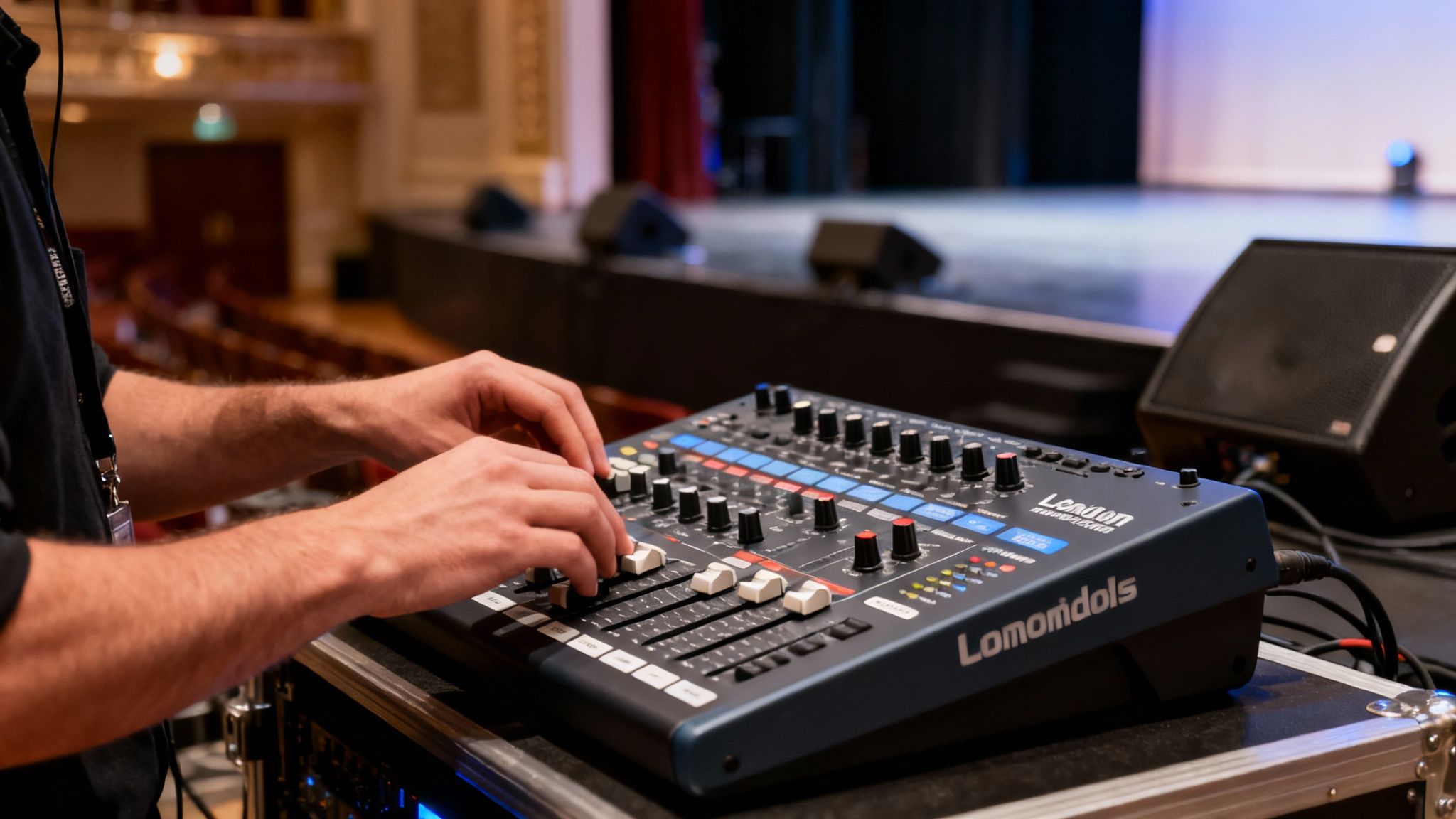
The quality of your audio directly influences your audience's experience. Poor sound can undermine an event’s most important moments. Imagine a keynote speech at a corporate awards night where the CEO's words are muffled, or a product launch where the background music crackles intermittently. These are not minor glitches; they can seriously devalue the event's purpose and damage your brand's reputation.
This is where professional sound hire becomes critical. It provides access to high-end equipment and, more importantly, the technical expertise that a DIY or semi-professional setup cannot offer. This is not just about loud speakers. It is about ensuring every word is heard distinctly, every piece of music is perfectly balanced, and that sound is distributed evenly across the entire venue.
More Than Just Volume
A common mistake is assuming the only question is "how loud do we need it?". While volume is part of the equation, the real objectives are clarity and coverage. A professional hire company will conduct a proper assessment of your London venue's unique acoustics. They will evaluate everything from the ceiling height and reflective surfaces (such as glass walls or marble floors) to the number of expected attendees.
This detailed approach ensures that the person at the back of the room has the same crystal-clear audio experience as the person in the front row, with no dead spots or jarring echoes.
Working with an experienced audio partner means you are not just renting equipment; you are investing in a seamless production. It is the difference between an event that feels polished and professional, and one that feels disorganised.
The Value of Expert Support
When you rent a sound system from a specialist provider like London Audio Visual Hire, you receive more than just speakers and cables. You gain a team of seasoned project managers and sound engineers with deep industry knowledge. They manage all the technical complexities on your behalf.
This includes:
- System Design: They will select the right combination of speakers, microphones, and mixers tailored specifically to your event.
- Logistics: They manage delivery, setup, and breakdown, working seamlessly with your venue's schedule.
- On-Site Operation: A sound engineer will be present, operating the mixing desk to ensure flawless audio from start to finish and making live adjustments as the event unfolds.
This guide serves as a roadmap to help you ask the right questions and make informed, confident decisions when navigating the process of sound system hire.
Defining Your Event's Audio Requirements
Before reviewing equipment lists, you must have a clear understanding of your event's specific needs. Knowing the guest count is not enough. The key to securing the right sound system lies in understanding the event's purpose, the content being delivered, and the characteristics of your chosen venue. A detailed brief is your most valuable tool.
For example, a corporate conference and a wedding reception may have the same number of guests, but their audio needs are entirely different. One requires pristine vocal clarity for a series of speakers, while the other needs a versatile system that can transition from gentle background music during dinner to a powerful DJ set. Each demands a completely different audio strategy.
What is the Content?
Be specific about your content. Will you have live presenters, video playback, a panel discussion, or a live band? Each of these has distinct technical demands.
A panel Q&A, for instance, requires several microphones operating simultaneously without feedback. A DJ, on the other hand, needs deep, impactful bass, which means subwoofers are essential. The better you understand what is audio-visual equipment, the more effectively you can articulate your requirements.
The Venue's Impact on Sound
Never underestimate the impact of the venue itself. An outdoor festival has no walls, so sound dissipates quickly, requiring a powerful, well-directed system to reach everyone.
Conversely, a grand hall with marble floors and high ceilings can create an echo chamber. Sound reflects off hard surfaces, turning clear speech into a muddled mess. This must be managed with careful speaker placement and sometimes even acoustic treatment.
During a site visit, consider the following:
- What are the dimensions of the space? Note the room's length, width, and ceiling height.
- What are the surfaces made of? Soft furnishings like carpets and curtains absorb sound. Concrete, glass, and wood reflect it.
- What is the background noise level? Is the venue near a busy London road? Is the air conditioning loud? The system will need sufficient power to cut through this ambient noise.
The demand for high-quality event technology is growing. The global audio-visual equipment rental market reached USD 35.8 billion in 2024 and continues to expand. In the UK, AV rentals now account for around 25% of total event costs, up from 18% in 2020, demonstrating how heavily businesses rely on professional audio and visual solutions.
A common oversight is planners failing to communicate the desired atmosphere. "Background music" and "headline DJ set" are two entirely different requirements. Be explicit about the energy you want to create so the sound system can be configured to deliver it.
Key Audio Considerations by Event Type
This table breaks down the typical audio needs for different types of events and serves as a useful starting point for building your brief.
| Event Type | Primary Audio Need | Typical Equipment | Key Consideration |
|---|---|---|---|
| Corporate Conference | Speech clarity and intelligibility | Lectern mics, wireless lapel mics, handhelds for Q&A, small PA system | Minimising feedback from multiple open microphones. |
| Wedding Reception | Versatility (speeches, music, DJ) | Wireless handheld mics, DJ setup, powerful speakers & subwoofers | System must handle low-level background music and high-volume party music. |
| Live Music Gig | Full-range dynamic sound | Stage monitors, mixing desk, instrument mics, powerful PA system | A professional sound engineer is essential for a good live mix. |
| Outdoor Festival | Power and coverage | Line array speakers, multiple subwoofers, delay towers for large areas | Weatherproofing and power distribution become major logistical factors. |
| Exhibition Stand | Localised, clear audio | Small directional speakers, screens with integrated sound, headset mics | Containing the sound to avoid bleeding into neighbouring stands. |
By defining your purpose, content, and venue acoustics upfront, you provide your hire company with the information needed to design a system that works flawlessly. This initial preparation saves you from stressful, expensive last-minute issues and ensures the sound is perfect on the day.
Choosing the Right Sound Equipment for Your Space
Once your event brief is finalised, you can begin selecting the equipment. A professional PA (Public Address) system is more than just a pair of speakers. It is an ecosystem of interconnected components, and understanding the function of each is key to achieving the right setup for your venue and event.
At its core, any sound system has three main parts: microphones, a mixer, and speakers. Microphones capture the sound, the mixer allows an engineer to balance and refine the audio, and the speakers deliver it to the audience. The quality and integration of these components will define the audio experience.
Selecting the Right Microphones
The microphone is the first link in the audio chain, so this choice is crucial. Different microphones are designed for different applications, and selecting the wrong one can lead to feedback, muffled audio, or practical difficulties for your presenters.
The main types you will encounter include:
- Handheld Wireless Mics: These are standard for Q&A sessions, presenters who move around the stage, and wedding speeches. They offer complete freedom of movement.
- Lapel (Lavalier) Mics: These are small, discreet microphones that clip onto a speaker's clothing. They are ideal for keynote speakers or panel discussions where individuals need their hands free. Careful placement is needed to avoid clothing rustle.
- Lectern Mics: These are fixed to a lectern and deliver consistent, high-quality sound for formal presentations, such as at awards ceremonies or conferences.
For an awards night in a large hotel ballroom, an effective setup would combine all three. A pair of lectern mics for the hosts, lapel mics for award winners to ensure smooth transitions on stage, and handheld mics for audience questions. In contrast, for a product launch in a smaller space, a single stylish handheld mic might suffice for a clean, modern aesthetic.
Speaker Size and Placement
When it comes to speakers, the goal is balanced coverage, not just high volume from the front. Every guest, regardless of their position in the room, should hear everything clearly and at a comfortable level. This is where professional expertise is invaluable.
A significant audio mistake at events is poor speaker placement. Placing two large speakers at the front of a long, rectangular room is a classic error. Guests at the front will be overwhelmed, while those at the back will struggle to hear. A 'distributed' system with several smaller speakers is almost always the better solution.
For a large ballroom, a sound engineer would likely use main speakers at the front and supplement them with smaller 'delay' speakers partway down the room. These additional speakers reproduce the same audio but with a millisecond delay, ensuring the sound waves from all speakers reach the listeners' ears simultaneously. The result is natural and clear audio throughout the space.
An experienced audio provider will use your venue's floor plan and acoustic properties to design a speaker layout that guarantees perfect coverage. You can explore a wide range of professional audio equipment to understand how different components serve various events. At London Audio Visual Hire, our project managers create bespoke solutions by carefully analysing the venue first, ensuring every system is perfectly matched to the space.
Navigating Logistics, Engineering and Timelines
Excellent sound on the day of an event is the result of meticulous planning weeks in advance. When you rent a sound system in London, you are not just acquiring equipment; you are accessing the logistical expertise required for a seamless production. This is particularly important in the capital, where venues often have very tight schedules for loading in and out.
As a general rule, you should book your sound system hire at least four to six weeks in advance for a standard event. For larger or more complex events, such as multi-day conferences or setups requiring specialised rigging, allow more time. A three-month lead time is a safer option. This not only guarantees equipment availability but also gives the technical team ample time for proper planning.
This timeline provides an overview of the typical logistics, from booking to on-site setup.
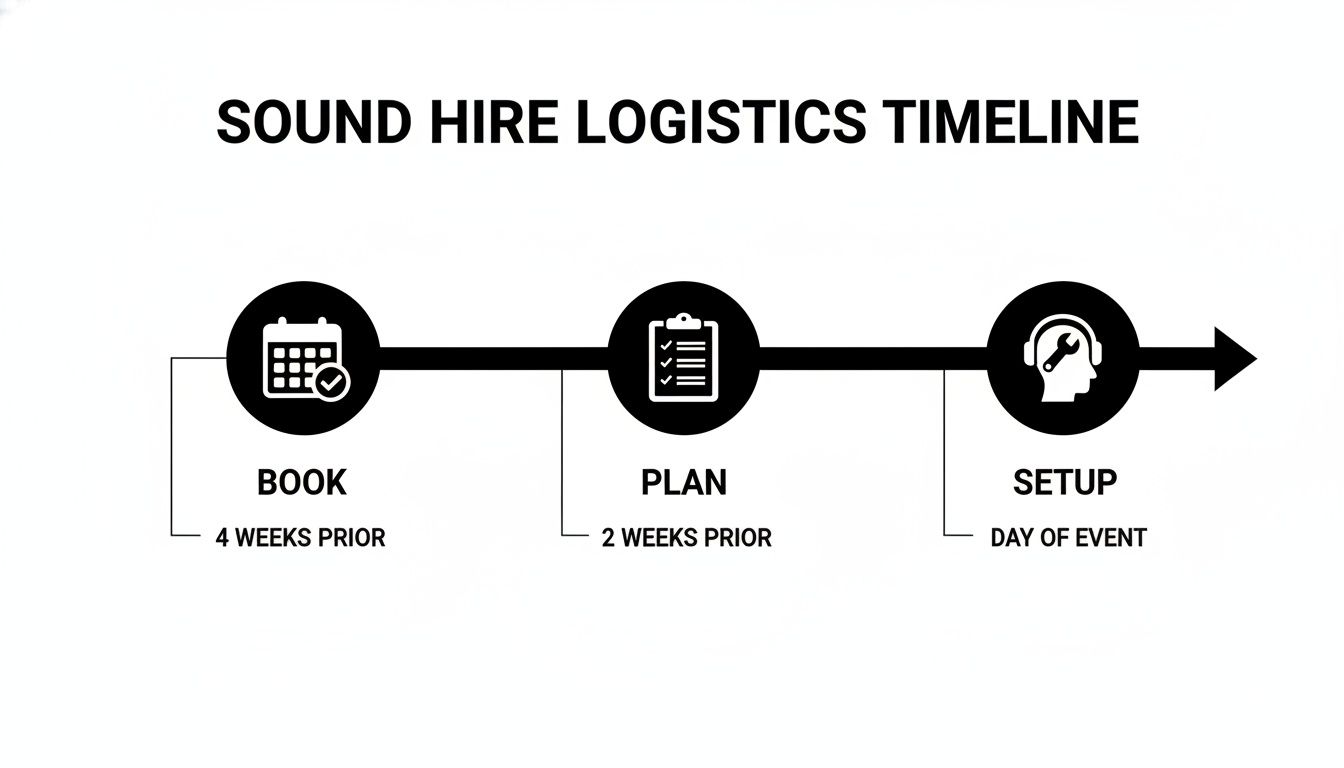
The key takeaway is that most of the work happens long before your event. Involving your AV partner early in the process is therefore crucial.
The Sound Engineer: Your On-Site Audio Expert
A professional sound engineer is the person who brings the hardware to life. Their role extends far beyond connecting speakers. They actively manage the live mix, ensuring every word from a microphone is clear, every video soundtrack is heard perfectly, and that feedback is eliminated before it starts.
For any event with more than a couple of audio sources, such as a panel discussion, a live band, or presentations with video, an engineer is a necessity. They conduct sound checks, adjust levels in real time as the room's acoustics change with the audience, and are the primary contact for any troubleshooting.
Technical Plans and Venue Coordination
To ensure a smooth operation, your AV provider will create essential documents to share with you and the venue, ensuring everyone is aligned.
- Stage Plot: A diagram showing the on-stage placement of everything from the lectern and speakers to performers and equipment.
- Input List: A detailed spreadsheet listing every audio source (e.g., 'Lapel Mic 1 – CEO', 'Laptop Audio – Presentation') and mapping it to a specific channel on the mixing desk.
These documents form the foundation of your event's audio plan. A clear input list and stage plot prevent last-minute complications and ensure the setup is fast, accurate, and as you envisioned.
When you work with a team like London Audio Visual Hire, this entire logistical process is managed for you. We contact the venue's technical manager directly to coordinate power requirements, confirm access times, and check rigging points. This is a fundamental part of our conference production services, where such coordination is non-negotiable. Ultimately, clear communication between your AV partner and the venue ensures a stress-free event.
Understanding Costs, Insurance, and Safety
When you receive a quote for a sound system, it represents more than just the price of equipment. To manage your event budget effectively, you need to understand the breakdown of costs. Equally important is ensuring the company you hire has the correct insurance and safety certifications in place. This is about protecting your event, not just achieving good sound.
A professional quote should be itemised, typically into three core parts:
- Equipment: The hardware, including speakers, microphones, mixing desk, and cabling.
- Labour: The cost for the skilled sound engineer and any technicians needed for setup, operation, and breakdown.
- Transport: The logistics of moving equipment from the warehouse to your London venue and back.
Always check the details. Does the quote include VAT? Are there potential overtime costs for the engineer if your event runs late? A transparent provider will make this clear from the outset.
Budgeting: Beyond the Cheapest Price
While it can be tempting to choose the lowest quote, compromising on sound is one of the fastest ways to undermine an otherwise well-planned event. Poor audio quality or inadequate technical support can have significant negative consequences.
Instead of focusing solely on the lowest price, have an open discussion with your potential supplier about your budget. An experienced company like London Audio Visual Hire can often suggest practical alternatives, such as a different speaker configuration or a more efficient crewing plan, that deliver the required quality without exceeding your budget.
There is a reason why many event professionals in London choose to rent. While the UK audio retail market has faced challenges, the rental sector is thriving. Renting a full system can reduce capital expenditure by an average of 35% compared to buying. It is a prudent financial decision that provides access to high-end, professionally maintained equipment for a fraction of the ownership cost.
Essential Checks: Insurance and Safety
Beyond the cost, two elements are non-negotiable: insurance and safety compliance.
Any reputable sound hire company must hold comprehensive Public Liability Insurance (PLI). This protects you, your guests, the venue, and the staff from any accidents involving the equipment or the crew. Do not hesitate to ask to see their insurance certificate. A refusal or inability to produce it is a major warning sign. Understanding what is liability insurance for contractors highlights the importance of this cover.
Verifying insurance and safety documentation is a core part of your risk management strategy. It is not just paperwork; it is about protecting your event, your reputation, and everyone present.
Additionally, every piece of electrical equipment they bring into your venue must be PAT (Portable Appliance Testing) certified. This is a UK legal requirement confirming that the equipment is electrically safe. A professional firm will have up-to-date PAT certificates for every item in their inventory. This attention to detail allows you to focus on your event, confident that the technical aspects are safe and compliant.
On the Day: Final On-Site Checks
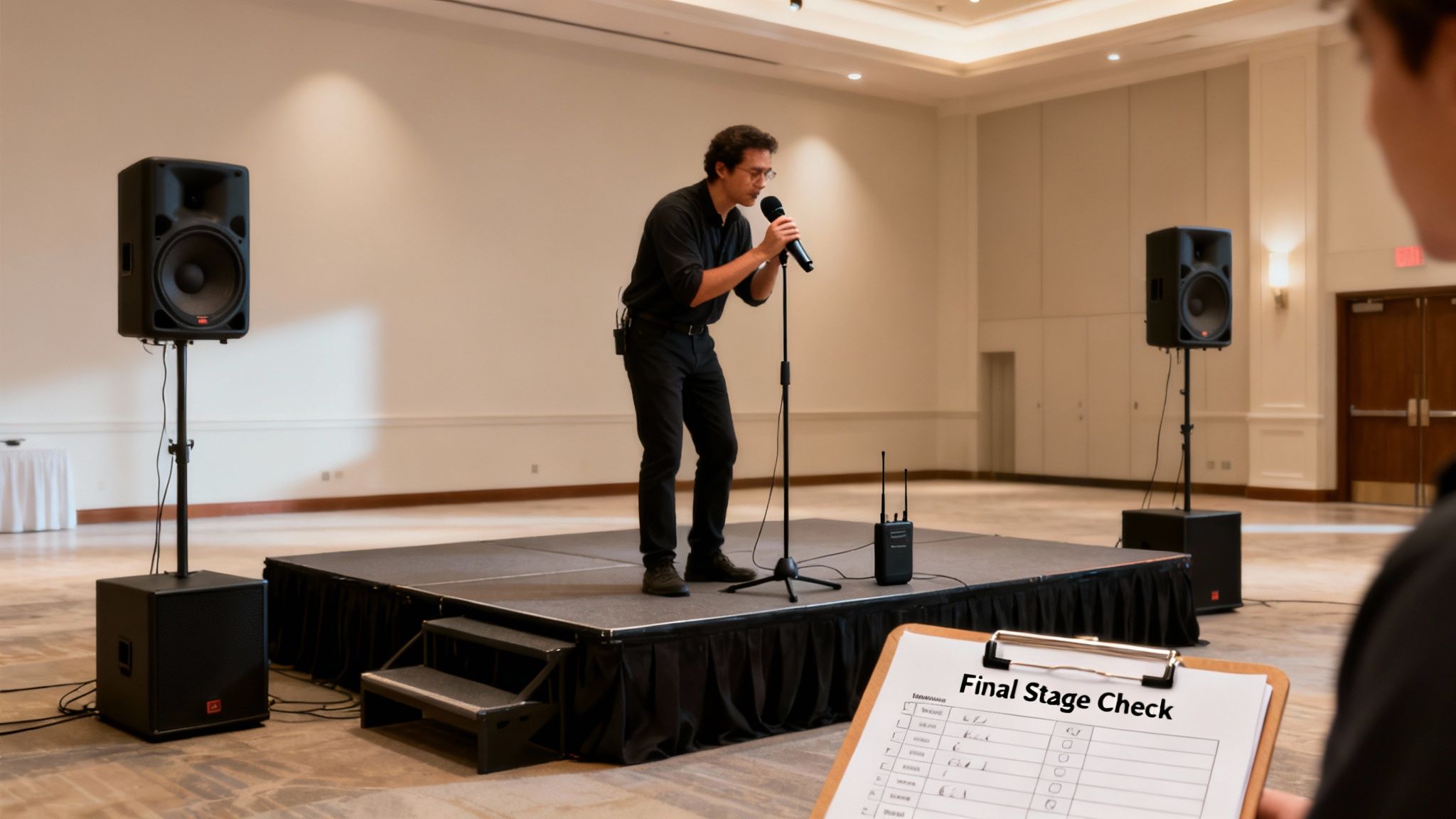
The final hours before doors open are critical. This is when all the planning comes together, and it is your last opportunity to resolve any issues with the on-site technicians to ensure every audio detail is correct. A methodical pre-event check is the difference between a smooth-running show and a stressful, last-minute rush.
First, locate your sound engineer. Ensure they have the most current schedule and have been briefed on every audio cue, from the music for award winners to the walk-on tracks for each speaker. This brief conversation is vital for guaranteeing seamless transitions throughout the event.
Your Pre-Show Sound Check
Before any guests arrive, you should personally conduct a final check of all audio sources. Do not assume everything works; test it.
-
Microphone Line Check: Test every single microphone, including the lectern mic, handhelds for Q&A, and any lapel mics for your main speakers. Listen for a clean, crisp signal. Address any buzzing, hissing, or feedback immediately.
-
Music and Atmosphere: Ensure the background music is at an appropriate level. It should create atmosphere without forcing people to raise their voices to be heard.
-
On-Stage Foldback: If you have presenters or a band on stage, they need to hear themselves clearly. Check the stage monitors (also known as foldback) to ensure the sound is clear and at a comfortable level for them to perform confidently.
A valuable tip is to establish a clear line of communication with your sound engineer. Find out where their mixing desk is located and agree on a simple, discreet hand signal, such as a thumbs-up for 'good' or a flat hand for 'reduce the volume'. This allows you to manage audio levels during the event without causing any disruption.
Answering Your Top Sound System Hire Questions
To conclude, here are answers to some of the most frequently asked questions about sound system hire.
How Far in Advance Should I Book?
While it depends on the event, earlier is always better. For a standard corporate event or conference in London, you should confirm your sound system booking at least four to six weeks in advance.
This timeframe provides sufficient opportunity to manage logistics, conduct a venue check if necessary, and ensure all required equipment is reserved.
For larger events, such as multi-day conferences, outdoor festivals, or any event during the busy summer and Christmas periods, you should plan much further ahead. For these, aim to book three to six months in advance. The best equipment and top engineers are in high demand during peak seasons.
Do I Really Need a Sound Engineer?
If your event involves more than a single microphone for a few speeches, then yes, you almost certainly do. A professional sound engineer acts as your insurance against audio problems. They do not just set up the equipment; they actively mix and manage the sound throughout your event.
If you are juggling multiple speakers, playing walk-on music, running video sound, and holding a Q&A session with roving mics, an engineer is invaluable. They prevent feedback, balance levels for clarity, and ensure a smooth, professional-sounding experience. For a simple AGM with one lectern mic, a skilled technician can manage the setup. For anything dynamic, an engineer is a non-negotiable member of the team.
An engineer is not just a technician; they are an active contributor to your event's success. They mix the sound in real time, adapting to the changing energy and acoustics of the room as it fills with guests.
What Information is Needed for a Quote?
To provide an accurate quote, we require some specific details about your event. The more information you can provide, the faster and more precise our proposal will be.
Here is what we need to get started:
- The basics: Event date and the venue's address.
- The audience: An estimate of your guest count.
- The purpose: The primary use for the audio (e.g., speeches, background music, a DJ, a live band).
- The specifics: How many microphones you anticipate needing, and what type (e.g., handheld, lapel, lectern).
- The media: Will you be playing sound from laptops for presentations or videos?
Providing this information upfront enables us to build a package that perfectly fits your event, with no unexpected costs later on.
A successful event depends on getting every detail right, and sound is one of the most critical elements. If you require expert advice and a system designed specifically for your event, the team at London Audio Visual Hire is ready to assist. See how we deliver seamless event production by visiting us at https://londonaudiovisualhire.co.uk.


