

Turning a product announcement into a truly memorable brand experience does not happen by accident. It is the result of a deliberate, strategic process that starts long before the first guest arrives. A successful launch hinges on a solid plan: one with clear goals, a realistic budget and a detailed timeline that guides every decision. It is about getting all your teams, from marketing to technical production, and every external supplier working from the same brief.
Building Your Product Launch Blueprint
The bedrock of any great product launch event is not a flash of creative genius; it is a meticulously crafted blueprint. This is the phase where you move past the big ideas and build the solid framework that will support the entire project. If you neglect this foundational work, even the most groundbreaking product can end up with a launch that feels disconnected and fails to make an impact. This is where you translate your business ambitions into a concrete event strategy.
A product launch is a serious investment, but one that pays dividends when you get it right. The UK event industry was valued at USD 80.21 billion in 2024 and is expected to grow to USD 136.10 billion by 2035. This shows the immense confidence businesses have in live events. For product launches, a strong return on investment is the norm, with many events achieving a 3:1 ratio or better.
Defining Clear and Actionable Objectives
Before you consider calling a supplier, you must know what success looks like. Your event objectives need to be sharp, measurable and directly linked to your wider business goals. Are you trying to dominate the media conversation, secure a certain number of pre-orders, or win over key industry influencers?
Typical objectives for product launches include:
- Generating Media Buzz: Landing coverage in the top-tier publications that your customers read.
- Driving Early Sales: Hitting a specific target for pre-orders or direct sales within the event window.
- Building Brand Authority: Staging a polished, professional event that cements your company as a leader in its field.
- Educating Stakeholders: Making sure investors, partners and key customers grasp the product's true value.
A common trap is setting vague goals like "create a buzz". A much stronger objective sounds like this: "Secure 500 social media mentions using our event hashtag and land features in three specific trade magazines within a week of the launch."
This visual plan breaks down the foundational steps of setting objectives, finalising the budget and assembling your team.
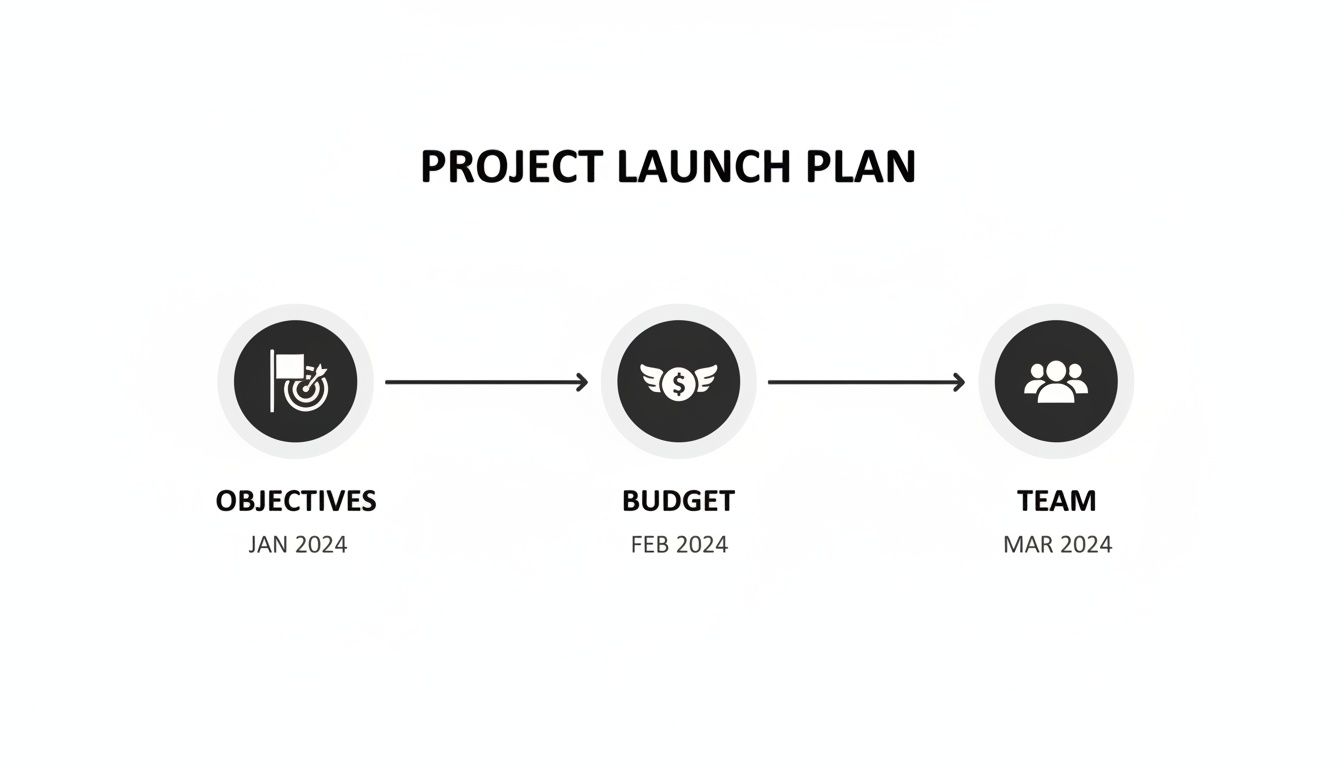
As you can see, these core planning elements are not a simple one-two-three process. They often overlap and need to be worked on concurrently in the early stages.
Creating a Realistic Budget and Timeline
Once your objectives are clear, you can start building a proper budget. This needs to be a line-by-line exercise, accounting for every possible cost. The big-ticket items are nearly always the venue, catering and technical production, which includes everything from sound and lighting to screens, often handled by an AV company. It is smart to start exploring your options with different London venues early on to get a real feel for costs.
At the same time, you need to map out your master timeline. The best way to do this is to work backwards from your ideal launch date. For any significant launch, I would strongly recommend a lead time of at least six to nine months. This timeline should be populated with critical milestones, such as when the venue must be booked, when invitations go out and when you will hold your technical rehearsals.
Do not forget your visual strategy. Capturing the event professionally is non-negotiable. This essential event photography checklist is a great practical resource to ensure you do not miss a single key moment.
Choosing a Venue and Mastering Technical Production
With your strategy finalised, it is time to bring your product launch to life. This is where we get into the tangible elements that your guests will see, hear and feel: the venue and the technical production. These two decisions are, without a doubt, among the most critical you will make.
An incredible venue sets the stage and creates an immediate impression. But it is the flawless audio visual (AV) production that ensures your message lands with the impact it deserves.
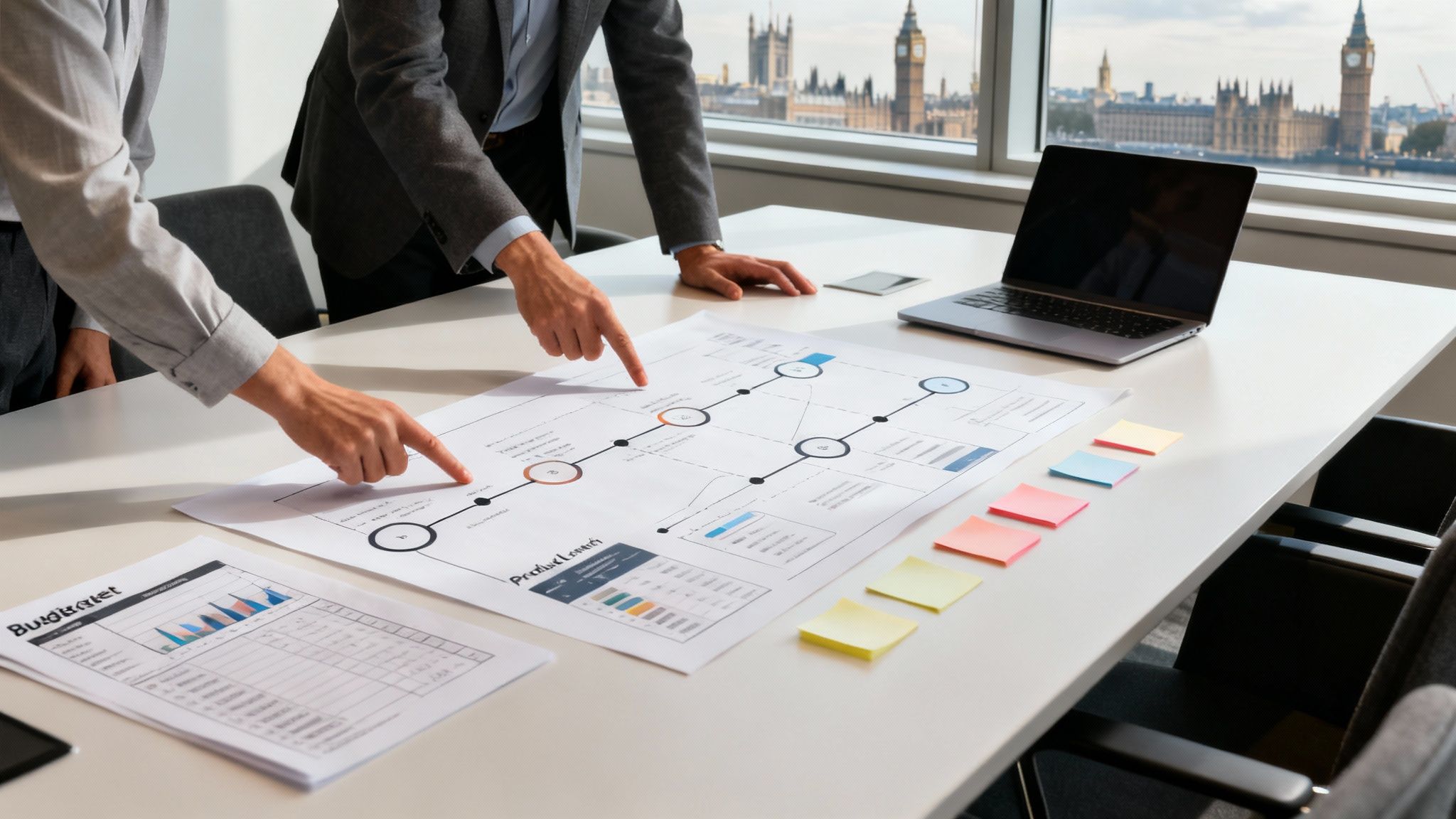
Think of them as a partnership. A breathtaking venue with terrible acoustics is a disaster waiting to happen. Conversely, even a blank-canvas space can be completely transformed with clever lighting, crisp sound and immersive video. Getting this combination right is the secret to a professional, memorable launch.
Finding the Perfect London Venue
London offers an almost overwhelming number of venue options, which can make the choice feel daunting. But the right space does more than just hold people; it should feel like an extension of your brand and the story you are telling about your new product.
As you start your search, keep these key factors in mind:
- Brand Fit: Does the venue's atmosphere match your brand? A fintech start-up launching a disruptive new app might feel right at home in a sleek, industrial space in Shoreditch. A luxury watch brand, however, would probably be looking for a classic, elegant hotel in Mayfair.
- Capacity and Flow: It is not just about fitting everyone in. You need to think about the journey. Is there enough space for a reception area, a main presentation stage, product demo pods and places for people to network comfortably?
- Accessibility: Do not underestimate the importance of accessibility. A venue that is a short walk from a major tube or train station is a massive plus for your guests.
- Venue Infrastructure: What is the in-house tech situation like? You need to know about power availability, the strength and reliability of the Wi-Fi, and whether they have rigging points for your lights and sound equipment. Finding this out early saves a world of difficulty and unexpected costs later.
A thorough site visit is not just a good idea; it is essential. I always recommend bringing your technical director or a representative from your AV partner along. They see things you do not, such as potential power shortfalls, awkward sightlines or acoustic dead spots, and can flag them before they become emergencies on the day.
Nailing the Technical Production Brief
Once you have shortlisted a venue, it is time to get specific about the technology. Your technical production brief is the master document that turns your creative vision into a concrete set of instructions for your AV supplier. A vague brief is a recipe for disaster; a detailed one ensures everyone is on the same page from day one.
Before you start writing, it helps to have a good grasp of what audio visual equipment entails. Knowing the terminology and possibilities will help you articulate your needs far more effectively.
To give you a head start, think of your tech brief as an itemised checklist. It forces you to consider every element, from the microphones for your speakers to the resolution of the video wall behind them.
This table is a great starting point for building out your own brief.
Product Launch Event AV Checklist
| AV Category | Key Considerations | Example Requirements |
|---|---|---|
| Sound | How many presenters? Will there be panel discussions? Do you need background music or sound for video playback? | 4 x Lapel mics for speakers, 2 x Handheld mics for audience Q&A, PA system suitable for a 200-person room, audio playback from laptop. |
| Video | What content needs to be displayed? Will you show presentations, videos, or a live social media feed? What are the room's sightlines like? | 1 x 5m x 3m LED video wall as a stage backdrop, 2 x 75" repeater screens for side-of-room viewing, 1 x Confidence monitor for the presenter. |
| Lighting | How will you light the stage, the product, and the room? Do you want to incorporate brand colours? Are there any specific moments to highlight? | Full stage wash, 2 x Spotlights on the product display, custom gobos with the company logo, uplighting around the room in brand colours. |
| Streaming & Hybrid | Will you be broadcasting the event live for a remote audience? Do you need to record the sessions for on-demand viewing later? | 3-camera setup for dynamic shots, dedicated streaming engineer, platform integration (e.g., Vimeo, YouTube Live), separate audio mix for the stream. |
This is not just about looking professional; it is about driving business results. The UK events industry is expected to be worth £68.7 billion by 2025, a testament to the power of live experiences. In this market, 64% of UK consumers say hybrid events create a lasting positive brand impression, which can boost purchase intent by 85%. A polished AV setup is what makes those powerful hybrid events possible.
Using AV to Tell an Immersive Brand Story
Great AV is not just functional; it is emotional. It is the tool you use to turn a standard presentation into a captivating experience that tells your brand’s story. The goal is to create an atmosphere that grabs your audience from the moment they walk through the door.
Think about how the different AV elements can work together:
- Lighting can completely change the feel of a room, guide your guests' attention to the product and wash the space in your brand colours. Imagine the lights dimming just before the big reveal; it instantly builds anticipation.
- Video is your canvas. A massive, high-resolution LED wall can showcase stunning product visuals, cinematic brand films or even pull in a live social media feed to make the event feel interactive and current.
- Sound is more than just making sure people can hear the CEO. It is about crystal-clear audio for every word, impactful sound design for your videos and a curated playlist that sets the perfect mood during networking.
- Staging creates the focal point. A well-designed stage is not just a platform; it ensures everyone has a great view and gives your presenters a professional, branded environment to speak from.
The real magic happens when audio, video and lighting are perfectly synchronised. A sudden lighting change paired with a powerful sound effect at the moment of the product reveal can create an unforgettable, high-impact moment that resonates with the audience long after they leave.
Working with an experienced AV partner means you are not just hiring equipment; you are hiring problem-solvers. They have seen every challenge a London venue can throw at you, from listed buildings with power limitations to rooms with awkward layouts, and they will have solutions ready before you even knew there was a problem. That is how you ensure a seamless, stress-free execution on the day.
Weaving Your Story into the Event Agenda
You have secured the venue and the tech production is underway. Now, it is time to focus on what truly matters: the story you are going to tell and how you will bring it to life on the day. Think of your launch not as a presentation, but as a performance. It needs a powerful narrative and a watertight schedule to take your audience on the journey you have planned.
This is the point where you stop listing product specifications and start forging an emotional connection. Your event's narrative is its soul: the 'why' behind the 'what'. It should be the common thread running through everything, from the CEO's opening words to the graphics on the main screen. The agenda, or what is known in the industry as the run of show, is the script that makes sure this story unfolds without a single misstep.
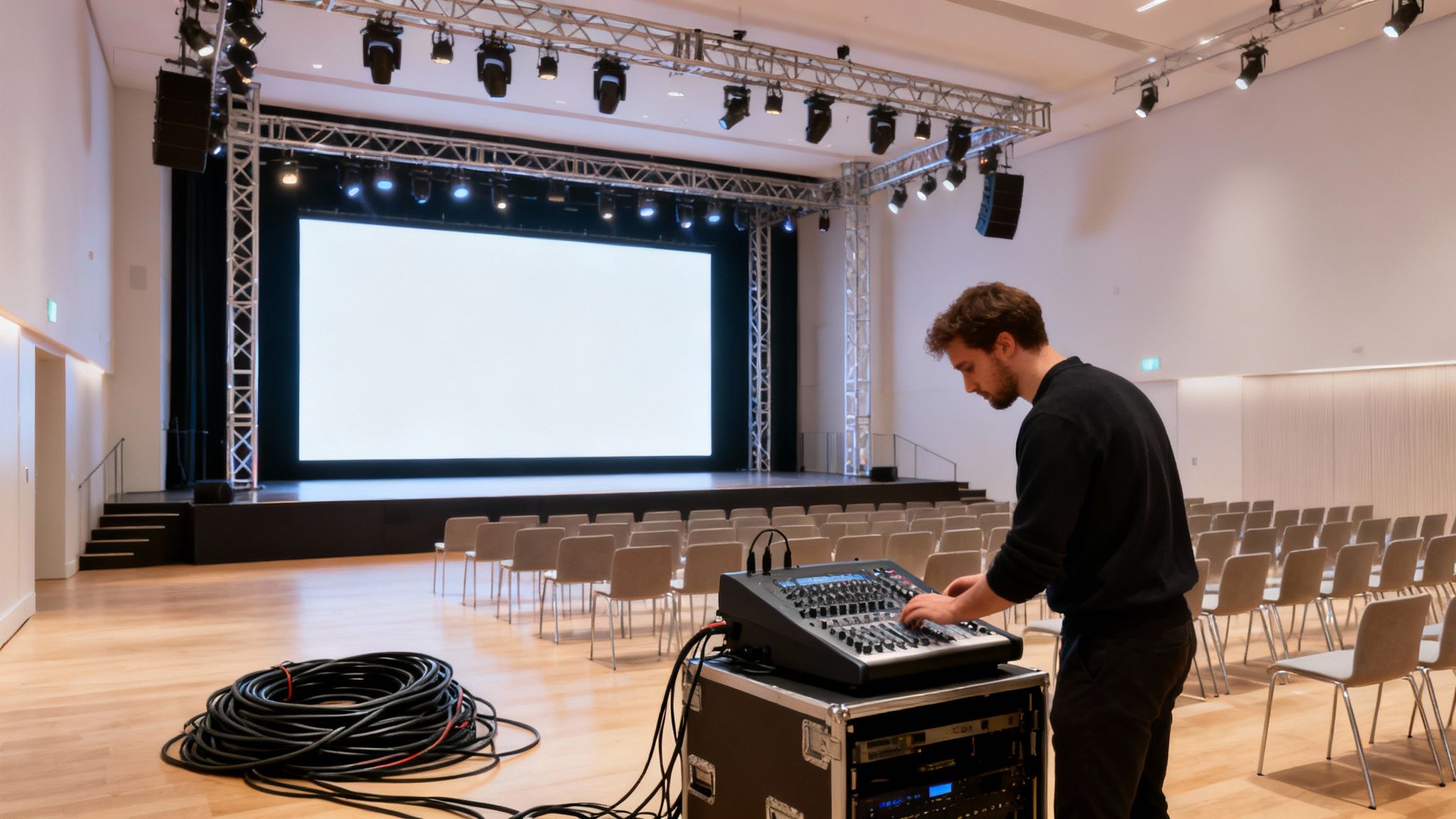
Structuring the Day for Maximum Impact
Your run of show is the event’s bible. It is a minute-by-minute blueprint for every person involved, from you to the lighting technician. It needs to be obsessively detailed, leaving zero room for interpretation. A solid agenda does not just create a smooth flow; it strategically builds and releases tension, keeping your audience engaged from start to finish.
While every event is different, a tried-and-tested structure for a launch often looks something like this:
- Arrival and Welcome (0-30 mins): First impressions count. This is about setting the tone with the right background music, welcome drinks and subtle branding on screens. The aim is to get guests feeling relaxed while quietly building a sense of anticipation.
- The Opening (30-45 mins): Have a senior leader welcome everyone. They should set the scene and introduce the core story without revealing too much too early.
- The Big Reveal (45-60 mins): This is the main event. The reveal needs to be a show-stopping moment, perfectly timed with dramatic lighting, sound and video.
- Deep Dive and Demo (60-90 mins): Once the initial excitement lands, bring on a product expert for a live demonstration. They can walk through the key features, focusing on how it solves real-world problems.
- Q&A Session (90-105 mins): A well-managed Q&A, led by a confident host, gives you a chance to tackle questions head-on and reinforce your key messages.
- Networking and Hands-On Time (105 mins+): This final part is vital. Let your guests get their hands on the product at dedicated demo stations and chat with your team. This is where the real connections are made.
This kind of structured flow ensures every part of your event has a distinct purpose, all contributing to the bigger picture.
Scripting and Rehearsing for a Flawless Performance
Even the most natural public speaker benefits from a well-written script. The content for every session needs to be sharp, concise and completely in tune with your central narrative. Remove corporate jargon and focus on the benefits your audience cares about. Keep slides clean and visual; they are there to support the speaker, not replace them.
From experience, the most common point of failure in any live event is the transition. A detailed run of show must spell out the cues for speakers walking on and off stage, for microphone handovers and for the accompanying shifts in lighting and on-screen content.
This is precisely why rehearsals are not optional. You must schedule a full technical run-through to find and fix any glitches. This means testing every microphone, every video playback and every single lighting cue until it is perfect.
Speaker rehearsals are just as critical. Your presenters need to be comfortable with more than just their slides; they need to own the stage. They must know where to stand, how to use the confidence monitors and what their cues are. Practice builds confidence and is the only way to guarantee a slick, professional delivery.
This level of preparation is the essence of great brand activation: making sure the live experience is a perfect reflection of your brand's quality. If you want to dive deeper, have a look at our guide on how to execute a powerful brand activation.
Ultimately, it is the narrative and the agenda that elevate your launch from a simple announcement to an unforgettable experience. All that disciplined, behind-the-scenes planning is what allows the magic to happen seamlessly on the day.
Engaging Your Audience: Before, During, and After
You can plan the most incredible event in the world, but it is just an empty room without an audience. Getting people excited about your product launch is not just about sending an invitation; it is about creating a journey that engages them from the very first email and keeps them connected long after they have gone home.
A truly great launch builds a groundswell of excitement. It makes people feel like they must be there. This is not about a single email blast and hoping for the best. It is a carefully coordinated promotional campaign that uses multiple channels to build momentum and forge a real connection with your brand.
Building Anticipation with a Multi-Channel Strategy
Your promotion needs to start weeks, if not months, before the event itself. The goal is to create a steady drumbeat of communication that keeps your launch top-of-mind.
A solid promotional plan brings several channels together, all working in sync:
- Targeted Email Campaigns: This is your direct line to your audience. Do not just send a generic invitation. Drip-feed information through a series of emails: announce your keynote speaker, offer a sneak peek of the agenda or share some behind-the-scenes content to build mystery.
- Social Media Buzz: Put your corporate social channels to work. Use countdown graphics, short video clips of the product developers and a unique event hashtag to get people talking early on.
- PR and Media Outreach: Getting the right press coverage adds a massive amount of credibility. When promoting the launch, crafting compelling press releases for events is essential for grabbing the attention of journalists and potential guests. Have your PR team line up exclusive pre-briefings for key industry voices.
- Strategic Partnerships: Team up with industry partners or sponsors. Getting them to cross-promote the event to their own networks is an excellent way to extend your reach and attract a high-quality audience.
Mastering the Guest Journey
Once you have their attention, the focus shifts to making their experience completely seamless. From the moment they click ‘RSVP’ to the second they walk through the door, every interaction is a reflection of your brand.
You cannot afford to neglect RSVP management. Use a professional event platform to handle registrations. It allows you to send automated confirmations and distribute essential information like directions and dress codes. Not only does this look far more professional, but it also gives you clean, real-time data on who is attending.
People often treat guest management as a simple administrative task. That is a huge mistake. It is your first real chance to engage. A personalised confirmation or a quick, helpful reply to a question makes an attendee feel valued before they have even set foot in the venue.
This focus on a smooth experience must continue on the day. A quick and easy check-in process, crystal-clear signage and friendly, helpful staff are non-negotiable. Your job is to remove every possible point of friction so your guests can dive straight into the experience you have worked so hard to create.
Creating Shareable Moments On-Site
During the event, your goal is to keep that energy high and, crucially, encourage people to share their experience. This means designing ‘shareable moments’ that naturally prompt guests to post on their social networks.
Here are a few tactics that work well:
- Interactive Tech: Go beyond a standard presentation. Think about touchscreen product demos, live polling through a mobile app or even a VR experience that gets people hands-on with what you are launching.
- Branded Photo Opportunities: A cleverly designed photo wall or a unique installation featuring your product becomes a natural magnet for photos and social media posts.
- Surprise and Delight: It is the unexpected things people remember. A surprise high-profile speaker, a unique entertainer or a thoughtful gift bag creates talking points that people are genuinely excited to share.
This on-site amplification is where the magic happens. With UK corporate event spending predicted to hit £2 billion in 2025, you cannot afford to ignore the power of organic reach. Research shows that 98% of attendees create and share content online after an event. These shareable moments turn your guests into brand advocates, creating the kind of authentic buzz that money cannot buy. Find out more by reading the full research on the UK events market.
Making it Happen: Flawless Execution and Measuring Success
After weeks, sometimes months, of painstaking planning, it all comes down to launch day. This is the moment the strategy becomes real. It is about more than just a smooth-running event; it is about executing flawlessly and then proving its value with hard data.
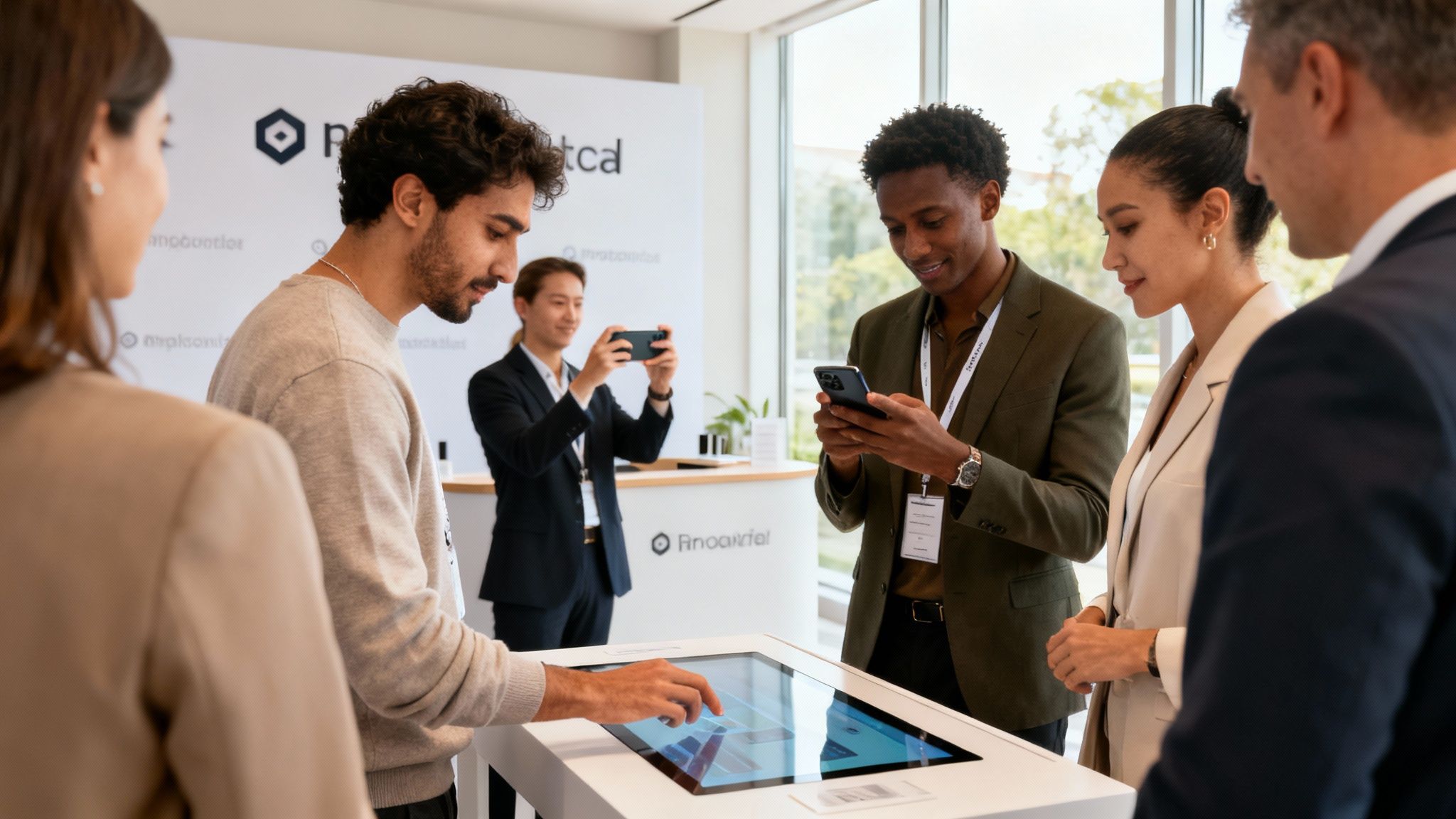
On the day, your on-site event manager is mission control. They are the one orchestrating every moving part: vendor arrivals, last-minute sound checks and dealing with potential problems. This frees up your internal team to do what they do best: connect with guests, talk to the press and build relationships. That is where their focus needs to be.
On-Site Management and Expecting the Unexpected
No matter how airtight your plan is, live events always present challenges. A keynote speaker gets stuck on the Tube, a presentation file becomes corrupted five minutes before showtime or the Wi-Fi drops. This is when your contingency planning goes from a box-ticking exercise to an absolute lifeline.
In the final days, get all your suppliers together for one last, comprehensive briefing. This includes your crew from London Audio Visual Hire. Everyone needs to be crystal clear on their cues, their roles and the master plan for the day.
Your 'what-if' plan should cover a few key areas:
- Tech Trouble: Always have backup laptops, spare projectors and extra microphones on standby. Make sure your AV team has a clear protocol for tackling common issues like audio feedback or a video that will not play.
- Speaker Snags: Keep a copy of every presentation on a separate USB stick. It is also wise to have a confident host ready to step in and fill a few minutes gracefully if a speaker is running late.
- Guest List Hiccups: Be prepared for unexpected plus-ones or walk-ins. Your front-of-house team should be briefed on how to handle any registration issues with a calm, professional touch.
You can spot a truly professional event not by a complete lack of problems, but by how seamlessly they are solved. An experienced, unflappable on-site team is your secret weapon for ensuring the audience never even knows a challenge arose.
Measuring What Actually Matters
Once the last guest has left and the lights go down, the work is not over. It is time to analyse. To prove a clear return on investment, you need to be tracking the right key performance indicators (KPIs) from the very beginning. With a recent report showing that 92% of product leaders are now directly responsible for revenue, a launch event has to deliver tangible results.
Your measurement strategy needs to link event activity directly to core business goals. Vague metrics are not sufficient. You need data that tells a compelling story about how your event impacted the bottom line.
A good way to structure this is to think about what you can measure before, during and after the event itself.
Measuring Product Launch Event Success
| Metric Category | Example KPI | How to Measure |
|---|---|---|
| Pre-Event Engagement | Registration Conversion Rate | Track website visitors vs. completed registrations using analytics tools. |
| During-Event Engagement | Social Media Mentions | Use a social listening tool to monitor event hashtags and brand mentions in real time. |
| Post-Event Impact | Sales Qualified Leads (SQLs) | Track how many attendees requested a demo or sales call via follow-up emails. |
| Audience Feedback | Net Promoter Score (NPS) | Send a post-event survey asking attendees how likely they are to recommend the product. |
| Return on Investment | Customer Acquisition Cost (CAC) | Divide the total event cost by the number of new customers acquired from the event. |
This data provides a full-circle view of your event's performance, from initial buzz to final sales.
The Follow-Up: Keeping the Momentum Going
A great launch creates a wave of energy and interest. Your job now is to ride that wave. A structured, timely follow-up strategy is essential for turning that buzz into business.
Within 24 hours, send a thank-you email to every attendee. This is a perfect opportunity to include a link to a highlights video or a PDF of the keynote presentation.
Next, segment your audience for more targeted communication. Prospects could get an invitation for a personal product demo, while journalists receive a full press kit with high-resolution photos and key quotes. At the same time, send out a feedback survey to gather honest opinions on the day. This intelligence is invaluable for improving your future product launch event planning. This disciplined approach ensures your launch is not just a moment in time, but the start of many valuable new relationships.
Your Product Launch Planning Questions, Answered
Even with the best plan, questions always arise. Having worked in event production for years, I have seen a few common queries come up time and time again when planning a product launch. Here are my straightforward answers to help you sidestep common pitfalls.
How Far in Advance Should I Start Planning?
If you are planning a serious product launch in a city like London, give yourself at least six to nine months. That time disappears surprisingly fast.
This is not about being overly cautious; it is about being strategic. Top-tier London venues and specialist AV crews get booked well in advance. Having that extra time gives you breathing room to develop a proper marketing campaign, manage your guest list without panic and negotiate better rates with suppliers. While you could pull off a smaller, more intimate launch in three to four months, a longer runway almost always leads to a better, less stressful event with a solid backup plan.
What Are the Most Common Technical Mistakes to Avoid?
Almost every technical glitch comes down to poor planning or a breakdown in communication. It is rarely the technology itself that fails, but the preparation behind it.
Here are the classic mistakes I see all the time:
- Underestimating power needs: You cannot just plug a massive video wall and a concert-level sound system into a standard socket. It is a fundamental error that can bring your entire event to a halt.
- Assuming the Wi-Fi will be fine: Bad Wi-Fi affects everyone. Guests cannot post on social media, your live stream will buffer endlessly and even your registration system might fail. It needs to be rock-solid.
- Ignoring hardware compatibility: Nothing kills the energy like a guest speaker fumbling for 10 minutes because their laptop will not connect to your projector system.
- Skimping on sound checks: Poorly placed microphones lead to feedback or muffled audio, meaning your key messages get completely lost.
The only real way to avoid these issues is to get a professional AV company involved from day one. A proper technical site visit and a detailed, collaborative brief are not just 'nice-to-haves'; they are absolutely essential for a technically flawless show.
How Can I Make My Product Launch Event Stand Out?
In a world of endless corporate events, "memorable" is the only metric that matters. To make your launch stand out, you have to move beyond a simple presentation and create a genuine experience.
Think about using technology to create some theatre. I have seen clients use projection mapping to completely transform a plain room into a dynamic environment, or use huge LED video walls to display stunning, immersive content. Augmented reality demos that let people 'play' with the product on their phones are also incredibly effective.
But it is not all about the technology. The story you tell is just as important. Do not just list features; weave a compelling narrative around the problem your product solves. Finally, pay attention to the small details. Personalised touches, from the initial invitation to a thoughtful gift bag and a genuine follow-up message, make your guests feel valued. That is what they will remember long after the event.
What Is a Realistic Budget for a London Product Launch?
This is a frequently asked question. The truth is, budgets for a London launch can vary wildly depending on your ambition. Here is a rough guide to get you started:
- A small-scale launch for 50-100 guests in a more modest venue will likely start in the £15,000 to £25,000 range.
- For a mid-sized event (150-300 people) at a premium venue with a proper AV setup, you should be looking at £50,000 to £100,000+.
- Anything bigger, with high-profile entertainment and extensive production, will easily surpass that.
Remember, your three biggest line items will almost always be the venue, the catering and the technical production (AV, staging and lighting). These three alone often account for 60-70% of the entire budget, so getting firm quotes for them early on is critical for keeping your finances grounded in reality.
Planning a product launch requires precision, expertise and a calm head under pressure. At London Audio Visual Hire, we provide the technical production and project management to ensure your event is flawless from start to finish. Learn more about our event production services.


