
Before considering venue scouting or menu tasting, the real work of event planning begins. This foundational stage separates genuinely memorable, impactful events from those forgotten as soon as the doors close. It is about laying the strategic groundwork, asking the right questions upfront to give your project a clear, unwavering direction.
Building the Foundation for a Successful Event
When planning an event in the UK, you are stepping into a significant industry. It is not just a collection of gatherings; it is a powerhouse sector estimated to be worth £61.65 billion to the economy in 2023. The conference and meetings segment alone is valued at a substantial £20 billion. This fact is not to intimidate, but to highlight the level of professionalism required to stand out. Understanding these UK events industry statistics provides a real sense of the landscape you are navigating.
Define Your Objectives and Target Audience
First, what does success look like for this event? Vague goals like "raising brand awareness" are not sufficient. You need to define objectives that are specific, measurable, achievable, relevant, and time-bound (SMART).
For example, a corporate product launch is not just about making an impression. A precise objective would be to generate 150 qualified sales leads within the first quarter. For an internal company conference, the goal might be to achieve a 90% employee satisfaction score and see a 5% reduction in staff turnover in the following six months. These are targets you can measure.
With your objectives set, you need to analyse your audience in detail. Forget basic demographics; build detailed personas.
- Who are they? Think about their job titles, the pressures of their industry, and the day-to-day challenges they face.
- Why would they attend? What motivates them to give up a day of their time? What do they hope to gain?
- What do they expect? Consider their preferences for session formats, how they like to network, and the overall atmosphere of an event they would find valuable.
Knowing your audience this well means every decision, from the keynote speaker to the type of coffee you serve, is made with them in mind. It is how you create an experience that genuinely resonates.
A well-defined objective is the compass for your event. It ensures every decision, from venue choice to marketing copy, points directly towards your desired outcome and prevents costly, unfocused efforts.
Creating a Rock-Solid Budget
Your budget is more than a spreadsheet; it is the financial blueprint for the entire project. One of the most common mistakes is underestimating costs or completely forgetting entire categories. A professional budget accounts for everything, leaving no room for unpleasant surprises.
Start by listing the major cost centres and then breaking each one down into detailed line items.
Essential Budget Categories
- Venue Hire: Do not just think about the main room. Include breakout spaces, crew rooms, and any hidden fees.
- Audio Visual (AV) Production: This covers everything from microphones and speakers to lighting, screens, staging, and the technical crew. Getting a quote from a specialist like London Audio Visual Hire early on is a sensible move.
- Catering: Think cost-per-head for all food and drink, including coffee breaks, lunch, and any evening receptions.
- Marketing & Promotion: This includes your digital advertising spend, any printed materials, and PR support.
- Staffing: Factor in costs for event managers, on-site support, security, and registration staff.
- Contingency Fund: This is non-negotiable. Allocate 10-15% of the total budget to an emergency fund. It is the safety net that will protect you when the unexpected happens.
Developing a Master Timeline
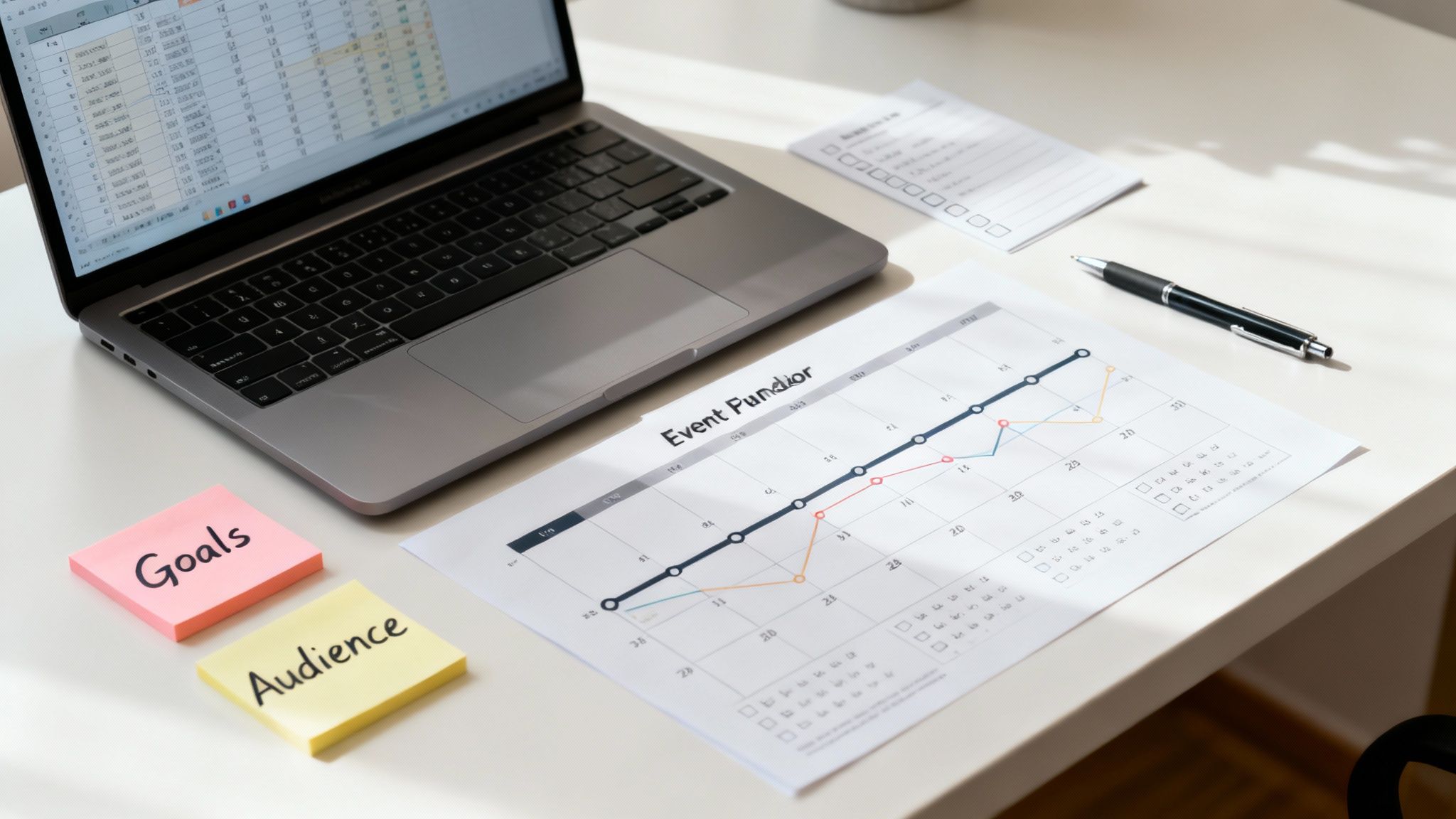
A master timeline, or project plan, is the one document that keeps everyone synchronised and accountable. It breaks down the entire planning process into manageable phases, assigning clear deadlines and owners to each task. This becomes the single source of truth for the whole team.
For most events, this plan should be mapped out 6-12 months in advance, depending on the scale. The timeline should cover every key milestone, from this initial strategy phase right through to the post-event debrief. It is what keeps the project moving forward and ensures nothing is missed.
Selecting the Venue and Technical Team
With your strategy set, it is time to address the practical elements of your event: the physical space and the technical crew who will bring it to life. Choosing the right venue and suppliers is a make-or-break moment. It dictates everything from guest experience to whether your keynote speaker's microphone works correctly. In a city like London, you are spoilt for choice, but that also means you must be meticulous in your selection process.
Picking a venue is not just about finding a space large enough for your guest list. You are looking for a partner, a space that actively helps you achieve your goals. London has approximately 10,000 venues, which can be overwhelming. The key is to cut through the noise with a methodical approach, starting with a site visit.
Making Your Site Visit Count
Forget the glossy brochures and sales pitches for a moment. A site visit is your chance to see a venue for what it really is. You need to walk through the doors thinking like an event manager, a guest, and a technician all at once. Go prepared with a checklist, because the small details you miss now will cause the biggest problems later.
Here is what to look for:
- The Guest Journey: How do people get here? Is it difficult to reach from the nearest tube station? What about accessibility for attendees with mobility issues? Walk the path from the front door to the main room, checking the flow and looking for potential bottlenecks.
- Space and Layout Reality: Do not just take their word for capacity. A room that holds 200 people theatre-style feels completely different with 200 people in a cabaret layout. Get a feel for the space yourself. Where will you put the registration desk, branding, and coffee stations?
- The Technical Check: This is non-negotiable. Count power sockets and note their locations. Ask specific questions about the Wi-Fi: can it genuinely handle 300 people logging on simultaneously? Look at the ceiling for rigging points and ask about any restrictions.
- Load-in and Logistics: Find the loading bay. Is it on a red route? Is there a goods lift, and is it big enough for a flight case? Knowing the route your production team must take saves significant time and stress on build day. You can explore a curated list of technically vetted London venues to see what a good setup looks like.
To make this easier, here is a checklist you can use on your next site visit. It helps ensure you are asking the right questions.
London Venue Site Visit Checklist
Use this checklist to evaluate potential London venues systematically. It is designed to make you think about the practical realities of running an event in the space, from the moment your first supplier arrives to the moment your last guest leaves.
| Category | Item to Check | Notes/Confirmation |
|---|---|---|
| Arrival & Access | Proximity to public transport (Tube, train, bus) | |
| On-site parking or nearby options? | ||
| Step-free access from street to main event space? | ||
| Clear internal and external signage? | ||
| Capacity & Layout | Confirmed capacity for your preferred layout (theatre, cabaret, etc.)? | |
| Ceiling height (critical for screens and staging)? | ||
| Any pillars or obstructions in the main room? | ||
| Suitable space for registration, cloakroom, and catering? | ||
| Technical & AV | Location and number of power sockets (13A, 32A)? | |
| In-house Wi-Fi strength and delegate capacity? | ||
| Rigging points available for lighting/sound? Weight limits? | ||
| Any sound restrictions or limiters in place? | ||
| Supplier Logistics | Location of loading bay? Any time restrictions? | |
| Dimensions and weight capacity of goods lifts? | ||
| Secure storage space for empty cases during the event? | ||
| Is there a dedicated supplier entrance/route? | ||
| Facilities | Number and location of toilets relative to main space? | |
| Kitchen facilities and back-of-house access for caterers? | ||
| Temperature control (air conditioning/heating)? |
Do not leave until you have answers to all these points. It will save you significant trouble later.
Choosing Your Audio Visual Partner
Your AV company is more than just a supplier; they are a core part of your production team. A great partner, like London Audio Visual Hire, is a technical consultant who can take your creative vision and figure out how to make it happen on budget and without issues.
The key to a good relationship here is clear communication, which is why a technical rider is so important. This is not just for music artists. A technical rider is a document that lists every piece of technology you need, from the number of lapel microphones and the size of the projector screens to the specific lighting cues for your CEO's entrance.
A detailed technical rider eliminates guesswork. It means the venue, your AV team, and you are all on the same page, preventing last-minute problems and ensuring a professional show.
When you are talking to potential AV partners, go deeper than just the price. Ask if they have worked in your chosen venue before. What is their on-site support like? What happens if a critical piece of equipment fails mid-event? A true professional will have solid, confident answers to all these questions.
The London event scene is a huge contributor to the UK economy. With 66% of organisations planning to schedule more events in 2025 and hybrid formats becoming standard, solid technical planning is more critical than ever. Making smart, data-driven decisions on your venue and suppliers is what separates a good event from a truly great one.
Mastering Logistics and Supplier Coordination
Behind every seemingly effortless event is a finely tuned machine of logistics and trusted suppliers. This is where the real work happens, turning a great idea into a flawless experience on the day. Getting the coordination right, from the caterers to the crewing company, is what separates professionals from amateurs.
Effective supplier management does not start when you are ready to sign a contract. It begins much earlier, with a proper vetting process to ensure every partner has the right equipment and fits the professional and reliable standard your event demands. For any major supplier, you must do your homework.
Vetting and Contracting Your Partners
When you are choosing suppliers, look past the initial quote. Ask for case studies or, even better, to speak to a few past clients who have run events of a similar scale. If you are planning a high-stakes product launch in central London, you need to know your suppliers have experience with that kind of high-pressure activation, not just a regional conference.
This process is absolutely critical when it comes to your venue, which is arguably your most important partner.
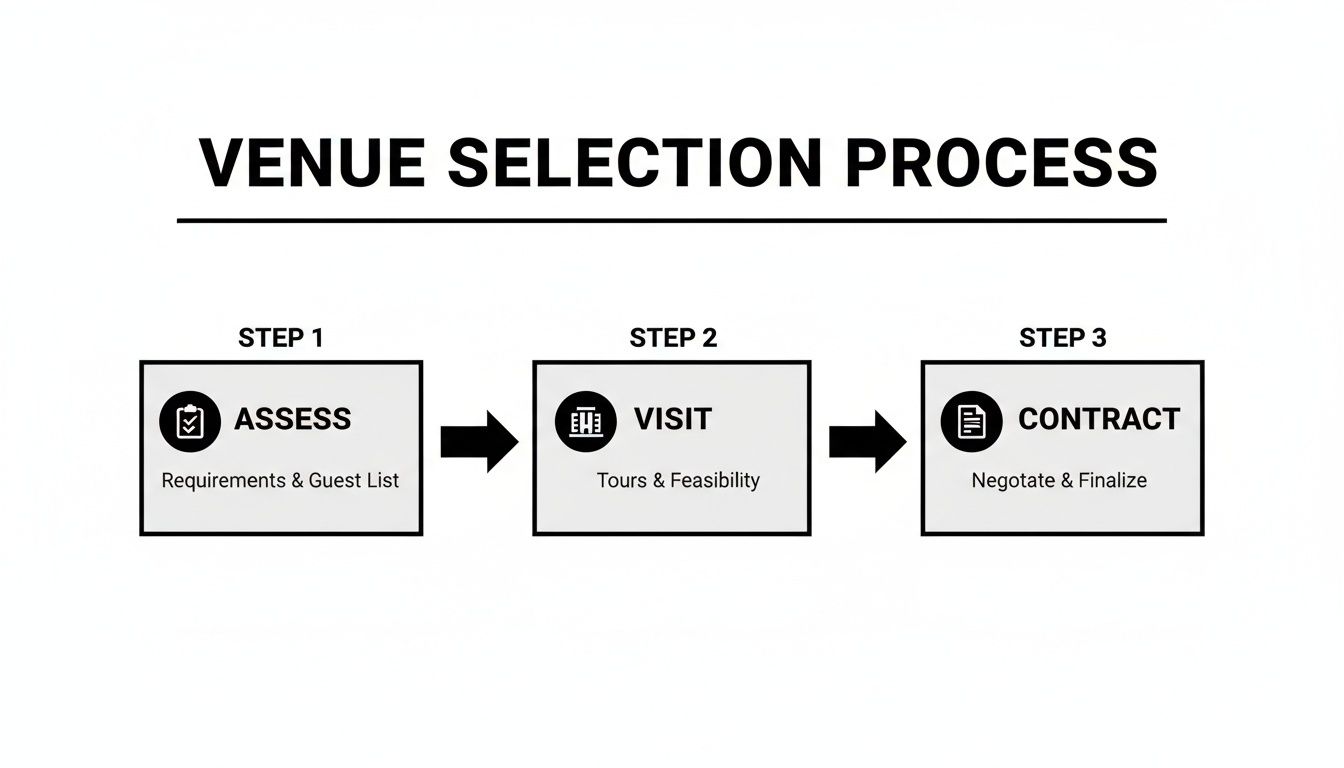
Following a structured approach like this means you can move from a long list to a signed contract without missing crucial details.
Once you have picked your team, the contract phase is all about setting clear expectations. A solid contract and a detailed Service Level Agreement (SLA) are your best tools for protecting the budget and ensuring everyone delivers what they promised.
Make sure your supplier agreements cover these points:
- A fully itemised scope of work: Be specific. Detail everything from the exact number of security staff to the model of the microphones.
- Clear payment schedules: Lock in the dates for deposits, interim payments, and the final balance, and what triggers each payment.
- Cancellation terms: What happens if things go wrong? Spell out the financial consequences for both sides if the event or service is cancelled.
- On-site responsibilities: Define exactly who does what on the day, including arrival times, setup duties, and breakdown procedures.
Do not forget, this is a negotiation. Never be afraid to ask for more value. For instance, if you are placing a large order with a company like London Audio Visual Hire, it is perfectly reasonable to ask them to include an extra comfort monitor for your speakers or keep a technician on-site a bit longer at no extra charge.
Creating the Master Run Sheet
If there is one document that can make or break your event on the day, it is the master run sheet. Think of it as the event's definitive script that details every cue, contact, and responsibility for everyone involved, from the headline speaker to the catering manager. It is your single source of truth.
A meticulously detailed run sheet does more than just list timings; it empowers your entire team to operate with precision and confidence. It anticipates needs, synchronises actions, and is the bedrock of a calm, controlled on-site environment.
A robust run sheet is granular, breaking the day down into increments as small as five minutes.
Example Run Sheet Snippet
| Time | Action | Owner | Notes |
|---|---|---|---|
| 14:00 | Keynote Speaker (Jane Doe) arrives at Green Room | Event Manager | Greet at VIP entrance, provide water and agenda. |
| 14:15 | AV Check with Keynote Speaker on Main Stage | AV Technician | Test microphone, clicker, and presentation slides. |
| 14:25 | Final Comms Check with all Department Heads | Show Caller | Confirm readiness via radio. Standby for doors. |
| 14:30 | Doors Open to Main Auditorium | Security / Ushers | Background music cue 3 starts. |
This level of detail leaves no room for error. When the AV technician sees '14:15', they know exactly who to find and where to be. This proactive coordination prevents delays and ensures every transition is seamless. It frees up your team to manage any real surprises with focus, from the first moments of setup to the final load-out.
Bringing It All Together on the Day
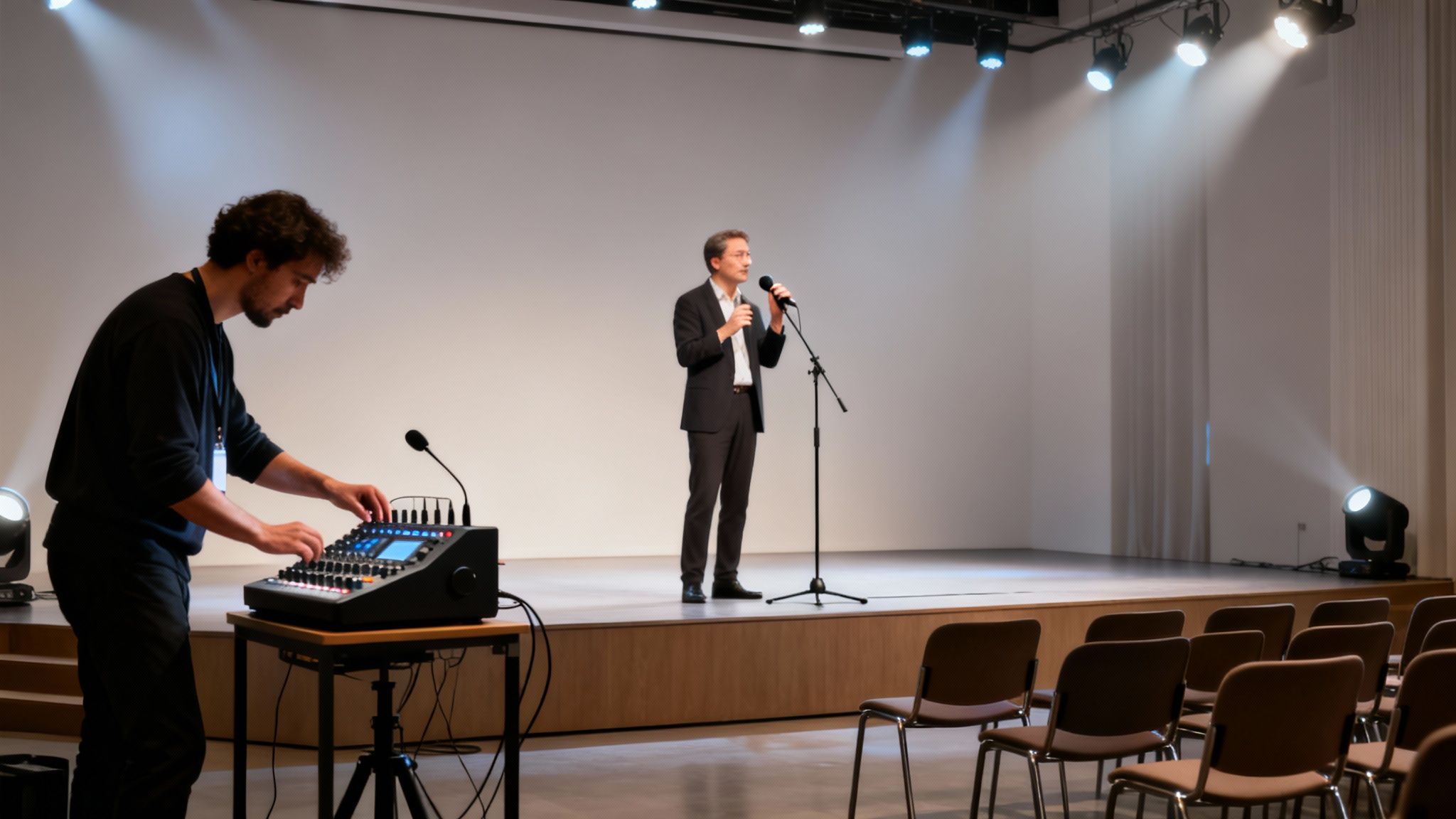
After months of painstaking planning, this is it. Event day is where the strategy, spreadsheets, and emails become a living experience. A successful on-site execution is not about luck; it is the direct result of obsessive preparation, clear communication, and the ability to stay calm under pressure.
The ultimate goal is to make the entire operation look effortless. Your guests should only see a polished, engaging event, completely oblivious to the complex machine operating behind the scenes. That seamless delivery starts hours before the first guest arrives, with the all-important team briefing.
The All-Important Team Briefing
A solid team briefing is the bedrock of a smooth event day. It is far more than a quick huddle to review the schedule. This is where you align every single person, from the registration team and security to the AV technicians and catering leads, on the mission.
Everyone needs to understand not just what they are doing, but how their role fits into the bigger picture.
Your briefing should confirm these key points:
- Walk Through the Run Sheet: Go through the master schedule moment by moment, highlighting critical transitions, cues, and timings. Make no assumptions.
- Establish Key Contacts: Make sure everyone knows the key players and department heads. A clear chain of command is vital when quick decisions are needed.
- Define Communication Channels: Establish clear communication protocols. This usually means dedicated radio channels for operations, AV, and catering to keep the airwaves clear.
- Review Contingency Plans: Run through the main ‘what if’ scenarios. What is the plan for a speaker running late? Or a medical issue? Remind everyone of the agreed-upon response.
This session gives your team the confidence to act decisively, knowing everyone is working from the same playbook.
Why Technical Rehearsals Are Non-Negotiable
If your event involves any kind of presentation, performance, or awards ceremony, a technical rehearsal is essential. This is your only chance to catch any issues with the sound, lighting, or video content before the room is full of people.
Think of a technical rehearsal as your insurance policy against on-stage problems. It turns potential show-stoppers, like a dead microphone or a glitchy slide deck, into minor tweaks that happen when nobody is watching.
During this time, your AV crew will work directly with each speaker. They will do proper microphone checks, ensure presentation clickers are paired and working, and test any videos or audio cues embedded in the slides. When you understand what is audio visual equipment and all its moving parts, you see why this dedicated time is so critical. It is not just about the technology; it also gives your presenters a massive confidence boost.
Proactive Problem-Solving on the Ground
Even with the best plan, things can go wrong. A supplier gets stuck in traffic, a speaker feels unwell, or the Wi-Fi drops. The difference between a minor hiccup and a crisis is how prepared your team is to handle it.
Instil a simple, logical process for tackling problems as they arise:
- Identify: What, exactly, is the problem? Be specific. Is it a technical issue, a guest complaint, or a staffing shortfall?
- Assess: What is the impact? Who does this affect, and how urgent is it?
- Delegate: Get the issue to the right person. The AV lead handles a faulty projector; the catering manager deals with a dietary mix-up. Do not try to solve everything yourself.
- Resolve & Report Back: The owner of the problem finds a solution and confirms with the event manager once it is sorted.
This structured approach stops panic from spreading and ensures challenges are handled discreetly and efficiently. When your team is empowered to solve problems, you can stay focused on the big picture, making sure the event hits every one of its goals.
Analysing Performance and Proving Event ROI
Once the last guest leaves, the job is not done. This is where some of the most crucial work begins. The post-event wrap-up is your chance to prove the event's value, justify the budget, and gather insights that will make your next one even better. This is how you turn positive feelings into hard data and show stakeholders a clear return on their investment.
Gathering Attendee Feedback
First, you need to find out what your audience really thought, and you need to do it quickly. The longer you wait, the more the memory fades, and your response rates will plummet.
Aim to send a feedback survey within 24 hours. Keep it short and to the point. Focus on key areas: session quality, the speakers, the venue, and their overall experience. A good mix of rating scales and a few open-ended questions works best, giving you both quantitative data and candid feedback.
Do not just stop at surveys. Monitor social media. What were people saying on LinkedIn or X? Tracking your event hashtag gives you a raw, unfiltered view of the attendee experience. It is often where you will find the most honest praise and constructive criticism.
The KPIs That Matter
Proving ROI is not just about showing everyone had a good time. It is about tying your results directly back to the goals you set at the very beginning. These are your Key Performance Indicators (KPIs), and they need to be specific to what your business cares about.
Here are a few examples of KPIs that hold real weight:
- Lead Generation: How many quality leads did you capture? What was your cost per lead? (Divide the total event cost by the number of qualified leads).
- Brand Engagement: Look at your social media reach and impressions. What was the general sentiment of the online conversation? Did you get any press coverage? Was there a spike in website traffic?
- Audience Satisfaction: A Net Promoter Score (NPS) from your survey is a powerful metric. It tells you in one number how likely your guests are to recommend your event to a colleague.
- Sales Conversion: For any event with a commercial objective, this is critical. How many meetings were booked or deals closed that you can trace directly back to a conversation at the event?
Proving ROI is about more than just happy attendees. It is about building a data-backed story that connects what you did on the day to real business outcomes. That is how you justify every pound spent and secure budget for the future.
The All-Important Debrief
Once you have gathered external feedback, it is time to look inwards. Get your core team and key suppliers in a room for a proper debrief. This should include your AV partner, London Audio Visual Hire. This is not a blame exercise; it is a frank, constructive discussion about what worked and what did not.
Go through everything from the initial planning stages to the on-site execution. Were there any bottlenecks with load-in? Did all the technology work seamlessly? This kind of collaborative review is where you unearth operational insights that will make future events run more smoothly.
Creating a Powerful Report
The final step is to bring all this information together into a single, compelling post-event report. This is your highlight reel for senior management and stakeholders. It needs to be clear, concise, and packed with data.
Your report should include:
- An executive summary showing key achievements against your original goals.
- A clear breakdown of your final budget versus actual spend.
- A summary of your attendee feedback and demographics.
- Hard data showing your performance against your core KPIs.
- A few screenshots of positive social media posts or press clippings.
- Your key learnings and a list of actionable recommendations for next time.
This is not just administration. With 74% of planners expecting budget increases, a solid report is your best tool. The UK event market is forecast to reach USD 99 billion by 2035, and competition is fierce. It is no surprise that 79% of professionals now use an Event Management System to track these metrics. For a deeper dive, check the latest UK event marketing statistics to see the trends shaping our industry. A strong report does not just prove your worth; it builds the case for future investment.
Your Most Common Event Planning Questions, Answered
No matter how many events you have run or how watertight your project plan seems, questions always arise. Getting ahead of these common queries means you will have solid answers ready for your team and stakeholders, keeping confidence high and the project moving forward.
Here are some of the questions I am asked most often by fellow event planners in London.
How Much Should I Set Aside for Contingency?
This is a common question. A standard benchmark across the UK events industry is to allocate 10% to 15% of your total budget to a contingency fund.
This is not spare cash for adding desirable extras last minute. It is your safety net for the genuine, unexpected costs that inevitably appear. If you are tackling something particularly complex, such as an outdoor festival or an event with heavy international logistics, I would strongly advise pushing that buffer up to 20%.
This fund is what covers costs such as:
- Surprise equipment needs, like an extra lectern microphone for an unexpected panellist.
- Supplier surcharges for things like late-night crew work or difficult central London deliveries.
- Unexpected staffing gaps, like needing an extra pair of hands from security or an AV technician on short notice.
Having that buffer gives you the freedom to solve problems quickly without having to return to your finance team for more funds.
What Should I Ask My AV Supplier?
Choosing your audio-visual partner is one of the most critical decisions you will make. It is about much more than getting the best price on screens and a PA system. The slickness of your entire event often rests on their shoulders.
Before you sign a contract with a supplier like London Audio Visual Hire, you need to ask some specific questions. Here are the questions I always ask:
- Venue History: Have you worked in this specific venue before? Someone who already knows the loading bay quirks, power limitations, and the name of the in-house manager is invaluable.
- On-Site Crew: Will we have a dedicated technician on-site for the whole event? Get their name. Find out what happens if they need a break. You do not want to be left searching for support mid-presentation.
- Contingency Plan: What is your protocol if a key piece of equipment fails, such as a projector bulb blowing or a laptop malfunctioning? Do you have backups on-site, ready to go?
- Itemised Quote: Can I get a completely itemised quote? I want to see every cable, every crew hour, and all transport costs listed separately.
- Proof of Performance: Can you show me some examples of events you have done that are a similar size and style to mine? A brief conversation with one of their previous clients is even better.
Remember, you are not just renting equipment; you are hiring a technical partner. Their ability to troubleshoot under pressure is just as important as the gear in their flight cases.
How Can I Measure the ROI of My Event?
Proving the value of your event is essential. To measure Return on Investment (ROI) properly, you must tie your results directly back to the goals you set at the start. A positive atmosphere is not enough; stakeholders want to see the numbers.
The classic formula is straightforward: (Total Event Value – Total Cost) / Total Cost x 100.
The real challenge is determining the 'Total Event Value', especially when your goals are not just about direct sales. Here is how I approach it for different objectives:
- For Lead Generation: Do not just count the number of scanned badges. Track how many of those leads converted into paying customers in the three to six months following the event. That is your true figure.
- For Brand Awareness: Look for tangible evidence. Track the spike in your social media mentions and engagement, the number of press clippings, and the uplift in traffic to your website during the event week.
- For an Internal Training Event: Use simple pre- and post-event quizzes to measure what people actually learned. You can then link improved knowledge or skills to potential gains in team productivity or fewer errors.
When you can assign a credible financial value to these outcomes, you are no longer talking about feelings. You are presenting a clear, data-backed case for the event's impact on the business.
Planning and running a flawless event means having technical experts in your corner you can rely on. At London Audio Visual Hire, we bring detailed planning, dependable equipment, and calm, experienced on-site support to ensure your event production is seamless. Find out how our team can help with your next London event.