

Organising an event in London, whether a corporate conference or a brand launch, hinges on achieving perfect sound. This is where professional PA for hire comes in, offering a complete audio solution to ensure every word, note, and announcement is delivered with clarity. It is much more than simply renting speakers; it is a full-service audio package designed around your event.
Your Essential Guide to Hiring a PA System in London
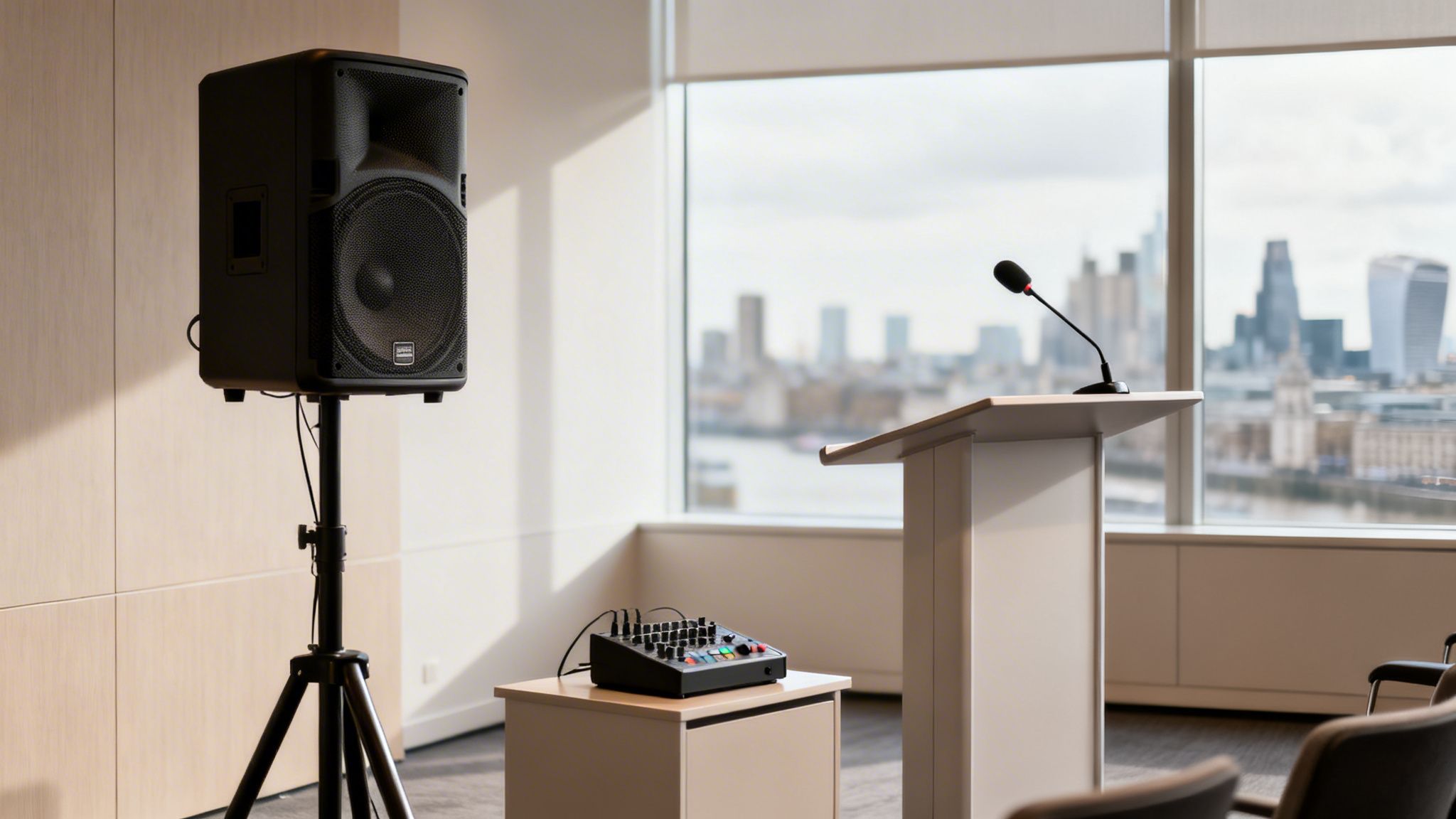
When you look for "PA for hire," you are searching for a Public Address system. A PA system is the central nervous system for your event's sound. It captures all audio inputs, processes them, and delivers them with clarity to your audience, whether they are in a small meeting room or a large exhibition hall.
A common mistake is assuming a PA system only makes things louder. In reality, its function is centred on clarity and control. If this is not managed correctly, a keynote speech can become muffled, background music can be a distraction, and important announcements may be lost.
Understanding the Core Components
A professional PA hire package is a complete, bespoke solution, not just a collection of equipment. The setup is always customised to fit the unique acoustics and layout of your venue. The core components almost always include:
- Speakers: These project sound to your guests. The correct type and number depend entirely on the room's size and audience numbers.
- Microphones: These capture sound at the source, such as a presenter's voice, a panel discussion, or a live band. Options range from handheld and lectern mics to discreet lapel mics.
- Audio Mixer: This is the control centre of the operation. A sound technician uses the mixer to balance levels, fine-tune the tone, and eliminate feedback, ensuring a seamless audio experience.
Consider this: microphones are the ears, the mixer is the brain, and the speakers are the mouth. For a message to be heard clearly, every part must work in perfect harmony.
The Value of Professional Expertise
While the equipment is vital, the true value of professional PA hire often lies with the technicians. An experienced sound engineer or AV technician from a trusted company like London Audio Visual Hire can be transformative. They handle all technical planning, setup, and live operation, freeing you to focus on running your event.
Their experience is invaluable when dealing with London's diverse venues, from historic buildings with challenging acoustics to modern conference centres. By choosing a professional service, you are not just hiring equipment; you are securing peace of mind and guaranteeing your event sounds as good as it looks. This guide will explain everything you need to know to make the right choice.
What a 'PA for Hire' Actually Includes
When you encounter the term "PA for hire," it is easy to assume you are just renting a pair of speakers. In reality, you are securing a complete sound system where every component plays a crucial role. Understanding these parts and their functions is key to specifying the right setup for your event and knowing what you are paying for.
The demand for professional sound is significant, particularly in a city like London with its continuous calendar of corporate events. The UK’s audio equipment rental market was valued at USD 739.51 million in 2024 and is projected to reach USD 1,369.99 million by 2033. This growth is driven by event planners who require high-quality sound for everything from trade shows to awards ceremonies. In fact, over 60% of corporate teams now choose to rent audio equipment rather than purchase it, avoiding significant upfront costs.
Speakers: The Voice of Your Event
Speakers are the most visible part of any PA system, delivering sound to your audience. They generally come in two types:
Powered Speakers (Active): These are the standard for most corporate events today. They have built-in amplifiers, which results in a simpler, tidier setup with fewer cables. This all-in-one design usually provides a cleaner, more dependable sound.
Passive Speakers: These require separate, external amplifiers to function. While this offers more customisation for large-scale setups like festivals or concerts, it also increases equipment and complexity, a task best left to experienced sound engineers.
For most corporate functions, a powered speaker system offers the ideal balance of quality, efficiency, and reliability.
The Audio Mixer: The Brain of the Operation
If the speakers are the voice, the audio mixer is the brain. This is the control centre where an AV technician connects all sound sources, such as microphones and laptops, and expertly blends them together.
The mixer is where the technical skill is applied. It allows a sound engineer to manage volume levels, eliminate feedback before it occurs, and adjust the tone (using EQ) so that every word is heard with perfect clarity.
Without a mixer, and a skilled operator, you would have an uncontrolled mix of sounds. This tool transforms raw audio into a polished, professional experience.
Microphones: Capturing Every Word
Microphones are the ears of your PA system, and selecting the right type significantly impacts how smoothly your event runs. The most common options are:
- Handheld Microphones: Ideal for audience Q&A sessions or for presenters who move around the stage. They are robust and easy to pass between people.
- Lapel Microphones (Lavalier): These small microphones clip discreetly onto a speaker's clothing, keeping their hands free. They are standard for keynote speakers and panellists, ensuring consistent sound levels.
- Lectern Microphones: These are fixed to a podium or lectern, providing a simple solution for formal speeches where the presenter remains in one place.
Understanding these core components helps you see how they integrate to create a seamless event. It also enables you to have a more informed discussion with your AV supplier about your requirements. To learn more about the equipment involved, feel free to read our detailed guide on the fundamentals of audio visual equipment.
Matching the PA System to Your Event and Venue
When it comes to event sound, a larger system is not always better. Hiring a PA system that is too powerful can be as detrimental as one that is too weak. The result is either overwhelming, muddy sound or a system that cannot deliver the required clarity.
The key is precision: matching the audio equipment to your specific objectives, the venue's characteristics, and your audience size.
The audio needs for a corporate conference are very different from the high-energy atmosphere of a product launch. Getting this right is the difference between an event that feels professional and one that does not. This is the expertise a PA hire partner provides; they design a sound solution that works, rather than just supplying equipment.
How Different London Events Shape Your Audio Needs
Let's review a couple of typical London event scenarios. This will help you identify your needs and have a more productive conversation with your audio visual supplier.
Scenario 1: The Corporate Conference
Imagine you are hosting 200 delegates in a hotel ballroom for a day of keynotes and panel discussions. The absolute priority is speech intelligibility. Every word must be heard clearly, from the front row to the back.
- Audio Setup: A distributed system using multiple, smaller speakers placed strategically is often more effective than two large speakers at the front. This ensures even volume for everyone.
- Microphones: A mix is required. Lectern mics are suitable for formal presentations, while lapel mics give panellists freedom of movement. Handheld mics are essential for audience Q&A sessions.
- The Main Challenge: Feedback, the high-pitched squeal, is a constant risk with several open mics in one room. A skilled sound technician manages levels at the mixing desk to prevent this.
Scenario 2: The High-Impact Brand Launch
Now, picture a product launch for 150 guests in an industrial-style venue. The goal is to build atmosphere and energy. The sound must be dynamic, transitioning seamlessly from a CEO's presentation to a video soundtrack and then a DJ set.
- Audio Setup: The system must be versatile. This usually means a pair of high-quality main speakers, supplemented with a subwoofer to provide a full-bodied sound for music.
- Microphones: Presenters will almost always use lapel mics to keep their hands free and maintain a polished appearance.
- The Main Challenge: The transitions. A technician's job is to ensure the audio flows perfectly between a presenter's voice, the impact of a video, and the energy of a DJ, without awkward pauses or jarring volume changes.
This flowchart can help you visualise how to begin assembling your own requirements.
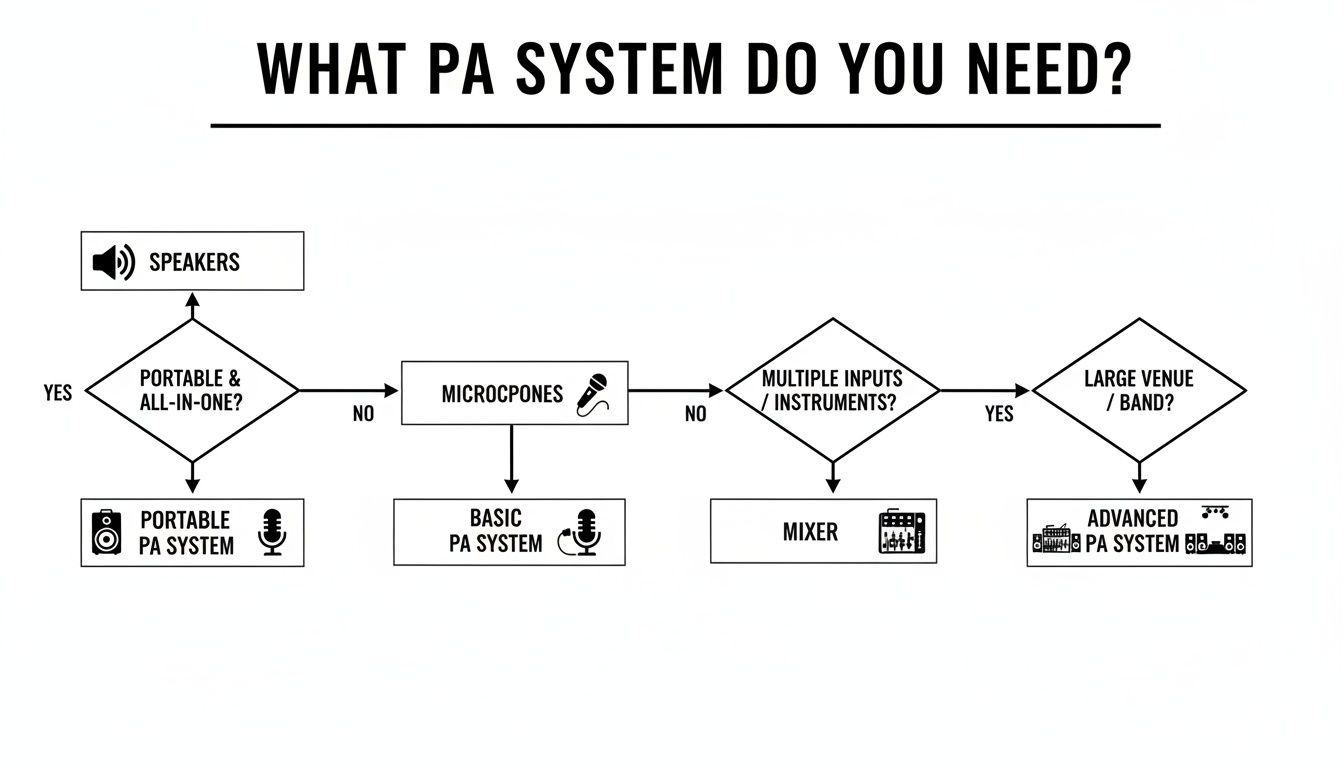
As you can see, the choice of speakers, microphones, and mixing desk are all interconnected. An error in one part can compromise the entire system.
To make this clearer, the table below offers some quick recommendations for common London event types.
PA System Recommendations by Event Type
| Event Type | Audience Size | Venue Type | Recommended PA Configuration | Key Considerations |
|---|---|---|---|---|
| Panel Discussion | 50-150 | Hotel Meeting Room | 2-4 small powered speakers on stands, small digital mixer, lapel/table mics | Focus on vocal clarity. Position speakers to avoid feedback from microphones. |
| Gala Dinner | 150-400 | Ballroom, Livery Hall | Distributed speaker system, main speakers for band/stage, subwoofers | Even coverage is vital so dinner conversation is possible away from the stage. |
| Product Launch | 100-300 | Warehouse, Gallery | High-quality main speakers (e.g., L-Acoustics, d&b) with subwoofers | System must handle speech, video soundtracks, and loud music with high fidelity. |
| Outdoor Brand Activation | 100-500+ | Public Square | Small line array or multiple point-source speakers, directional subs | Noise control is critical. Must adhere to council regulations and avoid sound spill. |
| Wedding Reception | 80-200 | Marquee, Stately Home | 2 main speakers and a subwoofer for DJ/band, separate small speaker for speeches | Two distinct needs: clear speeches and powerful music. A flexible system is key. |
This table serves as a starting point, but always consult with your AV provider to refine the plan for your specific circumstances.
Tackling London's Unique Venue Challenges
Beyond the event itself, the venue is your biggest variable, especially in London with its mix of historic and modern architecture. A one-size-fits-all audio plan is destined to fail here.
An experienced audio team does not just look at a room's dimensions; they listen to it. They understand that a historic, stone-walled hall will behave very differently from a modern, glass-fronted space, and they plan accordingly.
Here are two classic London challenges we see frequently:
Historic Venues with Tricky Acoustics: Many of London's most beautiful venues are listed buildings with high ceilings and hard surfaces like marble or stone. These surfaces create significant reverberation (echo), which can render clear speech unintelligible. A professional from a team like London Audio Visual Hire knows how to combat this, using advanced speakers (like line arrays) to direct sound at the audience, not at reflective surfaces.
Outdoor Events and Noise Control: For a brand activation in a public space, noise control is a primary hurdle. The sound system must be powerful enough to be heard over ambient city noise, but focused enough to avoid breaching local council noise limits. This requires careful system design and on-site monitoring of sound levels.
Why the Crew is More Important Than the Kit
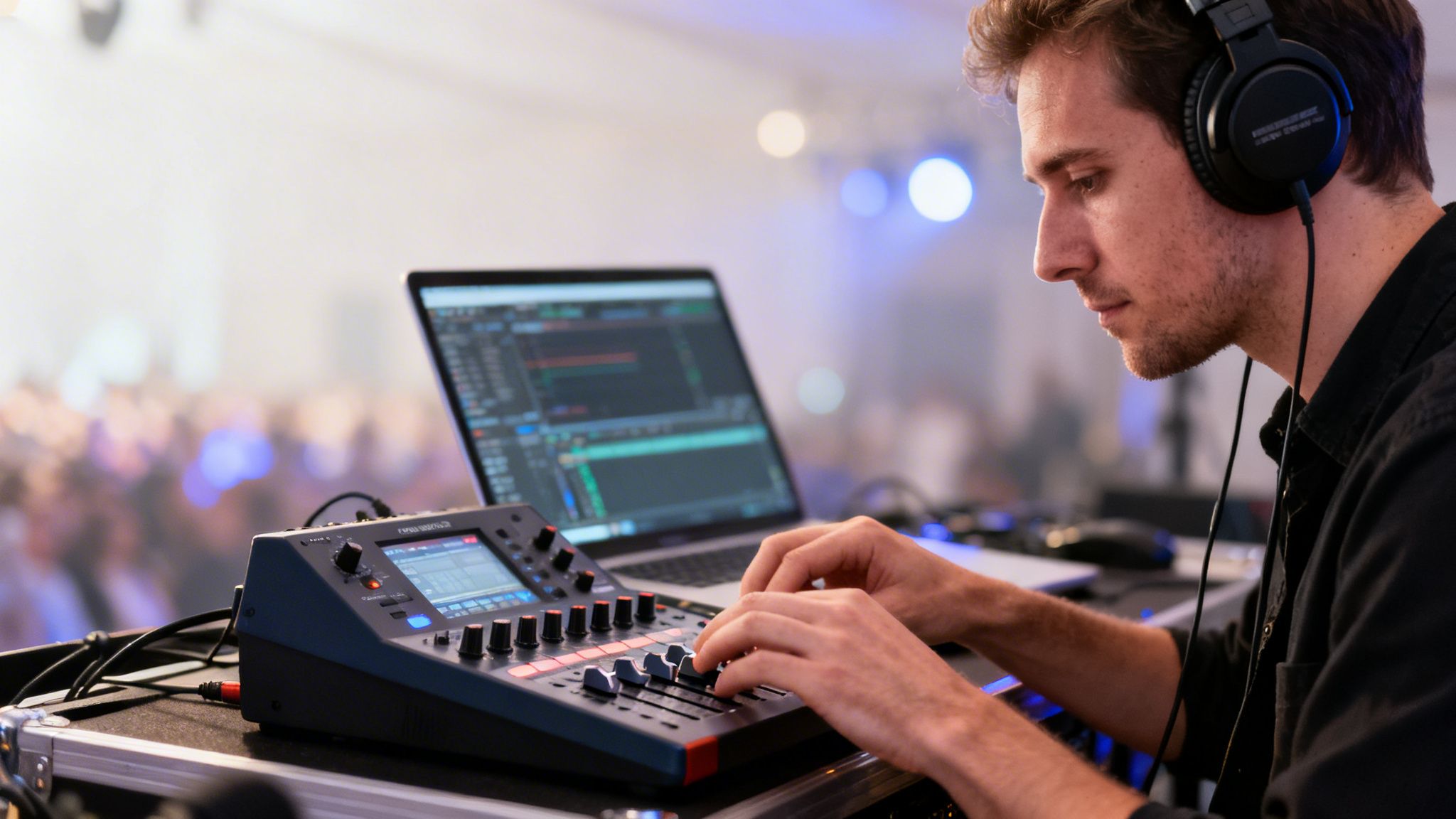
When arranging PA for hire, it is natural to focus on the equipment. However, years of industry experience show that the secret to a flawless event is not the hardware, but the skilled hands that operate it.
A 'dry hire', where you only rent equipment, is like being given the keys to a high-performance car without a support crew. You have the machine, but you are responsible for setup, operation, and any unexpected problems. Opting for a full-service provider means you get both the equipment and the expert team dedicated to a successful outcome.
Who’s Who on Your Audio Crew
Understanding the key roles on an expert audio team helps you appreciate the value they bring to your event.
The Sound Engineer: This is your audio architect. They design the system around your venue's acoustics and manage the sound live from the mixing desk. They balance every audio source, eliminate feedback, and ensure the person in the back row hears as clearly as the person in the front.
The AV Technician: These are the on-the-ground problem-solvers. The AV technician physically builds the system, running cables, positioning speakers for optimal coverage, and ensuring every component functions correctly before guests arrive.
The Project Manager: For larger events, the project manager is your single point of contact. They coordinate every technical detail, from the initial site visit to managing the crew on the day, allowing you to focus on your event and guests.
How On-Site Experts Prevent Problems
Live events often present unforeseen challenges. A great crew does not just react to problems; they anticipate and solve them.
An experienced sound engineer is not just reacting to feedback; they are preventing it from happening. They understand the science of sound and can identify potential acoustic or microphone issues in advance.
Imagine a panel discussion with five speakers, each with a lapel mic. In inexperienced hands, this is a recipe for audio issues, including hissing and fluctuating volumes. A skilled engineer, however, will meticulously manage each microphone from the mixer, ensuring every panellist is crisp and clear.
Demand for this level of skill is growing. With corporate functions making up 35% of an AV market seeing an 8.5% global CAGR, professionalism is the standard. 70% of events now rely on professional AV support to deliver a better experience. Outsourcing to experts can often reduce overall project costs by 20-30% by avoiding costly mistakes and using time on-site efficiently. You can read more about the growth of the AV production services market on researchandmarkets.com.
For a hybrid event, the challenge is greater. The engineer must create two distinct audio mixes simultaneously: one for the live audience and a separate one for virtual attendees. This ensures both audiences receive a clean, professional sound experience, a complex task impossible without an expert. By choosing a full-service hire, you are not just renting equipment; you are engaging a team that guarantees every technical detail is handled. You can learn more about the full range of AV services available for your next London event.
Getting to Grips with Costs, Contracts, and London’s Logistics
Understanding the finances and logistics behind hiring a PA system is key to budgeting accurately and ensuring a stress-free event. The price on your quotation is a sum of several parts, and any reputable hire company will be transparent about what you are paying for.
The total cost is a combination of factors, and achieving great audio depends on getting that combination right.
So, What Goes Into the Price?
A quotation's final figure is based on four main elements.
- The Equipment: This is the most significant variable. A simple setup for a small meeting is very different from a full line array system for a 500-person conference. More complex sound needs require more specialised equipment.
- The Hire Duration: Most hire companies work on half-day or full-day rates. A three-day conference will cost more than a single evening event.
- The Crew: The number of technicians and engineers required directly impacts the cost. A basic setup might need one AV technician, while a large show could require a project manager, a sound engineer, and a full crew.
- Logistics: This covers moving equipment and crew to your venue, including fuel, vehicle costs, and any specific London charges.
The "hire not buy" approach is standard for event planners. The UK's professional audio-visual market has shifted, with 40-50% of UK event organisers moving AV budgets towards rentals for greater flexibility after 2020. This highlights why they rely on insured, professional providers. Industry reports indicate a 25% failure rate for DIY or poorly managed AV setups, a risk that is avoided with a professional hire. You can see more data on the professional AV systems market and its trends on straitsresearch.com.
The Realities of London Logistics
Working in London presents challenges that a professional AV company knows how to handle. These are factored into planning and cost and are an indicator of a supplier's local knowledge.
A seasoned London-based AV team plans for the city's challenges as standard. A tight loading schedule or the Congestion Charge is not a surprise; it is part of a normal day's work, factored into the plan from the beginning.
Here are a few London hurdles we plan for daily:
- Congestion and ULEZ Charges: Any van entering central London during operating hours must pay these fees. It is a standard transport cost.
- Parking and Loading: A good hire company will have a plan for accessing the venue, loading or unloading within tight time slots, and departing efficiently.
- Venue Access Rules: Many London venues have strict rules regarding loading bay times and service lift access. An experienced team like ours will already know the procedures for most locations, ensuring a smooth load-in for London conference AV hire.
Understanding Your Hire Contract
Always read the contract before signing. It protects both you and the hire company by setting clear expectations. Pay special attention to a few key areas.
First, check that the provider has adequate Public Liability Insurance. A professional contract will state this clearly. It will also outline responsibility for equipment damage and the policy on cancellation or postponement. Reviewing this document can prevent future complications. For a clear, comprehensive quotation for your event in London, please contact our team.
Your Pre-Booking Checklist for PA Hire Suppliers
When you begin contacting PA hire companies, how do you distinguish the true professionals? The key is asking the right questions before you commit. This is about ensuring they have the skill, equipment, and experience to make your event sound exceptional.
A good supplier will welcome these questions as an opportunity to demonstrate their capability. This checklist is organised into four crucial areas.
Technical and Equipment Capability
This helps you determine if they are a genuine audio partner. You want a team that considers your event, not just their available stock.
- How do you design a sound plan for my specific venue and audience?
- For my event, what speakers, mics, and mixer would you recommend, and why?
- Do you own your equipment? How often is it maintained and tested?
- What is your on-site plan for backup equipment?
- Can you provide case studies from events similar to mine?
The difference between a standard supplier and a great one is their ability to explain the why. They will not just list equipment; they will explain why a certain speaker suits the room's acoustics or a specific microphone is best for your keynote speaker.
Logistics and On-Site Management
Transporting equipment and crew across London requires expertise. An experienced local company will manage this smoothly, whereas others may be unprepared for the capital’s challenges.
- How will you handle delivery, setup, and collection within central London's tight schedules?
- What is your process for liaising with the venue's management team?
- Are costs like the Congestion Charge, ULEZ, and parking included in the quotation?
- Who is my single point of contact on the day of the event?
- How much time do you require for setup and breakdown (derig)?
Crew Experience and Professionalism
The best equipment is ineffective without a skilled operator. The crew's expertise is as vital as the hardware.
- What is the background of the sound engineers who work on corporate events?
- Are the crew full-time employees or freelancers?
- How will your team be dressed to suit the professional tone of our event?
- If our event is hybrid, can the engineer manage audio for both the room and the online stream?
Safety and Compliance
This is non-negotiable. Proper insurance and safety documentation protect everyone involved.
- Can I see a copy of your public liability insurance? (The industry standard is £5-10 million of cover).
- Are all your electrical items PAT tested? Can you provide certificates?
- Do you prepare risk assessments and method statements (RAMS) for your on-site work?
These conversations provide a solid basis for your decision. A professional partner like London Audio Visual Hire will not only have good answers but will likely raise many of these points during your initial discussions.
Your PA Hire Questions, Answered
Let's conclude with a few common questions. Having these details clear can make a significant difference in your planning.
How Far in Advance Should I Book a PA System?
As early as possible. For major events like conferences or awards nights in London, you should aim to secure your PA system and crew at least 3-6 months ahead.
Peak dates, particularly around summer and the Christmas season, are booked very quickly. For smaller events, 4-6 weeks' notice can be sufficient, but booking early always guarantees the right equipment and the best team.
What Is the Difference Between Dry Hire and Wet Hire?
It is important to understand this distinction.
Dry hire is when you only rent the equipment. You are responsible for collection, setup, operation, and return. It is a basic option that places all responsibility on you.
Wet hire is the full-service package and is what we specialise in. It includes the equipment plus experienced sound engineers who deliver, install, operate, and remove the entire system. For any event where audio must be perfect, wet hire is the professional standard.
Are Your Technicians Insured and Safety Certified?
Yes, and you should never work with a company that is not. It is non-negotiable for professional events.
All our on-site engineers and crew are covered by comprehensive public liability insurance (PLI). Additionally, every piece of our electrical equipment is regularly PAT tested to meet UK safety regulations. We can provide all the documentation your venue requires.
Can You Support Hybrid Events?
Yes, we frequently manage the audio for hybrid events. Our sound engineers are experienced in this common requirement.
We create two distinct audio feeds simultaneously. One mix is balanced for the live audience in the room, while a second, separate mix is engineered for clarity for your online attendees. This ensures everyone receives a flawless listening experience.
Achieving the right sound is fundamental to a successful London event. At London Audio Visual Hire, we combine meticulous planning, high-quality equipment, and seasoned on-site support to ensure your message is heard exactly as you intend.
To discuss your requirements and receive a detailed quotation for your event, please get in touch with our team at https://londonaudiovisualhire.co.uk.


