
When running an event in London, achieving clear sound is crucial. It is not just about being heard; it is about how your brand, speakers, and message are perceived. Consider microphone hire in London less as a simple rental and more as a critical investment in clarity. Whether it is a high-stakes conference, a lively panel discussion, or a corporate announcement, every word needs to be delivered perfectly.
The Foundations of Flawless Event Audio
Delivering impeccable audio is about more than plugging in a microphone and increasing the volume. It is a craft that blends an understanding of acoustics, technology, and the unique characteristics of London's venues. I have worked in everything from grand, historic halls with cavernous echoes to sleek, modern conference centres buzzing with potential radio frequency (RF) interference. Each space presents its own puzzle, and the environment is a significant factor in your audio strategy.
The goal is to make the technology disappear. When the audio is seamless, the audience is not thinking about the speakers or the microphones; they are completely absorbed in the message. This means optimising the entire signal chain, from the moment a speaker talks to the sound reaching the back of the room.
Core Components of Professional Audio
To achieve a professional finish, you need to understand the equipment involved. While much happens behind the scenes at the technician's desk, a few key components always require attention:
- Microphone Selection: This is your starting point. The microphone captures the sound, and the right choice makes all the difference to the clarity and warmth of a person's voice.
- Mixing and Processing: From the microphone, the signal travels to a mixing desk. Here, a sound engineer balances levels, fine-tunes the EQ, and manages dynamics to create a smooth, coherent mix. For more complex events, you might see something like a High Fidelity Pickup Microphone Mixing System being used to blend multiple inputs cleanly.
- Loudspeaker System: Finally, the sound is projected through the speakers. The system must be powerful enough for the room and positioned correctly to give everyone in the audience the same quality experience.
The true measure of successful event audio is that the audience never has to think about it. When every word is effortless to hear, you have created an environment for effective communication and genuine engagement.
This guide is your playbook, built from years of hands-on experience at countless London events. We have put this together at London Audio Visual Hire to help you cut through the noise and make smart, confident decisions. If you want to start with the basics, our article on what is audio visual equipment is a great place to get a foundational overview.
Matching the Microphone to Your London Event
Choosing the right microphone for your London event is not about selecting the most expensive piece of equipment. It is about matching the technology to your objectives. A microphone that is brilliant in one scenario can be a complete let-down in another. The secret is understanding the unique demands of your event and knowing which tool is right for the job.
A keynote address at the QEII Centre demands a completely different audio setup than an interactive workshop in a Shoreditch venue. For the large stage, a discreet lectern microphone ensures crisp, consistent sound from a fixed position. For the workshop, you will want wireless handhelds that can be passed around, encouraging audience participation. Getting this right has a significant impact on how clearly your message lands and how engaged your audience feels.
Handheld Wireless Microphones
Handheld microphones are the reliable workhorses of the event world. They are intuitive, robust, and almost foolproof, which makes them perfect for audience Q&As, roving presenters, or panels where a single microphone needs to be shared among speakers.
Their biggest advantage is simplicity. Anyone can pick one up and instinctively hold it at the right distance. Modern systems deliver excellent sound quality and give the speaker total freedom to move. The only real downside is they keep one hand busy, which is not ideal for presenters who rely on gestures or need to refer to notes.
Lapel (Lavalier) Microphones
When a presenter needs their hands free and the ability to move around naturally, the lapel microphone (or lavalier) is the preferred choice. These are small, discreet units that clip onto a shirt, jacket, or tie, wired to a compact wireless belt pack.
This makes them a top choice for:
- Keynote Speakers: They allow for natural stage presence and gesturing without being tied to a lectern.
- Panellists: They keep the stage looking clean and ensure every speaker is heard clearly without the inconvenience of passing a microphone back and forth.
- Filmed Interviews: They are visually unobtrusive, which is a significant benefit for any event being recorded.
The one thing to watch with lapels is placement. If it is wrong, you will get muffled sound or the rustle of fabric. A good audio technician is invaluable here; they will ensure every microphone is fitted securely and properly tested before the speaker goes live.
The ultimate goal is to make the technology invisible. When a presenter can speak and move without even thinking about the microphone, their delivery is always more confident and powerful.
This simple decision tree can help you visualise the planning process and ensure you are on the right track for flawless audio.
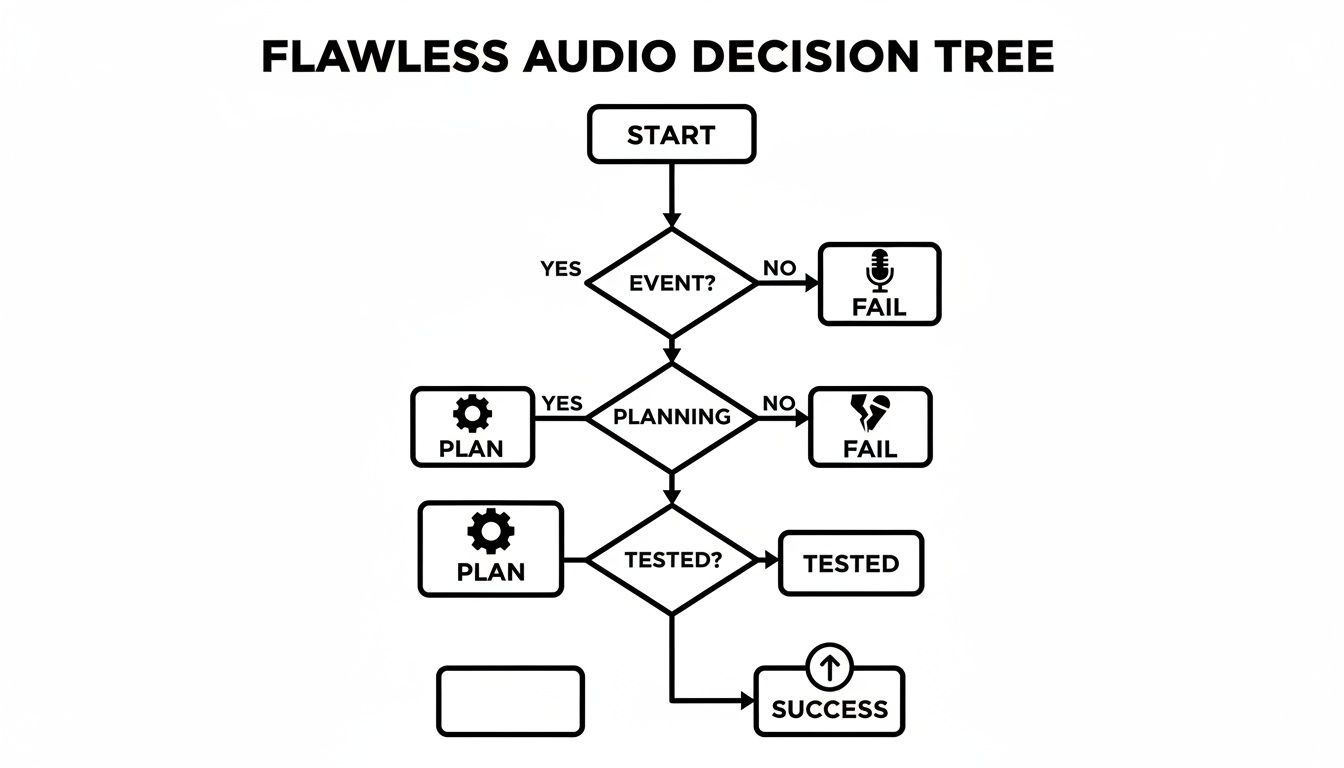
As the flowchart shows, great audio does not happen by accident. It is the result of deliberate planning, whereas a lack of forethought is a sure recipe for technical headaches.
Headset Microphones
For high-energy moments like a dynamic product launch or a fitness demonstration, the headset microphone is ideal. This design keeps the microphone element locked in a perfect, consistent position right by the speaker's mouth.
This fixed placement means audio levels stay solid, no matter how much the presenter moves their head. They are more visible than a lapel microphone, but the audio reliability they provide in active scenarios is second to none. If maintaining a constant distance between mouth and microphone is critical, this is your solution.
Specialised Conference Systems
For more formal, structured events like board meetings, council sessions, or AGMs, you need a system that brings order to the conversation. This is where ‘push-to-talk’ conference microphone systems are used. Each delegate gets their own microphone unit with a button they press to activate it.
This setup is a game-changer for several reasons:
- It stops people from talking over each other, keeping the discussion controlled and easy to follow.
- The system can be programmed to allow only a certain number of microphones to be live at once, dramatically cutting down on background noise.
- Many systems come with built-in features like voting functions and links for simultaneous interpretation.
In the UK, the microphone market recently generated revenues of USD 419.4 million, with professional-grade XLR microphones commanding an 84.17% share. This statistic highlights the industry's demand for high-quality, reliable connections. It is why we, as an experienced provider, only use dependable equipment for our events.
Systems like the Shure MXCW640 are designed specifically to maintain clarity and decorum in these structured settings. To get a feel for what is possible, you can explore the full range of audio visual equipment hire options.
Microphone Selection Guide for Common London Events
To help you get started, here is a quick-reference table matching common event types with the microphones we would typically recommend.
| Event Type | Recommended Microphone(s) | Key Considerations |
|---|---|---|
| Corporate Conference/Keynote | Lapel (Lavalier) or Lectern Mic | Hands-free for gesturing, clean stage look. A lectern mic provides a reliable backup. |
| Panel Discussion | Lapel Mics or Handheld Mics | Lapels for each panellist offer the best quality. Handhelds work well if mics need to be shared. |
| Audience Q&A | Handheld Wireless Mics | Robust, easy to pass around. "Catchbox" throwable mics are a great way to boost engagement. |
| Workshop/Training Session | Handheld or Headset Mic | Handhelds are flexible for group work. A headset is essential if the trainer is demonstrating a physical activity. |
| AGM/Formal Board Meeting | 'Push-to-Talk' Conference System | Ensures order, clarity, and control. Essential for minuted meetings and reducing ambient noise. |
| Product Launch/Live Demo | Headset Mic | Unbeatable for active presenters. Guarantees consistent audio levels regardless of movement. |
Ultimately, a discussion with your AV provider about the specifics of your event is the best way to land on the perfect microphone solution. They will help you navigate the options and ensure your speakers are heard perfectly.
Getting to Grips with London's Venues and Technical Quirks
London's incredible variety of event spaces is a double-edged sword. One day you are in a grand, historic Guildhall, the next you are in a sleek, modern conference centre like ExCeL. While fantastic for creating atmosphere, this diversity brings a unique set of audio challenges. Getting a microphone hire in London right means knowing how to manage these different environments.
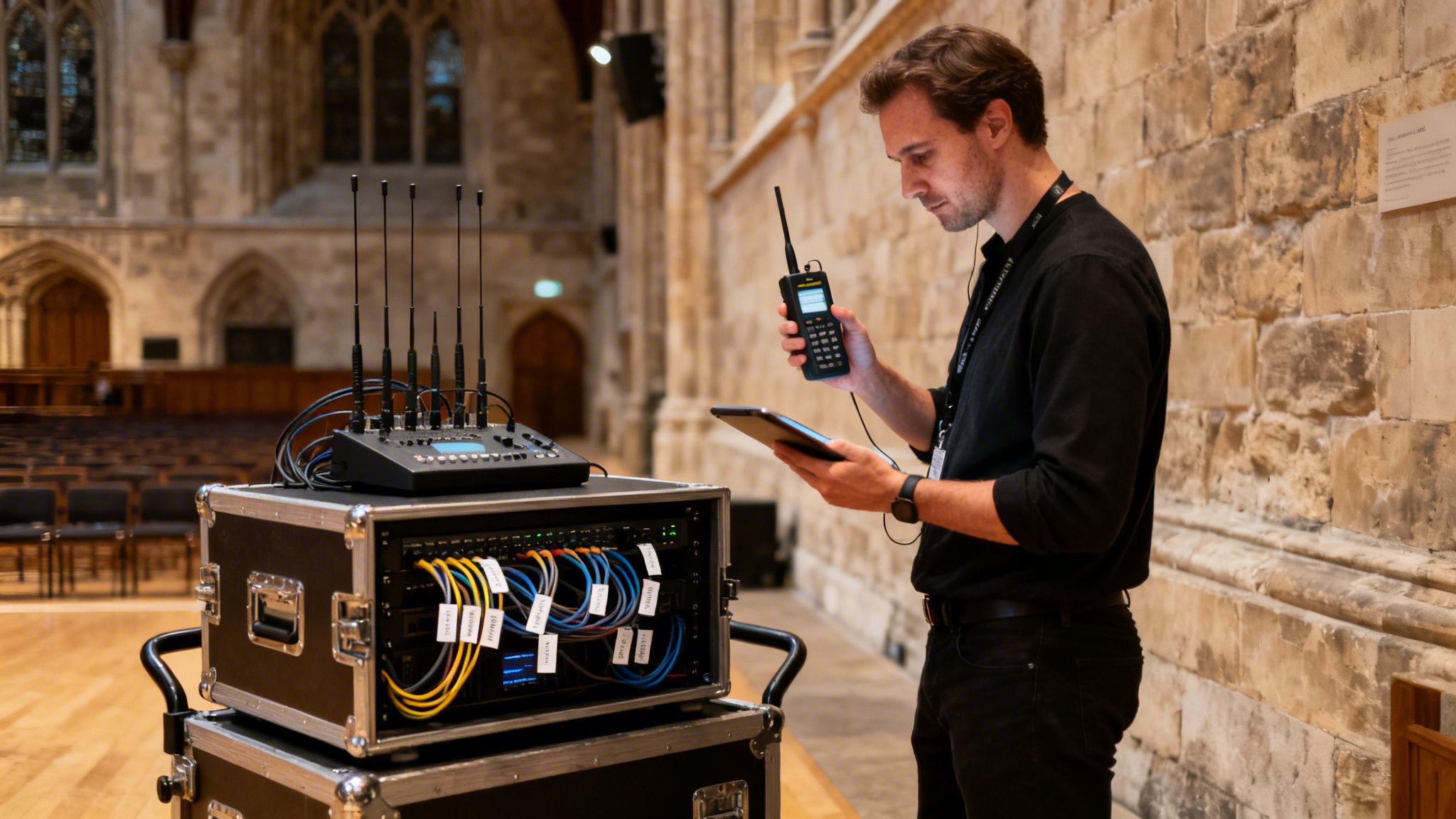
Historic venues with high ceilings, stone walls, and ornate plasterwork can be an acoustic nightmare. Sound bounces everywhere, creating an echo and reverb that can make speech unintelligible. On the other hand, the clean lines and glass walls of contemporary buildings create their own set of problems, with sharp, unpredictable sound reflections.
Taming the Airwaves: Why RF Coordination is Non-Negotiable
One of the biggest challenges in central London is radio frequency (RF) interference. The city’s airwaves are extremely congested. You are not just dealing with your own equipment; you are competing for space with other nearby events, theatre shows, emergency services, and the venue's Wi-Fi. It is a battle for a clean signal.
This is where a professional audio team proves its worth with meticulous RF coordination. This is not just a quick channel scan; it is a dedicated process to find clean, stable frequencies for every piece of wireless equipment.
An experienced sound engineer will:
- Use a dedicated RF scanner and analysis software to map out the entire frequency spectrum at the venue.
- Build a coordinated frequency plan from scratch, assigning a specific, interference-free channel to every wireless microphone, in-ear monitor, and communications pack.
- Monitor the RF landscape throughout the event, ready to make changes if a new rogue signal appears.
Skipping proper RF coordination is one of the quickest ways to undermine an event. A single interfering frequency can cause anything from annoying static to a complete dropout in the middle of a CEO's keynote.
Industry data supports this. While the UK's wireless microphone market is growing at a 7.45% compound annual growth rate, available spectrum is shrinking. It is no surprise that 75% of professionals are moving to digital encrypted systems to find a safe haven in these crowded RF zones.
The Ofcom Licence: Your Ticket to a Clear Channel
In the UK, using professional-grade wireless microphones almost always requires a specific licence from Ofcom. This is not just bureaucracy; it is a legal requirement that gives you exclusive use of a portion of the airwaves at your venue for the duration of your event. It is your guarantee of a protected, clean channel.
When you work with a professional AV company like London Audio Visual Hire, this is one less thing for you to worry about. We handle the entire licensing process, ensuring your event is fully compliant and has the interference-free frequencies it needs to run smoothly. Understanding the full technical picture is vital, which is why our guide on planning for conference AV hire in London is a great place to start.
Power and Safety: The Foundations of Good Audio
Two of the most overlooked, yet most critical, elements for reliable audio are power and safety. You can have the best equipment in the world, but it is useless if a faulty extension lead or a tripped circuit breaker shuts it down.
Rock-Solid Power Distribution
A professional crew will never plug a £50,000 sound desk into a single wall socket. We use dedicated power distribution units to create a stable, resilient power plan. This ensures every piece of sensitive audio equipment gets the clean, uninterrupted electricity it needs to perform.
Safe, Tidy Cabling
Trailing cables are more than just an eyesore; they are a serious trip hazard and a sign of an amateur setup. All our cables are meticulously taped down with high-visibility gaffer tape or run through protective rubber matting, especially in high-traffic areas. This is about keeping people safe and meeting the venue's health and safety standards.
The Power of a Pre-Event Site Visit
The single best way to avoid technical dramas is a pre-event site visit. There is no substitute for walking the space with an experienced audio technician. It is how we spot potential problems long before they have a chance to derail your event.
During a site visit, we are not just looking at the room. We are analysing acoustics, scanning for background RF noise, locating the best power sources, and planning the most efficient cable routes. This proactive step replaces guesswork with a concrete, reliable technical plan, built specifically for the unique challenges of your chosen London venue.
From Delivery to Derig: Nailing Your Event's Audio Logistics
Getting the right microphones is only half the battle. For any microphone hire in London, it is the logistics, the delivery, setup, and onsite support, that truly determine your event's sound quality. A solid plan is your best defence against last-minute panic and technical glitches.
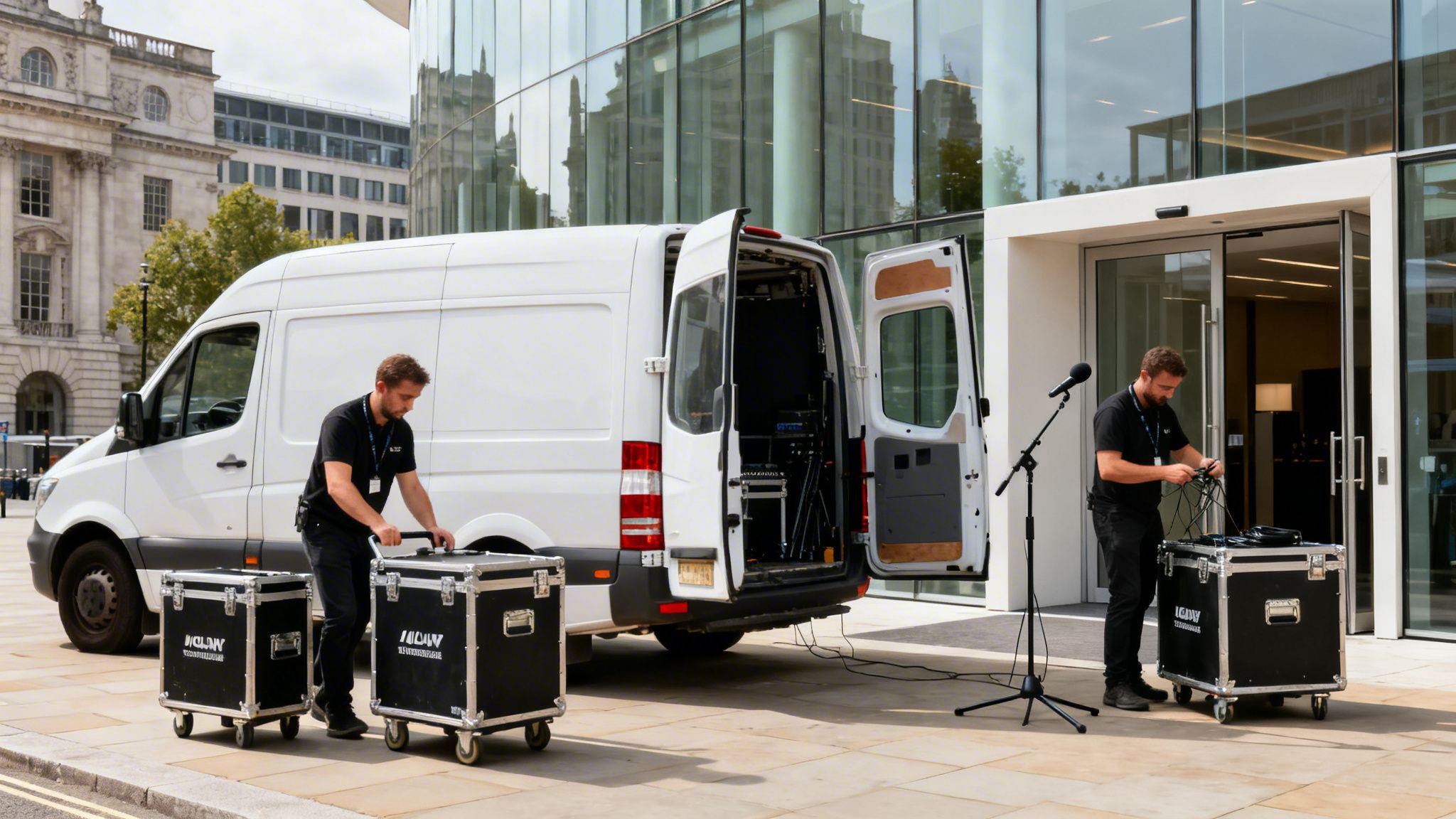
It all starts with providing your AV partner with a proper brief. Do not just send a list of equipment. Share the event agenda, venue floor plans, and expected audience numbers. The more context you provide, the better they can anticipate challenges and provide a quote that reflects the job.
Sorting Out Venue Access and Timings
This is where things can become complicated, especially in central London. You cannot just arrive with a van full of equipment. Many venues in the City or the West End have tight loading bay schedules, vehicle size restrictions, and very limited parking. Miss your slot, and your entire setup schedule is disrupted.
You need to get the venue manager and your AV provider talking. Make sure everyone is clear on the details.
- Access Times: What is the earliest you can get in, and when does everything need to be gone?
- Loading Bay Details: Are there height or weight limits? Do you need to book a specific time slot in advance?
- Parking: Where can the technician's van park during setup and the event itself? This often needs to be arranged and paid for separately.
Ignoring these points is a common mistake that can lead to delays and unexpected charges.
I have seen events delayed by hours simply because no one checked that the loading bay closed at 5 pm. A five-minute conference call between the planner, the venue, and the AV team can prevent this kind of headache entirely.
What Rigging and De-rigging Actually Involves
You will hear the terms rigging and de-rigging frequently. This is not just about plugging things in; it is the skilled, physical work of setting up and taking down all the audio equipment. It must be done safely and efficiently by people who know what they are doing.
The rigging process covers everything from:
- Running all cables for microphones, speakers, and the mixing desk, then taping them down so they are tidy and do not create a trip hazard.
- Placing speakers on stands or trusses to ensure everyone in the room can hear clearly.
- Setting up the sound desk, configuring the wireless microphone receivers, and preparing all the back-end equipment.
De-rigging is simply doing all that in reverse, usually under pressure to clear the venue by a specific time. It is a physically demanding job that requires technical know-how, and it is a standard, essential part of any professional AV hire service.
Why You Shouldn't Skip the Onsite Sound Engineer
Budgets are often tight. But if you are tempted to cut the onsite sound engineer, think again. This is one of the single best investments you can make for your event. Their job is much more than just pushing faders on a sound desk; they are your live audio safety net.
Before a single guest arrives, the engineer will run a full soundcheck. They will test every microphone for every speaker, ensure lapel microphones are clipped on correctly for the best pickup, and balance the audio levels for each person's voice. They will also have a backup plan for when things go wrong, like a battery dying mid-speech or a rogue frequency causing interference.
During the event, they are constantly listening and making small adjustments to keep the sound clear and consistent. When a quiet speaker follows a loud one, or when audience applause swells, the engineer is managing those levels in real-time. Any reputable company like London Audio Visual Hire will ensure their equipment is PAT tested (Portable Appliance Testing), but having an expert there to operate it is what delivers true peace of mind.
Understanding Your Quote and Managing Your Budget
When quotes for your microphone hire in London arrive, it is easy to just scan for the final figure. But an experienced provider is not just sending you a shopping list; they are giving you a blueprint for a successful event.
Learning to read between the lines is crucial. A proper quote is a detailed breakdown of a complete service, designed to guarantee your event’s audio runs smoothly. It gives you the transparency to see exactly where your money is going and to compare different proposals properly.
A word of warning: never just default to the cheapest option. A rock-bottom price often hints at compromises in equipment quality, technical support, or overall reliability. Those savings can evaporate quickly when things go wrong on the day.
Deconstructing the Costs in Your Quote
A professional audio quote should be fully itemised, with costs broken down into a few core areas. Understanding these helps you see the real value you are getting for your investment.
Here is what you should expect to see clearly laid out:
- Equipment Rental: The core cost for the hardware itself. This should specify the exact models of microphones, receivers, speakers, and mixing desks you are getting.
- Labour Costs: This covers the expertise of the people involved. It includes the sound engineers and technicians for delivery, setup (rigging), operation during the show, and breakdown (de-rigging) afterwards.
- Transport and Logistics: This is the cost of getting the equipment to your London venue and back. It factors in van costs, fuel, and any relevant Central London charges like the Congestion Charge or ULEZ fees.
- Consumables: A small but important detail. This covers items like fresh batteries for wireless microphones, gaffer tape to safely secure cables, and other single-use essentials.
Dry Hire vs. a Fully Managed Service
It is vital to be clear on the level of service you are paying for. The two main options are ‘dry hire’ and a ‘fully managed service’, and they are worlds apart.
A dry hire is exactly what it sounds like: you rent the equipment and nothing more. You are responsible for collecting it, setting it up, operating it, and returning it. If you have a genuinely skilled in-house technical team, this can be a good way to save money. But be honest about your team's capabilities, as you are taking on all the responsibility for setup, operation, and troubleshooting.
A fully managed service, on the other hand, is the complete end-to-end solution. The hire company provides not just the equipment, but also the skilled technicians to deliver, install, and operate it for you. For most corporate events where flawless audio is a must, this is the recommended approach. It buys you peace of mind and an expert safety net on site.
The real value in a managed service isn't just the equipment; it's the engineer who can solve a problem in 30 seconds that might take an untrained person an hour to diagnose. That calm, expert presence is priceless during a live event.
Budgeting for Quality and Reliability
When finalising the budget, try to shift your thinking from "what is the cheapest?" to "what is the best value?". The data supports this. The UK conference microphone market is set to grow at a CAGR of 12.6%, and even with all the wireless technology available, reliable wired systems still account for 54.1% of revenue in busy cities like London where RF interference is a constant battle.
More tellingly, audio failures are mentioned in 22% of negative post-event reviews for UK conferences. That single statistic makes the case for investing in experienced sound engineers better than anything else. You can read more about these insights into the conference microphone market.
To get the most from your budget without cutting corners, look at the bigger picture. Can you consolidate all your AV needs, including lighting, video, and audio, with a single supplier? This often leads to a better overall price and much simpler logistics. Finally, book early. The best equipment and technicians get reserved quickly, and booking well in advance can often help you secure a better rate.
It’s All About Partnership
When it comes to hiring microphones in London, you are not just renting equipment; you are bringing in expertise. Getting event audio right is a mix of smart planning, technical know-how, and a solid partnership with your AV provider. Think of it this way: investing in professional audio is a direct investment in your event’s reputation.
By paying attention to the details we have covered, from picking the right microphones and managing RF frequencies to handling logistics and having a contingency plan, you take the guesswork out of the equation. This is not just about renting equipment; it is about building a complete audio solution that guards your event against technical issues that can derail a presentation.
Ultimately, you want the technology to disappear. When the sound is perfect, your audience connects with the message, not the microphone. That is the real goal.
This is the standard we hold ourselves to. By thinking ahead and planning for every possibility, you can guarantee every word is heard, loud and clear.
If you are planning an event and want to ensure the audio is one less thing to worry about, our team at London Audio Visual Hire is ready to help. Get in touch for a no-obligation chat about your microphone hire needs in London, and we can determine the best way to make your event sound incredible.
Got a Question About Mic Hire? We've Got Answers
When sorting out the audio for an event, a few questions always seem to come up. Let's cut through the jargon and get straight to the practical answers we give to event planners every day. This should help you make the right calls for your next microphone hire in London, quickly and confidently.
How Many Mics for a Panel Discussion?
Plan for one dedicated microphone per person on stage. That means one for each panellist and one for the moderator. It is the only way to avoid the awkward passing of a single microphone, which disrupts the natural flow of a good discussion.
Do not forget the audience. You will want at least two handheld wireless microphones ready for the Q&A session. Having a couple on hand means you can keep the questions coming from different parts of the room without any dead air, making the session more dynamic and inclusive.
What Exactly Is RF Coordination?
Imagine trying to drive down the M25 at rush hour, but for radio signals. That is the London airwaves. They are jam-packed with signals from other events, TV broadcasts, Wi-Fi, and emergency services. Without managing it, you are inviting trouble.
RF coordination is the technical process of scanning the airwaves at your specific venue and finding a clear, empty "lane" for each of your wireless microphones and in-ear monitors. It is like air traffic control for your audio.
This isn't just a nice-to-have; it's absolutely essential for any event in London relying on wireless sound. Proper RF coordination prevents show-stopping dropouts, static, and hearing another event's audio bleed into yours. It is the bedrock of clear, reliable audio.
Should Presenters Just Use Their Own Laptops?
In a word, no. While it might feel simpler to let a presenter plug in their own machine, it is one of the most common causes of last-minute panic and delays. Using the dedicated, pre-tested laptop from the AV team sidesteps a minefield of potential technical glitches.
We see these issues all the time:
- The Connector Conundrum: Their laptop has a USB-C port, but the system is set up for HDMI. This leads to a frantic search for an adapter that may or may not work.
- Driver & Software Nightmares: Missing audio drivers or an out-of-date version of PowerPoint can mean that embedded videos or sound clips refuse to play.
- Display Setting Drama: The laptop's resolution is set for its own screen, not the large projector, leading to distorted images or a blank screen.
The safest approach is always to get the presentation files beforehand. Your technicians can load them onto a stable, event-ready machine that has already been fully tested with the sound system and screens. This guarantees a smooth, professional start for every speaker.
For a seamless audio experience at your next event, trust the experts. London Audio Visual Hire provides detailed planning, high-quality equipment, and experienced technicians to ensure your message is heard perfectly. To discuss your requirements, visit us at https://londonaudiovisualhire.co.uk.