

The success of any event in London, whether a high-stakes corporate conference in Canary Wharf or an immersive brand launch in Shoreditch, depends on the quality of its audio-visual production. For event planners, selecting the right london audio visual hire is the most critical first step towards creating a seamless and memorable experience.
This guide will walk you through the entire process, from preparing the initial brief to the final technical checks on the day.
Setting the Stage for a Flawless London Event
Organising AV hire in a city like London can seem like a significant undertaking. However, a methodical approach makes it a manageable and crucial component of your event's success. The goal is to translate your creative vision into a technical reality where every presentation is sharp and every word is heard with perfect clarity. For most professional events, engaging a specialist AV provider is the most effective strategy.
Attempting to manage with a collection of in-house equipment can lead to unforeseen complications. Common problems include incompatible cables, inconsistent sound coverage, or a lack of technical support when equipment fails. Partnering with an experienced AV company eliminates these risks. You gain access to appropriate, professional-grade equipment and, critically, skilled technicians who know London’s venues.
This process chart provides an overview of the journey from an initial concept to a perfectly executed event.
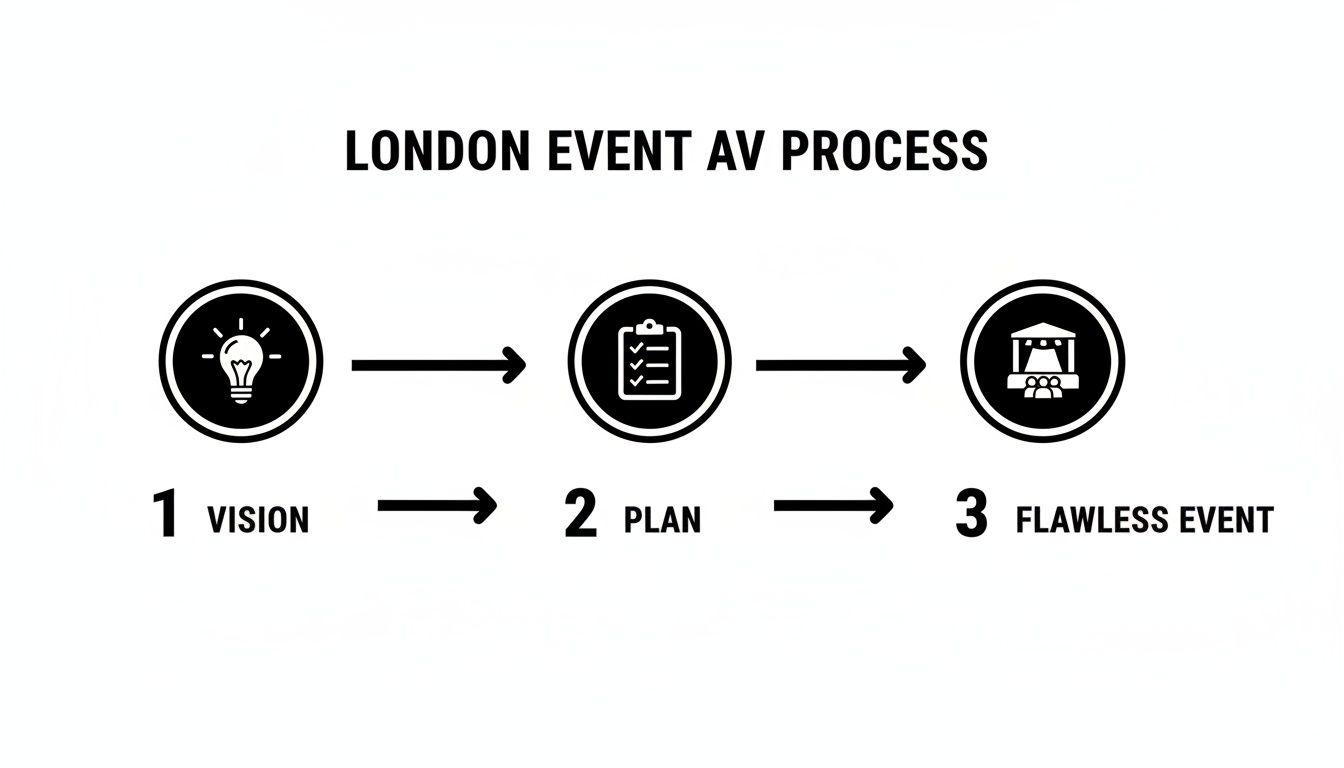
This illustrates that exceptional events do not happen by chance. They are the product of a clear vision supported by meticulous, collaborative planning.
Why a Professional Partner is Essential
Working with a dedicated AV hire company offers more than just equipment rental. It provides a project management and technical support framework that is vital for any high-profile event.
- Venue Expertise: An experienced London team will likely have worked in your chosen venue before. They will be familiar with its layout, power infrastructure, and acoustic characteristics.
- Technical Problem-Solving: A professional crew can identify potential issues before they become disruptive. They resolve problems quickly and discreetly, allowing your event to proceed without interruption.
- Peace of Mind: Knowing the technical production is in expert hands allows you to focus on your guests, speakers, and other event management responsibilities.
The true value of a professional AV partner lies in flawless execution. It is the invisible element that makes an event feel effortless, allowing your message and brand to stand out without technical distractions.
Ultimately, your event's success depends on connecting with your audience. To ensure your message resonates, it is helpful to understand the principles of creating engaging content, whether for a live presentation or video playback. This guide provides the framework to ensure your technical setup supports that goal.
Creating Your Event's Technical Blueprint
Your technical brief is the blueprint for your event. It is the most important document you will create, translating your vision into a language your AV partner can understand and execute. Without a detailed brief, you risk guesswork, inaccurate quotes, and last-minute problems.
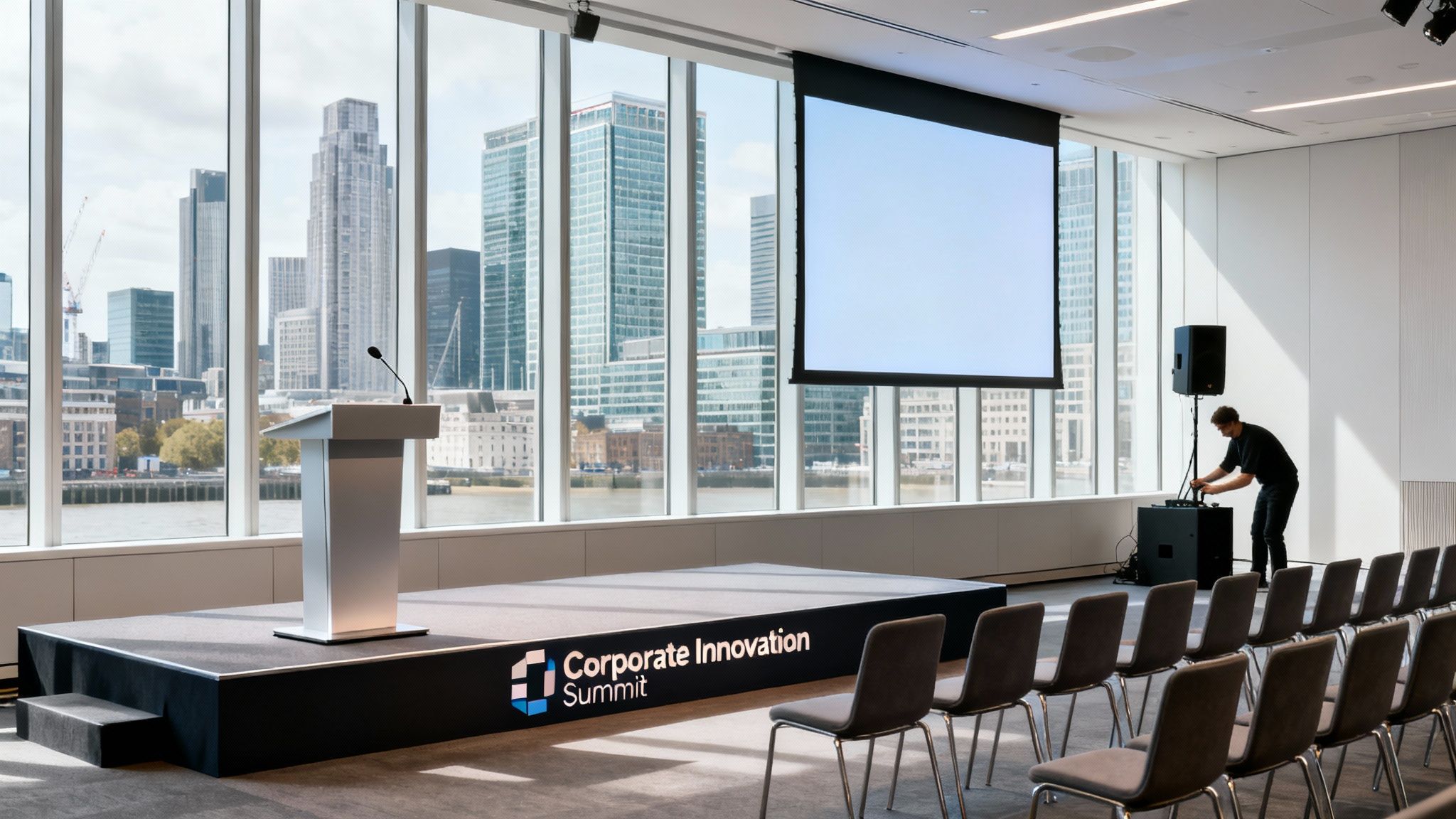
This document should do more than list microphones and a screen; it must paint a complete picture of the event's purpose and flow. Start with the fundamentals: what are you trying to achieve? Who is your audience, and what are the expected numbers? A detailed venue layout or floor plan is also essential from the outset. These details immediately inform the scale of AV production required.
For example, a discreet investor meeting for 30 people in a Mayfair hotel requires a vastly different setup from a product launch for 300 in a Shoreditch warehouse. The former might need only a high-definition screen and subtle lapel microphones, while the latter could demand a powerful sound system, dynamic lighting, and a large LED wall for maximum impact.
Defining Content and Speaker Requirements
With the foundational details established, focus on the specifics of your content and presenters. A solo keynote speaker has different technical needs from a fast-paced panel discussion.
Consider these common scenarios:
- The Keynote Speaker: Will they present from a lectern or move around the stage? A discreet lapel microphone is usually best, paired with a confidence monitor so they can see their slides without turning away from the audience.
- The Panel Discussion: This requires a microphone for each panellist and the moderator. Depending on the setup, this could mean table microphones or comfortable headsets. Lighting must also be considered to ensure the entire panel is clearly visible.
- The Audience Q&A: Always plan for audience participation. Two handheld wireless microphones are standard, allowing them to be passed around efficiently so everyone can hear the questions.
- Video Playback: Specify the format and resolution of any video content. Showing a high-definition video on a low-resolution screen undermines its quality and impact.
The demand for high-quality audio is significant in London's event sector. The UK's audio equipment rental market was valued at USD 739.51 million in 2024 for a reason: clear audio is non-negotiable. A detailed brief is your best guarantee of achieving it.
A run-of-show is essential. It acts as the script for the entire event, with timings for every segment, speaker entrance, and content cue. This allows the technical team to anticipate transitions and deliver a flawless production.
Mapping Out the Run-of-Show and Logistics
Your schedule is the backbone of the technical plan. A detailed run-of-show should map out the event from guest arrival to conclusion. Include timings for presentations, breaks, entertainment, and any special announcements.
This document enables the AV crew to plan lighting changes, sound cues, and video playback with precision. It also helps them schedule crew positioning. If you are incorporating unique wedding reception entertainment ideas or other creative elements, ensure they are factored into the schedule.
Finally, do not overlook the logistical details that are critical for your AV team. Be sure to include:
- Venue access times: Specify when the crew can enter the venue to begin setup.
- Speaker arrival times: This is crucial for microphone fittings and sound checks.
- Rehearsal slots: Always allocate dedicated time for presenters to become comfortable with the on-stage technology.
Your technical brief is a tool for clarity and collaboration. By investing effort upfront, you empower your London AV hire company to provide a precise quote, design the right system, and deliver your event as you envisioned. It is the first and most important step towards a successful partnership.
Getting to Grips with London Venue Logistics
A detailed technical brief is your starting point, but a physical site survey is where the plan is validated. Every London venue is unique. Whether you are in a Grade I listed building in Mayfair or a purpose-built conference centre in Docklands, each space has its own characteristics, challenges, and advantages. Skipping this step is a significant risk.
Any credible london audio visual hire partner will insist on a site survey. This is not an optional extra but essential for ensuring a smooth event. It is an opportunity to walk through the space with you, identify potential problems, and design a setup that is perfectly matched to the room.
This visit transforms a conversation about floor plans into one about practical, real-world solutions. It is where details are finalised and nothing is left to chance.
Assessing the Venue's Technical Infrastructure
During a site survey, the first task is to assess the venue's built-in infrastructure. A modern venue may have ample power and rigging points, but a historic building will almost certainly require a more creative and careful approach to achieve the same results.
Several key areas require close inspection:
- Power Availability: It is not just about having enough power, but having it in the right locations. Are there sufficient 13-amp or 32-amp supplies where the stage and control desk will be? If not, the plan must include extensive and safely managed cable runs.
- Rigging and Hanging Points: If you plan to fly a PA system, lighting rig, or large projectors, the venue's approved rigging points must be identified. Their weight limits and structural integrity must be checked to ensure everything is hung safely and in accordance with regulations.
- Ceilings and Sightlines: Ceiling height dictates screen size and placement. The low ceilings in a historic ballroom might preclude a single large projection screen, making multiple repeater screens a better solution for clear viewing.
- Room Acoustics: A space with high ceilings, glass walls, and hard floors, common in modern London venues, can create excessive echo. Identifying this early allows the sound engineer to plan accordingly, perhaps by using more directional speakers or sound-dampening materials to ensure vocal clarity.
Understanding these technical factors from the outset is vital. To see how this works in practice, you can explore our guide to London event venues for an inside look at spaces we know well. This kind of insight helps you choose a venue that complements your creative vision.
Navigating Load-In and Logistical Challenges
Beyond technical specifications, the logistics of moving crew and equipment from the vehicle to the event space can significantly impact your schedule. A smooth load-in sets the tone for the entire day.
The journey from the loading bay to the event space is one of the most frequently overlooked aspects of AV planning. A single flight of stairs or a small lift can add hours to a setup schedule if not planned for.
This is where a team with London experience proves its value. They understand the city's logistical quirks and will proactively identify potential bottlenecks.
Our logistical checklist always includes:
- Loading Bay Access: Is there a dedicated loading bay, or will the crew be parking on a busy street with time limits? We need to know about Red Routes, parking restrictions, and specific delivery windows.
- Lift Dimensions and Capacity: What is the size and maximum weight capacity of the service lift? A large LED video wall panel will not fit into a standard passenger lift.
- Setup and De-rig Times: Venues, especially hotels, often have tight turnaround times. Knowing exactly how many hours are available for setup and removal is non-negotiable and directly impacts the required crew size.
By addressing these details, your AV partner can build a robust logistical plan. This ensures the right equipment and crew arrive on time and that the setup is efficient, safe, and completed well before your guests arrive.
Decoding Your AV Equipment and Crew
An audio-visual quote can sometimes feel difficult to interpret. A long list of model numbers and technical jargon does not always clarify what you are paying for or why each item is necessary. Understanding the core equipment and the roles of the technical crew is key to appreciating the value behind the quote and asking informed questions.
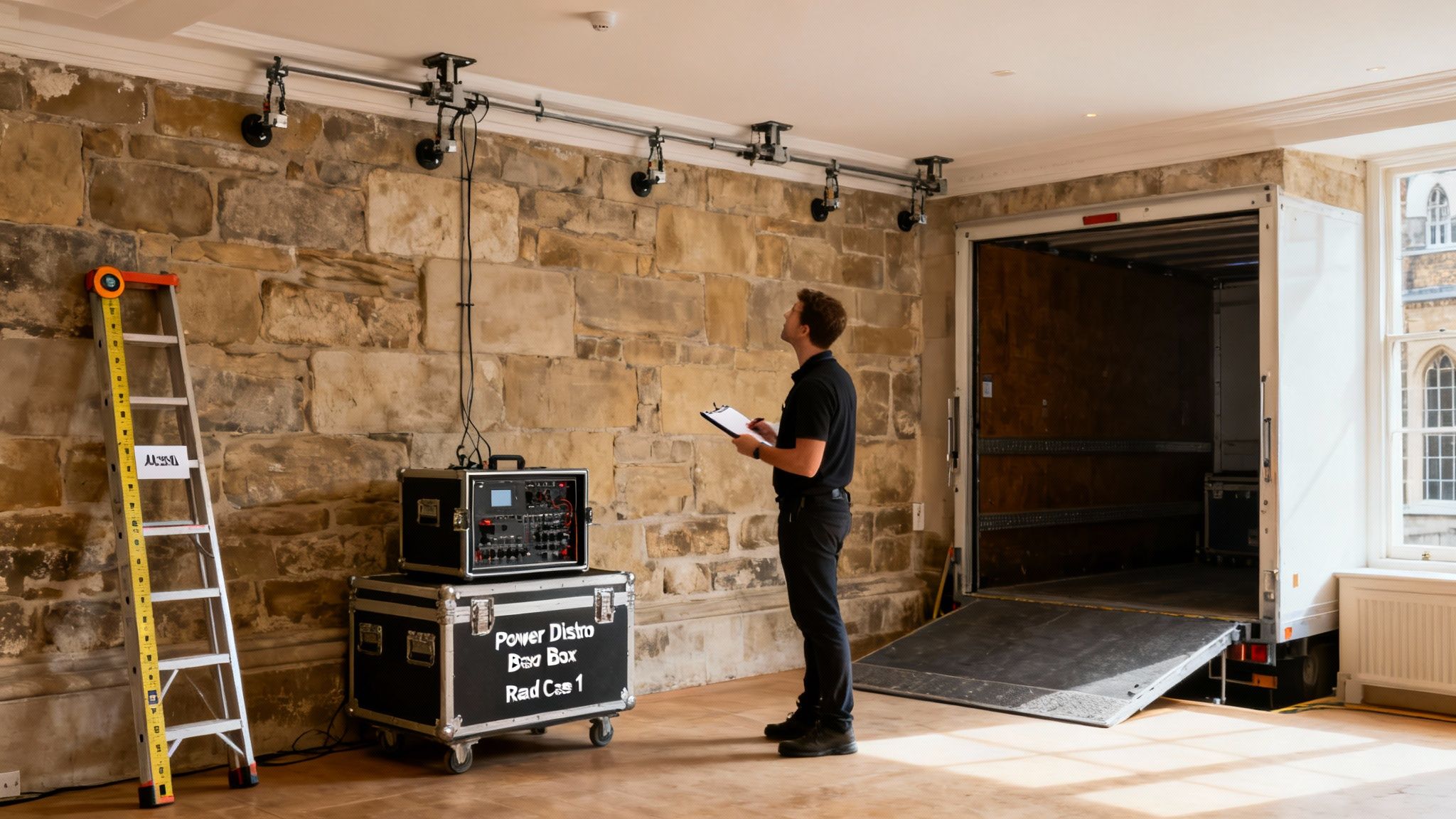
It helps to differentiate between a standard setup and a more complex one. A straightforward conference typically requires the essentials: a bright projector, an appropriately sized screen, and a public address (PA) system with a few microphones. This basic kit ensures everyone can see the slides and hear the speakers.
A high-profile awards dinner or a major brand launch is a different matter. The requirements become more layered. This could involve dynamic stage lighting to build atmosphere, a large LED video wall for high-impact visuals, and multiple camera feeds for live relays to screens around the venue. Each piece of equipment serves a specific purpose in creating the event experience.
Understanding Core AV Equipment
While the full inventory of equipment can seem extensive, most event technology falls into three main categories: audio, vision, and lighting. A good AV partner will specify the right tools based on your venue, audience size, and content.
A basic grasp of the terminology allows you to participate more effectively in planning discussions. For a deeper dive, you can read our guide on what is audio visual equipment and its function in a live setting.
Here are a few common items you will see on a quote and their functions:
- PA System: This is more than just speakers. It includes a mixing desk (the control hub for all sound), amplifiers, and the speakers themselves. The type and number of speakers are chosen based on the room's size and acoustics to ensure even sound coverage at a comfortable volume.
- LED Video Wall: Comprised of modular panels that connect to create a bright, seamless screen of any size, these are ideal for venues with high ambient light where projectors might appear washed out. They deliver a powerful visual impact for brand launches or awards shows.
- Vision Mixer: This device allows a technician to switch smoothly between different visual sources, such as a presenter's laptop, a pre-recorded video, or live cameras. It is essential for any event with multiple on-screen elements.
- Stage Wash and Gobos: A 'stage wash' is an even spread of light that illuminates the entire performance area, eliminating dark spots. 'Gobos' are stencils placed inside lights to project patterns or company logos onto a surface, adding a sophisticated, branded touch.
The People Behind the Technology
The equipment is only half the story. A skilled technical crew transforms hardware into a seamless, professional production. The size of the crew depends on your event's complexity, but understanding their roles helps to clarify their importance.
The value of a professional crew extends beyond operating equipment. It lies in their ability to anticipate problems, adapt to last-minute changes, and manage the technical flow of the event with calm, discreet confidence.
London's event scene is a major part of the wider European AV equipment rental market. With the global AV rental market projected to grow from USD 38.2 billion in 2025 to USD 76.3 billion by 2034, the demand for expert technicians will continue to increase. This growth highlights the importance of securing a reliable team for your london audio visual hire.
Your crew are the specialists who ensure every cue is met and every technical element runs smoothly. The key roles you are most likely to see on your crew list are outlined below.
Essential AV Crew Roles and Responsibilities
Understanding who does what on-site helps you appreciate the expertise required to deliver a flawless event.
| Crew Role | Primary Responsibility | Why This Role Is Crucial |
|---|---|---|
| Project Manager (PM) | Your main point of contact, overseeing everything from the quote to the final de-rig. Manages crew and venue liaison. | They are the link between your vision and the technical production, ensuring everything is executed perfectly. |
| Sound Engineer | Responsible for all audio elements: setting up microphones, managing speaker levels, and eliminating feedback. | Ensures every word is heard clearly, creating a professional and intelligible audio experience for the audience. |
| Vision Mixer / Video Tech | Manages all visual content. Operates the vision mixer, runs presentations, plays videos, and manages camera feeds. | Creates a polished, broadcast-quality look for all on-screen content, keeping the audience engaged. |
| Lighting Designer / Operator | Designs and operates the lighting rig. Creates atmosphere, ensures speakers are properly lit, and programs lighting cues. | Lighting transforms a space. This person uses light to set the mood and direct the audience's focus. |
When you hire a professional AV company, you are not just renting equipment. You are investing in the expertise, experience, and peace of mind that comes with a dedicated team focused on bringing your event to life.
Getting to Grips with Your AV Budget and Compliance
Managing budgets and ensuring safety are key responsibilities for an event planner. A good quote from an AV hire company should be transparent, so you know precisely how your budget is being allocated.
Most professional quotes, like those from London Audio Visual Hire, are broken down into four key areas: equipment, crew (labour), transport, and any extras. The equipment cost is based on your specific needs. Labour covers the skilled technicians who set up, operate, and remove the equipment, while transport is the cost of getting everything to your London venue and back.
Spending Smart Without Sacrificing Quality
Achieving the best value is not about finding the lowest price, which can often lead to poor results. Real value comes from smart planning and open communication with your AV partner about your goals and budget. An experienced provider can then suggest cost-effective ways to achieve your desired outcome.
Consider these practical strategies:
- Right-size Your Screens: A large video wall is impressive, but is it necessary for a 50-person conference? A high-quality projector and screen, or several large TVs, can often deliver the same impact for a fraction of the cost.
- Be Sensible with Lighting: Complex, moving lights are perfect for an awards ceremony. For a daytime seminar, they are likely unnecessary. A simple, elegant stage wash will ensure your speakers are well-lit and is more budget-friendly.
- Plan Crew Hours Realistically: Provide your AV team with a realistic schedule. A very tight window for setup or breakdown will require a larger crew to meet the deadline, increasing labour costs.
- Consolidate Your Suppliers: Managing separate suppliers for sound, video, and lighting can be complicated. Using a single, full-service provider often results in better value and a more streamlined experience with one point of contact.
Smart budgeting is not about cutting corners. It is about allocating funds to elements that directly enhance the audience experience and avoiding expenditure on technology that does not support your event's goals.
Safety and Compliance: The Non-Negotiables
Beyond the budget, your duty of care is paramount. Partnering with a fully compliant london audio visual hire company is essential. It protects your attendees, your brand, and your organisation from a legal standpoint. Any professional company will take this seriously and have all necessary documentation readily available.
Before finalising your supplier, you must verify their compliance. This is a clear indicator of their professionalism and provides complete peace of mind.
Ask for these key documents:
- Public Liability Insurance: Ensure their policy is current and provides sufficient cover. For most corporate events, a minimum of £5 million is recommended.
- RAMS (Risk Assessment and Method Statements): A RAMS document details all potential risks associated with the AV setup and outlines the safe methods the crew will use to install, operate, and de-rig the equipment.
- PAT Testing Certificates: Every piece of electrical equipment brought into your venue must be certified as safe. Your AV company must provide current Portable Appliance Testing (PAT) certificates for all their equipment.
The growing rental market reflects a shift away from purchasing equipment, offering greater flexibility. Planners typically allocate 15-20% of an event budget to AV, demonstrating its importance. You can read more about UK audio and video equipment market trends for further insight.
Working with a compliant and experienced partner ensures your event is not only technically flawless but also safe, secure, and professionally managed from start to finish.
Bringing It All Together On-Site
After extensive planning, briefing calls, and site surveys, the process culminates in the live event. This is where an empty room is transformed and your vision is realised. Your chosen London audio visual hire partner's crew will manage the technical execution, but your oversight during these final hours guarantees a polished and seamless experience.
The process begins with the load-in. The crew, led by the AV Project Manager, will bring all equipment into the venue according to the logistical plan. They will handle everything from navigating service lifts to running cables safely and discreetly. Your AV PM is your primary contact throughout the day, keeping you informed so you can focus on other priorities.
Once the equipment is in place, the build begins. This is a methodical process: the stage is assembled, lights are rigged, speakers are positioned, and video walls or screens are constructed. While the technical team is engaged in this process, you are free to manage speakers, liaise with catering, and handle other event management tasks.
From Sound Checks to Speaker Rehearsals
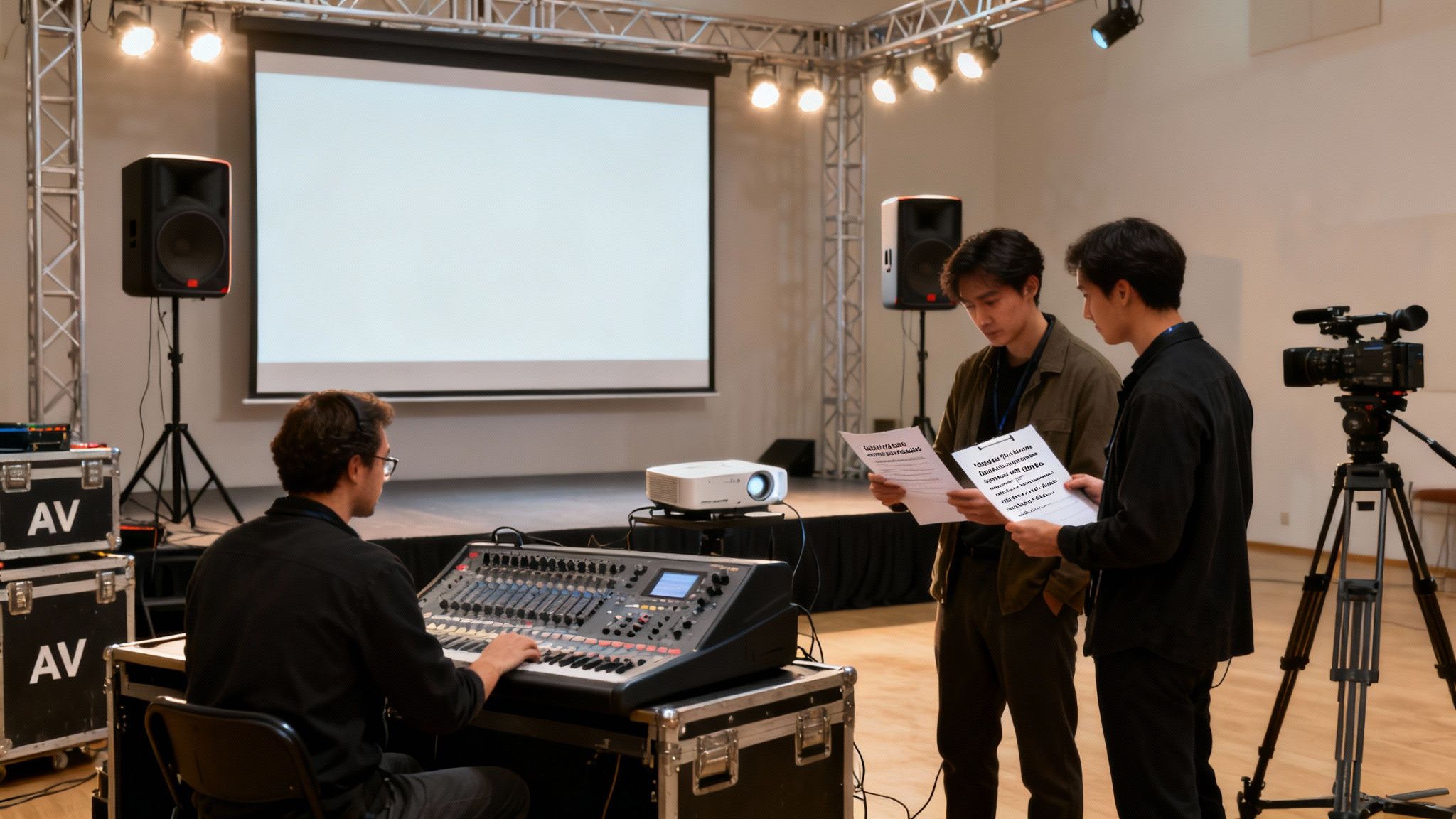
With the physical build complete, the crucial phase of testing and rehearsals begins. Do not rush this stage. A thorough run-through is the best way to prevent last-minute problems and ensure all elements work together perfectly when the doors open.
Before admitting guests, your AV Project Manager should walk you through a final sign-off. This is your opportunity to double-check everything and approve the technical setup.
A typical pre-show checklist includes:
- Sound Checks: Each presenter's microphone is tested to ensure levels are clear and balanced. Background music and video audio are also checked for appropriate volume.
- Lighting Cues: The different lighting states are run through. This could include specific looks for speakers entering the stage, a different state for a panel discussion, and perhaps your brand colours washing the room during breaks.
- Content Run-Throughs: Every slide and video file is checked on the main screen. This identifies any formatting issues and ensures transitions are smooth, which is particularly vital for events with a hybrid event streaming component.
- Camera Positions: For events using live video or streaming, camera shots are confirmed to ensure presenters are framed correctly and all key action on stage is captured.
"Dedicated rehearsal time is the single most valuable investment you can make on an event day. Allowing presenters to get comfortable on stage with the microphones, clickers, and confidence monitors builds their confidence exponentially and eliminates on-stage anxiety."
A confident speaker contributes to a successful event. Giving them ten minutes on stage to familiarise themselves with the setup helps them focus on their message, not the technology. It is a small detail that makes a significant difference.
The Live Show and a Swift Exit
During the live event, a professional crew becomes almost invisible. The sound engineer actively mixes the audio, the lighting operator executes pre-programmed cues on time, and the video technician ensures all on-screen content is flawless. Their role is to make the production feel effortless and to handle any minor issues discreetly before they are noticed.
Once the event concludes, the process is reversed. The crew will conduct a safe and efficient de-rig, systematically packing down all equipment to clear the venue within your allotted time. This final step, handled with the same care as the setup, ensures your event ends successfully and leaves the venue in its original condition.
Common Questions About London AV Hire
When organising an event in London, several questions about audio-visual services frequently arise. Getting clear, practical answers early in the process is key to smooth planning and ensures all expectations are aligned.
How Far in Advance Should I Book AV Hire?
For larger, more complex events, especially during the busy spring and autumn conference seasons, it is advisable to book your London audio visual hire partner 3-6 months in advance. This secures the availability of specialist equipment and the most experienced crew for your dates.
For smaller meetings or events with a simpler setup, a lead time of 4-6 weeks is usually sufficient. However, the best practice is to begin the conversation as soon as your venue is confirmed. This provides ample time for a thorough site survey and detailed planning.
What Information Do You Need for an Accurate Quote?
To receive a quote that is accurate and avoids later adjustments, we need a clear picture of your event. The more detail you provide at the outset, the more precise the initial estimate will be.
The essential information includes:
- Your confirmed event date, including access times for setup and de-rig.
- The full venue address and the name of the specific room or space.
- An accurate estimate of your attendee numbers to determine appropriate screen sizes and speaker coverage.
- A draft run-of-show or agenda to outline the flow of the day.
Remember to mention details about your content. Are you planning a panel discussion, video playback, or hybrid streaming? These elements directly impact the final quote.
A quick word of advice: when comparing quotes, ensure you are comparing like-for-like specifications. If one price seems significantly lower than others, it may be missing crucial crew members or substituting lower-quality equipment, a risk not worth taking on the day of the event.
Should I Use the Venue’s In-House AV Team?
Using a venue's in-house team can seem like the simplest option, and in some cases, it can be. However, it is not always the best choice for your event.
In-house providers often have a limited stock of equipment that may not be the latest technology. They may also lack the specific expertise required for a creative or technically demanding setup.
Engaging an external AV company gives you access to a wider range of modern equipment and a dedicated crew whose sole focus is the success of your event. I always recommend obtaining a comparative quote to determine who offers the best value and service for your specific requirements.
For seamless and professional event production, trust the experts at London Audio Visual Hire. Our experienced team provides detailed planning and calm, reliable support on-site. Get in touch to discuss your next London event.


