

Before briefing an exhibition stand builder in London, it is essential to define what a successful outcome looks like for your business. The primary objective must be clear: are you there to generate qualified leads, increase brand awareness, or launch a new product? Establishing this from the outset is the only way to see a genuine return on what is always a significant investment.
Setting Clear Goals For Your Exhibition Stand
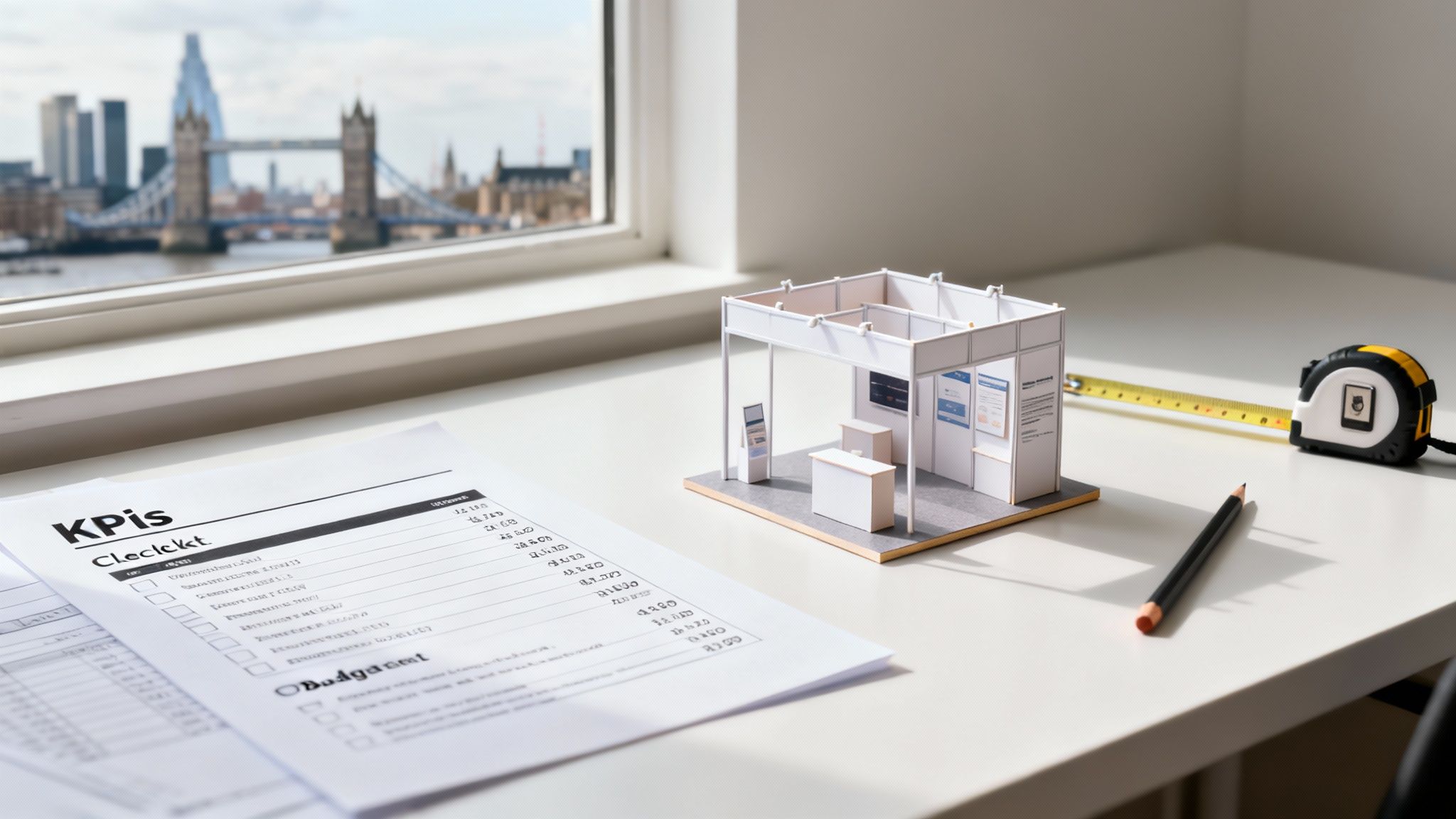
The first step in any exhibition project is to set clear, strategic objectives. While this may seem obvious, many businesses overlook this stage. Without solid goals, you have no way to measure success and cannot provide a stand builder with a meaningful brief. Your objectives will dictate every subsequent decision, from the stand’s layout to the technology you choose to incorporate.
Consider what you need to achieve. Is it capturing 100 qualified sales leads? Booking 50 one-to-one product demonstrations? Or perhaps you are aiming to increase social media mentions by 30% during the event. Whatever they are, your goals must be specific, measurable, and realistic.
Defining Your Key Performance Indicators
Your broad goals are translated into tangible targets through Key Performance Indicators (KPIs). KPIs provide a framework for tracking progress and determining if the exhibition was worthwhile once the event concludes.
Your KPIs might include:
- Lead Generation: The total number of qualified leads, meaning contacts who fit your customer profile and showed genuine interest.
- Brand Engagement: This could be the number of visitors who remained on your stand for more than five minutes, engagement with your event hashtag, or the volume of press mentions.
- Sales Targets: The direct value of orders placed at the show or revenue from any event-specific offers.
- Product Launch Metrics: The number of demonstrations given, samples distributed, or pre-orders secured for a new product.
Setting these benchmarks early ensures your brief to potential stand builders will be focused and results-driven. This clarity helps them design a stand that is not just visually appealing but a functional tool built to achieve your commercial targets. Our guide on effective branding at events offers further advice on making your stand a powerful marketing asset.
Establishing A Realistic Budget
Gaining a firm understanding of the full scope of costs is essential to avoid unforeseen expenses. The physical stand is a major part of the budget, but it is just one component when exhibiting in a competitive market like London.
When budgeting, you must look beyond the initial design and build quote to get the complete financial picture.
A well-planned budget is the difference between a stressful exhibition and a successful one. Factoring in all potential costs from the outset protects your ROI and empowers you to make smarter decisions with your chosen build partner.
Recent industry data highlights this for UK exhibitors. Research shows that 48% of exhibitors believe an eye-catching stand is the most effective way to attract attendees. At the same time, 72% of businesses identify floorspace and utility charges as major financial challenges. This demonstrates the importance of allocating funds wisely across the entire project, not just the physical structure.
Here is a look at how your budget might be allocated. It is an estimate, but it provides a solid starting point for your own planning.
Typical Exhibition Stand Budget Allocation in London
| Cost Component | Percentage of Total Budget (Estimate) | Key Considerations |
|---|---|---|
| Floorspace Rental | 25% – 35% | This is often your single biggest cost. Location within the hall is critical. |
| Stand Design & Build | 30% – 40% | Includes design fees, construction, graphics, and project management. |
| AV & Technology | 10% – 15% | Screens, lighting, interactive technology, and Wi-Fi. Can vary significantly. |
| Logistics & Labour | 5% – 10% | Transport to the venue, plus the installation and dismantling crew. |
| Venue Services | 5% – 10% | Electricity, rigging, internet, and waste disposal. Do not underestimate these. |
| Contingency Fund | 5% – 10% | Essential for covering unexpected issues or last-minute changes. |
Remember, this is a guide. A technology-heavy, interactive stand might see the AV percentage increase, while a simple shell scheme will have a much lower build cost. The key is to account for all these areas from day one to build a budget that is realistic.
How to Find and Vet the Right Stand Builder
With your objectives defined, the next crucial step is finding the right partner to bring your vision to life. Pinpointing the best exhibition stand builders London has to offer is not just about a quick online search; it is a methodical process to find a team that understands your goals, particularly at major venues like ExCeL London or Olympia.
A great builder does more than construct. They act as a strategic partner, understanding your commercial objectives and translating your brief into a functional, engaging space that delivers on your KPIs. You are looking for a company with a strong track record and demonstrable industry knowledge.
Where to Look for Reputable Builders
While a search engine is a reasonable starting point, finding specialists requires a broader approach. The best builders, those who truly understand your sector and its audience, are often found through industry-specific channels.
Here are a few recommended sources:
- Industry Associations: Organisations like the Event Supplier and Services Association (ESSA) maintain directories of accredited members who adhere to a strict code of conduct. This serves as an effective quality filter.
- Trade Publications: Industry magazines and websites for the events sector frequently feature or recommend top-tier builders. Monitor their articles and supplier lists.
- Professional Referrals: Ask peers or colleagues for recommendations. A first-hand account of working with a company is invaluable.
- Venue Supplier Lists: Major London venues usually have a list of approved or preferred contractors. These are companies that already know the venue's rules, regulations, and logistical complexities.
Using a combination of these sources helps you build a strong shortlist of potential partners who are already vetted by the industry.
Scrutinising Portfolios and Experience
Once you have a shortlist, it is time for critical evaluation. A builder's portfolio is their CV, and you need to look beyond the glossy photos to analyse whether their work is relevant to your project.
Ask yourself these questions as you browse:
- Have they built stands for companies in my industry before?
- Can I see projects they have completed at my chosen London venue?
- Do they show a good range of work, from large custom builds to smaller, more intricate designs?
- Is there clear evidence of them integrating technology successfully, such as large LED screens or interactive displays?
Experience at key London venues is non-negotiable. A builder who knows the specific dock doors at ExCeL or the traffic management system at Olympia is invaluable. They will anticipate problems and handle the venue’s health and safety paperwork efficiently, saving you considerable stress. If your project is broader, it is also helpful to understand the wider ecosystem of event production companies in London.
Key Questions to Ask Potential Partners
Before signing a contract, you must have a detailed discussion to ensure you are aligned. This is your chance to explore their processes, capabilities, and project management style. Vague answers should be considered a red flag.
A transparent and collaborative relationship with your stand builder is fundamental to a successful outcome. The initial vetting stage is not just about assessing their portfolio but also about gauging their communication style and commitment to your project's success.
It is worth noting that exhibition stand construction is a significant part of the UK's event economy and is growing rapidly. The global market, valued at USD 5.38 billion in 2024, is expected to reach USD 8.27 billion by 2030. As detailed by Credence Research, this growth underscores the importance of choosing an experienced partner who can navigate such a competitive field.
Here are the essential questions you need to ask:
- Design Process: How collaborative is your design process? Who will be my main point of contact from start to finish?
- In-House vs. Outsourced: Which parts of the build (such as metalwork, electrics, or graphics) do you handle in-house, and which do you subcontract?
- Project Management: How do you keep projects on track and communicate progress? What software or tools do you use?
- Health & Safety: Can you show me examples of Risk Assessments and Method Statements (RAMS) you have submitted for past projects at our venue?
- Budgeting: How do you handle unexpected costs or client changes mid-project? Is your initial quote fully itemised so I know exactly what I am paying for?
- Sustainability: What are your policies on using sustainable materials and minimising waste during the build and de-rig?
A confident, capable builder will welcome these questions and provide clear, detailed answers. This thorough approach ensures you partner with a reliable team that will feel like a true extension of your own.
Crafting a Brief That Delivers Results
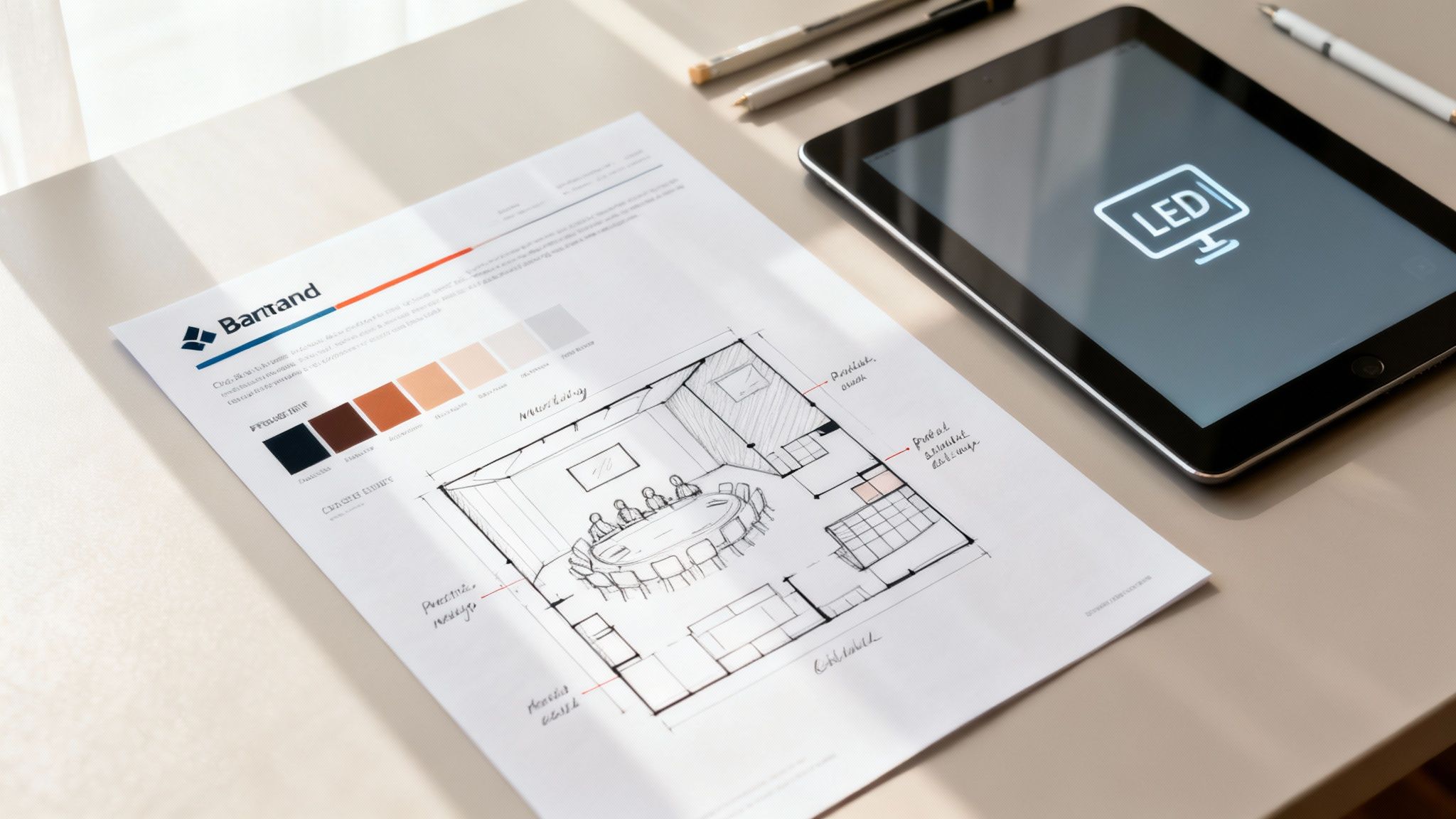
A vague brief is a primary reason why projects fail. It leads to missed deadlines, budget overruns, and a final stand that does not meet expectations. To get the best from top-tier exhibition stand builders in London, your brief must be the project's foundational document. It is what turns your strategy into a concrete, buildable plan.
Think of it as the architectural blueprint where every detail matters. The more specific and clear you are from the beginning, the smoother the entire process will be. You are not just telling them what to build; you are showing them what success looks like.
Essential Elements for Your Brief
An effective brief is much more than stand dimensions and a logo. It must give your build partner a genuine understanding of your company, your customers, and what you aim to achieve on the show floor. A great builder will use this information to propose creative ideas you may not have considered.
Ensure your document covers these core elements:
- Company & Brand Guidelines: Who are you? What is your market position? Attach your full brand guidelines, including logos, colour palettes, and typography.
- Event Goals & KPIs: Revisit the measurable goals you set earlier. Is the focus on lead generation, product demonstrations, or brand impact?
- Target Audience: Be specific. Who are you trying to attract? What are their job titles and professional challenges? This information shapes everything.
- The Budget: Be transparent about your total budget for the build, and always include a contingency for unexpected costs. This allows your builder to propose concepts that are creative yet realistic.
Planning the Functional Flow
This is where you consider the practical use of the space. Every square metre needs a purpose. Visualise the visitor journey, from the moment they see your stand to when they leave. How will your team interact with them?
When thinking about the structure, mentioning specific ideas you have, even simple ones like using versatile fabric pop-up display stands, can give your builder a much clearer picture of your vision.
Map out the key zones you will need:
- Welcome/Reception Point: The first impression. It needs to be open and inviting.
- Product Demo Areas: How will you showcase your products? Do you need custom shelving, plinths, or lockable cabinets? Note any power requirements.
- Meeting Spaces: Open and casual, or private and formal? How many people need to be seated at once?
- Hospitality Bar: A coffee machine or refreshments can be effective. This requires planning for plumbing and power from day one.
- Storage: An essential component. You need a lockable, hidden space for coats, bags, and additional marketing materials.
Your brief is not just a list of requirements; it is an invitation to collaborate. A detailed brief empowers your builder to act as a strategic partner, suggesting innovative solutions that help drive your business goals.
By thinking through these practical needs, you ensure the final design is not just aesthetically pleasing but also a hard-working, effective sales and marketing environment for your team.
Nailing the Technology and AV Integration
In modern exhibitions, technology is crucial for creating impact and drawing in attendees. However, simply writing "we need a screen" in your brief is insufficient. You must be precise about your audio-visual needs to avoid last-minute issues on-site.
This is where involving a specialist early can be invaluable. Working with a company like London Audio Visual Hire ensures your builder receives a technically sound specification from the outset, saving time and reducing stress.
Your technology specification needs to cover:
- LED Video Walls: Be specific on the size (e.g., 3m x 2m), resolution, and the type of content you will be displaying.
- Interactive Touchscreens: What size? What software will they use? Are they for data capture or interactive demonstrations?
- Lighting Design: What is the desired atmosphere? You will need ambient light, spotlights for products, and perhaps dynamic coloured lighting to match your brand.
- Audio System: Are you playing background music, or do you need directional speakers for a demonstration zone to avoid disturbing neighbouring stands?
Documenting this level of detail means your builder can design a structure with the right rigging points, smart cable management, and sufficient power from the start. Planning ahead ensures your technology is a seamless part of the experience, not a last-minute problem.
From Design to Flawless Build: The Project Management Phase
A brilliant stand design is one thing; getting it built, delivered, and installed perfectly within a busy London exhibition hall is another challenge entirely. This is where professional stand builders distinguish themselves. Expert project management is what separates the best exhibition stand builders in London from the rest.
From the moment you approve the design, a complex logistical process begins. Your builder is not just working to your deadline; they are juggling strict timelines from the event organiser and the venue. Missing a single deadline, even for something seemingly minor like submitting artwork, can cause a domino effect of delays and additional costs.
What to Expect: Key Checkpoints in the Build Process
A well-run project is divided into clear, manageable phases. As the client, your role is to provide timely feedback and sign-offs at each stage, which is vital for keeping the project on schedule. Open communication with your builder’s project manager will prevent many potential issues.
Here are the major milestones to monitor:
- Final Design Sign-Off: This is a critical stage. Once you approve the final 3D renders and technical drawings, the stand goes into production. Major changes after this point become complicated and expensive.
- Artwork Submission: Your builder will need your branding and graphic files in a high-resolution format. This deadline is usually non-negotiable because large-format printing and finishing require time.
- Workshop Visit: A good contractor will be proud to show you their work in progress. Ask to visit their workshop to see the stand being built. This is an excellent opportunity to check the quality before it is shipped.
- Venue Paperwork Deadline: This includes all official documentation: electrical plans, rigging requests, and the essential health and safety documents that need the venue's approval.
Getting Health & Safety Right (It is Non-Negotiable)
Navigating the health and safety regulations at major London venues like ExCeL or Olympia is a critical task that falls to your builder. The two key documents are the Risk Assessment and the Method Statement, often referred to as RAMS.
Submitting a comprehensive set of RAMS is not optional; it is a mandatory requirement for every UK event venue. How proficiently your builder handles this process is a strong indicator of their professionalism. Errors can result in your team being denied access to the site.
The Risk Assessment identifies potential hazards involved in building the stand, from using power tools to working at height. The Method Statement then details how the team will carry out the work safely to mitigate those risks. Your builder manages all of this, but you should always request a copy for your records.
To give you a clearer picture of how these pieces fit together, here is a sample timeline for a typical custom stand project.
Critical Path Timeline for an Exhibition Stand Project
| Phase | Timeline (Weeks Before Event) | Key Actions & Deliverables | Lead Responsibility (Client/Builder) |
|---|---|---|---|
| Discovery & Design | 16-20 | Initial briefing, concept development, budget alignment, 3D visuals, initial quote. | Both |
| Design Refinement | 12-16 | Feedback rounds, material selection, final 3D renders, detailed technical drawings. | Both |
| Sign-Off & Pre-Production | 10-12 | Contract signed, deposit paid. Builder submits H&S docs & service orders to venue. | Builder (Client for sign-off) |
| Artwork Submission | 8-10 | Client to supply all final, high-resolution graphic files for printing. | Client |
| Production | 4-9 | Stand construction begins at builder's workshop. Potential for client 'work-in-progress' visit. | Builder |
| Logistics & AV | 2-4 | Final logistics planning, AV equipment prep, packing and scheduling of transport. | Builder |
| Build-Up | 1 week (2-4 days) | Transport to venue, stand installation, flooring, electrics, AV integration, final checks. | Builder |
| Event Live | 0 | Handover to client, on-site support if required. | Client |
| De-Rig | Post-Event (1-2 days) | Stand dismantled, site cleared, components returned to storage or disposed of. | Builder |
This timeline illustrates the number of interconnected elements. Adhering to these deadlines, particularly in the early stages, is what ensures the final build-up runs smoothly.
The Final Push: Build-Up and De-Rig
The final stage is the physical build (the 'build-up') and the dismantling ('de-rig') at the venue. This is a high-pressure, tightly timed operation, often condensed into just a few days before the show opens. Your builder's crew will be working alongside hundreds of other contractors in a very busy environment.
Some of the unique logistical hurdles in London include:
- Timed Lorry Slots: Venues like ExCeL operate a strict schedule. Delivery lorries are given specific arrival windows to prevent congestion in the loading bays.
- Working with Organisers: Your builder must coordinate with official show suppliers for essentials like electricity, internet, and rigging points.
- Sticking to the Schedule: Build-up hours are strictly enforced. Work that overruns and goes 'out of hours' can incur significant overtime charges.
A comprehensive schedule is the foundation of this entire process. To understand how these detailed timelines are constructed, it is worth learning more about what a professional production schedule entails and how it ensures every element is in place and ready for the event.
Managing The Stand On-Site And After The Event
Once the stand is built, the work is far from over. The best exhibition stand builders in London understand their job is not finished until long after the last visitor has left. The handover, the live show, and the post-event breakdown are as critical as the initial design for achieving a positive return on investment.
When the construction is complete, the handover begins. This is your final opportunity to ensure every element is working perfectly before the doors open. Your builder's project manager should walk you through everything, from power sockets and lighting to AV equipment and lockable storage, making sure it all matches the approved brief.
The Pre-Show Handover Checklist
Do not rush this final inspection. Go through every part of the stand with your build team to ensure you are ready for a successful show.
Here is what you should be checking:
- Structural Integrity: Visually inspect the stand. Are the finishes neat? Does the structure feel solid and secure? A quick check can identify any last-minute issues.
- Graphics and Branding: Check that all branding is perfectly aligned and has not been damaged in transit. This is your brand's first impression.
- Lighting and Electrics: Test every switch, plug socket, and any charging points you have had installed. You do not want to discover a dead socket when your laptop battery is low.
- Audio-Visual Equipment: Start all screens and sound systems. Run through your content with an AV specialist to check for any playback or connection problems.
- Functionality: Open every cupboard and door. Ensure any moving parts work smoothly and that all ordered furniture is present and correctly placed.
A methodical handover means no last-minute problems. Your team can start the event focused entirely on engaging with visitors. To help boost that engagement, having the right giveaways is key; this comprehensive UK guide to promotional items for trade shows is a great resource for ideas.
This timeline gives you a sense of the typical project milestones that lead up to this crucial on-site phase.
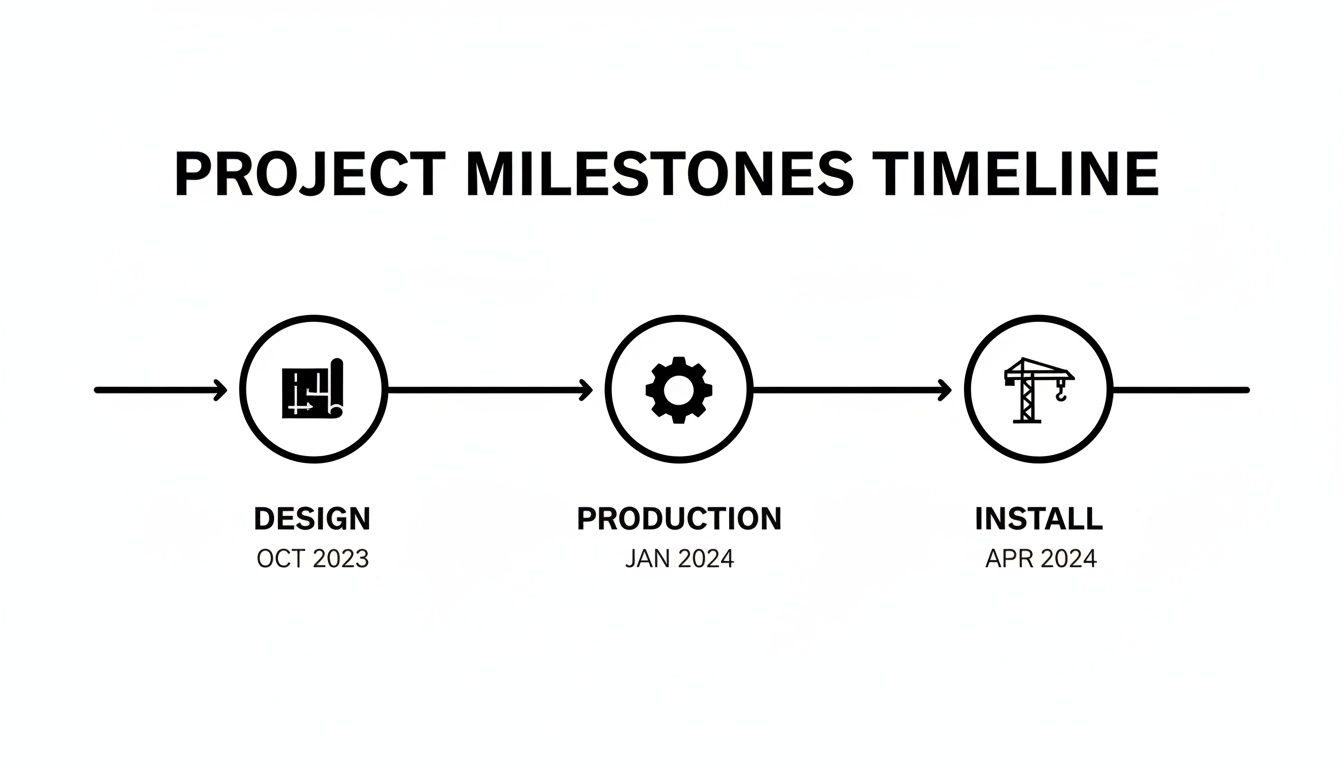
As you can see, decisions made early in the design and production stages have a significant impact on how smoothly the final installation and handover proceed.
After The Event: Measuring Success And Planning Ahead
Once the show concludes and the de-rig is complete, the final phase begins. Now it is time to review the goals you set at the start. A proper post-show analysis is the only way to measure what worked and to inform your strategy for the future.
Collate all your data. Did you hit your lead targets? What was the feedback on the stand's design? How well did the sales team perform? This is where you determine if the investment was successful.
The de-rig and post-event review are not just an afterthought; they are the groundwork for your next exhibition. A debrief with your builder will provide priceless insights that can improve future designs, increase efficiency, and boost your ROI for years to come.
The de-rig itself must be handled professionally. Your builder will manage the safe and swift dismantling of the stand, working to the venue’s tight schedule. This is also when you decide the fate of your stand's components. Discuss with your builder what is worth storing for future use and what needs to be disposed of, always aiming for the most sustainable option.
A final debrief meeting with your stand builder is the perfect way to close the loop, capturing all lessons learned and strengthening your partnership for the next project.
Your Top Questions About Exhibition Stands Answered
Entering the world of exhibitions, especially in a major hub like London, can feel complex. Having your questions answered is the first step towards a successful show. Let's address some of the most common queries from event planners.
How Far in Advance Should I Book an Exhibition Stand Builder in London?
The straightforward answer is: as early as possible.
For a completely bespoke, custom-built stand, you should begin the conversation four to six months before your event. This may seem like a long time, but it is a realistic window for all necessary steps: design consultations, revisions, fabrication, and logistics.
This lead time becomes even more critical at major London venues like ExCeL or Olympia, which have non-negotiable deadlines for submitting technical plans and health and safety documents. If you are considering a simpler modular system, you might manage with a shorter lead time of two to three months. However, booking early always provides more options, better availability, and helps you avoid rush fees.
What Is the Difference Between a Custom Build and a Modular Stand?
Understanding this distinction is crucial as it affects your budget, logistics, and brand impact.
-
Custom-Built Stand: This is a unique creation, built from scratch specifically for you. It uses raw materials like wood, metal, and acrylics to create a pure expression of your brand. You have complete creative freedom, but it comes with a higher price tag and is often designed for a single, high-impact event.
-
Modular Stand: This is constructed from pre-engineered components that can be reconfigured into different layouts and sizes. It is more cost-effective, sustainable (due to reusability), and generally quicker to install. This makes it an excellent choice if you plan to attend several shows a year. The trade-off is slightly less design flexibility compared to a full custom build.
The choice between custom and modular is a strategic decision. A custom build makes a powerful statement at a flagship event, while a modular system offers excellent value and consistency across a busy event calendar.
Who Is Responsible for Submitting Health and Safety Paperwork?
This is a point you cannot afford to get wrong.
Your appointed exhibition stand builders in London should complete and submit all health and safety paperwork to the venue. This includes risk assessments, method statements (RAMS), and any structural calculations the organisers require.
However, as the exhibitor, the ultimate legal responsibility for what happens on your stand space rests with you. It is vital to ensure your contract clearly states who is handling this. Always ask for copies of all submissions for your records. A professional builder will manage this process for you while keeping you informed every step of the way.
Can I Use My Own AV Equipment on the Stand?
Technically, you can, but it is often not advisable. You are much better off working with a specialist AV supplier, such as London Audio Visual Hire. Your stand builder will almost certainly have a trusted AV partner they work with, which makes the process far smoother.
There are several good reasons for this:
- Seamless Integration: An expert AV team knows what equipment to specify. They will get the power calculations right and manage cabling so it is hidden neatly within the stand's structure.
- Compatibility and Compliance: They will ensure every piece of equipment is PAT tested and meets the venue’s strict regulations. This avoids any last-minute issues with on-site officials.
- On-Site Support: This is the most important benefit. If a screen fails or a microphone cuts out during a live demonstration, an expert is on-site to fix it instantly. That support is invaluable and protects your investment in the show.
Bringing your own AV can create a minefield of compatibility issues and insurance problems, and leaves you without support if something goes wrong. It is a risk not worth taking.
At London Audio Visual Hire, we work hand-in-hand with London's top exhibition stand builders to deliver flawless technical production. Our team makes sure your AV, lighting, and interactive tech are perfectly integrated, so you can concentrate on what matters most: engaging with your audience. See how we can support your next exhibition by visiting us at https://londonaudiovisualhire.co.uk.


