
Organising a successful event in London requires meticulous planning, technical precision and a deep understanding of venue logistics. From corporate conferences in the City and immersive product launches in Shoreditch to high-profile galas in Mayfair, every detail contributes to the final experience. A comprehensive event organising checklist is not just a to-do list; it is a strategic framework that ensures nothing is left to chance, transforming a good event into an exceptional one.
This guide provides a detailed, stage-by-stage breakdown of the ten critical areas to master. It moves beyond generic advice to offer actionable insights specifically for the demands of the professional UK events landscape. This blueprint covers the essential phases of event production, from initial concept and budgeting to on-site execution and post-event analysis, with a sharp focus on the technical and audio-visual elements that create truly memorable experiences. Mastering this process allows for seamless delivery, proactive problem-solving and the ability to execute a vision without compromise.
The following sections will detail everything from Audio Visual Technical Requirements and Venue Site Assessments to Vendor Management and On-Site Execution. Whether you are a seasoned planner or an in-house marketing manager, this checklist will serve as your essential reference for delivering flawless events. To inspire your own bespoke blueprint, consider exploring an ultimate wedding planning checklist for a detailed look at another event type's comprehensive planning. Let’s dive into the critical components that will ensure your next London event is a resounding success.
1. Audio Visual Technical Requirements & Equipment Planning
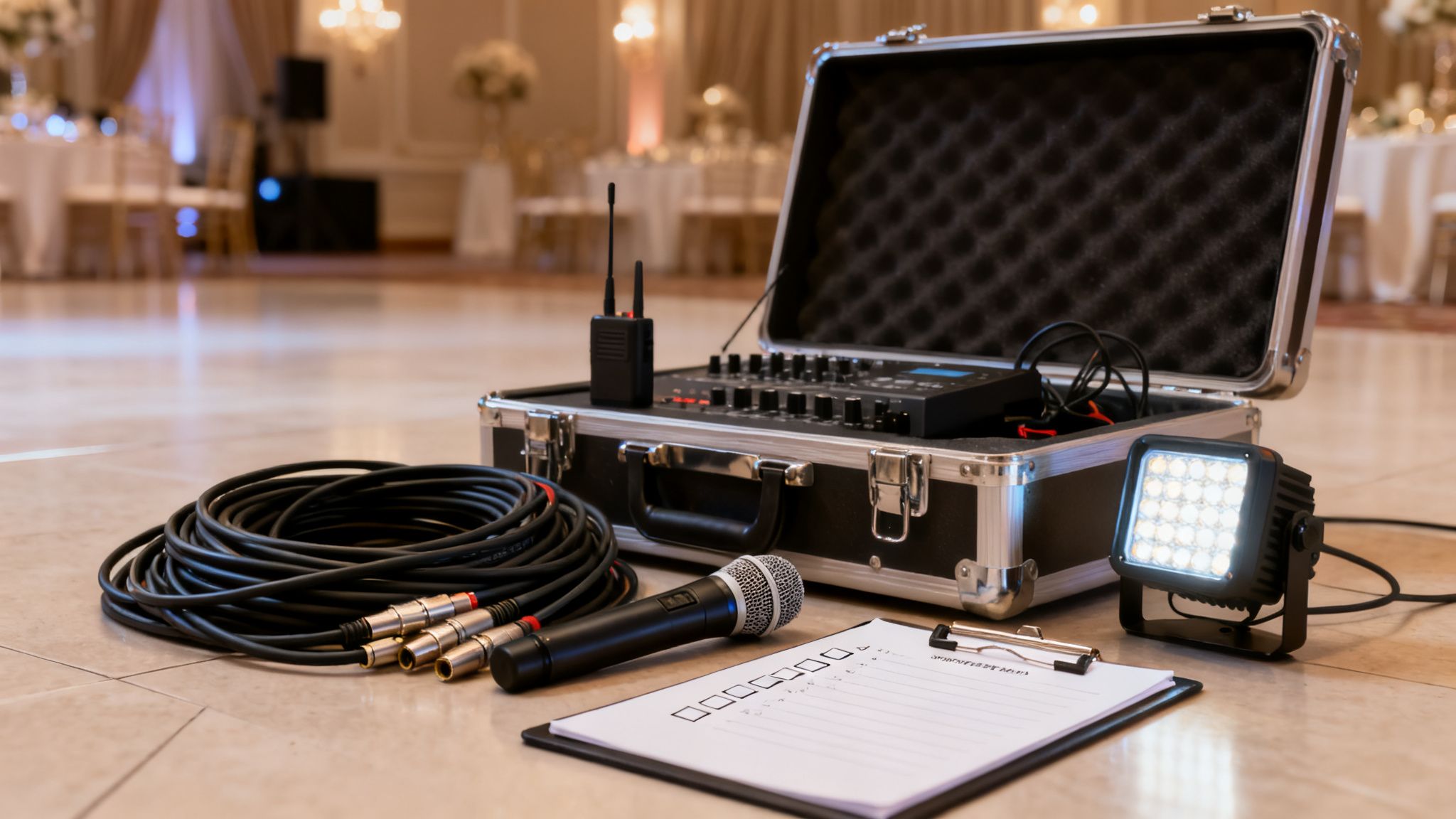
The first and most critical technical stage in any event organising checklist is defining your audio visual requirements. This foundational step involves identifying, specifying and sourcing all the AV equipment needed to bring your event vision to life. It covers everything from sound systems and projection displays to lighting rigs, streaming infrastructure and the essential technical connectivity that ties it all together.
Effective AV planning is about more than just hiring equipment; it ensures your key messages are heard and seen clearly, engages your audience effectively and represents your brand with professionalism. In a competitive market like London, where venues range from historic ballrooms to modern, purpose-built conference centres, understanding the specific technical capabilities, power distribution, rigging points and spatial constraints of your chosen location is paramount.
Why This is Essential
Neglecting detailed AV planning can lead to significant on-site problems, such as poor sound quality, mismatched video connections or insufficient lighting, all of which detract from the attendee experience. A corporate conference at The Savoy, for example, demands flawless multi-screen projection and reliable wireless microphone systems for its speakers. Similarly, a high-impact product launch in a unique Shoreditch venue might require a custom-built video wall and dynamic lighting design to create a memorable brand impression. Proper planning mitigates these risks and ensures a seamless production.
Actionable Tips for Implementation
- Conduct Early Site Visits: Visit your London venue with your AV supplier well in advance. Check power outlets, measure ceiling heights for rigging and identify potential acoustic challenges.
- Document Everything: Create a detailed technical specification sheet shared with the venue and your AV team. This document should list every piece of equipment, from cables to cameras.
- Plan Generous Timings: Allocate sufficient time for load-in, setup and testing. A good rule of thumb is to schedule a setup time that is 1.5 to 2 times the duration of the event itself.
- Schedule Technical Rehearsals: Always run a full technical rehearsal with presenters and AV operators to troubleshoot any issues before guests arrive.
2. Venue Selection & Technical Site Assessment
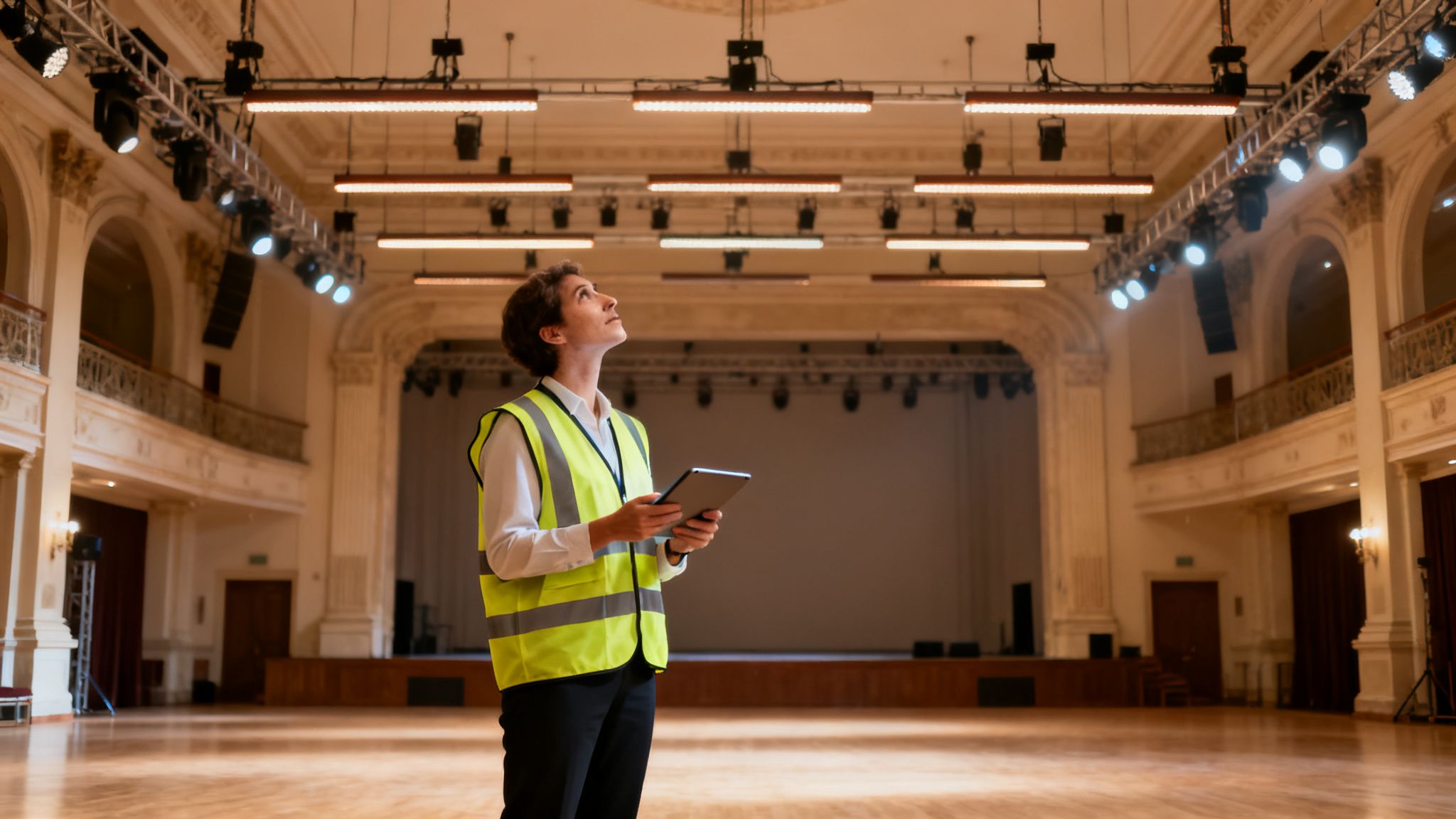
The second stage of your event organising checklist involves selecting a venue that aligns with your objectives and, crucially, conducting a thorough technical site assessment. This step moves beyond basic capacity and location considerations to a detailed evaluation of the venue's infrastructure, power supply, rigging capabilities, acoustic properties and overall compatibility with your AV production needs.
In a city like London, the options are vast, from historic listed buildings to state-of-the-art conference centres, each presenting unique technical challenges and opportunities. A successful assessment ensures your creative vision is technically feasible and prevents costly surprises on event day. This process is fundamental to matching the venue's physical and technical reality with your event's specific requirements.
Why This is Essential
Choosing a venue without a technical assessment is a significant risk. For instance, a historic banqueting hall may have strict limitations on rigging, impacting your lighting design, while a modern exhibition centre might have complex power distribution systems that require specialist knowledge. For outdoor London events, planning for power infrastructure and weather contingencies is non-negotiable. A detailed site visit confirms access routes, load-in capacity and any restrictions, ensuring smooth and safe technical execution. This detailed pre-planning is essential for exploring what’s possible within various London event venues and selecting the right one.
Actionable Tips for Implementation
- Develop a Venue Scorecard: Create a detailed checklist covering technical, logistical and commercial factors. Include power availability, rigging points, ceiling height and internet connectivity.
- Meet the Venue's Technical Manager: Engage directly with the in-house technical team to understand their specific procedures, limitations and any mandatory in-house suppliers.
- Verify Access and Logistics: Confirm load-in times, door dimensions, freight lift capacity and vehicle parking. A difficult load-in can add hours and significant cost to your setup.
- Document Everything Visually: Take extensive photos and videos during your site visit. This provides a crucial reference for your production team during the planning phase.
3. Budget Planning & Cost Management
A meticulously planned budget is the financial backbone of any successful event. This crucial component of your event organising checklist involves forecasting all potential costs, allocating funds strategically, tracking expenditure in real-time and managing financial risks. It covers every line item, from AV equipment hire and technical staffing to venue fees, marketing, catering and essential contingency funds.
Effective cost management is what transforms an ambitious concept into a financially viable reality. It ensures you do not overspend while allowing for strategic investment in high-impact areas that enhance the attendee experience. In a premium market like London, where venue and supplier costs can vary dramatically, a detailed and dynamic budget prevents unforeseen expenses from derailing your production and protects your return on investment.
Why This is Essential
Without rigorous budget planning, projects are vulnerable to scope creep and unexpected costs, leading to financial shortfalls and compromised event quality. A corporate conference for 500 people, for instance, must balance significant AV costs for livestreaming and multi-room setups (often £15,000-£40,000+) with delegate catering and speaker fees. A product launch with specialised lighting and video mapping requires careful allocation to achieve its creative vision without exceeding its £10,000-£30,000+ budget. Diligent financial oversight ensures every pound is accounted for and spent effectively to achieve key objectives.
Actionable Tips for Implementation
- Request Itemised Quotations: Always ask vendors for detailed, itemised quotes rather than a single total. This allows you to see exactly what you are paying for and identify areas for potential savings.
- Allocate a Technical Contingency: Set aside 10-15% of your total budget specifically for unforeseen circumstances, last-minute technical requirements or supplier overtime.
- Clarify All-Inclusive Costs: Confirm with all suppliers, including your AV provider, whether their quotes include setup, breakdown, crew travel and potential overtime fees to avoid surprise charges.
- Establish a Tracking System: Use a spreadsheet or project management software to track expenses against your budget in real time. Regularly review this document and report any variances to stakeholders immediately.
4. Timeline & Project Scheduling
Developing a detailed timeline and project schedule is the strategic backbone of any successful event. This crucial stage involves mapping out every task, from the initial concept to post-event evaluation, against a clear timeframe. It encompasses all key milestones, including venue confirmation, vendor selection, technical rehearsals, promotional campaigns and the final de-rig, ensuring every dependency is managed and all teams work in synchrony.
Effective project scheduling is the difference between controlled, proactive management and a frantic, reactive crisis. For any event in a fast-paced environment like London, a comprehensive timeline prevents last-minute panics, ensures adequate preparation time and enables seamless coordination across multiple vendors, from catering to audio visual suppliers. A well-structured schedule on your event organising checklist is fundamental to delivering on time and within budget.
Why This is Essential
Without a master timeline, critical path items can be missed, leading to costly oversights and compromises on quality. Imagine organising a 500-person corporate conference at the Barbican Centre; a delay in finalising the technical brief could jeopardise the availability of specialist AV equipment or staging. Similarly, planning a high-end gala with custom installations requires a long lead time for design approvals and fabrication. A robust schedule identifies these dependencies early, allocates realistic timings and ensures every element aligns perfectly for the event day.
Actionable Tips for Implementation
- Work Backwards: Start with your event date and map all milestones in reverse. This clearly identifies the required completion dates for each phase, from vendor contracting to design freezes.
- Use Project Management Tools: Create a master timeline in a shared platform like Asana or Monday.com. This provides a single source of truth for all stakeholders and tracks progress in real time.
- Build in Buffer Time: Incorporate contingency time (typically 1–2 weeks) before critical milestones. This provides a safety net for unforeseen delays without derailing the entire project.
- Establish Key Deadlines: Set and communicate firm deadlines for vendor confirmations (8–12 weeks out), design freezes and attendee registration cut-offs to keep the project on track.
5. Vendor Management & Coordination
An often underestimated element of an event organising checklist is the systematic management and coordination of all third-party suppliers. This crucial process involves selecting, contracting and synchronising every vendor, from the venue and caterers to specialist AV providers, security teams and florists. It is the central nervous system of your event, ensuring every moving part works in harmony to deliver a seamless experience.
Effective vendor management is about creating a collaborative ecosystem where every supplier understands their role, timings and dependencies on others. For a complex corporate event in a Central London venue like The Brewery, this means ensuring the AV production company’s load-in schedule aligns perfectly with the staging supplier, the caterer's service times and the venue's operational rules. Without this central coordination, you risk delays, miscommunication and costly on-site problems.
Why This is Essential
Poor vendor coordination can quickly derail an event. Imagine a product launch where the lighting designer's rig is incompatible with the venue's power supply, or a charity gala where the catering team is unaware of the keynote speaker's schedule, leading to noisy service during a critical speech. Meticulous management prevents these issues, ensuring quality and accountability across the board. It transforms a collection of individual suppliers into a single, high-performing team focused on a shared objective.
Actionable Tips for Implementation
- Create a Central Vendor Hub: Develop a shared document or project management space with contact details, contracts, insurance certificates and key deliverables for every supplier. This master contact sheet is invaluable on the event day.
- Issue Detailed Specifications: Provide each vendor with a detailed written brief or technical specification. For your AV provider, this should include everything from screen resolutions and microphone types to power requirements and rigging plots.
- Establish a Communication Rhythm: Schedule regular coordination meetings. Start with monthly check-ins during the early planning stages, increasing to weekly calls in the final month and a daily huddle in the last week.
- Integrate Timings into the Run Sheet: Your run-of-show document must clearly outline each vendor's specific responsibilities and timings, from the arrival of the first supplier to the departure of the last. This master schedule is the single source of truth for the entire event.
6. Design & Creative Concept Development
The sixth stage in a comprehensive event organising checklist is developing your design and creative concept. This is where the event’s aesthetic, messaging and overall attendee experience are defined. It involves establishing visual themes, colour palettes, branding integration and the spatial design of the venue, ensuring all technical elements are unified under one cohesive vision.
Strong creative development transforms an event from a simple gathering into a memorable, immersive experience. It ensures that the lighting design, video content and soundscape actively support the core message, rather than existing as separate technical components. In a visually competitive environment like London, a powerful creative concept – whether for a futuristic tech launch in Canary Wharf or an elegant awards gala in Mayfair – is essential for elevating brand perception and engaging guests on a deeper level.
Why This is Essential
Without a guiding creative concept, an event can feel disjointed and forgettable. The technical production might be flawless, but if the lighting, visuals and staging do not align with the event's objectives, the overall impact is significantly diminished. For instance, a corporate brand activation using its heritage colours in a sophisticated lighting design reinforces brand identity, while a conference with a dynamic visual identity, custom graphics and animated transitions creates a more professional and engaging atmosphere for delegates. A unified design ensures every element serves a purpose.
Actionable Tips for Implementation
- Create Mood Boards: Develop visual mood boards and design references early in the process. This helps align the vision of all stakeholders before committing to technical implementation and expenditure.
- Map the Attendee Journey: Consider the attendee flow, key touchpoints and sightlines when developing the spatial design. Ensure the creative concept enhances the experience from arrival to departure.
- Develop Technical Design Specifications: Translate creative ideas into detailed technical documents. Create lighting plots, projection layouts and video storyboards for your AV team to execute precisely.
- Schedule Design Reviews: Hold dedicated design review sessions within the first two weeks of planning. Gaining early sign-off on concepts prevents costly and time-consuming revisions later on.
7. Marketing, Promotion & Attendee Communications
The next essential stage in your event organising checklist is developing a strategic plan for marketing, promotion and attendee communications. This step involves all the activities required to build awareness, drive registrations and keep your audience engaged from the first announcement to the final post-event follow-up. It encompasses everything from your digital marketing footprint to your direct communication strategy, ensuring your event reaches the right people with the right message.
Effective promotion is the engine that fills your venue, whether you are targeting corporate delegates for a conference in Canary Wharf or attracting the public to a brand activation in Covent Garden. It sets the tone, manages expectations and provides critical logistical information that prevents on-site confusion. A well-executed communications plan creates excitement and transforms a list of attendees into an engaged community before they even arrive.
Why This is Essential
Without a robust marketing and communications strategy, even the most meticulously planned event can fail due to low attendance. A B2B trade show at the ExCeL London, for example, relies on a multi-channel approach using LinkedIn, industry partnerships and targeted email campaigns to secure exhibitors and visitors. In contrast, a charity gala may focus on emotive storytelling through social media and direct mail to drive ticket sales and donations. Neglecting this area results in a quiet room and a missed opportunity to achieve your event objectives.
Actionable Tips for Implementation
- Develop a Multi-Channel Content Calendar: Plan your promotional activity 8-12 weeks in advance. Create a calendar detailing content for email marketing, social media posts, blog articles and partner outreach to ensure consistent messaging.
- Segment Your Audience: Tailor your communications to different attendee types. A sponsor will require different information from a general admission ticket holder, so segment your email lists and advertising to deliver more relevant content.
- Create a Compelling Event Page: Your event website or registration page must have a clear value proposition. Include key details like speaker information, the agenda, venue logistics and a simple, frictionless registration process with clear calls-to-action.
- Establish a Communication Cadence: Send a structured sequence of emails: the initial announcement, an early bird discount reminder, a final call for registration and a "know before you go" logistics email one week prior to the event. This builds anticipation and keeps your event top-of-mind. When planning your event's outreach, considering strategic choices for your promotional items for trade shows can significantly enhance your brand's visibility and impact.
8. Logistics, Load-In/Out & Crew Scheduling
A core component of any event organising checklist is the detailed operational plan for logistics, load-in/out and crew scheduling. This stage governs the physical movement of all equipment and personnel into and out of your venue. It encompasses everything from coordinating venue access times and transport logistics to scheduling the technical crew required for setup, operation and breakdown.
Effective logistics planning is the invisible backbone of a successful event, ensuring that every piece of equipment arrives on time and is installed safely and efficiently. For events in London, where venues often have tight access, limited parking and strict time constraints, this meticulous planning is non-negotiable. Whether it’s navigating the loading bay of a Canary Wharf skyscraper or a historic City of London venue, a detailed schedule prevents costly delays and onsite chaos.
Why This is Essential
Poor logistical planning can quickly derail an event before it even begins. A delayed load-in can compromise vital rehearsal time, while an understaffed crew may struggle to meet deadlines, leading to a rushed and potentially unsafe setup. For example, a high-end gala at a prestigious Mayfair hotel with a tight two-hour load-in window demands military-precision crew coordination to get lighting, sound and staging in place. Likewise, a trade show booth with a complex AV setup at the ExCeL London requires a staged installation plan across multiple days, coordinated perfectly with venue management and other exhibitors.
Actionable Tips for Implementation
- Conduct a Logistics Walkthrough: Visit the venue with your production manager and technical team specifically to assess logistics. Document loading bay dimensions, lift access, power availability and any potential obstructions.
- Create a Detailed Schedule: Develop a comprehensive timeline that details every step from truck arrival to the final sweep-up. A complex corporate conference might need an 8 to 12-hour load-in, whereas a simple setup may only require 4 to 6 hours.
- Define Crew Roles and Shifts: Clearly outline crew requirements by role: riggers, lighting technicians, audio engineers, video operators and general crew. For long event days, schedule breaks and shift changes to ensure your team remains alert and effective.
- Communicate Clearly: Establish a clear communication channel, such as a dedicated WhatsApp group or radio channel, for the event manager, venue contact and technical crew lead to use on the day.
- Plan for Contingencies: Always build a buffer into your schedule, ideally 2 to 3 hours between setup completion and guest arrival for final testing and adjustments. Have a plan for contingency crew to cover any last-minute illness or unexpected challenges.
9. Technical Rehearsal & Testing
Following equipment planning, the next crucial phase in your event organising checklist is the technical rehearsal. This is the comprehensive process of testing all technical systems, confirming equipment functionality and practising operational procedures in a controlled environment before your attendees arrive. It covers sound checks, projection verification, lighting cues, streaming tests and the seamless integration of all these elements.
A well-executed technical rehearsal is your best insurance against on-the-day failures. It allows your technical team to identify and resolve issues, from a faulty microphone to a glitchy video transition, without the pressure of a live audience. For complex productions in London venues, such as a multi-stage conference at the ExCeL or an awards ceremony at the Roundhouse, this step is non-negotiable for building operator confidence and ensuring flawless execution.
Why This is Essential
Skipping a thorough rehearsal is a high-risk gamble that can undermine your entire event. Imagine an awards ceremony where a winner's video fails to play, or a hybrid event where the online audience cannot hear the keynote speaker due to untested internet connectivity. These issues create a poor experience and reflect badly on your organisation. A dedicated rehearsal, whether for a product launch testing video playback and lighting cues or a corporate conference running through every presentation, is fundamental to professional event delivery.
Actionable Tips for Implementation
- Schedule Ample Time: Book your technical rehearsal 2-4 days before the event to allow sufficient time for adjustments and fixes without last-minute panic.
- Use Actual Content: Always test with the final presentation slides, videos and graphics. Using placeholder content will not reveal potential file compatibility or formatting issues.
- Involve Key Personnel: Ensure all presenters, speakers and show callers participate. This helps them become comfortable with the stage, timings and technical setup.
- Run a Full Sequence: Go through the entire event schedule from start to finish, running technical sequences in the exact order they will happen on the day.
- Test Contingencies: Practice your backup plans. What happens if a primary microphone fails? What is the procedure for switching to a backup laptop? A rehearsal is the time to find out.
- Conduct a Final Check: Always schedule a brief sound and systems check on the morning of the event to verify everything is still functioning correctly after being powered down overnight.
10. On-Site Event Execution & Issue Management
The culmination of months of planning, this stage is where your event comes to life. On-site event execution is the live management of every technical and logistical element, from crew coordination and schedule adherence to real-time problem-solving. This critical phase involves overseeing the seamless operation of all systems, managing attendee flow and ensuring that any issues are resolved swiftly and discreetly, maintaining a flawless guest experience from start to finish.
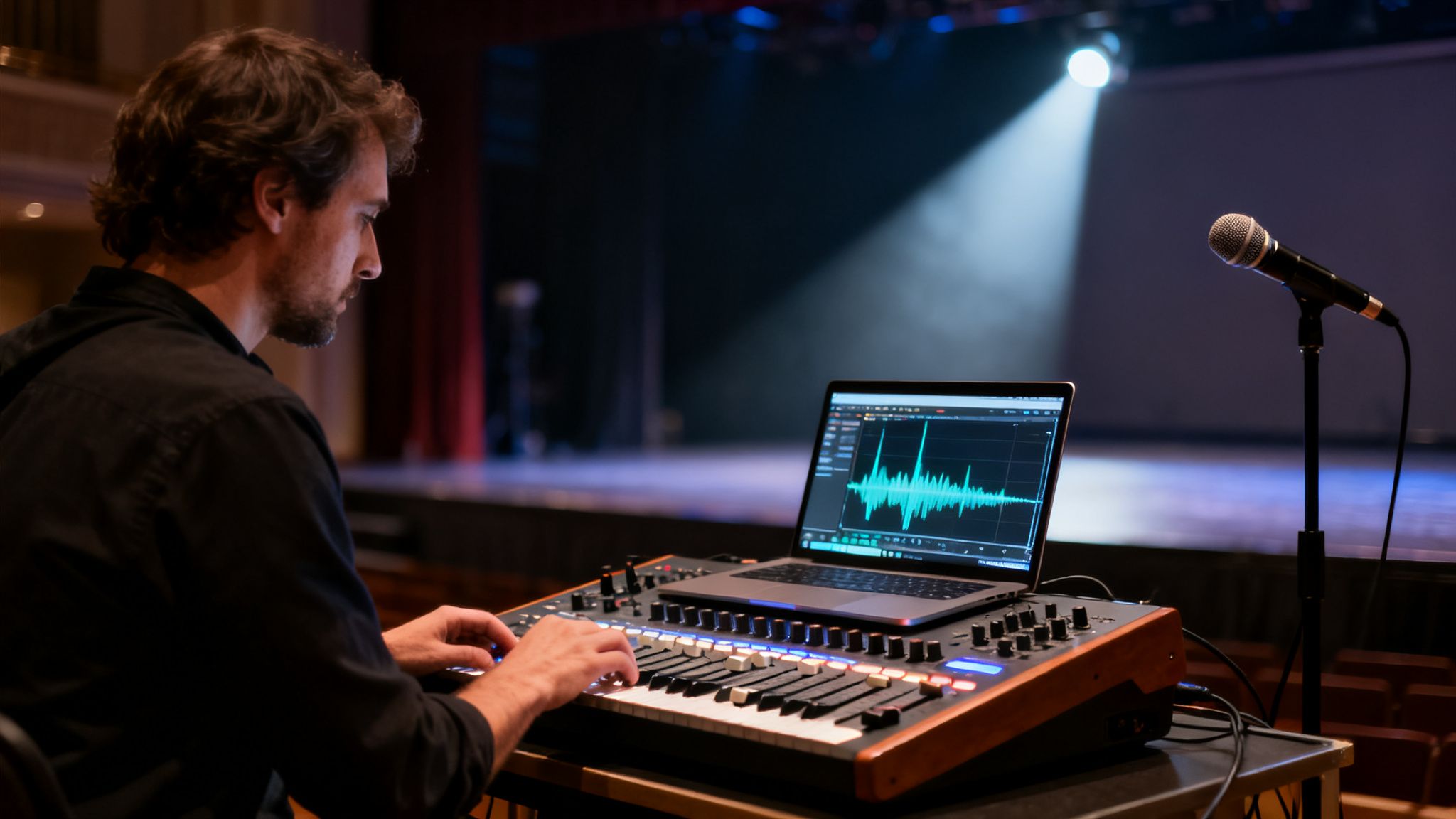
Effective on-site management is the difference between a chaotic event and a polished, professional production. It ensures the meticulously planned run sheet is executed with precision, technical cues are hit perfectly and the entire team operates as a single, cohesive unit. For a high-stakes awards ceremony at a venue like the Grosvenor House Hotel, this means managing complex video playbacks, live camera feeds and lighting changes with split-second accuracy, ensuring the entire production runs smoothly.
Why This is Essential
Without robust on-site management, even the best-laid plans can fall apart. Minor technical glitches, such as a microphone failure or a delayed video cue, can disrupt the flow and undermine an event's credibility. Proactive management anticipates these challenges and puts experienced professionals in place to handle them. A dedicated stage manager and technical director are essential for coordinating all moving parts, from speaker transitions to AV operations, ensuring the event delivers on its promises to stakeholders and attendees. This is a vital part of any comprehensive event organising checklist.
Actionable Tips for Implementation
- Conduct a Full Crew Briefing: Assemble all crew members 30 to 60 minutes before guest arrival. Run through the schedule, assign clear roles (e.g. audio engineer, lighting operator, stage manager) and establish communication protocols.
- Establish Clear Communication Channels: Use reliable two-way radios or headset systems with designated channels for different teams (e.g. technical, logistics, security).
- Create Contingency Plans: Prepare for common issues like equipment failure or speaker no-shows. Have backup microphones, laptops and a clear process for handling last-minute changes.
- Assign a Timekeeper: Designate one person to manage the run-of-show timings. They should provide regular time checks to the crew and speakers to keep the event on schedule.
- Maintain a Calm Demeanour: The event manager's attitude sets the tone for the entire team. Address issues calmly and professionally to maintain a positive and efficient working atmosphere.
10-Point Event Organising Checklist Comparison
| Item | Implementation complexity | Resource requirements | Expected outcomes | Ideal use cases | Key advantages |
|---|---|---|---|---|---|
| Audio Visual Technical Requirements & Equipment Planning | High – detailed technical specs and venue variation | AV engineers, equipment inventory, contingency kit, time for site checks | Reliable AV systems, reduced technical failures, accurate technical budgets | Corporate conferences, product launches, hybrid events, trade shows | Prevents failures, ensures professional quality, reduces troubleshooting |
| Venue Selection & Technical Site Assessment | Medium–High – site surveys, structural and acoustic checks | Venue site visits, technical manager, access to venue plans, measurement tools | Verified venue-technical compatibility, identified constraints, better vendor planning | Historic buildings, multi-space events, outdoor venues | Avoids surprises, enables accurate planning, improves vendor coordination |
| Budget Planning & Cost Management | Medium – detailed estimates and tracking | Financial planner, itemised vendor quotes, budgeting tools, contingency reserve | Controlled spend, contingency planning, clearer ROI and vendor costs | Large conferences, multi-day trade shows, charity galas | Financial control, prevents overruns, improves negotiation leverage |
| Timeline & Project Scheduling | Medium – dependency mapping and critical path | Project manager, scheduling tool (Gantt), stakeholder time, buffer allowances | On-time delivery, managed dependencies, fewer last-minute crises | Complex multi-vendor events, launches with fixed dates | Prevents missed deadlines, clarifies accountability, enables buffers |
| Vendor Management & Coordination | High – multiple parties and contractual alignment | Contract manager, communication protocols, regular meetings, insurance checks | Aligned vendors, clear scopes, timely deliveries and fewer disputes | Events with many specialised vendors (AV, catering, staging) | Ensures quality, accountability, smoother handoffs |
| Design & Creative Concept Development | Medium–High – creative-to-technical translation | Creative team, technical designer, mood boards, prototyping/tests | Cohesive brand experience, higher attendee engagement, integrated AV design | Brand activations, product launches, awards galas | Differentiates events, reinforces messaging, supports tech implementation |
| Marketing, Promotion & Attendee Communications | Medium – campaign planning and channel coordination | Marketing team, CRM/registration platform, content assets, ad budget | Increased awareness and registrations, managed attendee expectations | B2B conferences, product launches, fundraising galas | Drives attendance, reduces on-site confusion, extends reach |
| Logistics, Load-In/Out & Crew Scheduling | High – operational timing and venue constraints | Skilled crew, transport/logistics, load-in plans, health & safety measures | Efficient setup/breakdown, protected equipment, compliant operations | Complex AV installs, tight load-in windows, multi-day trade shows | Optimises time, reduces damage/risk, maintains safety |
| Technical Rehearsal & Testing | Medium – full-system validation and troubleshooting | Full technical systems, operators, venue access time, test checklists | Identified and resolved issues, operator confidence, polished execution | Live broadcasts, hybrid events, awards ceremonies | Reduces on-day failures, validates contingencies, improves quality |
| On-Site Event Execution & Issue Management | High – live coordination and real-time problem solving | Experienced on-site crew, comms systems, monitoring tools, contingency plans | Smooth live operation, rapid issue resolution, satisfied stakeholders | Live conferences, product launches, ceremonies | Minimises disruption, protects reputation, enables realtime adjustments |
From Checklist to Confident Delivery
Navigating the complexities of event production requires more than just a list of tasks; it demands a strategic, systematic approach. This comprehensive event organising checklist has walked you through the ten critical pillars of successful event delivery, from the initial spark of an idea to the final post-event analysis. By breaking down the process into manageable stages, you transform an overwhelming challenge into a clear, actionable roadmap.
The journey begins with foundational elements: defining clear audio visual technical requirements and conducting a thorough venue selection and technical site assessment. These early decisions create a ripple effect, influencing everything from budget planning to the final attendee experience. A well-defined budget is not a restriction; it is a strategic tool that empowers creative and logistical choices, while a detailed timeline and project schedule provides the rhythm and structure for your entire team.
Turning the Plan into Reality
As the plan solidifies, the focus shifts to bringing the vision to life. This is where meticulous vendor management, cohesive design and creative concept development, and strategic marketing and communications become paramount. The checklist underscores that these are not isolated activities but interconnected threads. Your creative concept must align with your technical capabilities, and your marketing must accurately represent the experience you are building.
The final stretch is all about execution. Flawless on-site delivery is the direct result of painstaking preparation in the preceding stages. Detailed logistics and crew scheduling, rigorous technical rehearsals and robust on-site issue management protocols are the safety nets that ensure a smooth and professional event. They represent the difference between reacting to problems and proactively preventing them.
Beyond the Ticking Boxes: The Value of Expertise
While this checklist provides the essential framework, its true power is unlocked when combined with professional expertise. Each point, from AV specifications to contingency planning, carries layers of nuance that only seasoned professionals can fully navigate.
The ultimate goal of any event organising checklist is not just to ensure everything gets done, but to create an environment where excellence can thrive. It is about building a foundation so robust that your team can focus on delivering an exceptional experience, rather than firefighting preventable issues.
Mastering this process elevates your role from a coordinator to a strategic event architect. It allows you to deliver events that not only run smoothly but also achieve their core objectives, whether that is generating leads, celebrating a milestone or launching a new product. By systematically addressing each area, you build confidence, mitigate risk and create a predictable path to a memorable and impactful event that leaves a lasting positive impression on every guest, stakeholder and sponsor. The confidence you project on the day is a direct reflection of the diligence and detailed planning you invested weeks and months before.
Ready to ensure the technical elements of your next London event are flawless? The expert team at London Audio Visual Hire can translate your checklist into a seamless reality. From initial AV consultation and venue assessment to providing the right equipment and on-site technical support, we offer the expertise to make your event a resounding success. Contact us today to discuss your event's technical requirements.