

Successful event management is a discipline of precision and foresight. While creativity is vital, flawless execution hinges on methodical planning. From large-scale corporate conferences in London to intimate brand activations, the margin for error is slim. This is where comprehensive event management checklists become indispensable, transforming complex logistical challenges into manageable, sequential tasks.
They provide structure, ensure accountability, and serve as a single source of truth for the entire team. A well-constructed checklist does more than just list items; it acts as a strategic framework that anticipates dependencies, allocates resources effectively, and safeguards against oversights. Forgetting a crucial piece of AV equipment or neglecting a key safety compliance detail can have significant consequences, impacting both attendee experience and brand reputation.
This guide moves beyond generic templates, offering ten detailed, actionable checklists designed for the specific demands of professional event production in the UK. We will cover every critical stage, from initial strategy and venue selection to on-site technical execution and post-event analysis. Each checklist provides the framework needed to mitigate risks, control budgets, and deliver a seamless experience for every attendee, speaker, and stakeholder.
1. Pre-Event Planning Checklist
The Pre-Event Planning Checklist is the foundational document that underpins the entire event lifecycle. It serves as the strategic blueprint, moving an event from a concept to a viable project. This initial phase is arguably the most critical; mistakes made here can have cascading effects on budgets, timelines, and the overall success of the occasion.
This checklist forces the definition and agreement of the event's core pillars before significant resources are committed. It covers everything from establishing clear, measurable objectives (e.g., generate 500 qualified leads, raise £100,000 for charity) to defining the target audience and developing a comprehensive budget.
Key Components and Implementation
A robust pre-planning checklist moves sequentially through the conceptual stages, ensuring every foundational element is documented and approved. A typical workflow involves:
- Defining Event Goals & Objectives: What is the primary purpose of the event? This could range from brand awareness for a product launch to knowledge-sharing at a corporate conference.
- Audience Profiling: Who are you trying to reach? Create detailed personas for ideal attendees to guide all future decisions on content, marketing, and venue selection.
- Budget Allocation: Develop a detailed preliminary budget. This should include line items for venue hire, AV production, catering, marketing, staffing, and a crucial contingency fund of at least 15-20%.
- Timeline Creation: Work backwards from the proposed event date to create a master timeline with key milestones and deadlines for every phase. For a major conference, this is often a 9-12 month plan.
- Stakeholder Approval: Secure formal sign-off on the objectives, budget, and timeline from all key decision-makers. This prevents costly changes later in the process.
Expert Insight: Use a project management tool like Asana or Trello from day one. Create tasks that mirror your checklist items, assign owners, and set deadlines. This transforms a static document into a dynamic, accountable project plan that provides real-time visibility for all stakeholders. This early adoption of project management discipline is a hallmark of professional event management checklists.
2. Venue Setup and Layout Checklist
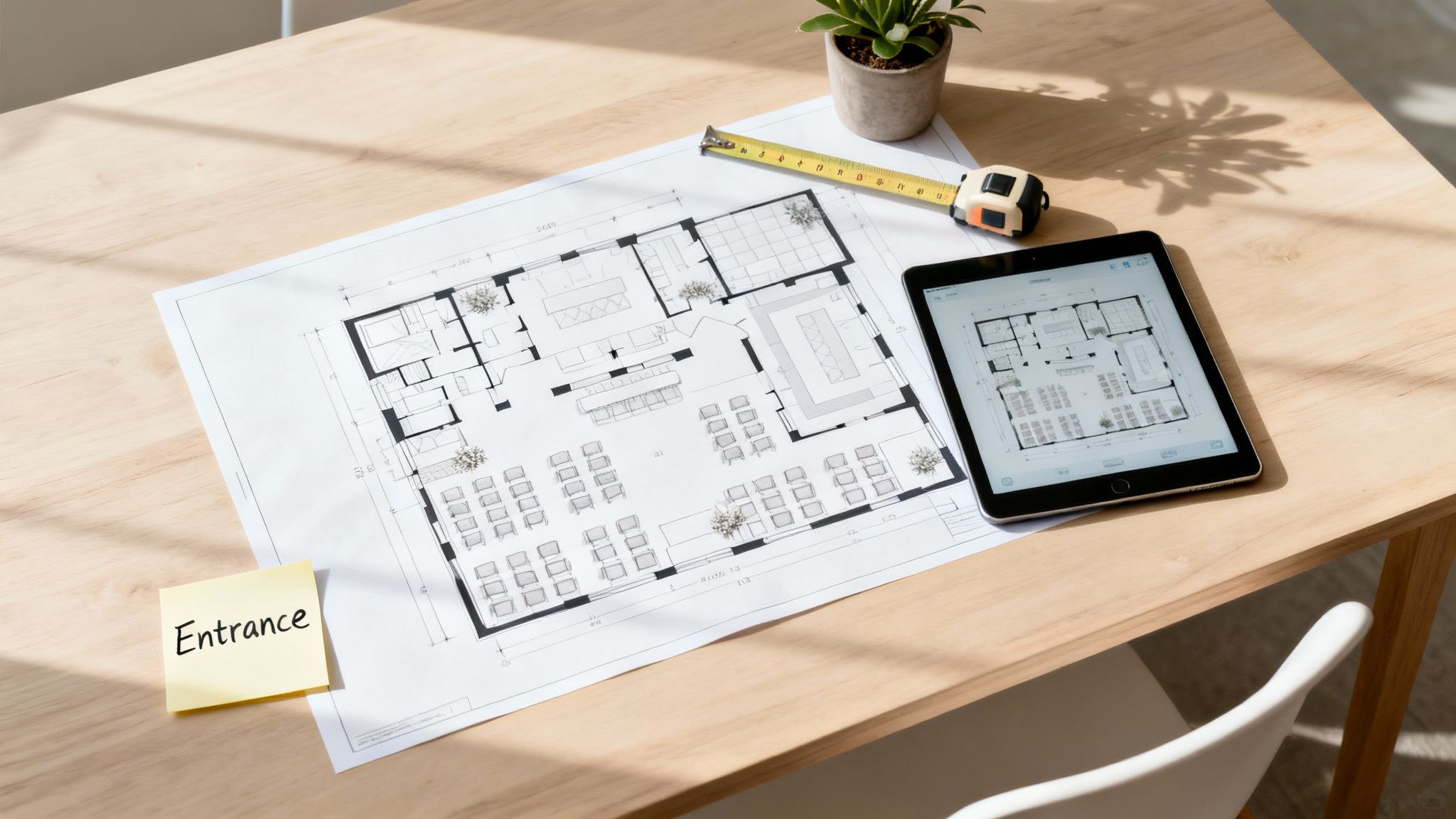
The Venue Setup and Layout Checklist is the critical link between selecting a physical space and delivering an exceptional guest experience. It translates the event's vision into a functional, safe, and engaging environment. This document governs the tangible arrangement of the space, ensuring every element from seating to signage is deliberately placed to optimise flow, comfort, and the achievement of event objectives.
A poorly executed layout can lead to logistical problems, from attendee bottlenecks and poor sight lines to safety hazards. This checklist ensures that the practical, physical setup of a venue is methodically planned and executed, leaving no detail to chance.
Key Components and Implementation
A comprehensive venue setup checklist meticulously details every physical aspect of the event space. The implementation process is both creative and highly technical, requiring precision from planning through to execution. A standard workflow includes:
- Floor Plan Creation: Develop a to-scale floor plan mapping out all key areas. This includes registration desks, seating arrangements (e.g., theatre, cabaret, banquet), stage placement, catering stations, and exhibitor booths.
- Traffic Flow and Egress: Plan attendee movement patterns to avoid congestion. Clearly define and signpost all primary walkways, service corridors, and, most importantly, emergency exit routes in compliance with venue regulations.
- Accessibility Arrangements: Ensure the layout is fully accessible. This involves checking for ramp access, adequate space for wheelchair navigation, accessible toilet facilities, and reserved seating areas.
- Placement of Technical Elements: Co-ordinate with AV suppliers to mark locations for speakers, projectors, screens, lighting rigs, and control desks. Ensure power sources are sufficient and safely managed. This is a vital step in transforming a space into an immersive environment; find out more about the different types of event venues in London and their technical capabilities.
- Signage and Branding: Map out the placement of all directional, informational, and branding signage for maximum visibility and impact, guiding guests seamlessly through their journey.
Expert Insight: Use digital floor planning software like SmartDraw or Social Tables to create and share dynamic layouts with suppliers and stakeholders. Before finalising, conduct a physical walkthrough of the empty venue with a measuring tape and your draft plan to verify dimensions, identify potential obstructions like pillars or low ceilings, and check sight lines from various audience perspectives. This prevents costly last-minute adjustments.
3. AV/Technical Checklist
The AV/Technical Checklist is a non-negotiable document for any modern event where technology plays a role. It addresses every aspect of audio, visual, lighting, and digital infrastructure, ensuring that the technical delivery is as polished as the content itself. From a simple microphone at a gala to the complex multi-camera broadcasts of a virtual summit, this checklist prevents technical failures that can undermine an entire event.
This document serves as the bridge between the creative vision and the technical team's execution. It translates requirements for sound, visuals, and connectivity into a concrete action plan, covering equipment specifications, crew roles, testing schedules, and crucial contingency plans. Neglecting this stage introduces significant risk, from poor audio quality to a complete presentation failure.

Key Components and Implementation
A detailed AV checklist should be developed in close collaboration with the venue's technical manager or a dedicated AV supplier like London Audio Visual Hire. It systematically addresses every potential technical point of failure. The process includes:
- Equipment Specification: List every piece of required hardware. This includes microphones (lapel, handheld), projectors, screens, laptops, cameras, lighting rigs, and speakers. Specify model numbers if necessary. For more in-depth information, you can explore this overview of what is audio-visual equipment.
- Connectivity & Power: Confirm Wi-Fi bandwidth and availability of hard-wired internet connections. Map out all power requirements and ensure sufficient, reliable sources are available for all equipment.
- Crew & Roles: Define the technical team needed. Specify roles such as sound engineer, lighting technician, camera operator, and overall technical director.
- Run-of-Show Integration: Create a technical run-of-show that aligns with the main event schedule. This document should detail every cue, from a presenter's walk-on music to specific lighting changes and video playback.
- Testing & Rehearsal: Schedule a full technical run-through, ideally 24 hours before the event begins. Test every microphone, presentation clicker, and video file to ensure seamless operation.
Expert Insight: Redundancy is your most important technical strategy. For mission-critical elements like the keynote speaker's laptop or the primary sound desk, always have a duplicate, powered-up, and ready to go. This principle of "two is one, and one is none" is a core tenet of professional event management checklists and can be the single factor that saves a presentation from disaster.
4. Registration and Check-In Checklist
The Registration and Check-In Checklist is the operational plan for managing an attendee's first physical or digital interaction with an event. It governs the entire intake process, from data capture and credential creation to the final on-site welcome. This checklist is critical because the check-in experience sets the tone; a seamless process creates a positive first impression, while a chaotic one can lead to frustration before the event has even begun.
This document ensures that every logistical detail of attendee arrival is meticulously planned. It covers the technology, staffing, workflow, and contingency plans needed to manage the flow of guests efficiently. By systemising this process, you guarantee accurate data collection for post-event analysis and ensure every attendee feels expected and valued from the moment they arrive.
Key Components and Implementation
A comprehensive registration checklist breaks the process down into pre-event, on-site, and post-event actions, ensuring nothing is left to chance. A typical workflow involves:
- Platform Selection & Setup: Choose a registration platform (e.g., Eventbrite, Splash) that suits your needs. Configure ticketing tiers, data capture fields, and automated confirmation emails.
- Credential Production: Plan the design and production of name badges, lanyards, or wristbands. Ensure data is correctly formatted for printing and establish a clear deadline for production well ahead of the event date.
- On-Site Logistics & Staffing: Design the physical layout of the registration area, creating clear signage for different queues like pre-registered and on-the-day sales. Schedule and train staff on the check-in software, data protocols, and troubleshooting common issues.
- Technology & Equipment Testing: A few days before the event, test all hardware under simulated load conditions. This includes scanners, printers, laptops, and the internet connection to identify and resolve any potential bottlenecks.
- Contingency Planning: Prepare for the unexpected. Have a manual, paper-based check-in list as a backup, extra staff on standby for peak periods, and a clear protocol for handling payment issues or unlisted guests.
Expert Insight: Implement a dedicated express lane for pre-registered attendees who have their QR code or ticket ready. This simple organisational step dramatically reduces queue times. Using mobile scanning apps on smartphones or tablets, rather than relying solely on fixed laptop stations, provides flexibility to reduce queues and get people through the door faster. This operational detail is a core component of effective event management checklists.
5. Catering and Food Service Checklist
The Catering and Food Service Checklist is an indispensable tool for managing one of the most memorable elements of any event. Food and beverage often account for a significant portion of the budget and have a direct impact on attendee satisfaction. This checklist governs the entire culinary experience, from initial supplier selection and menu tasting to on-the-day logistics and post-event cleanup.
A well-executed catering plan can elevate an event from good to exceptional, while poor planning can lead to dissatisfied guests and logistical problems. This checklist ensures every detail is considered, from accommodating complex dietary requirements to managing service staff and adhering to food safety regulations. It provides a structured framework for liaising with caterers for any type of event.

Key Components and Implementation
A comprehensive food service checklist is organised chronologically, guiding you from high-level decisions to minute-by-minute execution on the day. The typical workflow includes:
- Supplier Selection and Tasting: Shortlist potential caterers based on budget, style, and reputation. Schedule menu tastings at least 4-6 weeks before the event to finalise selections and assess quality.
- Menu Planning & Dietary Needs: Design a menu that reflects the event's theme and audience. Crucially, integrate a system to capture and track dietary requirements directly from your event registration platform to avoid errors.
- Logistics and Service Timeline: Confirm all logistical needs, including kitchen access, power requirements, and service areas. Establish a clear timeline for staff arrival, food preparation, service times, and bar opening/closing hours.
- Compliance and Safety: Verify the caterer's public liability insurance and food hygiene ratings. Ensure plans are in place for allergen management, such as using colour-coded utensils for different dietary needs to prevent cross-contamination.
- Final Numbers and Briefing: Provide the caterer with a guaranteed final headcount 7-10 days prior to the event. Conduct a final briefing with the catering manager to review the schedule, service flow, and key contacts.
Expert Insight: Integrate your dietary requirement data directly into your check-in process. When an attendee with a severe allergy scans their badge, a discrete alert can be sent to the catering manager and designated service staff. This proactive approach to allergen management is a critical feature of professional event management checklists and demonstrates an exceptional duty of care.
6. Marketing and Promotions Checklist
The Marketing and Promotions Checklist is the strategic engine that drives event awareness, ticket sales, and attendance. It acts as a comprehensive campaign plan that aligns all promotional activities towards a common goal. This checklist ensures that no channel is overlooked and that every communication is consistent, on-brand, and timed for maximum impact.
This document is essential for translating event goals into tangible results like registrations or leads. It provides a structured framework for a multi-channel strategy, co-ordinating efforts across email marketing, social media, public relations, paid advertising, and partnerships. Neglecting this organised approach often leads to a scattered marketing effort and a failure to build pre-event excitement.
Key Components and Implementation
A successful marketing checklist organises activities chronologically and by channel, creating a unified promotional timeline that builds momentum as the event date approaches. A typical workflow includes:
- Campaign Strategy & Messaging: Define the core event value proposition, key messages, and visual identity. Create a unique event hashtag and ensure it is used consistently across all platforms.
- Content Creation & Calendar: Develop a content plan including blog posts, videos, speaker interviews, and social media graphics. Schedule this content in a calendar using tools like Buffer or Hootsuite to ensure a steady stream of communication.
- Email Marketing Automation: Set up a multi-touch email campaign for invitations, reminders, and updates. A/B test subject lines and calls-to-action to optimise open and click-through rates.
- Partnership & Influencer Outreach: Identify and leverage speakers, sponsors, and industry influencers to promote the event to their networks. Provide them with a pre-made promotional kit to make sharing easy.
- Performance Tracking: Continuously monitor key metrics such as registration conversion rates, cost per acquisition (CPA), and channel effectiveness. Use this data to adjust tactics and reallocate budget to the best-performing channels.
Expert Insight: Begin promotional activities at least 8-12 weeks before the event for maximum reach. Create distinct monthly or fortnightly themes for your marketing, allowing you to focus on different aspects like speakers, content, or networking opportunities. This systematic approach is a core part of effective event management checklists and is vital for powerful brand activation.
7. On-Site Run Sheet and Day-of Operations Checklist
The On-Site Run Sheet is the master control document for the live event, a minute-by-minute script that dictates the flow of every action on the day. While pre-event planning sets the stage, this checklist ensures the performance is flawlessly executed. It is the single source of truth for the entire on-site team, synchronising catering, AV, speakers, and staff into a cohesive operational unit.
This document transforms strategy into real-time, co-ordinated action. From the first supplier arrival to the final guest departure, the run sheet documents precise timings, assigns clear responsibilities, and outlines contingency procedures. For complex events like awards ceremonies or live broadcasts, where timing is measured in seconds, a detailed run sheet is non-negotiable and is a core component of professional event management checklists.
Key Components and Implementation
A comprehensive run sheet is meticulously detailed, leaving no aspect of the event day to chance. It is a living document that guides the team through every critical moment. A typical workflow for its creation and use involves:
- Master Timing Schedule: Create a master timeline starting from crew call to final load-out. This should include everything from AV checks and speaker rehearsals to catering service times and session transitions.
- Role and Responsibility Assignment: Every line item on the run sheet must have a designated owner. For example, specify who cues the presenter, who operates the lighting changes, and who is the point of contact for catering.
- Contingency Planning: What happens if a speaker is late or a technical issue arises? The run sheet should include built-in buffer times and pre-agreed alternate sequences.
- Distribution and Briefing: Distribute the final run sheet to all key staff, suppliers, and stakeholders at least 24 hours in advance. Conduct a mandatory on-site briefing, ideally two hours before doors open, to walk through the entire schedule.
- Live Event Management: Identify a single point person (often the show caller or stage manager) responsible for managing the run sheet in real time. They will give the cues and make executive decisions if the schedule needs to adapt.
Expert Insight: Use a colour-coding system within your run sheet to visually separate departments such as AV, catering, security, and front-of-house. Print copies on waterproof paper or laminate them for durability. For critical moments where audio communication might fail, establish simple hand signals for key transitions, a technique borrowed from broadcast production that ensures the show goes on.
8. Vendor Management Checklist
The Vendor Management Checklist is the operational control centre for co-ordinating all third-party suppliers, from caterers and AV technicians to florists and security staff. It provides a structured framework for identifying, vetting, contracting, and managing every external partner whose services are integral to the event's success. Neglecting this area can lead to miscommunication, service failures, and budget overruns.
This checklist organises the entire supplier lifecycle, ensuring every touchpoint is managed professionally and systematically. It moves beyond a simple contact list to become a comprehensive management tool, covering everything from initial due diligence and contract negotiation to on-site co-ordination and post-event performance evaluation. For a large corporate conference with over 20 specialised suppliers, this document is essential for maintaining order and quality control.
Key Components and Implementation
An effective vendor management checklist is a dynamic document that evolves with the event timeline. It ensures clarity on deliverables, payments, and on-site logistics for all parties involved. A typical workflow includes:
- Selection & Vetting: Research potential suppliers, request detailed proposals, and check at least two recent references. A key step is verifying their public liability insurance is valid for the event date.
- Contracting & Onboarding: Issue clear, detailed contracts that specify the exact scope of work, deliverables, payment schedules, and cancellation terms. Once signed, onboard the supplier with key event information and a primary contact person.
- Logistics & Communication: Create a master supplier contact sheet with primary and backup contacts. Schedule a mandatory pre-event site visit or walkthrough 1-2 weeks before the event to finalise logistics, power requirements, and load-in schedules.
- On-Site Management: Establish a clear check-in procedure for all suppliers on the day. Provide them with a detailed briefing pack including a site map, schedule, and emergency contact information.
- Post-Event Evaluation: Conduct post-event debriefs with key suppliers to gather feedback. Use a simple performance scorecard to rate their service, which informs future hiring decisions and helps build a database of trusted partners.
Expert Insight: Before finalising any supplier contracts, establish a clear payment schedule linked to performance milestones. For example, structure payments as 40% on signing, 40% one week pre-event, and the final 20% contingent upon satisfactory completion of all contracted services. This approach incentivises high-quality service delivery and is a standard practice within professional event management checklists.
9. Safety, Security, and Compliance Checklist
The Safety, Security, and Compliance Checklist is a non-negotiable component of modern event management, tasked with safeguarding attendees, staff, and the event’s reputation. This document moves beyond logistics into the critical domain of risk management, addressing all legal, health, and security requirements. It is the framework that ensures an event is not only successful but also fundamentally safe for everyone involved.
From accessibility regulations to emergency response plans, this checklist ensures that potential hazards are identified and mitigated long before the doors open. Overlooking this stage can lead to severe consequences, including legal liability and reputational damage. It systematically addresses every facet of duty of care, from crowd control at a large festival to data security at a corporate conference.
Key Components and Implementation
A thorough safety and compliance checklist is built upon a proactive risk assessment and meticulous planning. The implementation process should be integrated into every stage of the event lifecycle, not treated as a last-minute addition.
- Risk Assessment and Mitigation: Identify all potential hazards relevant to your event type, such as trip hazards, fire risks, overcrowding, or technical failures. For each risk, outline specific mitigation strategies and a response plan.
- Regulatory and Legal Compliance: Systematically review and document compliance with all relevant legislation. This includes health and safety regulations, accessibility standards, and local authority licensing for alcohol or public entertainment.
- Emergency Response Planning: Develop clear, documented procedures for various emergency scenarios, including medical incidents, fire, or security threats. This plan must include evacuation routes, designated assembly points, and an established chain of command.
- Staff and Vendor Vetting: Verify that all staff have the necessary certifications (e.g., first aid, food handling) and that all third-party suppliers, from security firms to catering companies, hold adequate public liability insurance.
- On-Site Safety Briefings: Conduct a mandatory safety briefing for all staff, crew, and volunteers no more than 24 hours before the event begins. This ensures everyone is familiar with their roles, evacuation routes, and key emergency contacts.
Expert Insight: Your venue is your primary partner in compliance. Schedule a dedicated walk-through with the venue’s operations or safety manager specifically to discuss their in-built safety systems, fire marshal capacity limits, and emergency protocols. This collaborative approach ensures your event-specific plans align perfectly with the building's existing infrastructure, forming a core part of professional event management checklists.
10. Post-Event Wrap-Up and Follow-Up Checklist
The Post-Event Wrap-Up and Follow-Up Checklist is where the true return on investment for an event is realised. The conclusion of the physical event is not the end of the project; it is the beginning of a crucial phase focused on capitalising on momentum, measuring success, and gathering data to inform future strategies. Neglecting this stage is a common mistake that undermines all the hard work that came before.
This checklist provides a structured framework for all post-event activities, ensuring nothing falls through the cracks. It covers everything from timely attendee communication and supplier settlement to in-depth data analysis and strategic content repurposing. Executing this phase with precision is essential for demonstrating value, strengthening relationships, and transforming a one-off occasion into a long-term asset.
Key Components and Implementation
A well-organised post-event checklist ensures every action taken after the doors close is purposeful and efficient, turning raw event data into measurable outcomes. A typical workflow includes:
- Immediate Attendee Follow-Up: Send personalised 'thank you' emails within 24-48 hours. This communication should include links to key resources, such as presentation slides, video recordings, or photo galleries.
- Feedback Collection and Analysis: Distribute a feedback survey within three to five days while the experience is still fresh. Use this data to generate a detailed report on attendee satisfaction, content relevance, and venue experience.
- Financial Reconciliation: Finalise all payments with suppliers, venues, and contractors. Compile a comprehensive financial report comparing the final spend against the initial budget, noting any variances and their causes. This should be completed within two weeks.
- Team Debrief and Reporting: Conduct a post-mortem meeting with the entire event team and key stakeholders within one week. Discuss what worked well, what challenges were faced, and document key learnings to improve future events.
- ROI and Data Analysis: Analyse the final data against the initial goals set in the pre-planning phase. This includes metrics like lead generation, social media engagement, press coverage, and sales conversions attributed to the event.
Expert Insight: Systematically repurpose your event content to extend its lifecycle and marketing value. Edit session recordings into short, shareable clips for social media, compile key quotes into a blog post, and create a highlight reel for future event promotion. This content strategy transforms the investment in your event into a year-round marketing engine, making your event management checklists a tool for sustained brand engagement.
10-Item Event Checklist Comparison
| Checklist | Implementation complexity | Resource requirements | Expected outcomes | Ideal use cases | Key advantages |
|---|---|---|---|---|---|
| Pre-Event Planning Checklist | High – detailed, up-front work | Cross-functional team, PM tools, stakeholder time | Aligned objectives, budget, timeline and risk plan | Large conferences, festivals, corporate retreats | Prevents last-minute changes; establishes accountability |
| Venue Setup and Layout Checklist | Medium – technical spatial planning | Floor plans, site visits, design tools, planner/expert | Optimised attendee flow and space utilisation | Ballroom events, trade shows, weddings | Maximises comfort and safety; reduces spatial conflicts |
| AV/Technical Checklist | High – specialised technical setup | AV equipment, experienced tech crew, backups | Reliable presentations, seamless AV and hybrid capability | Keynotes, hybrid events, live broadcasts | Prevents technical failure; enables professional production |
| Registration and Check-In Checklist | Medium – operational and tech co-ordination | Registration platform, staff, kiosks/scanners | Efficient entry, accurate attendee data | Conferences, festivals, ticketed events | Reduces wait times; improves data collection |
| Catering and Food Service Checklist | Medium – supplier co-ordination, compliance | Caterers, menu approvals, dietary tracking, budget | Timely food service, dietary accommodations, food safety | Receptions, conferences, weddings | Enhances attendee satisfaction; supports inclusivity |
| Marketing and Promotions Checklist | High – ongoing creative and analytics work | Marketing team, budget for ads, content tools | Increased awareness, ticket sales, measurable ROI | Public events, launch events, ticketed conferences | Drives attendance and brand recognition |
| On-Site Run Sheet and Day-of Operations Checklist | High – minute-by-minute co-ordination | Dedicated ops staff, printed/digital run sheets, comms | Timely execution, clear role assignment, fast decisions | Live events, multi-session conferences, ceremonies | Keeps event on schedule; clarifies responsibilities |
| Vendor Management Checklist | Medium – contractual and logistical oversight | RFPs, contracts, insurance checks, co-ordination time | Reliable supplier delivery and documented performance | Multi-supplier productions, weddings, expos | Reduces disputes; ensures service quality and accountability |
| Safety, Security, and Compliance Checklist | High – legal and safety-critical tasks | Security staff, medical, permits, insurance, training | Minimised risk, regulatory compliance, emergency readiness | Large public events, festivals, high-risk gatherings | Protects people and reduces legal/financial risk |
| Post-Event Wrap-Up and Follow-Up Checklist | Medium – analytical and administrative work | Analytics tools, finance staff, content team | ROI insights, settled accounts, lessons learned | All events seeking improvement and ROI tracking | Extends event value; captures feedback and learnings |
Integrating Checklists into a Cohesive Event Strategy
The comprehensive event management checklists detailed throughout this article provide a powerful operational blueprint. However, their true potential is unlocked when they are viewed not as isolated documents, but as interconnected components of a single, cohesive event strategy. Simply downloading a template is the first step; the real work lies in customising, integrating, and treating these checklists as dynamic tools that evolve with your event.
A scattered approach, where different teams use different documents without a centralised vision, often leads to duplicated effort, miscommunication, and critical details falling through the cracks. The goal is to create a unified system where the marketing checklist informs the registration process, the venue checklist aligns perfectly with the AV technical brief, and the on-site run sheet becomes the master document that synchronises every moving part.
From Static Documents to Dynamic Strategy
The most successful event organisers treat their checklists as living frameworks. Before each new project, they revisit and adapt these templates, tailoring them to the unique goals, audience, and constraints of the specific conference, product launch, or gala. This process of continuous refinement is essential for growth and improvement.
Consider these actionable steps to elevate your use of event management checklists:
- Centralised Digital Hub: Move away from scattered spreadsheets and Word documents. Use a project management tool (like Asana or Trello) to house your checklists. This creates a single source of truth, allows for real-time updates, and provides clear visibility for all stakeholders.
- Assign Clear Ownership: Every item on every checklist must have a designated owner. This simple act transforms a passive list into an active accountability matrix. For instance, the ‘Confirm Speaker AV Requirements’ task on the technical checklist should be assigned to a specific technical director or project manager.
- Inter-Departmental Review: Before finalising your plans, hold a cross-functional meeting. Have the marketing team review the registration checklist, the operations team scrutinise the catering plan, and the technical team validate the run sheet. This collaborative process uncovers potential conflicts and dependencies that are easily missed in isolation.
Key Insight: An event management checklist is not merely a to-do list; it is a communication tool. Its primary function is to ensure that every team member, from the event director to the on-site technician, understands their responsibilities and how their tasks impact the entire project.
The Crucial Role of Specialist Partners
While these checklists provide an invaluable framework for your internal team, certain areas demand deep specialist expertise. This is particularly true for complex technical production. An AV checklist, no matter how detailed, is a starting point for a critical conversation with your technical partner, not a substitute for one.
An experienced production company uses such a document to probe deeper, asking crucial questions your team may not have considered. They will translate line items like ‘projector and screen’ into precise calculations involving lumen brightness, throw distance, screen material for ambient light conditions, and signal distribution. They turn ‘sound system for speakers’ into an acoustic plan involving speaker placement, microphone frequency co-ordination, and audio mixing for both the live and virtual audience.
By systematically applying and integrating these event management checklists, you are not just ticking boxes. You are building a repeatable, scalable, and resilient process for delivering exceptional events. This methodical approach fosters a culture of preparedness and calm control, empowering your team to manage challenges proactively and focus on what truly matters: creating an unforgettable attendee experience.
A detailed AV checklist is your first step towards technical excellence, but translating it into a flawless production requires specialist expertise. The project managers at London Audio Visual Hire use these same principles to design and execute robust technical solutions for London's leading events. Contact us to discuss how our team can bring technical certainty to your next event.


