
Effective exhibition stand design begins with strategy, not aesthetics. Before considering colour palettes or lighting fixtures, the primary focus must be on business objectives. A visually impressive booth that fails to deliver on commercial goals is an expensive misstep. The foundation of a successful stand is laid long before the first panel is constructed.
Laying the Strategic Foundation for Your Booth
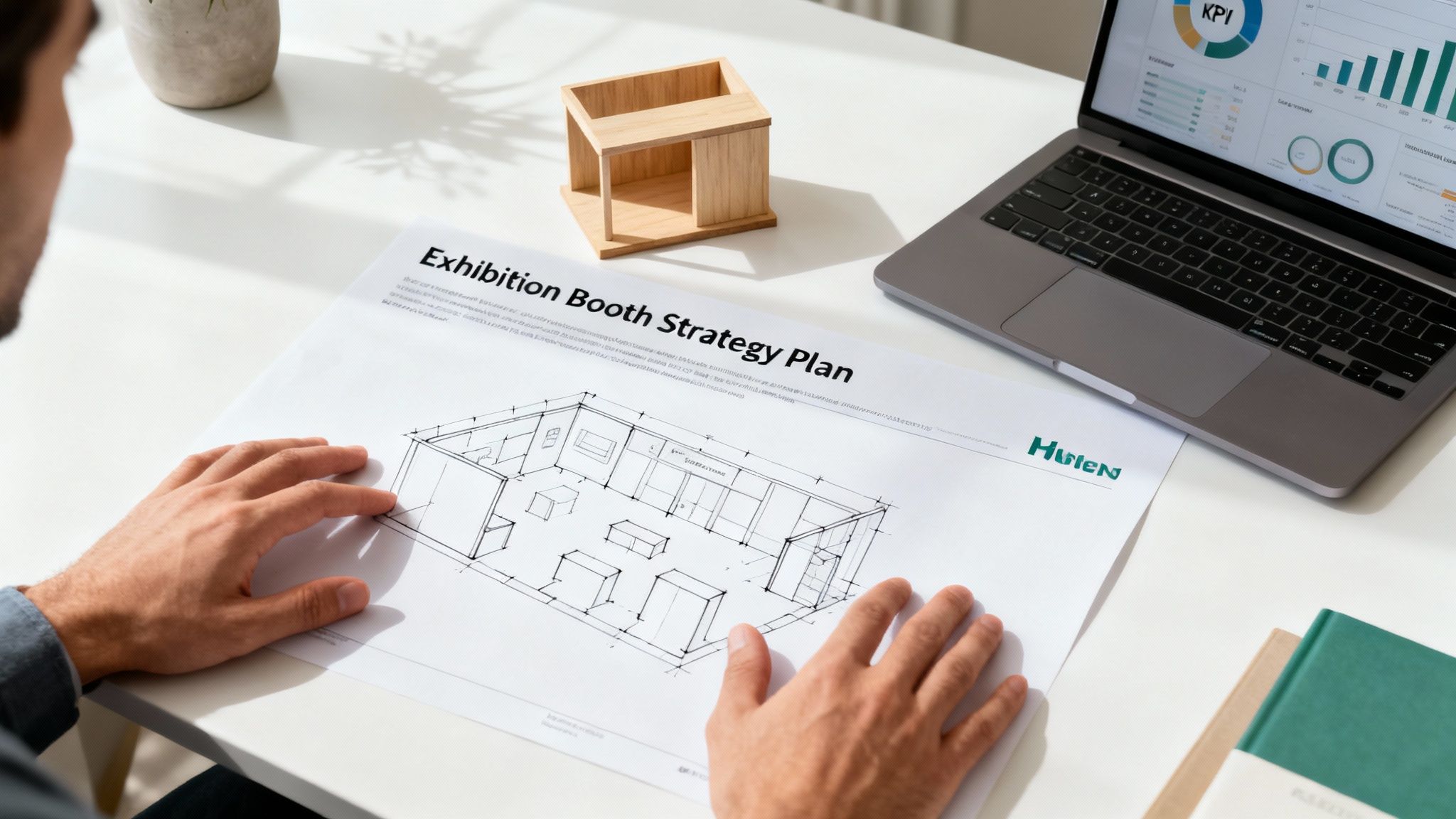
This initial stage is the blueprint for success. Every subsequent decision, from layout and graphics to technology integration, will build upon this groundwork. The process starts with a simple question: "What is our primary goal for exhibiting?"
The answer shapes every choice. Is the aim to generate qualified sales leads? Is it to launch a new product and create significant market impact? Or is the priority to engage with existing clients and strengthen relationships? Each objective demands a distinct approach to stand design and visitor flow.
Defining Your Core Objectives
Your main goals are the compass for the entire project. If lead generation is the priority, the stand design should incorporate prominent data capture stations, interactive screens to engage visitors, and a clear, compelling call to action.
Conversely, if the focus is on brand awareness, the design should create an immersive, memorable experience that encourages conversation and social media sharing. This is less about capturing data and more about generating a lasting impression.
Common objectives include:
- Lead Generation: The primary focus is capturing contact details from potential customers who fit an ideal profile.
- Brand Awareness: The aim is to make a statement, increase company visibility, and enhance recognition within the industry.
- Product Demonstration: The goal is to allow attendees to interact with products and understand their unique selling points.
- Networking: This requires dedicated spaces, such as a semi-private meeting area or a hospitality bar, for meaningful conversations with partners and key clients.
To provide context, the UK's exhibition industry hosted an estimated 1,016 exhibitions in 2023, attracting 6.92 million visitors. In a competitive environment, an undefined strategy is insufficient. A focused approach is essential to stand out.
Expert Tip: A common mistake is attempting to achieve too many objectives at once. Select one primary and one secondary goal. This clarity leads to better design decisions and ensures your message resonates with the target audience.
To translate your goals into tangible design considerations, the following framework can be useful.
Exhibition Booth Objectives Framework
| Objective Category | Key Performance Indicator (KPI) | Design & AV Implications |
|---|---|---|
| Lead Generation | Number of qualified leads captured; Cost per lead | Integrate tablet-based data capture forms or badge scanners. Use interactive touchscreens with lead-capture gates. Design a clear visitor journey that guides them towards a call-to-action point. |
| Brand Awareness | Social media mentions & engagement; Post-show brand recall surveys; Press & media coverage | Invest in large-format video walls displaying brand stories. Use dramatic architectural features and bold lighting to create a memorable look. Create a unique, shareable photo opportunity or an immersive experience. |
| Product Launch | Number of product demos conducted; Units pre-ordered or sold; Media & influencer briefing requests | Create dedicated product demo pods with focused lighting and sound. Use high-resolution screens to show the product in action. Ensure ample, secure storage for products and a well-lit display area that makes the product the hero. |
| Client Relationships | Number of meetings with key accounts; Renewal or upsell conversations initiated | Design a comfortable, semi-private meeting area with good acoustics. Include a hospitality element like a coffee bar or charging station to encourage longer conversations. Use subtle branding that feels premium and exclusive. |
This table helps bridge the gap between high-level business goals and the practical decisions required for design and AV integration.
Crafting a Comprehensive Design Brief
With clear objectives established, the next step is to create the design brief. This document is the single source of truth that aligns all stakeholders: the internal team, stand designer, builders, and AV partners.
A detailed brief prevents misunderstandings, last-minute changes, and budget overruns. It should explain not only what is required but also why, connecting every request back to the core objectives. When working on brand activations, a robust brief is often the difference between a good idea and a flawless execution.
Designing Your Space and Visitor Journey
With clear objectives, the focus shifts to translating them into a physical space. The most effective approach is to design an intuitive visitor journey rather than just a structure.
This journey begins before an attendee steps onto the stand. Analyse the event floor plan. Identify the main aisles and the likely direction of foot traffic. Your most important messages and eye-catching visuals must face these high-traffic sightlines.
The entrance should be open and inviting. A common error is creating barriers, such as a tall reception desk or cluttered display at the edge of the space, which can be intimidating. The design should subtly draw people in, encouraging exploration.
Structuring the Visitor Flow
An intelligent layout guides people from one key message to the next in a logical sequence. It tells a story. For example, an attendee might first see a striking welcome graphic, then be drawn towards an interactive product demo, and finally move to a quieter area for a detailed conversation.
Consider these proven layout concepts:
- Open Plan: This layout removes walls to create an accessible, visible space. It is ideal for encouraging browsing and is well-suited for brand awareness objectives.
- Zoned Layout: This approach creates distinct 'rooms' without walls, using flooring, lighting, or low partitions to define specific areas for demonstrations, meetings, or hospitality.
- Structured Path: This creates a defined route, ensuring visitors see key information in a specific order. It is highly effective for new product launches that require a step-by-step narrative.
A frequent mistake is the desire to fill every square metre. Negative space is a valuable design element. It provides room for visitors to move comfortably, prevents the stand from feeling claustrophobic, and creates a better environment for conversation.
Defining Zones with Purpose
Zones can be defined creatively. A simple change in flooring, such as from standard carpet to a wood-effect vinyl, can signal a shift from a public demonstration area to a more private meeting space.
Lighting is another powerful tool. Bright, focused spotlights can highlight a new product. In contrast, softer, warmer lighting can create a relaxed atmosphere in a seating area designed for longer conversations. At London Audio Visual Hire, we often use intelligent lighting systems that can adapt the mood throughout the day, shifting from a bright, energetic feel in the morning to a more relaxed tone for afternoon networking.
Every element on the stand must have a purpose that supports the visitor journey. For more inspiration on creating a memorable space, explore these fresh exhibition display ideas. The combination of smart spatial planning and creative design transforms a booth from a simple display into a felt experience.
Weaving Your Brand and Tech into a Seamless Experience
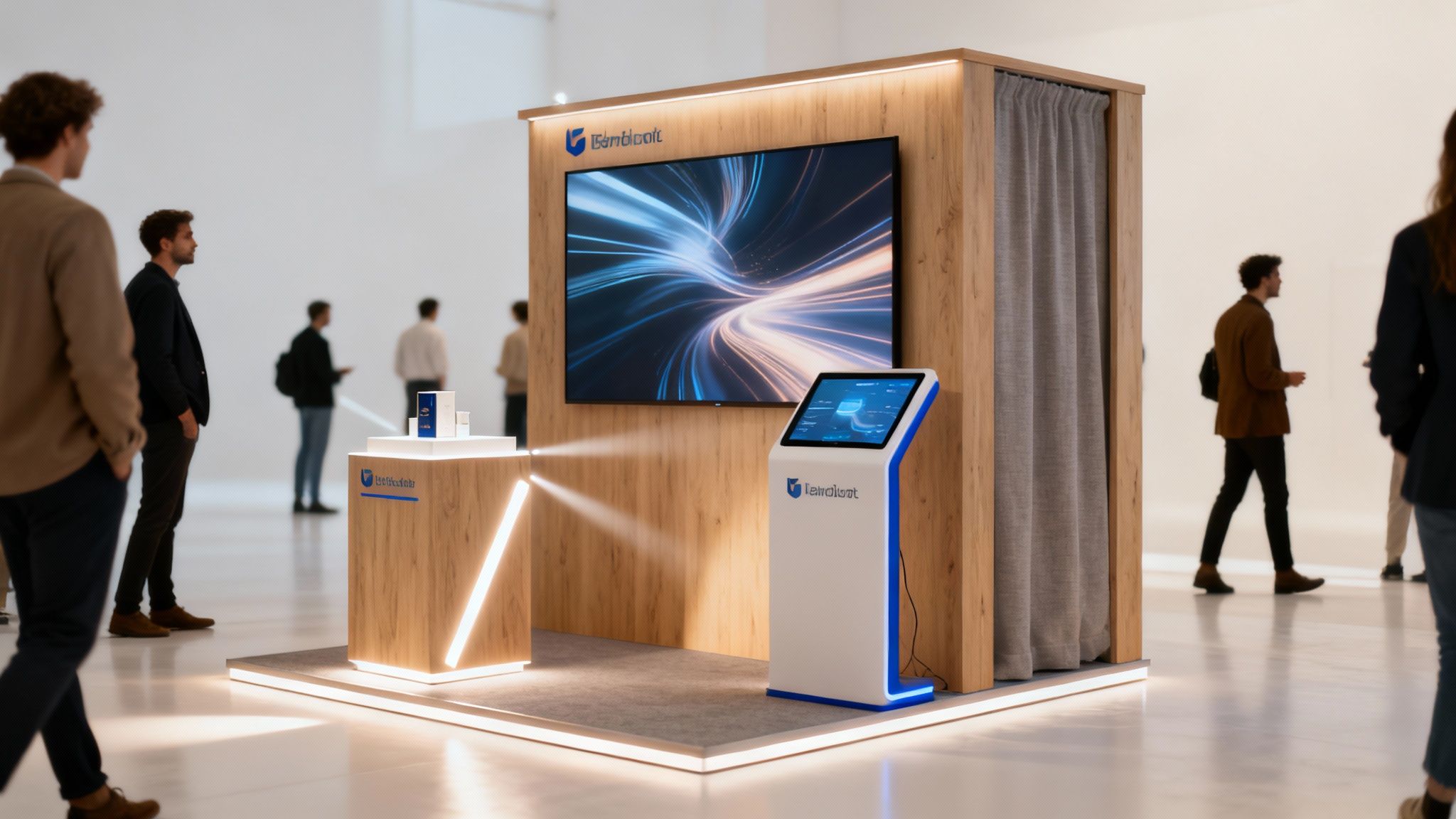
An exhibition booth should be a physical manifestation of your brand. The goal is to translate your company's identity, from its colour palette and typography to its overall tone, into a three-dimensional experience that connects with visitors.
This extends beyond placing a logo on a wall. Every material, texture, and finish should be deliberate and reflect your brand's values. For instance, a luxury brand might use polished metals and a minimalist design, while an eco-conscious business could use reclaimed wood and natural fabrics to convey its story non-verbally.
Using Audio Visual Tech to Turn Heads
Audio visual (AV) technology can elevate a stand from a static display to a dynamic brand platform. When chosen strategically, AV amplifies your core message, engages the senses, and makes your presence memorable in a crowded exhibition hall.
With trade shows in 2024 expected to feature an average of 153 exhibitors, differentiation is key. Interactive displays have been shown to increase visitor engagement by 50%, a significant advantage when 49% of CMOs view B2B events as crucial for reaching the 6.92 million people who visit UK exhibitions annually.
A common error is treating technology as an afterthought. AV must be integrated into the design from the outset. A video wall built seamlessly into the structure is far more professional and impactful than a standalone screen placed in front of a backdrop.
At London Audio Visual Hire, we specialise in creating these integrated experiences. When applied with a clear strategy, AV can transform passive observers into engaged participants.
The Best AV Tools for an Unforgettable Stand
Here are several technologies that consistently deliver results:
- Seamless Video Walls: For high-impact storytelling, large, vibrant video walls are unbeatable. Use them for cinematic brand films, product animations, or live social media feeds. Modern solutions like LED video walls are particularly effective.
- Interactive Touchscreens: These put visitors in control, allowing them to explore content at their own pace. They are ideal for self-guided product tours, detailed technical specifications, or quizzes that capture lead data.
- Directional Sound: This technology creates distinct audio zones on your stand. Focused speakers can create an immersive sound bubble for a product demo without disturbing conversations happening nearby.
- Strategic Lighting: The power of good lighting should not be underestimated. It sets the mood and directs attention. Use spotlights to highlight key products, wash walls in brand colours, or use animated lighting to create energy and draw attention from across the hall.
By blending your brand's physical presence with the right technology, you create a cohesive and powerful experience. This approach makes your message clearer, your products more desirable, and your stand a destination that people will remember. To better understand the equipment involved, see our guide on what is audio visual equipment.
With the space plan finalised, the next consideration is the physical construction. The choice of build method is a major decision, affecting budget, timeline, sustainability, and the final impression.
Fundamentally, there are three paths: bespoke, modular, or a hybrid of both.
A bespoke build is a one-of-a-kind creation designed from scratch. It offers complete creative freedom to build something unique that embodies your brand, featuring dramatic shapes and specific textures. The trade-offs are higher cost, longer lead times, and the fact they are often built for a single event.
Conversely, a modular stand is built from a pre-designed system of interlocking components. Its main advantage is flexibility; the same components can be reconfigured for different stand sizes and layouts. For companies exhibiting multiple times a year, it is a more sustainable and cost-effective long-term solution.
Finding the Sweet Spot: The Hybrid Approach
For many exhibitors, the optimal solution is a hybrid approach. This combines the benefits of both methods. A modular system can be used for the main structure, such as walls, flooring, and storage, which contains costs and speeds up construction. Custom-built features can then be added where they will have the greatest impact.
This could include a uniquely designed reception desk, a stunning product display, or an eye-catching entrance archway. It is an intelligent way to achieve a bespoke feel without the full bespoke price tag.
Sustainability is an increasingly important consideration. The demand for eco-friendly exhibition design is now a standard expectation, with exhibitors actively seeking reusable frameworks and recyclable materials.
This shift offers both environmental and financial benefits. Some suppliers now offer materials that can reduce construction waste by up to 40%. With 64% of annual exhibitions now prioritising modular stands for reuse, the trend is clear. This approach can cut costs by as much as 30% compared to a one-off bespoke build. As this booth design services report highlights, brands using innovative, reusable systems are not just saving money; they are seeing real sales growth.
A Quick Guide to Choosing Materials
When discussing materials with your builder, keep these practical points in mind:
- Durability vs. Weight: The stand must be durable enough to withstand shipping, assembly, and dismantling, yet light enough to keep transport costs manageable.
- Venue Rules: The exhibitor manual is a critical document. UK venues have strict regulations regarding fire safety and structural integrity. Your builder must use compliant materials to avoid serious issues on build day.
- The Look and Feel: Materials set the tone. Natural wood finishes can feel warm and sustainable. Sleek metals and high-gloss laminates create a modern, tech-focused impression. Ensure the finishes align with your brand story.
- Tech-Ready: All AV equipment requires power and data. The stand's structure must be designed to conceal cables and securely mount screens, lights, and speakers. Consult your AV provider early to ensure the design accommodates all technical requirements. You can see the type of equipment to consider in our extensive AV equipment inventory.
Managing Logistics From Workshop to De-Rig
A brilliant design for an exhibition booth is only half the battle. Flawless execution transforms a great concept into a show-stopping reality. Managing the process from fabrication to the final de-rig requires meticulous planning and coordination across multiple teams.
The process involves aligning designers with fabricators and specialist suppliers, such as AV technicians. A dedicated project manager is invaluable for keeping everything on track, managing budgets, meeting deadlines, and navigating the complexities of large UK exhibition venues.
The diagram below provides an overview of the main construction methods, which will heavily influence your logistical planning.
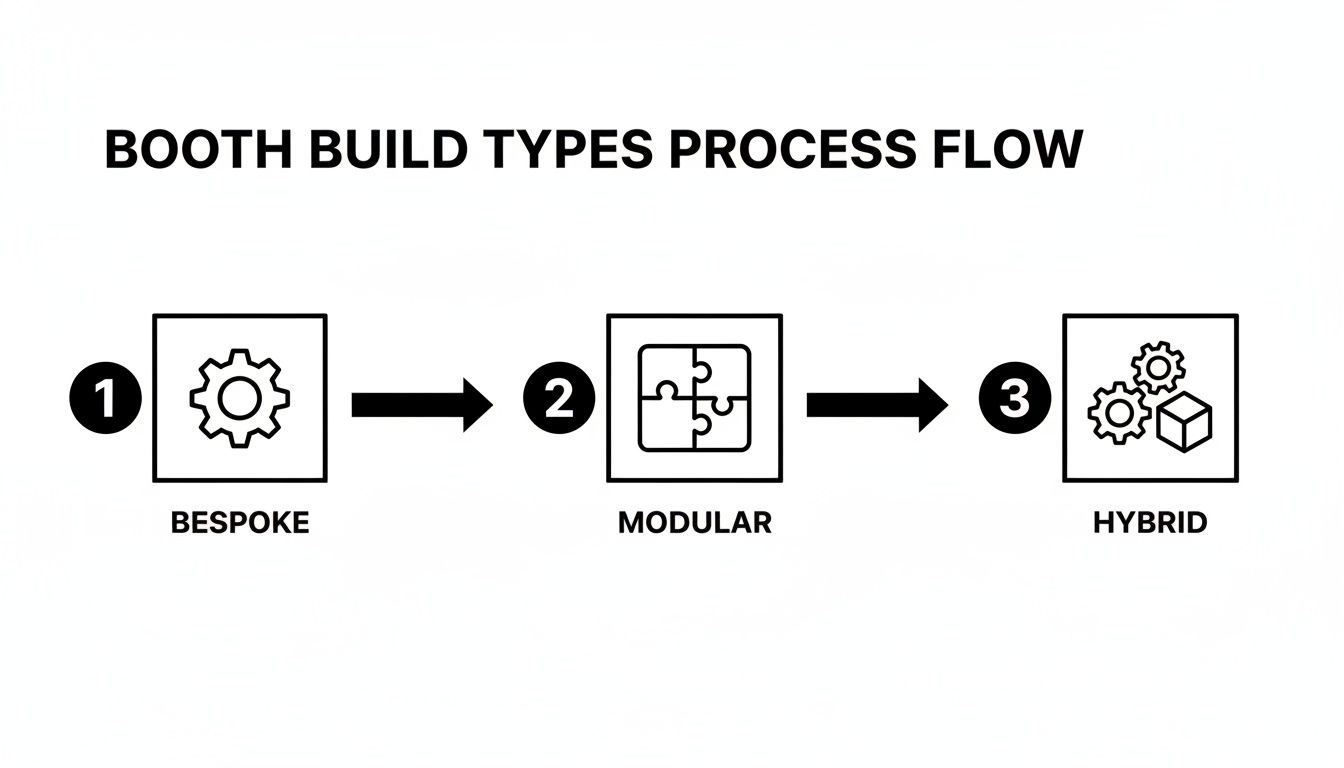
A fully bespoke build demands a different logistical approach compared to a modular or hybrid stand. Planning must reflect this.
Navigating Pre-Show Requirements
Long before transportation, a significant amount of paperwork must be completed. Event organisers require detailed plans and safety documents for approval before any construction can begin. Errors at this stage can lead to costly delays or refusal of permission to build on-site.
Typical submissions include:
- Health and Safety Plan: This includes your risk assessment and method statement (RAMS), explaining how the stand will be built and dismantled safely.
- Structural Calculations: For any complex or custom-built elements, an engineer's report is often required to prove stability and safety.
- Floor Plans and Visuals: Organisers must approve detailed drawings showing the layout, dimensions, and all electrical requirements.
Managing these submissions while coordinating suppliers and transport is challenging. An experienced partner like London Audio Visual Hire can manage this entire process, ensuring every detail is correct and submitted on time.
A common mistake is ignoring the exhibitor manual provided by the event organiser. This document is essential. It contains everything from required fire ratings for materials to specific times for vehicle access. Overlooking it can lead to significant problems on-site.
On-Site Build-Up and De-Rig
The installation phase, or build-up, is when all the planning comes to fruition. The environment is often chaotic, with a tight schedule for all exhibitors. An efficient build depends on smart scheduling, with different teams, such as structure, electrics, and AV, working in a logical sequence.
For instance, flooring must be laid before the main structure is erected. Electrical wiring must be run before the final graphic panels are fixed. A skilled on-site project manager is essential for resolving the minor issues that inevitably arise and preventing them from becoming major problems.
The de-rig, or dismantling process, is equally important but is often rushed. A methodical approach is key to protecting your investment. Modular components must be carefully disassembled and packed to avoid damage, ensuring they are ready for future use. This is also the final opportunity to conduct an inventory of all equipment, particularly high-value AV kit, before it returns to storage.
Common Questions About Exhibition Booth Design
Even the most well-planned projects can raise questions. Below are answers to some of the most common queries from marketing teams and event managers to help you avoid potential pitfalls.
How Far in Advance Should I Start Designing an Exhibition Booth?
For a custom-built stand, you should begin the process at least six to nine months before the event. This timeframe allows for proper strategy development, design revisions, fabrication, and logistical planning without last-minute pressure.
For a simpler modular stand, a lead time of three to four months may be sufficient. The main constraints are often booking specialist AV equipment and securing a build slot with fabricators, which are in high demand for major UK shows. Rushing the process invariably leads to compromises or increased costs.
What Are the Most Common Hidden Costs to Look Out For?
Several common expenses can impact your budget if not accounted for.
Pay close attention to quotes for the following:
- Venue Services: Power supply, internet access, and stand cleaning are charged by the venue, and these costs can be substantial.
- Material Handling: Often referred to as ‘drayage’, this is the mandatory fee the venue charges to transport your materials from the loading bay to your stand space.
- Last-Minute Changes: Requesting different graphics or an extra screen a week before the show will likely incur significant rush fees from your suppliers.
My best advice is to obtain a detailed quote from every supplier that clearly specifies what is and is not included. I always recommend clients allocate a contingency fund of 10-15% for unexpected on-site costs.
How Can I Make My Small Booth Stand Out?
With a small footprint, the key is to be clever and impactful. Focus on quality over quantity.
Think vertically. A tall, striking graphic or a simple hanging sign can significantly improve visibility across a crowded hall. Good lighting is also critical; it can make a small space feel bright, welcoming, and premium. Investing in one compelling piece of technology, like a large seamless video wall or an interactive touchscreen, can create a focal point that draws people in.
Finally, avoid clutter. A clean, uncluttered design with one clear message that can be understood in seconds is far more powerful than attempting to communicate too much at once.
What Health and Safety Regulations Do I Need to Consider?
Health and safety is a critical consideration at UK exhibitions. You must submit a full risk assessment and method statement (RAMS) for your stand build, outlining all potential hazards and the measures in place to manage them.
Other mandatory requirements include structural stability, the use of certified fire-retardant materials for all components (including graphics), and electrical safety. All electrical equipment must be PAT tested. Your design must also comply with the emergency access routes shown on the venue's floor plan.
Partnering with an experienced team ensures every aspect of your booth, from the initial design to the final on-site execution, is handled with precision and care. For expert support with your next project, contact London Audio Visual Hire to discuss how we can bring your vision to life. Learn more at https://londonaudiovisualhire.co.uk.