

Planning a corporate event in London is unlike planning one anywhere else. You are working in one of the world's most vibrant, but also most demanding, cities. This guide is your roadmap, built from on-the-ground experience, to help you navigate London's unique landscape. We will show you how to deliver conferences, awards nights and brand activations that are not just successful, but genuinely memorable.
The Art of Planning Corporate Events in London
Executing a successful corporate event in London is a balancing act. It requires creative flair, robust planning and a deep understanding of the city's dynamics. London offers incredible, iconic venues and top-tier suppliers, but it also presents logistical challenges that can catch even seasoned planners off guard. Every decision, from selecting a historic venue to managing technical production, shapes the final experience.
This is not just another checklist. We will explore practical, actionable strategies that work specifically for the London market. Let us examine what it really takes to elevate a standard corporate gathering into a truly special occasion.
Core Pillars of a London Event
A successful event is built on several key pillars working in unison. If one is weak, the entire structure can feel unstable. A coordinated approach is essential from the outset.
- Strategic Venue Selection: This is your foundation. The space you choose must align with your brand, budget and practical requirements.
- Flawless Technical Production: Your message must be delivered perfectly. This means crystal-clear audio, dynamic lighting that sets the mood and reliable live streaming.
- Robust Logistical Management: Moving people, equipment and suppliers around a city like London requires meticulous coordination, encompassing transport, permits and schedules.
- Creative and Thematic Execution: This involves creating an atmosphere. The goal is an engaging environment that resonates with guests long after they have left.
Props and décor are crucial for bringing your theme to life. A complete guide to sourcing props for events can be a significant help in transforming a blank space into an immersive world. Knowing how to integrate these elements is what makes an event truly exceptional. Throughout this guide, we will provide the insights needed to manage each component with confidence.
Understanding London's Corporate Event Scene
London is not just a city; it is a global business hub. This status directly influences its corporate event market, creating one of the most dynamic and demanding environments in the world. The city's excellent infrastructure, from the Tube network to its vast supply of high-quality hotels and venues, acts as a magnet for major corporate gatherings. This blend of prestige and practicality means demand is consistently high.
That high demand creates a fiercely competitive, fast-moving landscape. To deliver a successful event here, you need to understand the city's unique rhythm. A failure to do so can quickly lead to challenges with venue availability, supplier schedules and budgets that are stretched too thin.
The Impact of Intense Market Demand
The sheer number of events happening across London at any given time places a significant strain on resources. This affects the entire supply chain, not just venues. AV technicians, catering crews, security teams and transport providers are often booked months, sometimes even a year, in advance.
This level of competition means you must plan ahead and be decisive. Last-minute requests are difficult to accommodate and usually come at a premium. This is where building solid relationships with local suppliers pays dividends. A trusted production partner, like London Audio Visual Hire, has the on-the-ground knowledge to navigate the market and secure the resources you need for a seamless event.
Understanding the competitive pressure is the first step to managing it. Proactively booking your venue and key suppliers is not just advisable, it is essential for achieving your objectives in London.
Navigating Peak Periods and Mid-Week Pressure
London's event calendar has distinct high and low seasons. While the city is always busy, demand skyrockets during certain periods, such as the run-up to Christmas or during major industry conferences. The most consistent pressure, however, comes from the mid-week rush that defines the corporate world.
It is a familiar pattern: Tuesdays, Wednesdays and Thursdays are prime time for corporate events. This concentration creates a bottleneck for suppliers who are often managing back-to-back events with tight turnarounds. To put this in perspective, a recent industry analysis showed that London attracted around 30% of all UK event enquiries in 2024. The same data confirmed the mid-week squeeze, with Wednesday (25%), Thursday (24%) and Tuesday (23%) being the most requested days. You can explore more about these event industry trends and what they mean for planners.
This mid-week crunch has several direct consequences for anyone planning corporate events in London:
- Reduced Availability: The best venues and top-tier technical crews are booked first during these peak times.
- Increased Costs: With demand so high, some suppliers may charge a premium for mid-week bookings.
- Logistical Complexity: Tighter schedules for transport, setup and breakdown mean coordination must be precise to avoid delays.
Simply being aware of this weekly cycle can help you plan more effectively. If you have flexibility, booking your event for a Monday or a Friday can open up more options, often with better availability and more competitive rates. It is a simple strategic shift that demonstrates an understanding of the London event scene.
How to Select the Right London Venue
Choosing the right venue is arguably the most critical decision you will make when planning a corporate event in London. It is about much more than a postcode. The space you select sets the tone, defines your logistical framework and creates the backdrop for the entire guest experience. Think of it less as a location and more as a strategic partner, one that needs to be perfectly aligned with your brand, technical requirements and objectives.
A great choice involves more than scrolling through a list of options. It is about systematically assessing how a venue’s unique character supports your specific goals.
For example, a magnificent historic livery hall in the City of London conveys prestige, making it ideal for a black-tie awards dinner. The challenge, however, is that its listed status could present significant logistical hurdles when loading in a large stage set or complex AV equipment.
Conversely, a purpose-built conference centre near Canary Wharf offers the latest technology and straightforward accessibility. It is perfect for a multi-day conference but might lack the unique character needed for a creative brand launch. The skill lies in matching the venue’s strengths to your event's purpose.
Aligning Venue Type with Event Objectives
Every corporate event has a different mission, and London's incredible variety of venues reflects this. The first step is to be clear about the type of event you are running. Getting this right narrows your search and prevents you from forcing a venue to fit a purpose it was not designed for, which only leads to friction and a compromised guest experience.
Here are a few classic pairings to consider:
- Conferences and Seminars: Modern conference centres or large hotels with dedicated business suites are usually the best choice. They are built for this purpose, with breakout rooms, integrated technology and reliable connectivity.
- Gala Dinners and Awards Ceremonies: Think grand. Historic buildings, museums or exclusive-use manors lend a sense of occasion that makes the evening feel special.
- Product Launches and Brand Activations: A blank canvas is often required. Galleries, studios or unique industrial spaces provide the creative freedom to build an immersive world around your brand.
- Team-Building and Away Days: Be creative. Venues like sporting stadiums, private boats on the Thames or interactive spaces create a more memorable and engaging atmosphere than a standard meeting room.
The most effective approach is to define your non-negotiable requirements before you start your search. Knowing your exact capacity, technical needs and desired atmosphere will save considerable time and ensure your final choice is a genuine asset.
Analysing Critical Selection Factors
Once you have a shortlist, it is time to look deeper. Move beyond the glossy photographs and scrutinise the practical details that will determine your event's success. In a city as dense as London, the logistical reality of a venue is just as important as its aesthetic.
A detailed checklist is your best tool here. By scoring each potential space against the same set of criteria, you can make a fair, objective comparison. This helps you make a decision based on data, not just an initial impression.
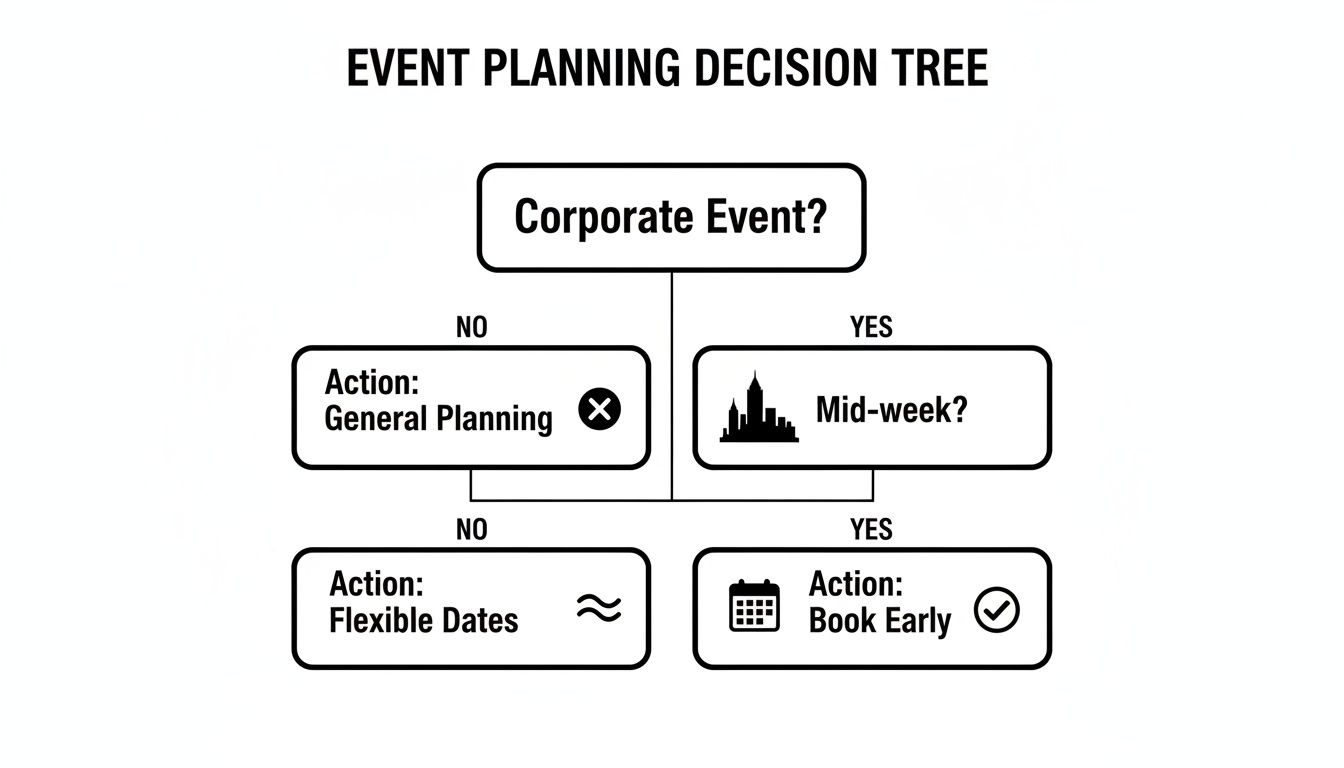
This decision tree highlights a crucial point about the London market: mid-week corporate events are incredibly popular, so booking well in advance is not just a good idea, it is essential.
To help you stay organised, we have put together a checklist to guide your evaluation process.
London Venue Selection Checklist
This table provides a structured way to assess potential venues, ensuring you cover all the critical factors specific to hosting an event in London.
| Criteria | Key Considerations for London Venues | Why It Matters |
|---|---|---|
| Location & Accessibility | Proximity to Tube/train stations, major roads and airports. Is there parking? Is the entrance clearly signposted and accessible? | In London, travel time is a major factor. A convenient location reduces guest stress and can improve attendance. Poor access can be a deal-breaker. |
| Capacity & Layout | Does the seated/standing capacity fit your guest list comfortably? Does the layout suit your agenda (e.g., breakout rooms, reception area)? | You need a space that feels full but not cramped. The right layout allows for a natural flow of people and activities throughout the event. |
| Technical Infrastructure | In-house AV quality, Wi-Fi speed and capacity, power supply availability and rigging points for lighting/sound. | Weak Wi-Fi or insufficient power can disrupt a presentation. Understanding the technical capabilities upfront prevents costly last-minute hires. |
| Logistics & Access | Loading bay access (size and times), lift availability, storage space for equipment and supplier restrictions. | A historic venue might have a small lift and a two-hour loading window. These logistical constraints directly impact your setup and breakdown schedule. |
| Licensing & Restrictions | Alcohol and entertainment licences, noise level restrictions (especially in residential areas) and curfews. | Being caught out by a noise restriction or an early curfew can bring your event to an abrupt and unprofessional end. |
| Brand Alignment & Vibe | Does the venue’s architecture, interior design and reputation match your company’s brand and the event's tone? | The venue is a physical extension of your brand. A sleek tech launch feels out of place in an ornate hotel ballroom. |
Using a checklist like this ensures you are making a like-for-like comparison, making your final decision much clearer and more confident.
The Value of Venue-Specific Knowledge
A simple truth of event planning in London is that no two venues are the same, especially regarding technical specifications. A modern hotel likely has straightforward loading bays and ample power. A Grade II listed building, however, may have strict access times, sound limiters and protected architectural features that cannot be altered.
This is precisely where an AV partner with direct, on-the-ground London experience becomes invaluable. A team that knows the specific characteristics of different locations can identify potential problems well in advance.
To see what we mean, you can explore some of our partner London Audio Visual Hire venues and get a sense of how expert knowledge can unlock a location's true potential. A thorough site survey from an experienced professional can identify issues that could become expensive problems on show day.
Mastering AV and Technical Production
Excellent audio-visual production is the element that transforms a standard corporate event into a memorable experience. It is the invisible framework that ensures your message is heard, your brand is presented professionally and your audience is fully engaged from start to finish. For anyone planning corporate events in London, the technical side can seem complex, but understanding the basics is key to delivering a successful event.
Be clear: great AV is much more than plugging in a microphone and a projector. It is a finely tuned discipline, blending technology with creativity. It means designing a sound system that delivers every word with perfect clarity to the back of the room, using lighting to completely change a venue's atmosphere and ensuring every video on screen looks sharp and professional.
The Core Components of Event Production
To understand the process, it helps to break technical production down into its main components. Each element has a specific function, but they must all work in harmony to create a polished, cohesive experience. A professional AV team integrates all these elements flawlessly.
-
Audio Reinforcement: This ensures every word from a speaker is crystal clear, whether the audience is 50 or 500. It involves selecting the right microphones, positioning speakers for even sound coverage and expertly managing levels to avoid feedback.
-
Lighting Design: Lighting is not just for illumination; it is for creating atmosphere and directing attention. With intelligent lighting, you can feature your brand colours, spotlight presenters and build excitement for an awards ceremony or product launch.
-
Video and Display: From high-resolution LED walls forming a conference backdrop to strategically placed screens for breakout sessions, visuals are a key component. This area covers managing all video feeds, checking for compatibility and ensuring playback is perfect every time.
-
Live Streaming and Hybrid Elements: To reach an audience beyond the venue, broadcasting your event online is the solution. This requires a robust internet connection, multiple cameras to create a dynamic viewing experience and a production crew to professionally mix the live feed for your remote audience.
Understanding the audio-visual equipment needed for each of these functions is the first step in effective technical planning. A specialist supplier can guide you through the options, from a basic PA system for a small meeting to a complex, multi-screen setup for a major conference.
Why Early Technical Planning Is Crucial
Engaging your technical partner early in the planning process is one of the most effective decisions you can make. It guarantees a smoother event and helps you avoid expensive, last-minute issues. Arranging AV at the eleventh hour is a recipe for stress and can compromise the quality of your entire event. Early collaboration allows for a much more strategic approach.
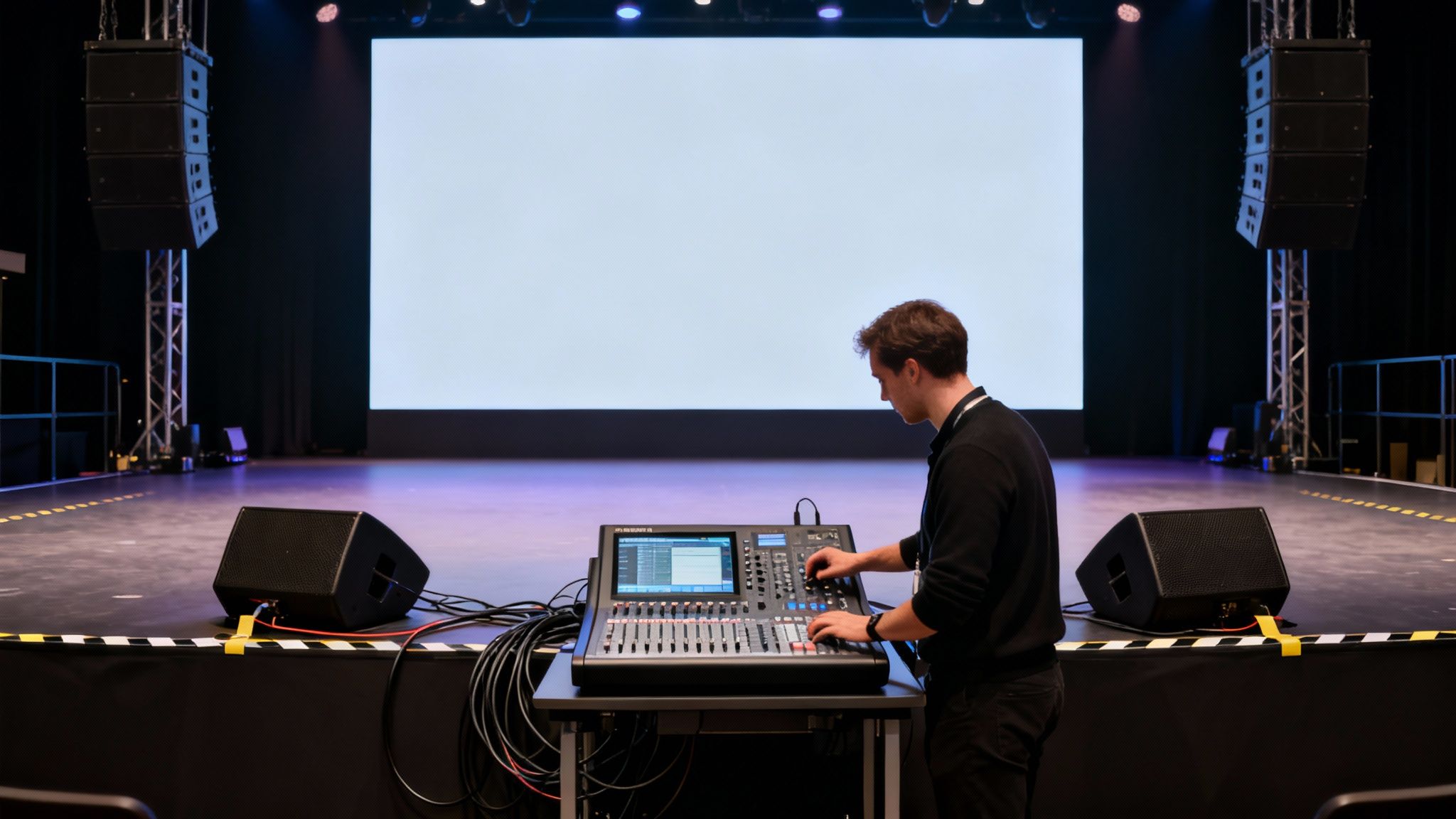
A technical site survey is a critical first step. This is where an experienced production manager, from a company like London Audio Visual Hire, will visit the venue with you. They will check everything from the power supply and its distribution to potential rigging points for hanging lights and speakers. They can identify logistical challenges, like a difficult loading bay in a historic building, long before they become a problem on the day.
This proactive planning also covers the vital area of health and safety. Professional event production relies on detailed risk assessments and method statements (RAMS). This documentation ensures all equipment is installed and operated safely, covering everything from tidy cable management to certified rigging for any suspended equipment.
A detailed technical plan, developed in partnership with your AV supplier, is your blueprint for a flawless event. It turns assumptions into certainties and allows you to focus on your guests, confident that the technical execution is in expert hands.
The UK's event planning market has seen significant growth, with industry revenues projected to reach approximately £2.4 billion in 2025. This growth has been matched by a shift in client expectations: more technology-led, experiential events with a focus on sustainability. As a result, AV suppliers now need to offer energy-efficient LED lighting, robust streaming platforms and certified rigging to meet modern ESG and safety standards. You can read more about these evolving market demands.
Ultimately, mastering the technical side of corporate events in London is about partnership. By teaming up with a knowledgeable and well-equipped supplier, you gain the expertise needed to handle the city’s unique venues and deliver a technically perfect event that achieves all your goals.
Navigating London Event Logistics and Regulations
The true test of a corporate event in London is not always what happens in the main room; it is often determined in the loading bay. Understanding the city's unique logistical and regulatory landscape is not just advisable, it is an absolute necessity. Overlooking these details can lead to costly delays, compliance issues and significant stress on the day.
Proper logistics management is more than just moving equipment. It is about having a deep understanding of London’s urban environment, from navigating traffic restrictions to working around the charming, but often challenging, quirks of historic venues. A team with local knowledge can anticipate these hurdles, making sure every piece of equipment and every crew member arrives safely, on time and ready to work.
Managing London’s Transport and Access Challenges
Simply getting production equipment into Central London can be a major challenge. The city’s complex system of charges and restrictions, designed to manage traffic, can easily catch out event transport. Your production vehicles need to navigate both the Congestion Charge zone and the Ultra Low Emission Zone (ULEZ), which have different rules, different operating times and significant penalties for non-compliance.
Beyond road charges, the physical act of accessing the venue presents its own puzzle. A modern conference centre might have a spacious loading bay, but a Grade II listed building in the City could have a single, small entrance with a strict time slot shared with other tenants. This is where meticulous planning is essential.
Here are a few practical considerations you will need to manage:
- Vehicle Size and Route Planning: Many of London's roads have strict size and weight limits. This means you cannot simply enter the venue's postcode into a satellite navigation system; you must plan the route carefully for larger production trucks.
- Parking Suspensions: On-site parking is a rare luxury. You will almost certainly need to arrange for parking bay suspensions with the local council to load and unload. This requires an application and a fee, well in advance.
- Timed Load-ins: Most venues will provide a specific time slot for deliveries to avoid congestion. Missing your window can disrupt the entire production schedule.
A seasoned, London-based supplier will have this local knowledge integrated into their process, pre-empting problems that a company from outside the city might not anticipate.
Upholding Health, Safety and Regulatory Compliance
Compliance is the absolute foundation of any professionally run event. In the UK, organisers have a legal duty of care to ensure the safety of attendees, staff and all contractors. This responsibility cannot be delegated; it requires hands-on management and robust documentation to demonstrate due diligence. A failure in this area can have severe legal and financial consequences.
Everything starts with a thorough risk assessment. This document systematically identifies potential hazards at your event, from cables creating a trip hazard to the structural safety of the stage, and clearly states how you will manage and control those risks.
A robust risk assessment is not just a box-ticking exercise. It is a live document that demonstrates a professional commitment to safety and forms the basis of a safe and successful event.
Here are the key documents you will need to have in order:
- Risk Assessments and Method Statements (RAMS): These detail how high-risk tasks, such as working at height or managing complex electrical setups, will be performed safely.
- Public Liability Insurance: Almost every London venue will require proof of your public liability cover, usually for a minimum of £5 million, before granting access.
- PAT Testing Certificates: Every piece of electrical equipment brought into the venue must have a valid certificate to prove it has been tested and is safe to use.
If you are running a hybrid event with an online audience, your compliance duties extend into the digital realm, covering data protection and cybersecurity. Understanding the details of secure hybrid event streaming is vital for protecting your attendees' information. For a deeper look at guest safety and compliance, resources on security for event hire can be very helpful.
Ultimately, correctly handling these logistical and regulatory demands is what separates a polished, professional production from an amateur one.
Building Your Event Budget and Timeline
Your budget and timeline are the two essential pillars supporting your entire event. If they are well-planned, you have a solid foundation for success. If they are not, even the most brilliant concept can fail under the pressure of unexpected costs and last-minute disorganisation. For any corporate event in London, a disciplined approach to finances and scheduling is non-negotiable.
Creating a budget for a London event is about more than listing expenses; it is about understanding the city's unique financial landscape. While you have the usual costs like venue hire and catering, the amounts can differ significantly. Have you factored in the Congestion Charge and ULEZ fees for every supplier delivery? What about crew parking? That alone can become a substantial line item if not planned for.
A proper budget gives you the control needed to realise your vision without financial stress. It is what transforms a great concept into a flawlessly executed reality.

Key Budget Components for London Events
To keep things manageable, break your budget down into clear categories. This makes it easier to track spending and identify opportunities for efficiency. For any event in the capital, your cost centres will likely include:
- Venue Hire: This is typically the largest expense. It covers the main space, any breakout rooms and the venue’s service charges.
- Catering (F&B): This includes everything from morning coffee to evening canapés, plus the staff required to serve them.
- Technical Production: This covers all audio-visual equipment from a partner like London Audio Visual Hire, staging, lighting and, crucially, the skilled crew and transport to make it all work.
- Staffing and Talent: This covers your event managers, security, hosts and any special guests like speakers or entertainers.
- Marketing and Promotion: The budget for your event website, invitations, on-site signage and any associated advertising.
- Contingency Fund: This is absolutely vital. I recommend setting aside 10-15% of your total budget for unexpected costs. Something will almost always arise, and this buffer is your safety net.
The UK's business events sector is substantial. The latest analysis valued it at £33.6 billion, with conferences and meetings accounting for £16.3 billion of that total. This indicates the scale of the industry and why professional execution is so important. If you are interested in the data, you can discover more research on the UK business events sector to get a feel for the market.
Creating a Realistic Production Timeline
Working in tandem with your budget is the production timeline. This is your roadmap, plotting out every step from the initial brief to the post-event debrief. A good timeline prevents tasks from being forgotten, helps you manage supplier deadlines and keeps everyone aligned.
A timeline is not just a list of dates; it is a strategic tool that builds momentum and ensures every element comes together in the right sequence, at the right time.
For a typical mid-sized corporate event, the timeline might follow a structure like this, outlining the major milestones and how far in advance you should be thinking about them:
| Timeframe | Milestone | Key Actions |
|---|---|---|
| 9-12 Months Out | Strategy & Venue | Define your goals, finalise the budget and book your venue. |
| 6-8 Months Out | Supplier Engagement | Appoint your key partners, especially your AV production company. |
| 3-5 Months Out | Content & Design | Finalise the agenda, book speakers and sign off on technical designs. |
| 1-2 Months Out | Logistics & Promotion | Confirm all transport and access details; launch your promotional campaign. |
| 2-4 Weeks Out | Final Preparations | Conduct final site visits and technical walkthroughs at the venue. |
| Event Week | Execution | Run final technical rehearsals, deliver the live event and manage the breakdown (de-rig). |
Following a framework like this helps you stay ahead of the curve, managing the process proactively instead of constantly reacting to problems. By bringing in experienced suppliers early, you are not just hiring equipment; you are gaining their expertise, which is invaluable in building a plan that is both ambitious and achievable.
Got Questions About London Events? We've Got Answers
Running a corporate event in London for the first time? It is natural to have questions. We have years of direct experience, so here are some straightforward answers to the queries we hear most often.
How Far Ahead Should I Book My Venue and AV Team?
As soon as possible. For the most sought-after corporate event venues in London, you need to be securing your date 9-12 months in advance. This is especially true if you are planning an event for the busy spring, autumn or pre-Christmas seasons when availability is limited.
Once your venue contract is signed, your next call should be to your technical partner. Engaging your AV production supplier around 6-8 months out is ideal. This gives them ample time to inspect the venue, design a technical setup that is right for the space and secure the best equipment and crew for your event.
What are the Sneakiest Hidden Costs of London Events?
London is a fantastic city, but it has its complexities, and those can become expensive if you are not prepared. A solid plan is your best defence against budget overruns.
Keep a close eye on these common factors:
- Transport Fees: Do not forget the Congestion Charge and ULEZ. These apply to every single supplier vehicle entering the zone, and those costs can add up quickly.
- Crew Parking: On-site parking in central London is extremely rare. You will likely need to budget for council parking suspensions or an off-site solution.
- Tight Timings: Many venues, particularly historic ones, have very strict rules about load-in and load-out times. A tight schedule could result in overtime costs for your crew.
- Venue Quirks: A beautiful listed building might have power limitations or specific rules about rigging. Discovering these late in the process can mean hiring extra generators or specialist equipment you had not budgeted for.
The single best way to avoid these surprises is a professional technical site survey. It allows your AV team to identify potential issues months in advance and plan for them, rather than dealing with them on event day.
Is Public Liability Insurance Really Necessary?
Yes, absolutely. You will find that virtually every professional venue in London will require proof of Public Liability Insurance before granting access. The standard minimum cover they expect is usually £5 million or £10 million.
While any reputable supplier (like us at London Audio Visual Hire) will have their own insurance for their team and equipment, the responsibility for the overall event cover lies with you, the organiser. Always double-check the specific requirements in your venue contract.
What’s the Difference Between an Event Planner and a Production Company?
Think of it like building a house. The event planner is the architect. They design the master plan, manage the budget, coordinate all the different tradespeople (caterers, marketers, etc.) and ensure the whole project stays on track.
The production company or AV supplier is the master builder. They take the architect's vision and bring it to life, focusing on the technical and creative details. They are the experts who design and operate the sound, lighting, video, staging and streaming, all the elements that create the atmosphere and make the event function correctly. The two roles are distinct but deeply connected; the best events happen when they collaborate closely from the very beginning.
When you are ready to discuss the technical details, the team at London Audio Visual Hire has the experience and deep venue knowledge to ensure your event runs without a hitch. Find out how we can help make your vision a reality.


