

Flawless event execution is not about luck; it is about meticulous planning. From large-scale corporate conferences to intimate brand launches, every successful event is built on a foundation of detailed, systematic preparation. Without a structured approach, critical details can be overlooked, leading to budget overruns, technical failures, and a compromised guest experience. This is where professional checklists for events become indispensable, transforming complex processes into manageable, sequential tasks.
This guide provides a comprehensive collection of actionable checklists, organised by function and designed for the demands of the professional UK events industry. We will cover every stage of the event lifecycle, from initial concept to post-event analysis, with a specific focus on the technical and logistical challenges often encountered in UK venues. These resources are designed for event managers, marketing teams, and production agencies who need to deliver excellence under pressure.
You will find practical frameworks to manage suppliers, mitigate risks, and ensure every element is perfectly coordinated. Special attention is given to critical components like audio-visual specifications, venue logistics, and safety compliance, which are vital for a seamless production. We will explore dedicated checklists for everything from pre-event marketing and on-site staff management to post-event financial reconciliation and sponsor fulfilment. The aim is to equip you with the strategic tools needed to deliver events with confidence and precision, ensuring no detail is left to chance.
1. Pre-Event Planning Checklist
A pre-event planning checklist is the foundational document for any successful event, serving as a comprehensive roadmap from initial concept to the final days before launch. It systematically breaks down the entire planning process into manageable phases and tasks, ensuring no critical detail is overlooked. This tool is indispensable for establishing realistic timelines, confirming budgets, securing the right venue, and coordinating all stakeholders, including suppliers and partners.
For event planners, this checklist acts as a single source of truth. For example, some of the world's largest conference organisers follow a rigorous 12-month planning cycle, using detailed pre-event checklists to manage immense complexity. For specialist suppliers like London Audio Visual Hire, this document is vital for integrating technical requirements, such as site surveys, equipment specifications, and confirming power and connectivity needs well in advance. For more detailed webinar-specific setups, the Ultimate Webinar Planning Checklist offers granular guidance.
How to Implement This Checklist
- Work Backwards: Create a master timeline by starting with your event date and working backwards, assigning deadlines to each task.
- Assign Clear Roles: Use the checklist to assign a single point of contact for each supplier relationship and internal responsibility to avoid confusion.
- Schedule Early Site Surveys: For any venue, book a technical site survey at least 6-8 weeks prior to the event to identify and resolve potential AV and logistical issues.
- Document Everything: All technical specifications, supplier agreements, and stakeholder communications must be documented and attached to the relevant checklist item.
Using a pre-event checklist transforms planning from a reactive scramble into a proactive, controlled process. It provides the structured oversight needed for complex projects, which is a core part of successful conference production.
2. Day-Of Event Execution Checklist
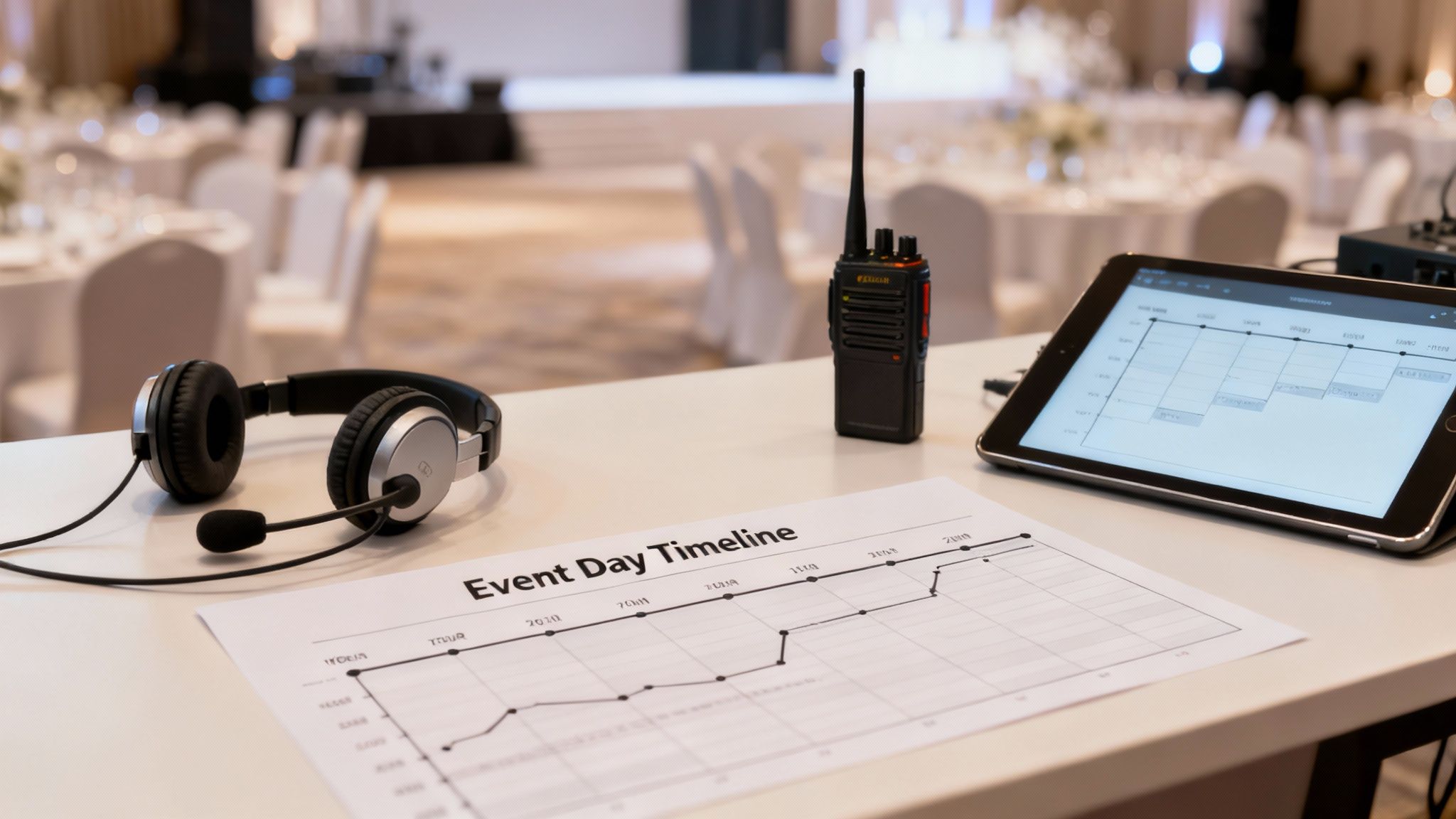
A day-of event execution checklist is the real-time operational script that transforms months of planning into a seamless live experience. It coordinates every on-site activity, from the first supplier arrival to the final breakdown, ensuring precise synchronisation of people, technology, and timings. This document is essential for managing supplier schedules, staff briefings, guest flow, technical cues, and emergency protocols, acting as the central command tool for the entire event team.
For large-scale operations, this checklist is non-negotiable. For instance, major multi-venue shows use integrated day-of checklists to manage complex schedules simultaneously, while international conference organisers rely on minute-by-minute timelines. For technical suppliers like London Audio Visual Hire, this checklist is critical for executing flawless live production, dictating everything from microphone checks to live stream transitions. It ensures that every technical system is tested, cued, and operated in perfect alignment with the event schedule.
How to Implement This Checklist
- Create a Master Timeline: Develop a minute-by-minute schedule visible to all key staff, either on a digital dashboard or a large printed board at a central command point.
- Conduct Mandatory Briefings: Hold a comprehensive briefing with all staff, department heads, and key suppliers at least two hours before the event officially begins to align on roles and the schedule.
- Schedule AV System Tests: Mandate that the AV team completes a full system sound, lighting, and video check a minimum of 60 minutes before guest arrival to resolve any last-minute technical issues.
- Use Real-Time Communication: Equip team leaders with walkie-talkies or headsets linked to a central channel to ensure instant communication and rapid response to any arising situations.
By using a detailed day-of checklist, you move from managing chaos to directing a finely tuned performance. This is a core discipline of professional event production management, providing the control needed to deliver an exceptional experience under pressure.
3. Post-Event Evaluation Checklist
A post-event evaluation checklist is a critical tool for concluding an event efficiently and extracting maximum value for future planning. It methodically guides teams through the crucial activities that follow the final guest's departure, including equipment breakdown, financial reconciliation, and performance analysis. This systematic process ensures that all loose ends are tied up, from venue handover to supplier payments, transforming the event's conclusion into a valuable learning opportunity.
This structured debrief is essential for demonstrating ROI and fostering continuous improvement. Many major corporate events teams are known for publishing detailed post-mortem reports within two weeks to refine future strategies. Similarly, UK event agencies leverage robust post-event checklists to strengthen client relationships, using feedback to secure future bookings. For specialist suppliers like London Audio Visual Hire, this checklist is vital for logging equipment condition upon return and finalising technical reports, ensuring accountability and maintaining inventory integrity.
How to Implement This Checklist
- Act Quickly: Send out satisfaction surveys within 24 hours while the experience is fresh in attendees' minds and schedule a full team debrief within one week.
- Document Venue Condition: Take detailed photographs of the venue before setup and after breakdown to provide clear evidence of its condition, protecting your deposit and professional reputation.
- Reconcile Finances Promptly: Compare all actual costs against the initial budget to identify variances. Process final payments to suppliers and document all financial outcomes for the final report.
- Analyse and Archive Data: Collate all performance data, including attendance figures, survey feedback, and social media engagement. Create a concise summary for stakeholders and archive all documentation for easy access when planning future events.
Using a post-event evaluation checklist formalises the closing phase of your project, ensuring every success and lesson learned is captured to make your next event even better. This is a core component of professional event production and client management.
4. Supplier Management Checklist
A supplier management checklist is a systematic framework for overseeing all third-party relationships from initial selection to final sign-off. This document is essential for coordinating the diverse teams that bring an event to life, including caterers, security, florists, and technical specialists. It provides a centralised system for tracking contracts, communication, deliverables, and payments, ensuring every supplier aligns with the event's objectives and timeline.
This checklist is a cornerstone of professional event coordination. For instance, major UK venues provide standardised supplier guidelines to manage the complex logistics of large-scale exhibitions, while corporate event agencies rely on detailed checklists to synchronise AV, catering, and décor teams seamlessly. For AV providers, this document is critical for defining technical specifications, power requirements, and load-in schedules in collaboration with other on-site suppliers, preventing logistical conflicts.
How to Implement This Checklist
- Centralise Information: Create a master spreadsheet listing all suppliers, their primary contact details, signed contract status, and key deadlines for deliverables and payments.
- Define Scope Clearly: Insist that every supplier provides a detailed, written scope of work. For AV suppliers, this must include an itemised equipment list, setup times, and on-site support levels.
- Schedule Coordination Calls: Organise a mandatory all-supplier coordination call approximately two weeks before the event to review the master schedule and identify any potential overlaps or issues.
- Confirm Pre-Event: Conduct a final confirmation call with each supplier 48 hours before their scheduled arrival to verify timings, access details, and any last-minute requirements.
A robust supplier management checklist transforms a potentially chaotic network of suppliers into a cohesive, high-performing team. It establishes clear accountability and ensures that every component of your event is delivered to the highest standard, a key principle in effective event production.
5. Logistics and Coordination Checklist
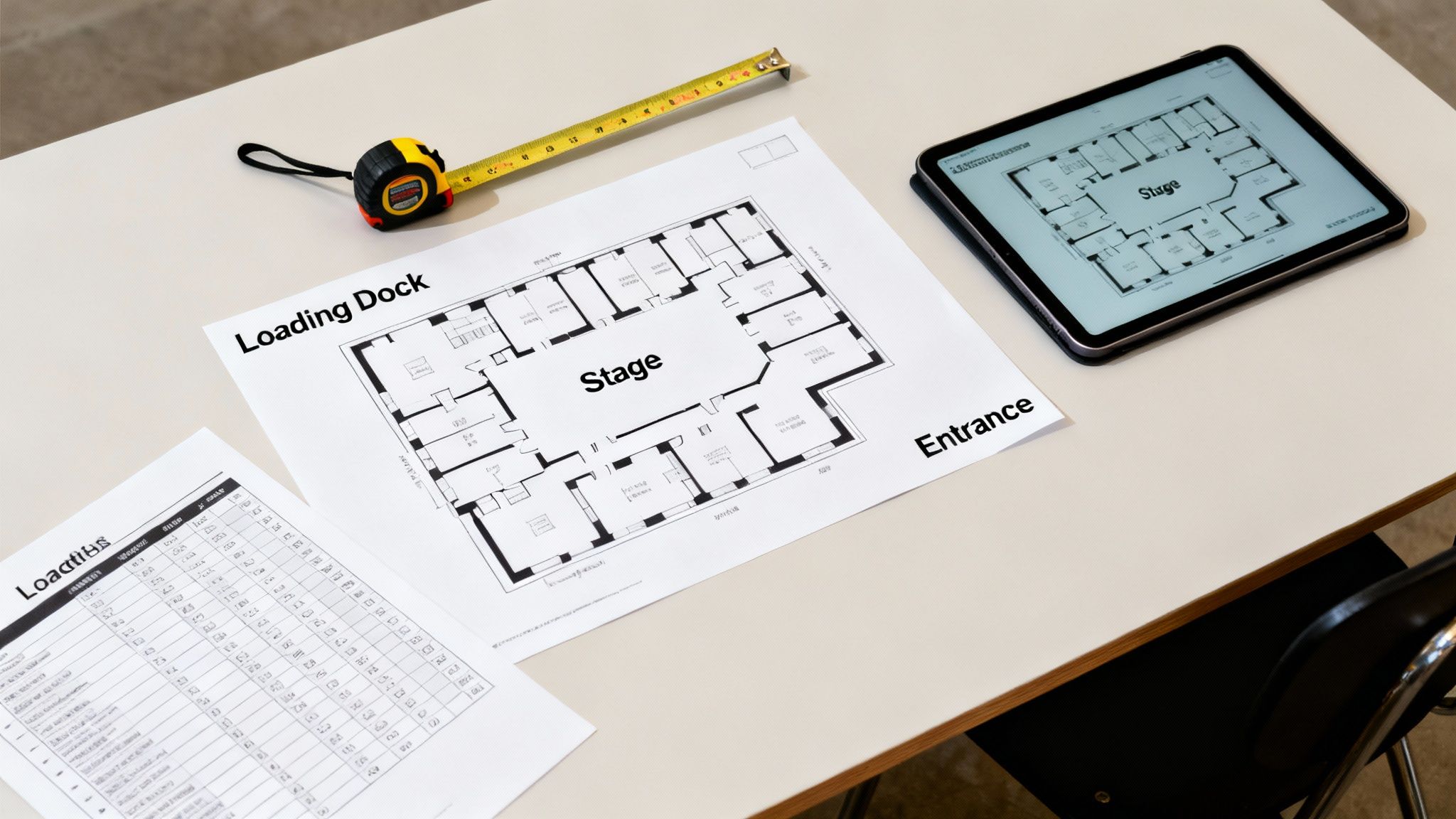
A logistics and coordination checklist is the master plan for the physical execution of an event, managing the intricate movement of people, materials, and equipment. It governs every practical detail, from supplier transport and setup sequencing to on-site storage and breakdown procedures. This document is essential for preventing issues, especially in complex venues with tight access or multiple simultaneous activities.
For large-scale exhibitions, coordinators rely on room-by-room logistics checklists to manage exhibitor arrivals and equipment placement without conflict. Similarly, theatre productions use meticulous logistics plans for nightly set changes, coordinating complex AV and staging movements in confined spaces. This checklist ensures every piece of equipment arrives on time, is placed correctly, and is removed efficiently, forming the backbone of a smoothly run operation. For those planning the technical aspects, understanding what is audio visual equipment is a critical first step.
How to Implement This Checklist
- Create Detailed Floor Plans: Develop precise, scaled floor plans marking the exact placement of all AV equipment, staging, seating, and supplier stations.
- Schedule Delivery Windows: Assign specific, staggered arrival and loading times for each supplier to prevent congestion at loading bays and service entrances.
- Conduct a Thorough Site Visit: Personally inspect the venue to assess loading dock dimensions, lift capacities, power access, and potential transport bottlenecks.
- Coordinate with Venue Management: Confirm all vehicle access routes, parking restrictions, and house rules for equipment movement well in advance.
- Plan the Breakdown Sequence: Document the de-rig and load-out process in reverse order of setup to ensure a swift and organised exit.
Using a logistics checklist is non-negotiable for any event involving significant physical components. It transforms a complex series of movements into a choreographed, manageable process, preventing costly delays and on-site stress.
6. Safety and Risk Management Checklist
A safety and risk management checklist is a non-negotiable tool for ensuring the wellbeing of attendees, staff, and suppliers. It systematically identifies potential hazards, outlines mitigation strategies, and formalises emergency procedures in compliance with UK Health and Safety Executive (HSE) regulations. This document is essential for securing appropriate insurance, gaining venue approval, and protecting an organisation’s reputation by demonstrating a professional commitment to safety.
For event organisers, this checklist provides a structured framework for due diligence. For instance, documented safety procedures are often mandated by corporate event insurers before providing cover, making this checklist a critical operational and financial document. For suppliers, it clarifies responsibilities, such as ensuring all electrical equipment holds valid PAT testing certificates and that any rigging or temporary structures have been signed off by a structural engineer.
How to Implement This Checklist
- Conduct a Formal Risk Assessment: At least six weeks before the event, perform and document a comprehensive risk assessment, identifying all potential hazards and outlining clear mitigation measures.
- Establish Emergency Protocols: Define a clear communication chain and procedures for medical emergencies, evacuations, or security incidents. Hold a mandatory safety briefing with all staff 30 minutes before guest arrival.
- Verify Supplier Compliance: Ensure all suppliers, particularly AV and production partners, provide evidence of insurance, risk assessments, and equipment safety certifications.
- Plan for Transport Safety: For events involving participant or equipment transportation, incorporating a comprehensive vehicle inspection checklist is crucial to your safety and risk management plan.
Using a safety and risk management checklist moves planning from assumption to assurance. It provides the documented proof of care required for modern event operations, a core tenet of responsible event management.
7. Marketing and Promotion Checklist
A marketing and promotion checklist is a strategic tool designed to guide all audience-building activities leading up to an event. It systematically outlines every promotional task, from campaign planning and media outreach to social media execution and content creation, ensuring a cohesive and impactful message. This document is essential for driving ticket sales, maximising attendance, and generating brand awareness for any public-facing event.
This checklist is the engine behind successful event promotion. Many major B2B conferences coordinate complex promotional campaigns that start 12 weeks in advance to reach diverse audiences. Similarly, some of the world's largest tech conferences deploy six-month marketing campaigns to engage potential attendees. The value is clear, as event platforms consistently report that early and structured marketing efforts can significantly increase ticket sales. For AV-intensive events, this checklist ensures that high-quality visuals of the production are showcased in promotional materials, highlighting the premium experience awaiting guests.
How to Implement This Checklist
- Build a Detailed Calendar: Start at least 12 weeks before your event date and create a marketing calendar that maps out all activities, including email sends, social media posts, and press release timings.
- Define Core Messaging: Develop three to five key messaging pillars that clearly communicate the event’s value proposition and resonate with your target audience.
- Leverage Targeted Advertising: Use targeted digital ads on platforms like LinkedIn for B2B conferences or Instagram for lifestyle events to reach specific demographics and interests.
- Partner for Cross-Promotion: Identify complementary organisations, speakers, or sponsors and create agreements for mutual promotion to expand your reach.
Using a marketing and promotion checklist ensures your promotional efforts are strategic, consistent, and measurable, transforming audience acquisition from a hopeful guess into a well-managed campaign.
8. Virtual and Hybrid Event Checklist
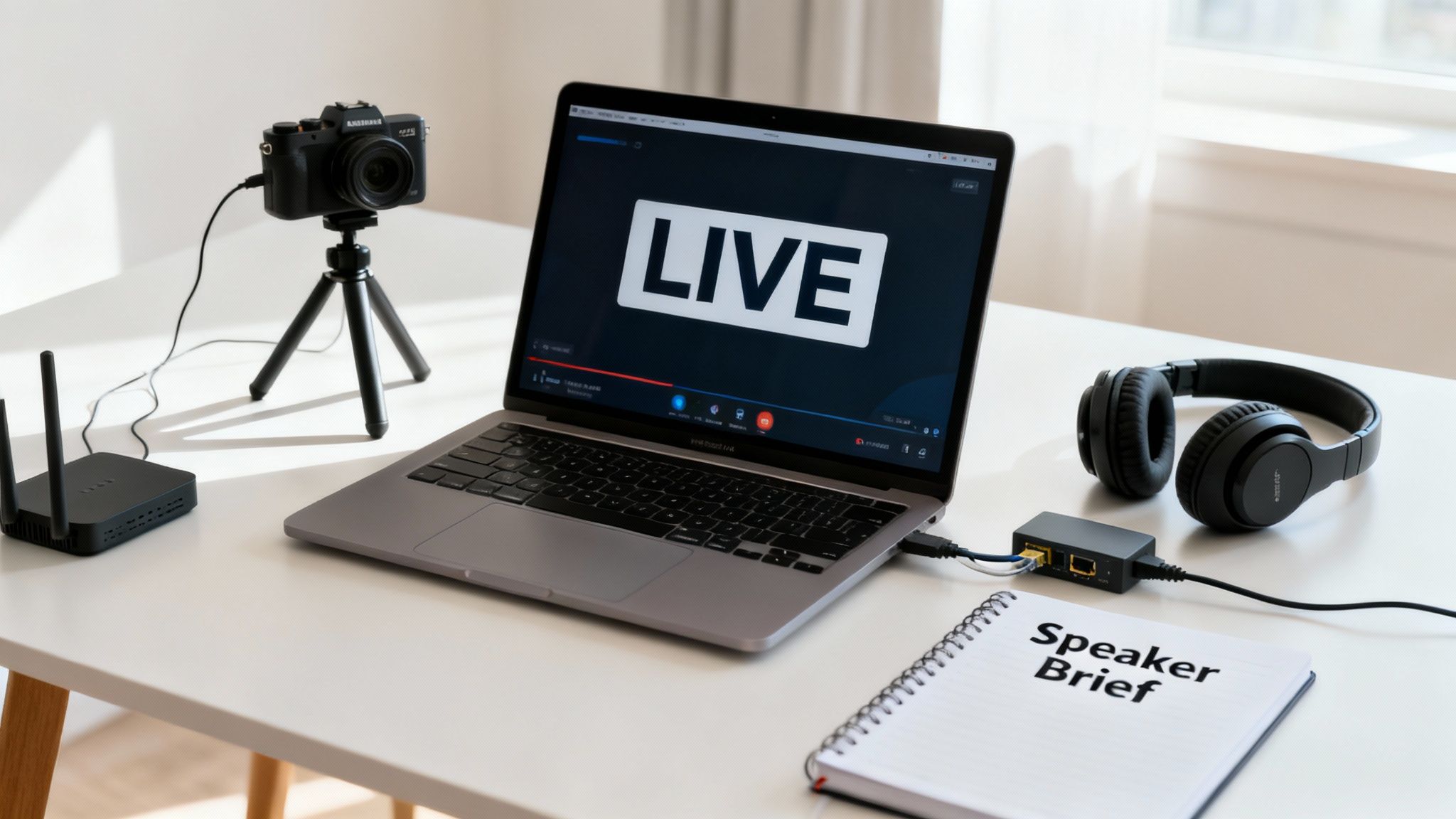
A virtual and hybrid event checklist is a specialised document designed to manage the unique complexities of events with both in-person and remote components. It focuses on the seamless integration of streaming technology, digital platform management, and the remote attendee experience. This checklist is essential for ensuring technical stability, coordinating virtual speakers, and delivering an engaging experience for audiences joining from anywhere in the world.
As hybrid models become standard, this checklist is crucial. For instance, major conferences now routinely offer hybrid options, with remote audiences sometimes exceeding 50% of total attendance. This highlights the shift towards digital-first engagement. This checklist provides the framework to manage the AV streaming infrastructure, internet connectivity, and virtual audience interaction that defines these modern events.
How to Implement This Checklist
- Conduct Rigorous Tech Rehearsals: Schedule a full technical rehearsal with all remote speakers at least three days before the event to test their audio, video, and internet connections.
- Build in Redundancy: For any venue, ensure backup internet connectivity is in place. A dual-connection setup (e.g., dedicated fibre and a 5G cellular backup) is the professional standard.
- Provide Clear Speaker Briefings: Send detailed technical instructions and platform guides to remote speakers at least one week in advance, covering everything from login procedures to presentation sharing.
- Plan for Engagement: Use the checklist to pre-plan the use of interactive features like live polls, Q&A sessions, and chat. Assign dedicated team members to moderate these channels throughout the event.
Using a dedicated checklist ensures that the digital components of your event receive the same meticulous planning as the in-person elements. It is the key to delivering a polished, professional broadcast, a core component of successful hybrid event streaming.
9. Budget and Financial Management Checklist
A budget and financial management checklist is a critical tool for maintaining fiscal control over an event, from initial cost estimates to final reconciliation. It provides a structured framework for tracking all income and expenditure, ensuring the event remains within its allocated budget and delivering financial transparency to all stakeholders. This document is essential for making informed decisions, controlling costs, managing supplier payments, and ultimately proving the event's return on investment.
For corporate event planners, this checklist is non-negotiable for accountability. Many professional event planners operate on the principle of including a 15-20% contingency fund to manage unforeseen costs. For specialist suppliers such as London Audio Visual Hire, a clear budget breakdown is vital for providing accurate quotes on equipment and labour, ensuring all technical costs are transparently itemised and approved. This financial discipline is a cornerstone of professional event management.
How to Implement This Checklist
- Build a Detailed Budget: Create a master spreadsheet listing all potential expenses, from venue hire to AV production, and assign estimated costs. This should be a living document, updated in real time.
- Include a Contingency Fund: Allocate a contingency reserve of 15-20% of the total budget to cover unexpected expenses or last-minute requirements.
- Track Expenses Meticulously: Use accounting software or a dedicated spreadsheet to log every expense as it occurs. Require itemised invoices from all suppliers to cross-reference against agreed quotes.
- Establish Approval Processes: Define clear authority levels for signing off on expenses, especially those not included in the original budget, to prevent uncontrolled spending.
Using a financial management checklist transforms budgeting from a high-stress guessing game into a controlled, strategic process. It ensures every pound is accounted for, providing the financial oversight necessary for successful and profitable events, a key aspect of comprehensive event production.
10. Registration and Ticketing Checklist
A registration and ticketing checklist is an operational guide for managing the entire attendee journey, from the initial ticket purchase to the final post-event data analysis. It details every step, including platform selection, payment processing, check-in procedures, credential management, and data handling. This systematic approach ensures a seamless experience for attendees while providing planners with crucial data for logistics and marketing.
For major trade shows, integrated badge printing at check-in is essential for managing high-volume traffic efficiently. Similarly, many conferences see a significant portion of their registrations in the final two weeks, making a robust and scalable system non-negotiable. For suppliers like London Audio Visual Hire, attendee numbers confirmed via this checklist directly impact equipment allocation, from the number of microphones for Q&A sessions to the scale of projection required. This document is a critical tool in a suite of checklists for events, bridging attendee management with operational delivery.
How to Implement This Checklist
- Select Platforms Early: Choose and configure your registration platform at least eight weeks before your event to allow ample time for testing and promotion.
- Simplify the User Journey: Design a simple registration flow, asking for a maximum of 3-4 fields for basic events to minimise drop-off rates and encourage completion.
- Automate Communications: Set up automated emails for ticket confirmation, event reminders, and day-of instructions to keep attendees informed and engaged.
- Plan for Contingencies: Test the entire digital check-in process one week before the event and have a manual, paper-based backup system ready in case of technology failure.
A well-executed registration and ticketing process sets a professional tone from the first interaction, streamlines on-site operations, and provides valuable data for future event planning.
11. Staff and Volunteer Management Checklist
A staff and volunteer management checklist is an essential organisational tool for recruiting, training, and deploying the human resources needed for a seamless event. It provides a structured framework for defining roles, scheduling shifts, and communicating critical information, ensuring every team member, paid or voluntary, understands their responsibilities. This checklist is vital for maintaining professional standards and guaranteeing adequate coverage for all event functions, from registration to guest assistance.
This methodical approach is indispensable for large-scale operations. For instance, major sporting events successfully coordinate thousands of volunteers using detailed management protocols, while corporate event agencies rely on such checklists to maintain a pool of trained staff, ensuring consistent service quality. Similarly, charity galas often blend professional staff with volunteer committees, using this tool to align expectations and tasks. For any event, this checklist ensures that the team on the ground executes the vision flawlessly, which is a key component of effective event management.
How to Implement This Checklist
- Define Needs Early: Determine your staffing requirements at least eight weeks before the event; a common ratio is one staff member per 25-50 attendees, depending on event complexity.
- Create Detailed Role Descriptions: Clearly document the responsibilities, required skills, and time commitment for each position to attract the right people and set clear expectations from the outset.
- Conduct Mandatory Training: Schedule a comprehensive briefing session, either in-person or via video, about one week before the event to cover procedures, brand messaging, and emergency protocols.
- Assign a Day-Of Coordinator: Designate a single point of contact to manage staff on the event day, handle any issues, reassign roles if needed, and ensure smooth operational flow.
- Brief Technical Teams: For events with significant AV components, ensure the AV production team receives a specific briefing on their roles, cues, and speaker support requirements.
12. Sponsor and Partnership Management Checklist
A sponsor and partnership management checklist is a strategic tool for identifying, securing, activating, and retaining event partners. It provides a structured framework for managing everything from initial outreach and contract negotiations to on-site brand activation and post-event reporting. This document is essential for any event that relies on financial or in-kind support to achieve its budget and enhance the attendee experience.
For organisers, this checklist ensures all sponsor deliverables are met and relationships are properly nurtured. For instance, major tech conferences use this process to manage tiered packages that can bring in significant revenue. Similarly, UK charity galas often generate 40-60% of their total income through meticulous sponsorship management. For suppliers providing services like audio-visual equipment, this checklist clarifies their role as a potential in-kind sponsor, detailing the value exchange and branding opportunities clearly and contractually.
How to Implement This Checklist
- Create Tiered Packages: Develop three to four sponsorship tiers (e.g., Platinum, Gold, Silver) with clear, escalating benefits for each level to attract a wider range of partners.
- Build a Prospect List Early: Begin researching and compiling a list of potential sponsors at least six months before the event, targeting companies whose brand aligns with your audience.
- Define Activation Logistics: Use the checklist to track every sponsor benefit, from booth location and branding placement to speaking slots and digital acknowledgements, assigning a team member to oversee each one.
- Manage Post-Event Follow-Up: Schedule a sponsor appreciation meeting within two weeks of the event to present a detailed report with key metrics and open discussions about future partnerships.
This checklist turns sponsor management from a complex sales exercise into a repeatable, relationship-driven process. It ensures financial targets are met while delivering exceptional value, a cornerstone of successful and sustainable event production.
12 Event Checklist Comparison
| Checklist | Implementation complexity | Resource requirements | Expected outcomes | Ideal use cases | Key advantages |
|---|---|---|---|---|---|
| Pre-Event Planning Checklist | Moderate–High (long lead planning) | Project management time, stakeholder coordination, venue & AV specs | Clear timeline, reduced risks, aligned teams | Corporate events, conferences, product launches, trade shows | Comprehensive preparation; fewer last-minute changes |
| Day-Of Event Execution Checklist | High (real-time coordination) | Experienced staff, comms gear, AV technicians, contingency resources | Smooth operations, rapid issue resolution, consistent guest experience | Time-sensitive and technically complex events | Synchronised teams; immediate problem handling |
| Post-Event Evaluation Checklist | Low–Moderate (time-sensitive follow-up) | Data collection tools, staff time, finance/admin support | Lessons learned, ROI data, final reporting | Repeat events, client reporting, process improvement | Drives continuous improvement; documents outcomes |
| Supplier Management Checklist | Moderate–High (administrative) | Contract management, procurement staff, legal/insurance checks | Reliable supplier delivery, cost transparency, dispute mitigation | Events with multiple suppliers, large productions | Ensures accountability; reduces supplier risk |
| Logistics and Coordination Checklist | High (operational detail) | Venue visits, transport assets, floor plans, staging crew | Efficient movement, timely setups/breakdowns, minimised damage | Large-scale, multi-venue, equipment-heavy events | Optimises flow and space; prevents delays |
| Safety and Risk Management Checklist | High (regulatory focus) | HSE expertise, medical/security services, insurance, training | Regulatory compliance, reduced liability, safer events | All events (mandatory), public/large/outdoor gatherings | Protects people and assets; legal compliance |
| Marketing and Promotion Checklist | Moderate–High (ongoing) | Marketing staff, ad budget, creative assets, analytics tools | Increased visibility, higher attendance, audience engagement | Public events, festivals, product launches, consumer events | Drives ticket sales and pre-event buzz |
| Virtual and Hybrid Event Checklist | High (technical & coordination) | Streaming tech, bandwidth redundancy, platform licences, tech support | Expanded reach, recorded content, flexible attendance | Conferences, webinars, global-audience events | Scales audience; creates on-demand assets |
| Budget and Financial Management Checklist | Moderate (detailed tracking) | Financial tools, accounting staff, invoice processing | Cost control, transparent reporting, variance analysis | All events, especially corporate and sponsored | Prevents overruns; enables ROI and auditability |
| Registration and Ticketing Checklist | Moderate (technology dependent) | Registration platform, payment processing, check-in hardware/software | Accurate headcount, streamlined check-in, attendee data | Ticketed events, conferences, concerts, workshops | Improves guest flow; captures attendee data |
| Staff and Volunteer Management Checklist | Moderate–High (people management) | Recruitment resources, training materials, scheduling systems, coordinators | Trained workforce, clear roles, reliable coverage | Large events, festivals, multi-day conferences, volunteer-reliant events | Ensures adequate staffing; improves guest service |
| Sponsor and Partnership Management Checklist | High (strategic & contractual) | Sales/partnership team, legal/contracts, activation logistics | Sponsorship revenue, branded activations, partner retention | Large conferences, festivals, trade shows, charity galas | Secures funding; extends reach via partner networks |
Integrating Checklists for Seamless Event Production
Throughout this guide, we have explored a comprehensive suite of checklists for events, covering every critical phase from initial strategy to post-event analysis. We have detailed the granular tasks involved in pre-event planning, on-site execution, supplier management, and financial oversight. The core takeaway is not merely the existence of these lists, but the power they hold when integrated into a dynamic, cohesive event management system.
These templates, from the Safety and Risk Management Checklist to the detailed Sponsor and Partnership Management Checklist, provide a robust foundation. However, their ultimate value is unlocked through customisation. No two events are identical. The scale of a large trade show requires a different logistical approach than an intimate product launch. Your checklists must reflect these unique variables, evolving from static documents into living project management tools.
From Blueprint to Flawless Execution
The mastery of event planning lies in moving beyond simply ticking boxes. It is about understanding the reason behind each item and fostering a culture of proactive diligence within your team. A checklist-driven approach creates a single source of truth, minimising ambiguity and empowering every team member, from volunteers to senior stakeholders, with clarity on their roles and responsibilities. This systematic process is your best defence against the unforeseen challenges that inevitably arise.
Consider the intricate dependencies between different checklists:
- Supplier and Logistics: The Supplier Management Checklist directly informs the Logistics and Coordination Checklist. Securing a reliable AV supplier, for instance, has a domino effect on your power requirements, load-in schedules, and on-site technical support plan.
- Marketing and Registration: The Marketing and Promotion Checklist drives the targets for your Registration and Ticketing Checklist. The success of your promotional campaigns is measured directly by the data captured during attendee sign-up.
- Budget and Sponsors: The Sponsor and Partnership Management Checklist is intrinsically linked to the Budget and Financial Management Checklist. Every confirmed sponsorship package directly affects your revenue projections and spending capabilities.
By recognising these interconnections, you transform a collection of individual lists into a powerful, integrated workflow. This holistic view ensures that no detail is overlooked and that all operational facets are perfectly aligned to achieve your event’s core objectives.
The Power of a Checklist-Driven Culture
Adopting these checklists for events is more than a procedural step; it is a strategic decision that cultivates an environment of preparedness and professionalism. It reduces cognitive load, freeing you and your team to focus on what truly matters: creating an exceptional attendee experience. When the logistical framework is secure, your creative and strategic thinking can flourish. You are no longer just managing tasks; you are orchestrating a memorable and impactful event.
Ultimately, these documents are your blueprint for success. They empower you to anticipate needs, mitigate risks, and execute with precision. By consistently applying, refining, and adapting these checklists, you build a reliable, repeatable process that not only ensures smooth delivery but also solidifies your reputation as a meticulous and highly effective event professional. This structured approach is the bedrock upon which truly extraordinary events are built, turning complex challenges into seamless, successful realities.
A critical component of any event checklist is securing technical partners who operate with the same level of precision. For flawless audio-visual production, trust the experts at London Audio Visual Hire. Our own internal checklists for everything from equipment preparation to on-site engineering ensure your event's technical delivery is seamless, reliable, and perfectly aligned with your vision.