
A show-stopping booth in an exhibition is not just about flashy design; it is the end product of a robust strategic plan. Your journey to a successful event starts long before you select colours or graphics. It begins with asking the right questions: What are we trying to achieve? Who are we talking to? And crucially, what is our budget? Get these right, and you are not just renting floor space – you are building a powerful business asset.
Building a Foundation for Exhibition Success
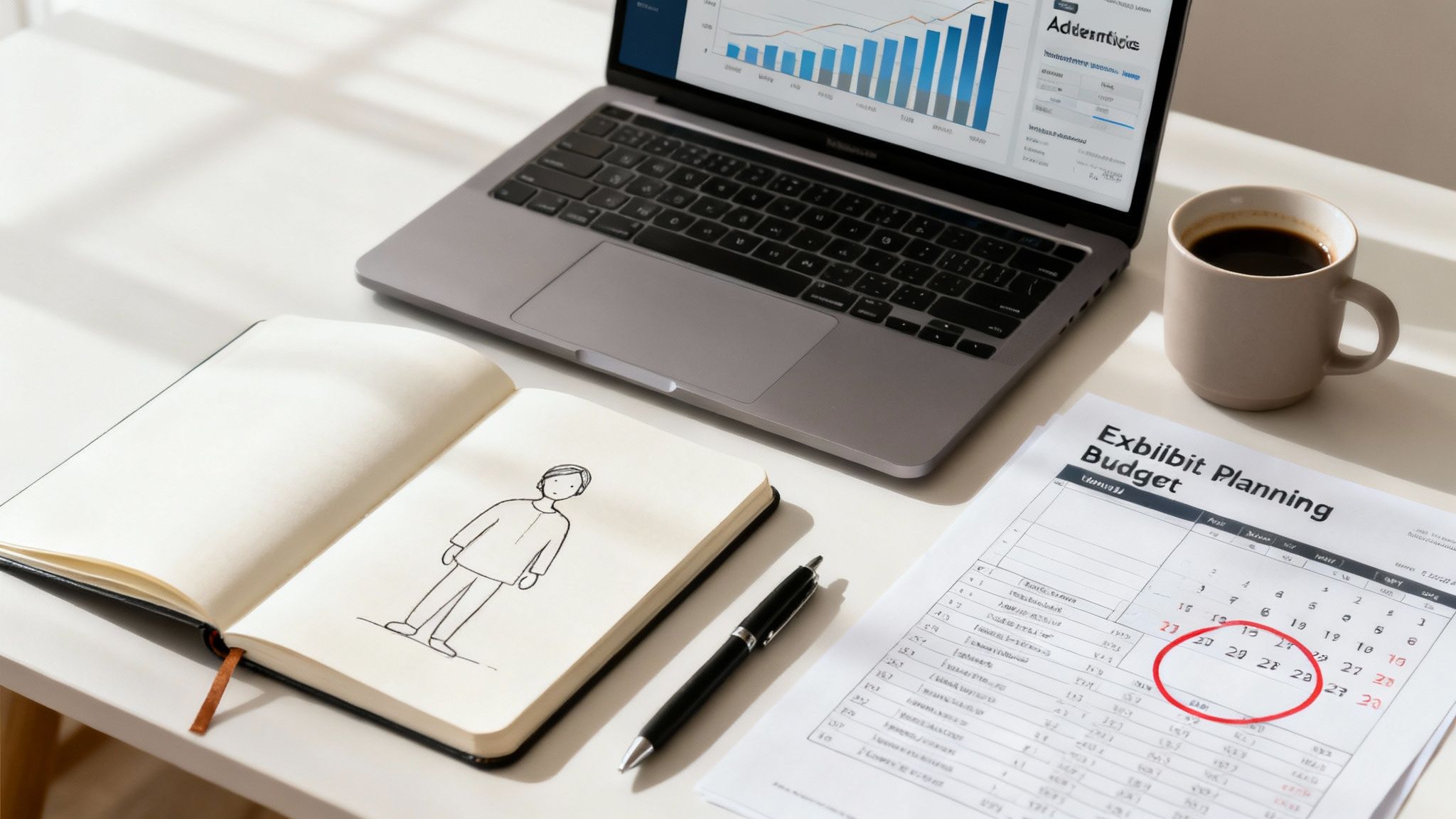
Before any construction begins or a screen is plugged in, you need to lay the groundwork. This initial phase is about establishing purpose and direction. Without a clear roadmap, even the most visually stunning stand will fail to deliver. It is about moving past the idea of just "showing up" and drilling down into what you want to achieve from the event.
Defining Your Core Objectives
Every decision you make – from the layout of your stand to the AV technology you hire – must trace back to your goals. So, what does success look like for you at this show? Most objectives will fit into one of these categories:
- Lead Generation: The primary aim here is capturing quality contact details to feed your sales pipeline. Everything is geared towards interaction and data capture.
- Brand Visibility: Perhaps you are a new entrant to the market or simply want to increase your profile. The goal is to be remembered long after the show ends.
- Product Launch: You have something new and exciting to unveil. Your stand needs to create interest, draw a crowd, and generate conversation.
Try to select one primary objective. Why? A stand designed for rapid lead capture has a completely different feel and function to one built for an immersive brand story. Focus is essential.
Understanding Your Audience and Message
You know what you want. Now, who do you need to talk to? Obtain the pre-show attendee data and begin your analysis. Who are they? What are their job titles? Most importantly, what problems are they trying to solve that you have the answer to?
Your message needs to connect directly to their pain points. Avoid vague corporate language. Your stand needs to answer every visitor's unspoken question immediately: "What is in this for me?" This laser-focused message should be evident everywhere, from the main graphics to the talking points you give your team.
A well-defined strategy transforms your exhibition booth from a simple marketing expense into a calculated investment. It ensures every pound spent on design, staffing, and technology contributes directly to achieving measurable business outcomes.
Allocating Your Budget Strategically
Let’s discuss budget. A realistic budget is non-negotiable, and a common error is to assume the cost of floor space is the largest component. It often is not. A comprehensive budget covers everything:
- Stand Design and Build: The structure, graphics, flooring, and furniture.
- Technology and AV: This includes screens, sound systems, lighting rigs, and any interactive technology. Working with a specialist like London Audio Visual Hire is key here.
- Staffing: Do not forget training, travel, accommodation, and branded clothing for your team.
- Marketing and Promotion: This includes pre-show emails, on-site handouts, and giveaways. This helpful guide to effective promotional products can ensure your items are kept.
- Logistics: Transporting the stand to the venue, installation (the 'build-up'), and dismantling (the 'breakdown').
The potential return makes this level of planning worthwhile. The UK's exhibition sector is a powerhouse. In a recent benchmark year, 1,145 events generated £5.1 billion in direct spending. For an individual company, the average total economic output per exhibitor reached £87,000. That figure alone shows that a properly budgeted and planned presence is not just an expense; it is a serious investment.
Designing a Booth That Demands Attention
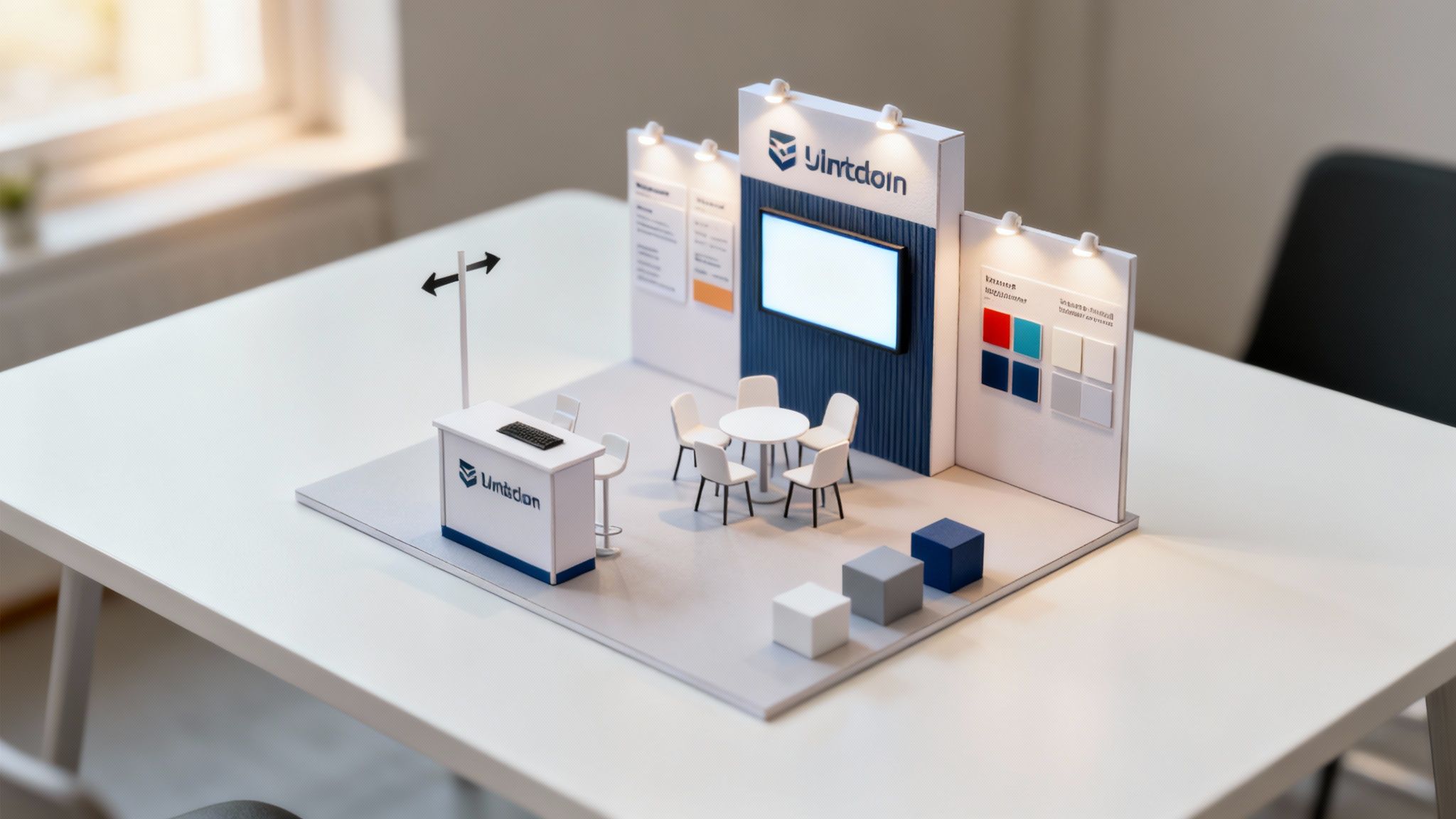
Think of your booth in an exhibition as your brand’s physical handshake. Before your team has a chance to say hello, the design, graphics, and atmosphere of your stand have already made an impression. A great design is not just about looking good; it is a smart blend of aesthetics and practicality that turns a patch of floor space into a must-visit destination.
The layout is your secret weapon for controlling how people experience your stand. Many companies make the classic mistake of building a fortress, with a huge reception desk at the front that acts as a barrier. You want the opposite. An open, inviting design naturally draws people in from the aisles.
Consider organising your stand in zones to create a natural flow for visitors.
- Welcome Zone: Keep the entrance clear and open. This is where you make that first, easy connection without causing a traffic jam.
- Demonstration Area: Set aside a space for product demonstrations or interactive technology. Ensure it is visible from the aisle to arouse curiosity.
- Meeting Space: Create a quieter, semi-private area with comfortable seating. It is perfect for having proper conversations with genuinely interested leads.
- Information Hub: A simple, designated spot for collecting brochures, scanning a QR code for more information, or charging a phone.
Crafting a Cohesive Brand Experience
Your brand needs to be instantly recognisable, even from the other side of the hall. This is about more than just placing your logo everywhere. It is about building an immersive space that communicates who you are and what you stand for, without a word being spoken.
Start by establishing a clear visual hierarchy. What is the single most important message you want people to see? Make that the largest, boldest element on your stand. Adhere to your brand’s colour palette and fonts for a consistent look. And crucially, do not compromise on the quality of your graphics. For professional production, it is often best to work with specialized display services.
The best exhibition booths do not just show off products; they tell a story. Every detail, from the feel of the flooring to the warmth of the lighting, should work together to create a compelling brand narrative that connects with visitors.
This holistic approach is key to any memorable brand activation. Every choice you make helps build an experience that will stay with your audience long after the event is over.
Integrating Audio Visual Elements Seamlessly
Never treat your AV as an afterthought. It happens time and again: technology is added at the last minute, resulting in a mess of cables and screens that look out of place. When AV is planned from the very beginning, it can completely transform the experience.
For example, if you are planning a large LED video wall, its location will shape the entire layout of your stand. You need to place it for maximum impact without blocking pathways or meeting areas. Lighting is another critical element. It is not just about visibility; it is about setting a mood, highlighting key products, and directing attention exactly where you want it.
Get your designers, stand builders, and an AV supplier like London Audio Visual Hire in the same room from day one. This way, all technical needs – power drops, cable management, rigging points for hanging screens or lights – are integrated into the design. This approach creates a polished, professional, and powerful presence. The technology should feel like a natural part of the environment, not a distraction.
Integrating Essential Audio Visual Technology
In the busy environment of a packed exhibition hall, your audio visual (AV) setup is what will make people stop and look. Good AV turns a simple booth in an exhibition from a static display into a dynamic experience that captures attention and tells your story with impact. This should not be an add-on; your AV choices should be woven into your design from day one, all geared towards achieving your main objectives.
The right technology has a job to do. It might be a giant video wall that draws people in from across the hall, an interactive screen that lets them discover your products for themselves, or clever lighting that creates a focused space for a serious discussion. The key is to select the right tools and make them a seamless part of your stand.
Commanding Attention with Video Solutions
The easiest way to cut through the noise is with something large and bright. Large video displays act as magnets for attention. A massive LED video wall can serve as the visual anchor for your entire stand – it can be a high-impact backdrop for a presentation or loop brand content that gets your message across in seconds.
For visitor engagement, interactive touchscreens are excellent. They allow visitors to browse your product catalogue, watch case studies, or even configure a solution on the spot. It puts them in control, which enhances their experience, and it frees up your team to have more meaningful conversations with genuinely interested prospects.
A great AV strategy should feel completely effortless to your visitors. The technology is there to boost the brand experience, not get in the way. It is all about using screens, sound, and light to direct attention where you want it and deliver information in the most engaging way possible.
When choosing screens, think about viewing distance and the content you are showing. You will need high-resolution screens for anything interactive and up-close, whereas a large LED wall is more about creating a 'wow' factor from a distance. Understanding the different types of displays is a good first step, and this guide on what is audio visual equipment is a great place to start.
Creating Effective Soundscapes
Audio is often overlooked, but when done right, it can completely change the atmosphere of your stand. The main challenge is ensuring your presentations or videos can be heard clearly without disturbing your neighbours or adding to the general noise of the hall. This is where you need to be strategic.
Directional speakers are a brilliant tool for this. They create a tight 'cone of sound', pushing audio into a very specific area. This means only the people standing directly in front of your screen can hear it properly, so you can get your message across without excessive volume.
Here are a few other ways to use sound effectively:
- Headphone Stations: If you have detailed demonstrations or client testimonials to share, provide headphones. It creates a personal, immersive experience and eliminates background noise.
- Presenter Microphones: A discreet lapel or headset microphone is non-negotiable for live demonstrations. It guarantees your speaker can be heard clearly over the noise.
- Subtle Background Audio: A quiet, on-brand soundscape can help define your space and make it feel more welcoming.
The Strategic Use of Lighting
Good lighting is perhaps the single most effective way to make your booth in an exhibition stand out. We are not just talking about keeping the space bright; this is about using light as a design tool to create a mood, highlight your best products, and guide people's eyes. A professionally lit stand looks more polished, important, and inviting.
It is all about layering. You might use spotlights to make a new product the focus of the display, coloured uplighters to wash the walls in your brand colours, or even intelligent moving lights to create dynamic energy that catches the eye. The goal is to create visual contrast so your stand does not blend into the uniform lighting of the exhibition hall. Working with a specialist team is the best way to design a lighting rig that truly elevates your presence.
Power and Rigging: The Unseen Essentials
Behind every stunning video wall and perfectly lit product lies the unglamorous but critical infrastructure: power and rigging. If these are mishandled, your entire stand could come to a halt. Inadequate power planning is a classic, costly mistake that can lead to anything from flickering screens to a total blackout mid-event.
Before anything else, conduct a "power audit" and calculate the total draw of every piece of equipment. You will have to submit this to the organisers well in advance; it is always better to request more than you think you need.
Rigging is the term for hanging items – such as lighting trusses, speakers, or large banners – from the ceiling. This is a job for specialist technicians. It is governed by strict health and safety rules, and for good reason. Bringing in a professional AV team ensures everything is hung safely, positioned perfectly, and meets all the venue's regulations.
Matching AV Technology to Your Exhibition Goals
How do you connect all this back to what you are trying to achieve? The key is to match the technology to the goal. This table breaks down how specific AV solutions can help you meet common exhibition targets.
| Exhibition Goal | Recommended AV Solution | Primary Benefit |
|---|---|---|
| Maximise Lead Generation | Interactive touchscreens with data capture forms | Allows visitors to self-qualify and provides a simple way to collect details for follow-up. |
| Increase Brand Visibility | Large-scale LED video wall | Creates a massive visual beacon that grabs attention from across the hall and gets your brand seen. |
| Launch a New Product | Focused product spotlights and a dedicated demo screen with directional audio | Makes the product the undeniable star of the show and allows for clear, focused presentations. |
| Facilitate Deeper Conversations | A semi-private meeting area with a small screen for presentations | Provides a quieter, more professional space for important one-on-one discussions away from the show floor. |
| Educate Visitors | Multiple headphone stations with on-demand video content | Delivers a detailed, immersive learning experience without adding to the ambient noise. |
By thinking strategically about your AV from the start, you can build a stand that not only looks incredible but also works hard to deliver real, measurable results.
Mastering Logistics and Supplier Coordination
An ambitious design and impressive technology are excellent, but they mean nothing without flawless execution behind the scenes. The real success of your exhibition booth hinges on mastering the complex web of logistics that turns a plan on paper into a functional, engaging space on the event floor.
This is not just about booking suppliers; it is about conducting an orchestra. You have the stand builder constructing the physical framework, the AV specialists wiring the technology, and perhaps furniture or graphics companies in the mix. Every partner needs to work in perfect concert, all guided by a clear timeline and incredibly detailed briefs.
Building a Project Timeline
Your project timeline is, without a doubt, your single most important logistical tool. It is the master document that keeps your internal team and all your external suppliers on the same page, ensuring everyone knows what is due, and when. The best way to build one? Start from the exhibition opening day and work backwards.
Think in terms of key milestones. You will want to map out:
- Supplier Confirmation: When do you need contracts signed with your stand builder, furniture provider, and specialist firms like London Audio Visual Hire? Book this early.
- Design Sign-off: The final date to approve all structural and graphic designs so production can begin.
- Venue Deadlines: Every venue has its own set of dates for submitting health and safety forms, risk assessments, and technical plans. Missing these can cause serious problems.
- The Build-up: Scheduling the arrival of every component and allocating precise times for construction, AV setup, and final checks.
- The Breakdown: The work is not over when the show closes. You need a solid plan for efficiently dismantling and removing everything.
This timeline helps visualise how each layer of your stand comes together, especially with the technology. You cannot install a video wall after the main structure is fully painted and finished.
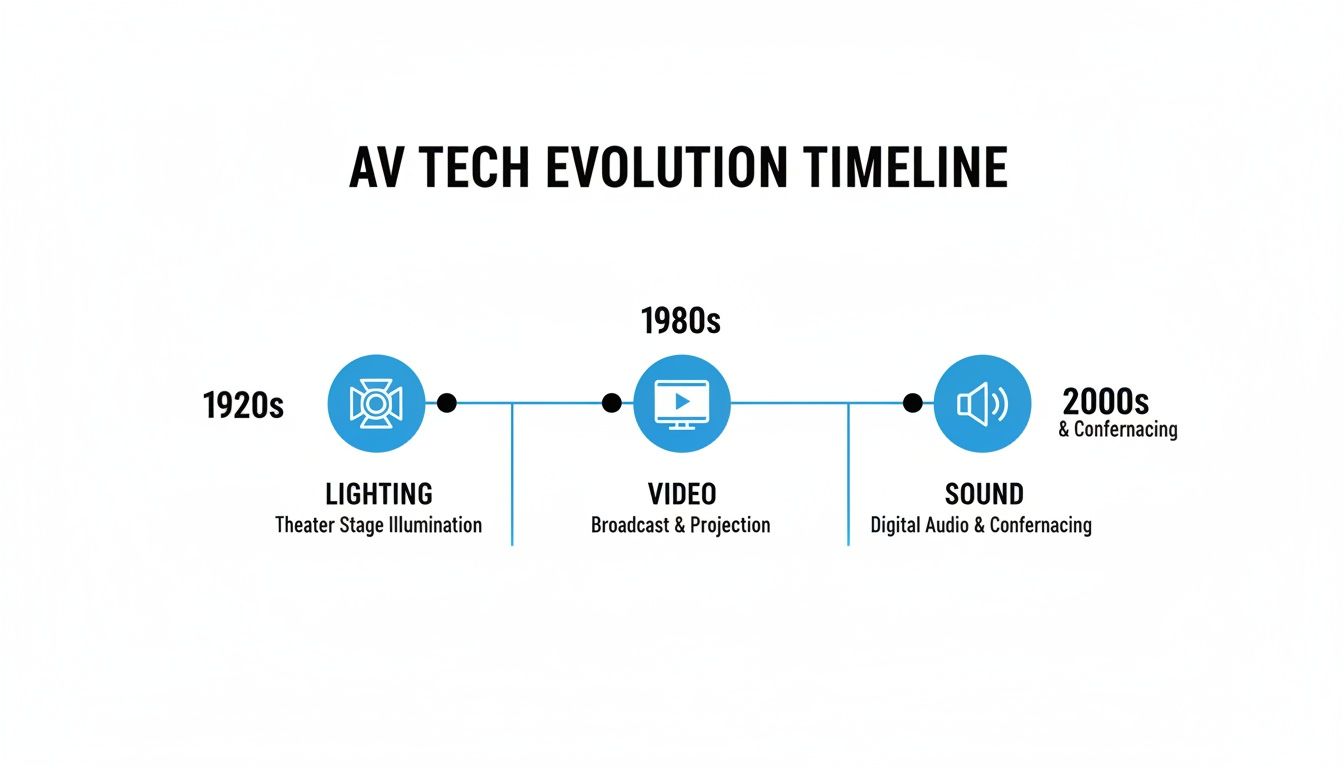
As the graphic shows, there is a logical flow. You have to get foundational elements like power and lighting sorted before you can layer on more complex video and audio systems.
Selecting and Briefing Your Suppliers
Choosing the right partners is half the battle. Look for suppliers who have a track record in your specific exhibition or, even better, at the venue itself. A supplier who already knows the loading bay procedures, power regulations, and rigging policies of a major London venue is invaluable.
When it comes to briefing them, detail is everything. A vague instruction guarantees a vague result.
Your technical briefs, particularly for your AV partner, need to be precise. Include scaled floor plans showing the exact placement of screens, speakers, and lighting rigs. Specify the required resolutions for all your video content and provide a comprehensive list of every piece of equipment that needs a power socket. Being this granular at the briefing stage prevents expensive and stressful problems on-site.
The quality of your supplier briefs directly translates to the quality of the final execution. Think of a clear, detailed brief as a contract of understanding – it eliminates guesswork and ensures every partner is working towards the same goal from day one.
Navigating Venue Regulations and Compliance
Exhibition halls, especially major London venues, are governed by strict health and safety regulations. These are non-negotiable. Trying to cut corners can result in your stand being shut down before the doors open. You will be required to submit a range of documents, most commonly risk assessments and method statements (known as RAMS).
These documents outline any potential hazards involved in building and running your stand and detail the safety measures you are putting in place. Your stand builder and AV supplier will need to provide their own RAMS for their work, which you will then collate and submit to the organiser.
The pressure to get this right is immense. Data from over 1,000 exhibitions shows the typical event allows just 4.7 days for build-up, for a show that is only open for 2.3 days. With an average of 153 exhibitors all competing for attention in that tight window, you do not have time for logistical errors. As this UK exhibition industry report highlights, that small setup window makes experienced, compliant suppliers an absolute necessity.
Bringing It All Together On-Site (And What to Do Next)
After all the planning, designing, and logistical coordination, the doors are about to open. This is where it all comes together. Success on the exhibition floor is not just about having a great-looking stand; it is about proactive management, having your team fully prepared, and knowing exactly what you will do after the last person leaves. Even the most polished booth in an exhibition will underperform without an engaged team and a solid plan to turn conversations into contracts.
The energy your team brings is vital. Make a brief meeting each morning, before the show opens, a non-negotiable part of your routine. This is not just a pep talk; it is a huddle to set daily targets, recap key talking points, and ensure everyone knows their role. You do not want potential clients wandering off because everyone thought someone else was going to greet them.
Running a Tight Ship During the Show
Keeping things running smoothly on the day requires a sharp eye for detail. Your first job every morning should be a full systems check. Power up everything – from the main video wall to the interactive tablets – and ensure it is all working perfectly. A small technical glitch during a key demonstration can kill momentum.
Engaging visitors effectively is an art. Your team needs to be coached to ask open-ended questions that uncover a visitor's needs, rather than just launching into a rehearsed sales pitch. The real skill is in qualifying leads on the fly, identifying who is a genuine prospect and who is just collecting free items.
To keep the stand looking professional and feeling welcoming, a few simple disciplines go a long way:
- Create a Rota: Ensure staff get proper breaks. A tired team is easy to spot and gives a poor impression. Keep them fresh and focused.
- Keep It Tidy: Your stand is a physical representation of your brand. Assign someone to keep the space clean, clear away empty cups, and restock brochures throughout the day.
- Have a Contingency Plan: What happens if the venue Wi-Fi fails or a key screen goes blank? Having the mobile number for your London Audio Visual Hire on-site technician is crucial for resolving issues quickly.
The Post-Show Follow-Up: Turning Leads into Business
The work does not end when the lights go down. In many ways, the most important phase for your ROI is just beginning. A slow or disorganised follow-up will undo all the hard work you put in on the exhibition floor.
Your immediate priority is to organise all the data you collected. Whether from badge scanners, digital forms, or handwritten notes, get it all into your CRM within 24-48 hours. Speed is critical while the conversations are still fresh in everyone's minds.
The real measure of your exhibition success is not how many people visited your stand, but how many of those visitors eventually become customers. A systematic, timely, and personal follow-up is what builds the bridge from a great show to a profitable one.
Measuring What Mattered and Planning for Next Time
To justify the budget for your booth in an exhibition, you must connect your results back to your original goals. Dig into the data. If you were aiming for leads, how many did you get? What was the cost per lead? For a closer look at managing this kind of large-scale project, see how we handle conference production.
The numbers prove the value. A report on the UK exhibition industry found it generated £4.1 billion in direct spending, leading to a total economic output of £9.4 billion. This breaks down to an average of £77,000 per exhibitor – a clear demonstration of what a well-run event can achieve. You can discover more about the economic impact of UK exhibitions to see how your own results compare.
Finally, get the whole team together for a post-show debrief. Find out what worked, what did not, and what you could do better. This honest, on-the-ground feedback, combined with your hard data, is the key to ensuring your next exhibition is even more successful.
Your Questions, Answered
Even with the best plan, questions always arise. Here are some of the most common ones we hear from clients, along with our straightforward advice.
How Far in Advance Should I Start Planning My Stand?
As early as you possibly can. We always recommend starting the process a good 6 to 9 months before the exhibition doors open. It may sound like a long time, but it passes quickly.
This gives you sufficient time to do things properly – to think strategically about your goals, secure a prime location on the floor plan, and develop a design that works. More importantly, it means you avoid the stress and inflated costs that come with rushing. Trying to book a good stand builder or an AV partner like London Audio Visual Hire at the last minute is a recipe for limited choices and premium pricing. A longer lead time also makes managing the venue paperwork and health and safety forms a much less frantic experience.
What Are the Common Hidden Costs I Should Look Out For?
The "hidden" costs can seriously impact a budget if you are not prepared for them. The biggest culprits are often venue-specific charges that are rarely included in your initial space booking. Think electricity connections, internet access, and especially rigging points if you are hanging anything from the ceiling.
A few other common costs that catch people out include:
- Waste disposal: You will be charged for any rubbish left behind after you dismantle the stand.
- Drayage: This is the official term for the service that moves your crates from the loading dock to your stand space. It is rarely free.
- Public liability insurance: Most event organisers will insist you have it, and it will not be included in your fee.
Always build a buffer for your team's travel, accommodation, and any last-minute requirements. The best way to stay in control is to get a fully itemised quote from every supplier and add a 10-15% contingency fund to your master budget. It will save you significant stress later.
My best piece of advice? Never assume a service is included. Get everything in writing and specifically ask suppliers and the venue what is not covered in their quote. This simple step is the single most effective way to protect your investment.
How Do I Measure the ROI of My Exhibition?
Measuring the Return on Investment (ROI) is impossible unless you set clear goals from day one. What did you want to achieve?
If it was about lead generation, the calculation is fairly straightforward. Track how many qualified leads you acquired and what percentage of those converted into sales in the following weeks and months. A simple metric is your cost per lead: divide your total exhibition spend by the number of leads you generated.
If your goal was more about brand awareness, you will need to look at softer metrics. Did your social media channels see a boost in mentions and followers? Did you receive any press coverage? Was there a noticeable spike in traffic to your website during the show? By weighing the value of new business and increased brand visibility against your expenditure, you can build a solid case for the ROI of your booth in an exhibition.
For flawless technical execution at your next event, the experienced team at London Audio Visual Hire provides detailed planning and calm support on-site. Explore our services at https://londonaudiovisualhire.co.uk.