

Renting audio visual equipment is about more than just securing speakers and lights for an event. It involves bringing in the right high-specification technology, and often the expert crew to run it, without the significant expense and logistical challenges of ownership. For a set period, you get precisely what you need to make your event look and sound professional.
Defining Your Event's Audio Visual Needs
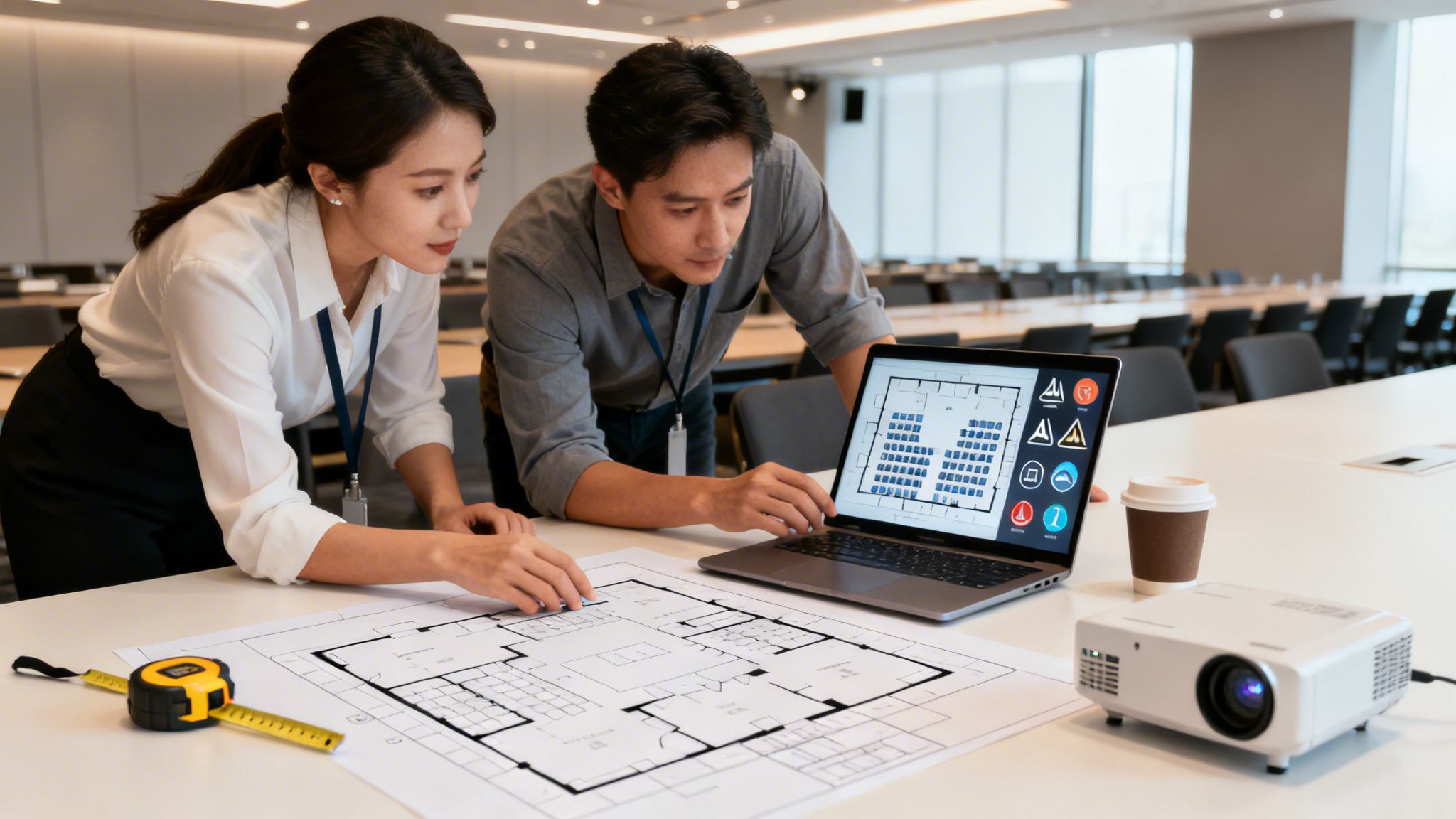
Before considering which microphone or projector to hire, you must be clear on what you are trying to achieve. This is the foundation of a successful event. Skipping this stage can lead to last-minute problems and a final bill that is much higher than expected. A solid plan ensures every piece of technology serves a purpose.
Start with the overall objective. Is it a high-energy product launch, a formal corporate conference, or a gala dinner? Each has entirely different technical demands. A brand event might need large video walls and interactive displays, whereas a conference's priorities will be intelligible audio and clear presentation slides.
This is also the time to be practical about your venue. A historic London building may be visually impressive but could present acoustic challenges or have power limitations. In contrast, a modern conference centre is likely to have been designed with technical production in mind.
Aligning Technical Needs with Event Objectives
Focus on the 'what' and 'why' before getting lost in the 'how'. Instead of requesting a specific brand of speaker, describe the audio experience you want to create. This allows an experienced provider like London Audio Visual Hire to use their expertise to suggest the equipment that will deliver the required results.
Consider these key areas:
- Audience Size and Layout: How many people will attend? A keynote for 500 requires a different sound system and screen setup to a workshop for 30.
- Content Delivery: What is happening on stage? You will have different audio and video requirements for live speakers, panel discussions, pre-recorded videos, or a live band.
- Desired Atmosphere: What is the intended mood? Lighting is a powerful tool. It can transform a room from a formal corporate space into a vibrant, celebratory environment.
- Branding and Messaging: How will you display company logos, sponsor acknowledgements, or key messages? This will determine whether you need screens, projectors, or custom-lit gobos.
A well-defined AV brief is not just a shopping list of equipment. It is a clear, detailed description of the experience you want for your attendees. It becomes the blueprint for your technical partner.
Why Professional Rentals Are the Smart Choice
Choosing to hire AV equipment instead of buying it is a strategic decision that many event professionals are making. The UK's audio visual rental sector is growing, driven by the need for flexibility and access to the latest technology.
The European AV rental market, in which the UK holds a significant share worth around USD 1.3 billion, is set for steady growth. This is partly due to a 20% increase in brand activations, which rely heavily on rental equipment for high-impact events. It makes financial sense to avoid the burdens of ownership. For more industry data, you can review the latest reports from IBISWorld.
By clearly mapping out your needs from the start, you lay the groundwork for a smooth production. It is the most important step you can take to ensure every word is heard, every presentation is seen, and your message connects with your audience. For a closer look at the different types of equipment involved, read our guide on what is audio visual equipment.
Selecting The Right AV Equipment For Your Venue
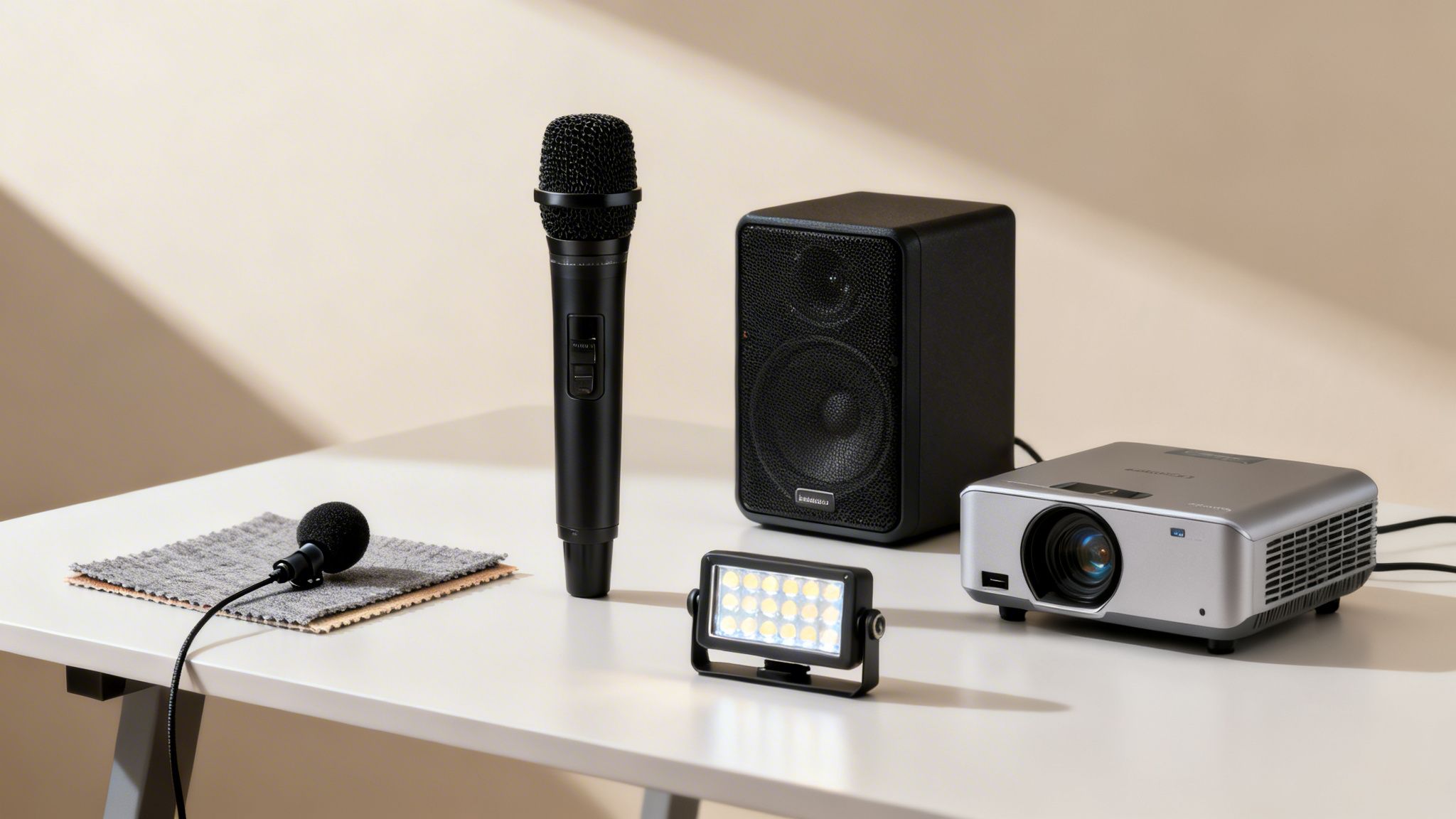
Once you have a solid brief, it is time to select the equipment that will bring your event to life. You do not need to become a technical expert. The goal is to understand the basics of sound, video, and lighting so you can have a productive conversation with your audio visual rentals partner.
Getting this right is about ensuring the equipment is a perfect match for both your event’s objectives and the unique characteristics of your venue. Every microphone, screen, and light should have a specific purpose, contributing to the experience you want to create for your guests.
The demand for high-quality event technology in the UK is significant. The audio equipment rental market alone was valued at USD 739.51 million and is expected to climb to USD 1369.99 million by 2033. Many organisers choose to rent, often saving 40-60% compared to the cost of buying equipment outright. You can find more data on the UK market at Deep Market Insights.
Core Sound System Components
Audio is one element you cannot afford to get wrong. If your audience cannot hear what is being said, the entire event is compromised. The right microphones and speakers depend on the event format and the acoustics of the room.
For a keynote speaker or a panel of experts, lapel microphones (also known as lavalier mics) are an excellent choice. They clip discreetly onto clothing, leaving speakers free to move and gesture naturally. In contrast, classic handheld microphones are better for audience Q&A sessions or for performers who want control over their sound.
When it comes to speakers, the venue is the deciding factor.
- Point source speakers are the individual speaker boxes you are used to seeing. They are ideal for smaller rooms or for directing sound into a specific zone, such as a breakout area or reception space.
- Line array speakers are the tall, vertical columns of speakers seen at large conferences and concerts. They are designed to spread sound evenly across a large area, ensuring the person in the back row hears as clearly as someone at the front. This is particularly useful in challenging venues, such as a large hall with high ceilings that can cause sound to reverberate.
Making The Right Visual Choices
Visuals capture attention and help to convey your message. The main decision is often between projectors and LED video walls, and the choice usually comes down to ambient light levels and audience size.
Projectors and screens are a solid, budget-friendly choice for presentations in a room where you can control the lighting. However, in a bright, sun-lit room or an outdoor marquee, the image can appear washed-out.
This is where LED video walls excel. They are built from individual panels, so they can be constructed to almost any size or shape. Because they are incredibly bright and offer high contrast, they look impressive even in daylight, ensuring your content always looks sharp and vibrant. To get a feel for the possibilities, you can browse a full range of London Audio Visual Hire equipment.
Using Lighting To Shape The Atmosphere
Lighting is much more than just providing illumination. It is a powerful tool for directing focus, setting the mood, and reinforcing your brand. A few well-placed lights can transform a bland conference room into something special.
Effective lighting design is about painting with light. It guides your audience's attention, enhances the venue's architecture, and creates a memorable atmosphere that supports your event's core message.
Here are a few lighting essentials you will encounter:
- Uplighters: Placed on the floor and aimed up walls or pillars, they wash the space in colour and add a sense of depth and drama.
- Spotlights: Perfect for drawing attention to what is important, whether that is the person at the lectern, a new product on display, or a wedding cake.
- Gobos: These are custom-made stencils that fit into a light fixture to project logos, patterns, or messages onto a wall or floor. It is an effective and stylish way to display branding.
To help you get started, here's a quick-reference table for matching equipment to common event types.
Core AV Equipment Selection Checklist
| Event Scenario | Recommended Sound Equipment | Recommended Video Equipment | Recommended Lighting Equipment |
|---|---|---|---|
| Corporate Conference | Lapel mics for speakers, handheld for Q&A, line array speakers for main hall, point source for breakouts. | Large LED video wall for main stage, projectors/screens for breakout rooms, repeater screens for large rooms. | Stage wash for speakers, spotlights for lectern, gobos with company logo, uplighting in brand colours. |
| Gala Dinner / Awards | Handheld wireless mic for host, lectern mic for speeches, distributed point source speakers for even coverage. | Dual projector screens on either side of the stage for presentations and live camera feeds. | Theatrical spotlights for award winners, custom gobos on the dance floor, coloured uplighting to match theme. |
| Product Launch | High-quality point source speakers for impactful music and video playback, headset mic for presenter. | High-resolution LED video wall for dynamic content, interactive touch screens for guest engagement. | Dramatic spotlights on the product, moving lights for energy, uplighting to create an immersive atmosphere. |
| Small Workshop | A simple PA system with one or two speakers and a wired microphone. | A single large TV screen or a portable projector and screen for presentations. | Basic room lighting is often sufficient, perhaps a single spotlight on the facilitator. |
This checklist is a starting point, but it provides a solid foundation for your conversation with an AV provider.
By understanding these AV fundamentals, you will be in a much stronger position. You can communicate your vision clearly and ensure the final equipment list you receive from a supplier like London Audio Visual Hire is perfectly tailored to your event, your venue, and your objectives.
Getting to Grips with Your AV Rental Budget
Understanding the costs for audio visual rentals is a core skill for any event manager. When a detailed quotation arrives, it is easy to get lost in the line items. The key is to look beyond the hire fees for screens and speakers and understand the full scope of the service.
The final price is always a combination of the equipment itself, the technical expertise required, and the logistics of transporting it to and from your venue. A professional quotation from a supplier like London Audio Visual Hire will set all of this out clearly, so you can see exactly where your investment is going.
The UK’s live event equipment rental market is on track to be worth $15 billion by 2025. For most events, the AV spend makes up 25-35% of the total budget. This is driven by over 50,000 UK events in 2024 alone, with a notable 18% increase in hires for hybrid conferences as organisers choose to rent equipment instead of investing in purchasing it. The full report from Data Insights Market has more details on these market trends.
What's Actually in an AV Quote?
One of the most common oversights is underestimating the cost of the crew. The technicians and engineers who set up, operate, and troubleshoot the equipment are just as crucial as the hardware. Their expertise is what ensures your event runs smoothly.
A typical quotation is broken down into a few key areas:
- Equipment Hire: This is the straightforward cost for the physical items: microphones, projectors, LED screens, lighting rigs, and so on. It is usually priced per item, per day.
- Labour and Crew: This is the cost for the skilled people needed on the ground. It covers the crew for setup and de-rig, the on-site technicians running the event, and often a project manager to oversee the entire operation.
- Transport and Logistics: This fee covers getting the equipment to your venue, collecting it afterwards, and all the associated planning.
- Consumables and Insurance: This can include smaller but essential items like specific cables, batteries, or the mandatory insurance to cover the equipment.
When preparing your event budget, it helps to see how AV fits into the bigger picture. For instance, looking at a breakdown of how much a wedding costs can provide useful context on how different supplier costs, including AV, compare.
The Factors That Move the Price Needle
Several factors can influence your AV rental costs. If you know what they are, you can plan more accurately and identify potential savings.
Your quotation is not just a price list; it is a reflection of your event's complexity. The more moving parts you have, from multiple breakout rooms to complex lighting changes, the more technical support and planning time it will require.
Here are the main cost influencers to watch out for:
- Event Duration: A multi-day conference will always cost more than a half-day meeting. This is not just about longer equipment hire; it is also about more crew days.
- Venue Access Times: This is a significant factor. Tight load-in and load-out windows often mean you need a larger crew to get the job done in time, which increases labour costs. If you can negotiate more generous access times with your venue, you could see a real saving here.
- Technical Complexity: An awards dinner with live camera feeds, slick video playbacks, and dynamic lighting cues is very different from a simple presentation with one microphone and a screen. The more complex your vision, the more it will cost to execute flawlessly.
Real-World Tips for Managing Your AV Budget
Keeping your AV spend in check does not have to mean cutting corners on quality. It is about smart planning and clear communication with your provider from the start.
First, be upfront about your budget. It is the most helpful thing you can do. It allows a company like London Audio Visual Hire to suggest the most effective solutions that fit within your financial parameters, rather than pitching ideas you cannot afford.
Try to bundle services with a single, full-service supplier. Hiring sound from one company, video from another, and lighting from a third is nearly always a recipe for higher costs and logistical problems. A single partner can provide a more cohesive and cost-effective package.
Finally, plan as far ahead as you can. Last-minute bookings can lead to rush fees and limit your equipment choices. Planning early not only secures better rates but also guarantees you get the best team and technology for your event.
Vetting and Choosing Your AV Rental Partner
Selecting the right AV partner is one of the most important decisions you will make for your event. The equipment is only half the story. The real make-or-break factor is the team behind it; they are the ones who determine whether your event is a seamless success or a technical failure. In a city like London, you must look beyond a simple price list to find a supplier you can trust.
A great AV partner becomes an extension of your own team. They are the calm, professional experts who are with you from the initial planning call right through to the final cable being packed away. You want a team that understands your objectives and has a solid history of delivering for events like yours.
Assessing Experience and Expertise
Not every AV company is the right fit for every event. Some excel at small conferences, while others specialise in large-scale festival productions. It is crucial to find a partner whose expertise matches your needs. A significant advantage is finding a company that already knows your venue, as they will be familiar with its acoustic properties, power supply limits, and access routes.
When you have those initial conversations, ask direct questions.
- Have they handled events of this size and complexity before? Ask for examples or case studies.
- What is their track record with your venue, or similar spaces in London?
- Who will be your day-to-day contact? A dedicated project manager is a sign of a professional and organised company.
The quality of their on-site crew is vital. These are the people solving problems under pressure, so you need to be confident in their experience. You can learn more about the experienced, dedicated staff at London Audio Visual Hire.
Checking Equipment, Insurance, and Reviews
A supplier’s equipment inventory tells you a lot. A company that invests in high-quality, industry-standard brands shows a commitment to reliability, which reduces the risk of technical failures on the day.
A professional AV company’s quotation should be clear, detailed, and transparent. If it seems vague or confusing, that is a red flag. It should clearly separate costs for equipment, labour, and transport, leaving no room for surprise charges later on.
Beyond the equipment, a few practical checks are non-negotiable. Always verify they have Public Liability Insurance, as it is a requirement for operating at any venue. Ensure their equipment is regularly serviced and has up-to-date safety certificates (like PAT testing). A professional company will have these documents ready to provide.
Finally, do your research. What are past clients saying? Online reviews and testimonials give you an unfiltered look at how a company performs. Look for comments on their communication, problem-solving skills, and on-site attitude. This feedback is often more revealing than any marketing material. Even a resource like a guide to professional podcast studio rental can offer useful tips on how to assess technical providers, as many of the core principles are the same.
Before you sign a contract, a thorough vetting process is your best defence against event stress. The checklist below provides a structured way to compare potential suppliers and make a confident choice.
AV Supplier Vetting Checklist
| Vetting Criterion | What to Look For | Why It Matters |
|---|---|---|
| Relevant Experience | Case studies, photos, or client lists from events similar to yours (size, type, industry). | Proves they can handle the specific technical and logistical demands of your event. |
| Venue Familiarity | Direct experience with your chosen venue or very similar ones in London. | They will already know the layout, power, loading access, and potential acoustic issues. |
| Quality of Equipment | Industry-standard brands (e.g., d&b, L-Acoustics, Shure, Panasonic, Blackmagic). | High-quality equipment is more reliable and delivers a better experience for your audience. |
| Insurance & Safety | Valid Public Liability Insurance certificate and PAT testing records. | Protects you, the venue, and your attendees from liability. It is a non-negotiable sign of professionalism. |
| Team Expertise | In-house technicians vs. freelancers. Ask about the experience of the crew assigned to your event. | An experienced, cohesive team can troubleshoot effectively and works more efficiently on-site. |
| Client Reviews | Recent, detailed testimonials or online reviews (Google, industry forums). | Provides honest, third-party insight into their reliability, communication, and on-site conduct. |
| Quotation Clarity | A detailed, itemised quotation separating equipment, labour, transport, and VAT. | Prevents hidden costs and shows they are transparent and professional in their dealings. |
| Responsiveness | How quickly and thoroughly do they respond to your initial enquiry and follow-up questions? | Good communication from the start usually translates to a smoother process throughout. |
By working through these checks methodically, you will be able to see past the sales pitch and find a true AV partner who will actively contribute to your event's success.
Nailing the Logistics and On-Site Coordination
Flawless event execution is born from meticulous logistical planning and solid on-site coordination. Managing the technical aspects of your event, from the first site visit to the final pack-down, is all about clear communication and anticipating potential challenges.
A professional AV partner will always advocate for a collaborative site survey well before the event date. This is not just a quick walk-through; it is a critical planning session. This is where your project manager from a company like London Audio Visual Hire will physically walk the space with you, turning your ideas into a practical, workable plan.
Why the Site Survey is Non-Negotiable
A site survey is where your event moves from paper to the real world. It is the moment you can spot and solve problems before they have a chance to impact the event. This visit is essential for finalising the small details that make a huge difference.
Here's what we aim to achieve:
- Power Distribution: We will map out all power sources, checking their capacity to ensure every piece of equipment can run safely without overloading the circuits.
- Cable Management: This involves planning how to run cables safely and discreetly to avoid trip hazards while keeping the space looking clean and professional.
- Equipment Placement: We will pinpoint the ideal spots for speakers, screens, and lights, balancing maximum impact with clear sightlines and the venue's layout.
- Logistical Access: We will check the load-in and load-out routes, measure lifts, and gain a clear understanding of any venue-specific rules or restrictions.
This process is about preventing last-minute surprises. Realising the only available power socket is on the wrong side of the room or that the main speakers will not fit through a doorway on the morning of the event is a stress you do not need.
Building a Bulletproof Production Schedule
Once the site survey is complete, we can build a detailed production schedule. This acts as the master blueprint for the entire technical team. It aligns everyone on precisely what needs to happen and when.
A proper schedule breaks down every phase:
- Team Arrival and Briefing: When the crew arrives on-site and holds their pre-setup meeting.
- Load-In: The specific time for equipment delivery, coordinated with the venue manager.
- Rigging and Setup: A step-by-step timeline for getting the sound, video, lighting, and staging in place.
- Technical Rehearsals: Dedicated time for presenters and performers to do a run-through to test mics, check presentations, and practise cues.
- Show Times: The exact start and end times for every part of your live event.
- De-Rig and Load-Out: The plan for dismantling everything and clearing the venue after the event.
A detailed production schedule is the backbone of a smoothly run event. It ensures every member of the production team, from the sound engineer to the venue manager, is working in perfect synchronisation.
On-Site Troubleshooting and Support
Even with the most detailed plan, live events are unpredictable. This is where you see the true value of an experienced on-site technical team. They are not just operators; they are expert problem-solvers who know how to remain calm under pressure.
Whether it is a presenter’s laptop that refuses to connect or a sudden burst of feedback from a microphone, a seasoned crew will diagnose and fix the issue, often so quickly that the audience is unaware. That peace of mind is one of the most valuable things you get with a full-service audio visual rentals partner.
Finding that reliable partner requires a solid vetting process. It is about ensuring they have the right equipment and a proven history of delivering. This infographic breaks down a simple but effective way to vet potential AV rental companies.
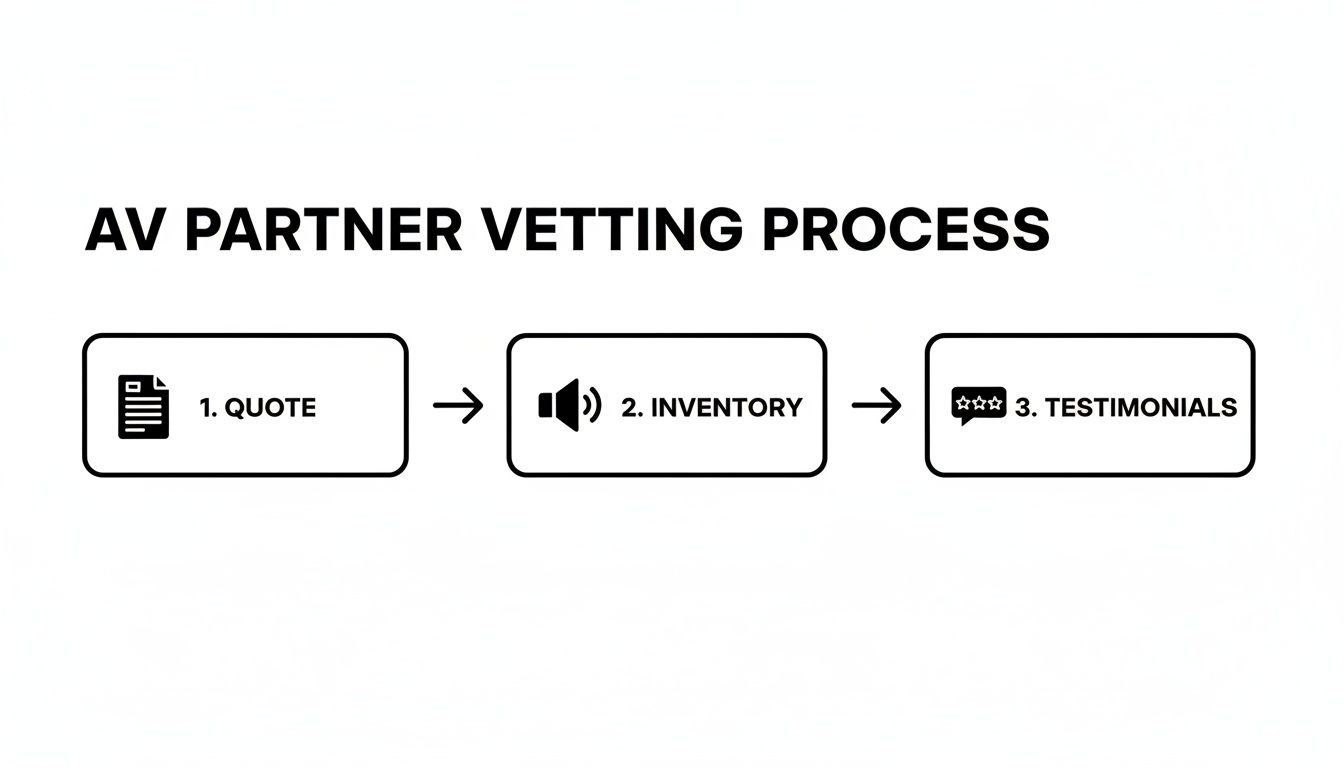
As you can see, a thorough check of their quotations, equipment inventory, and client feedback is the bedrock of making a confident choice.
Communication is Everything
Ultimately, successful on-site coordination comes down to one thing: clear and constant communication. The event planner, the venue manager, and the AV project manager need to operate as a single, cohesive team.
Before the event, ensure everyone has a copy of the production schedule and all key contact numbers. On the day, something as simple as a WhatsApp group or short-range radios for key personnel can be a game-changer for instant communication. When the team from a partner like London Audio Visual Hire is on site, they become an extension of your own, working with you to deliver an outstanding experience.
By investing time in logistics and focusing on clear communication, you create an environment where the technical production works seamlessly, freeing you up to focus on your guests.
Got Questions About Your AV Hire? We've Got Answers.
Even experienced event planners can have questions about AV. It is a world with its own jargon and logistical puzzles, so asking questions is not just normal, it is smart. Here are a few of the most common queries we receive, with straightforward answers drawn from years of hands-on experience at events across London.
How Far in Advance Should I Book My AV?
For large-scale events like conferences, awards nights, or intricate product launches, you should aim to secure your audio visual rentals at least three to six months in advance. This is essential for reserving high-demand equipment like large LED walls and securing the best project managers and technicians for your date.
If you are planning something smaller, such as a single-room meeting or a workshop, a lead time of four to six weeks can be sufficient. Just remember, London is a very competitive market.
Booking early is not just about securing equipment. It is about giving your event the planning time it deserves. It allows for proper site visits, thoughtful technical design, and a collaborative process that leads to a smoother, more impressive result.
The bottom line is that contacting a supplier like London Audio Visual Hire sooner rather than later is always the best approach. It gives us the time to understand your event properly and recommend solutions that truly fit, without the pressure of an approaching deadline.
What's the Difference Between a Dry Hire and a Full-Service Rental?
Understanding this distinction is crucial for choosing the right level of support. These two options are very different and cater to different needs and skill levels.
Dry Hire: This is exactly what it sounds like: you are hiring the equipment only. It is your responsibility (or your team's) to collect it, set it up, operate it during the event, and return it. A dry hire can be a good option if you have a qualified in-house technical team who knows the equipment well.
Full-Service AV Rental: This is the comprehensive, end-to-end solution that most of our corporate and agency clients require. It is not just about the equipment. It is the entire support system: a dedicated project manager, logistics, delivery, setup by experienced engineers, on-site operation, and the complete pack-down afterwards.
Think of a full-service package from London Audio Visual Hire as your peace-of-mind guarantee. We handle all the technical work, so you can focus on your guests.
What Insurance and Safety Paperwork Should I Be Asking For?
When it comes to safety, there are no shortcuts. Any reputable UK-based AV company must have Public Liability Insurance. This covers potential accidents or damage at your venue, and you should always ask to see their certificate. It is non-negotiable.
Additionally, all their electrical equipment should have up-to-date PAT (Portable Appliance Testing) certificates. A professional company will have clear records showing their equipment is safe and regularly maintained. Their crew should also be trained in health and safety, particularly around rigging and ensuring cables are managed safely. Do not be afraid to ask for these documents; a professional will have them ready and will be happy to share them.
Can I Tweak My Order Closer to the Event Date?
We understand that event plans are rarely set in stone. Things change, and a good AV partner will always try to be flexible.
Making small additions, like another lectern microphone or a few extra uplighters, can usually be arranged with a few days' notice, as long as the items are in stock.
However, major changes are a different matter. If you suddenly decide to alter the entire stage design, want a much larger video screen, or need to add a whole new breakout room, that is a significant shift. This will require a complete re-quote and might not be possible at the last minute.
The secret is open communication. Keep your AV project manager in the loop. Confirm your core requirements as early as you can, but give them a heads-up the moment you think a change might be on the horizon. This allows them to check what is feasible and flag any cost implications straight away, so you can make an informed decision.
Planning an event in London means you need a technical partner you can count on. The team at London Audio Visual Hire brings together deep technical knowledge with a focus on clear communication and calm, professional support on the ground. To talk through your next event, get in touch with our project managers today.


