
Planning an event in London presents a unique challenge. The pressure is on to deliver something special, and when it comes to technical production, there is no room for error. This guide is designed to walk you through the world of audio visual hire in London, giving corporate and agency planners a practical framework for success. We will go beyond equipment lists to examine what it takes to execute a seamless event, from concept to completion.
Setting the Stage for Event Success
Finding the right AV partner is one of the most critical decisions in event planning. London's venues are varied, from grand, listed buildings with difficult acoustics to sleek, modern conference centres. Each comes with its own set of rules and challenges.
A skilled AV company does more than deliver speakers and screens. They are a technical extension of your team, troubleshooting a faulty power supply in a historic venue or determining the best way to light a stage in an awkwardly shaped room. They are your partners in bringing a creative vision to life.
The technical needs of an event can vary significantly. A small board meeting may only require a clear display and a reliable microphone. A high-profile product launch, however, could involve complex lighting rigs, live-streaming to a global audience, and dynamic video walls. For larger corporate shows and trade fairs, creative interactive exhibition stand ideas can boost engagement, but this relies on a sophisticated and flawless AV setup.
Why Professional AV Hire is Essential
Engaging experts from the start provides a significant advantage. It is not just about accessing the latest equipment; it is about ensuring every technical detail is planned and executed without issue.
Here is what a professional service provides:
- Deep Technical Knowledge: You gain access to seasoned sound engineers, lighting designers, and video technicians. These professionals know London’s venues, from their power limitations to their unique acoustic quirks.
- Effective Risk Management: A professional crew understands contingency planning. They anticipate potential problems and have backup plans ready, preventing a small glitch from derailing your event.
- Time and Resource Savings: Outsourcing technical planning and execution frees your team to focus on content, speakers, and the overall guest experience.
- Guaranteed Quality: Reputable AV suppliers invest in high-quality, industry-standard equipment that is meticulously maintained. This guarantees reliability and a polished, professional finish that reflects well on your brand.
Professional audio visual hire in London is an investment in peace of mind. It provides the confidence that comes from knowing the technical aspects of your event are in experienced hands.
This guide offers a practical blueprint, covering everything from writing a solid technical brief to managing the on-site team. It will provide the tools you need to collaborate with your AV partner and deliver exceptional events.
Turning Your Event Vision into a Technical Brief
The gap between a brilliant event concept and flawless execution is bridged by one critical document: the technical brief. When seeking professional audio visual hire in London, this brief is your blueprint. It is the master plan that communicates your exact requirements to your AV partner, leaving no room for guesswork.
A good brief is more than a list of equipment. It provides context, clarifies your objectives, and describes the desired attendee experience. Without this clarity, your supplier may make assumptions, leading to mismatched expectations, incorrect equipment specification, and problems on the day.
The goal is to explain not just what you need, but why you need it. This ensures every technical choice, from the type of microphone on the lectern to the brightness of the projector, supports your event's goals.
This simple flow illustrates the importance of the planning stage.
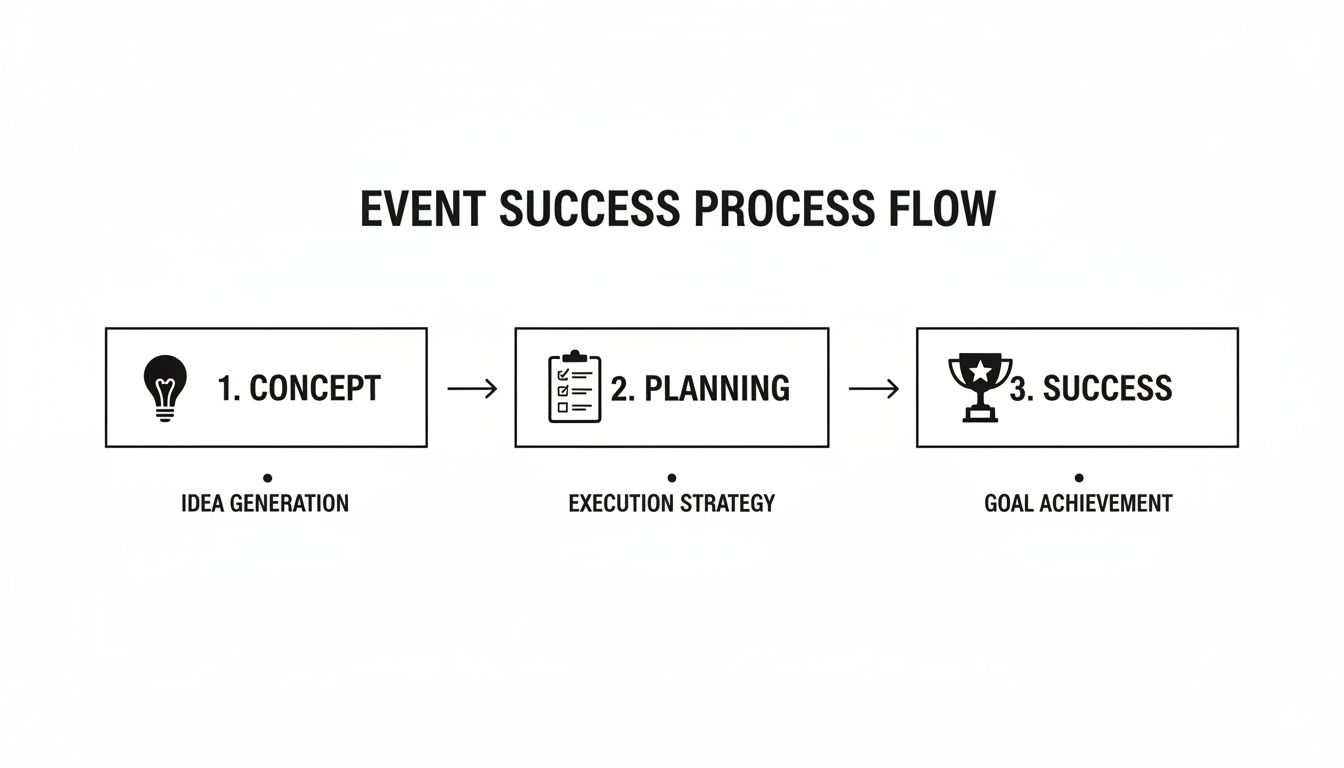
As shown, success is the direct outcome of meticulous planning, all of which is captured in your technical brief.
The Essential Ingredients of a Great AV Brief
To create a brief that delivers exactly what you need, several key areas must be covered. It is best to start with the "why" before focusing on technical details. A comprehensive brief helps your AV partner provide an accurate quote and suggest the most effective solutions for the job.
Ensure your brief always covers these points:
- Event Objectives: What is the purpose of the event? Are you launching a product and need to generate excitement? Is it a conference focused on knowledge sharing, or an awards ceremony that must feel prestigious? Be specific.
- Audience Profile: Who is your audience? The technical setup for an internal training day for 50 staff is very different from that for a press conference for 200 international journalists.
- Content and Format: Outline the schedule of events. Will there be keynote speakers, panel discussions with audience Q&A, video presentations, a live band, or interactive polling? For a full rundown of the equipment involved, you might find our guide on what audio visual equipment is useful.
- Venue Details: Provide the full address, an on-site contact person, and any known technical specifications of the London venue. Information such as ceiling height, power availability, and the room's natural acoustics is invaluable for an AV team.
This level of detail allows an experienced project manager to identify potential challenges and develop a robust plan from the outset.
From Your Needs to Their Equipment List
Once you have defined the core purpose, you can connect your content to the required technology. This is where a skilled AV team demonstrates its value, translating your creative vision into a detailed equipment list.
Consider a real-world example. A luxury brand is planning an immersive product launch in a dry-hire warehouse in Shoreditch. The vision is a dark, atmospheric space with dramatic lighting that reveals the product, timed perfectly to a high-impact soundtrack and video projected onto bare brick walls.
In this scenario, a vague request for "some lights and a speaker" would be inadequate. The technical brief needs to be far more specific:
- Audio Requirements: The brief must state the need for a powerful PA system capable of delivering deep, clear sound to fill a large, reverberant space. Subwoofers for impactful bass are essential.
- Lighting Design: It would not just ask for "lights". It would specify intelligent lighting fixtures (like moving heads), LED uplighters to highlight industrial architecture, and a dedicated lighting technician to program complex cues synchronised with music and video.
- Visual Elements: To achieve a sharp image on a rough surface like brick in a dark room, the brief must request high-brightness laser projectors. Standard office projectors would appear washed-out and unprofessional.
This approach ensures the technology serves the creative vision. Demand for sophisticated setups is growing, as evidenced by analysis of trends in the UK audio equipment market. A detailed brief is key to unlocking technical expertise and ensuring your event is memorable.
Budgeting for Your AV and Avoiding Hidden Costs
Establishing a realistic budget is a primary and crucial step in planning any successful event. When it comes to audio visual hire in London, it is easy to focus only on the cost of the equipment. However, the hardware is just one component of a larger picture.
A comprehensive AV budget covers the total cost of technical production. This includes not only screens and speakers but also the skilled personnel, logistics, and essential safety measures that ensure your event runs smoothly. Cutting costs in these areas often leads to unexpected invoices and last-minute issues.
The cheapest quote is rarely the best value. A price that seems too good to be true often indicates that corners are being cut, whether on equipment quality, technician experience, or pre-event planning. Your AV spend should be viewed as an investment in certainty and a stress-free event day.
What is Included in an AV Hire Quote?
To create a budget you can adhere to, it is important to understand what you are paying for. While equipment is the foundation, a professional AV quote includes several other critical line items.
Here are the key cost areas to factor in:
- Skilled Labour: This is arguably the most important element. You are not just hiring equipment; you are hiring the expertise of project managers, sound engineers, and video technicians. Their time spent on planning, setup (rigging), operation, and breakdown (de-rigging) is what ensures success.
- Logistics and Transport: Moving equipment and crew across London is a significant undertaking. Congestion charges, limited parking, and tight loading bays contribute to logistics costs. This covers getting everything and everyone to your venue safely and on time, which may require multiple vehicles for larger events.
- Insurance and Compliance: A reputable AV company will have substantial Public Liability Insurance. This protects you, the venue, and your attendees. The cost of this cover, along with ensuring all equipment is PAT tested and meets safety standards, is included in the price.
A good quote will be transparent, breaking down these costs so you know exactly where your money is going. If a quote consists of a single, vague figure, request an itemised breakdown. A refusal to provide one is a significant red flag.
How to Spot and Avoid Hidden Costs
Unexpected costs can disrupt event plans. These surprises usually arise from gaps in the initial plan or assumptions about what is included in a quote. The best defence is to ask the right questions from the start.
Be aware of these common overlooked expenses:
- Crew Hours and Overtime: Clarify what a standard 'day rate' for a technician covers and what the overtime charges are. If your event runs over schedule, which is common, you need to know the potential cost in advance.
- Venue-Specific Charges: Some London venues impose charges for power usage, use of their rigging points, or even mandate the use of their in-house team for certain tasks. A good AV partner with experience in various venues can help identify these potential costs early on.
- Contingency and 'Consumables': It is wise to build a contingency of 5-10% of your total AV budget into your numbers for last-minute requirements. Also, confirm if items like batteries for wireless microphones, gaffer tape, or specific cables are included or if they will be billed as 'consumables' afterwards.
Ultimately, budgeting for professional audio visual hire in London is about recognising the value of a complete service. By understanding the full scope of what is involved, you can set a realistic budget that ensures a flawless technical execution for your event.
How to Choose the Right AV Hire Partner in London

Choosing your AV supplier is one of the most critical decisions in event planning. The right choice provides more than an equipment provider; you gain a collaborator, a technical safety net, and a vital part of your delivery team. In a market as crowded as London's, it is essential to look beyond the sales pitch and identify who can deliver.
This is about finding a team whose expertise and working style align with your own. You need a partner who can translate your creative vision into a technical reality, understands the unique challenges of London venues, and communicates clearly from the initial quote to the final de-rig. It is about building a relationship based on trust and technical excellence.
Evaluating Technical Expertise and Experience
First, you must examine a company’s track record. A supplier with a broad portfolio is positive, but what you need is one with specific, relevant experience. You must feel confident they have handled events of a similar scale, style, and complexity to yours.
When speaking with potential partners, ask direct questions about their previous work. Vague assurances are not sufficient.
- Ask for specific case studies: Request examples of events they have delivered that are similar to yours in terms of audience size, venue type, and technical setup.
- Enquire about their team: Who are their senior sound engineers and lighting designers? What is their background, and will they be the individuals working on your event?
- Discuss venue familiarity: Have they worked in your chosen London venue before? If so, they will know its quirks, from power limitations and loading bay access to sound restrictions.
This line of questioning helps you quickly gauge their real-world experience and ensures they will not be learning on the job at your expense.
A truly experienced AV partner will not just answer your questions; they will ask their own. They will be keen to understand your goals and potential challenges, demonstrating a proactive, collaborative mindset from the first conversation.
Assessing Communication and Collaboration
While technical skill is a prerequisite, a supplier’s communication style is equally important. A successful event depends on seamless collaboration between your team and the technical crew. You are looking for a partner who is responsive, transparent, and easy to work with under pressure.
Pay close attention to how they interact with you from your initial enquiry. A slow response time or a confusing quote can be an early indicator of disorganisation that could cause problems later. Your audio visual hire partner should feel like a natural extension of your own team.
According to market analysis, there is surging demand in the UK pro AV market, driven largely by corporate events needing high-quality solutions. This makes it more crucial than ever to select a partner who can deliver.
Vetting Health and Safety Protocols
In the live events industry, health and safety are paramount. Your AV supplier must have robust protocols to protect your guests, your staff, and the venue. This is non-negotiable.
Do not hesitate to ask for their documentation. Any professional company will have it ready and will view your due diligence as a positive sign. Here is what you should request:
- Public Liability Insurance: Ensure their cover is sufficient for the scale of your event.
- PAT Test Certificates: All their electrical equipment must be regularly tested and certified as safe.
- Risk Assessments and Method Statements (RAMS): This demonstrates they have a formal process for identifying and managing potential hazards.
To help you compare potential suppliers, we have put together a simple checklist. Use this framework to log their responses and make a more informed decision.
AV Supplier Vetting Checklist
| Evaluation Criteria | Supplier A Response | Supplier B Response | Key Considerations |
|---|---|---|---|
| Relevant Case Studies | Do their examples align with your event's scale, style, and complexity? | ||
| Team Experience | Who are the key technicians? What is their direct experience? | ||
| Venue Familiarity | Have they worked in your venue? Do they know its limitations? | ||
| Communication Speed | How quickly and clearly did they respond to your initial enquiry? | ||
| Quote Clarity | Is the quote detailed, transparent, and easy to understand? | ||
| Public Liability Insurance | Is the cover level appropriate for your event? Can they provide a certificate? | ||
| PAT Testing Evidence | Can they confirm all equipment is tested and certified? | ||
| RAMS Provided | Do they have a clear, professional process for health and safety? |
This table should provide a clear, at-a-glance comparison, helping you move beyond the sales pitch to see which partner truly has the substance to back it up.
At London Audio Visual Hire, we provide a full spectrum of technical production services backed by a team of seasoned professionals. Choosing the right partner means ensuring every detail, from creative execution to safety compliance, is handled with genuine expertise.
Managing On-Site Production and Execution
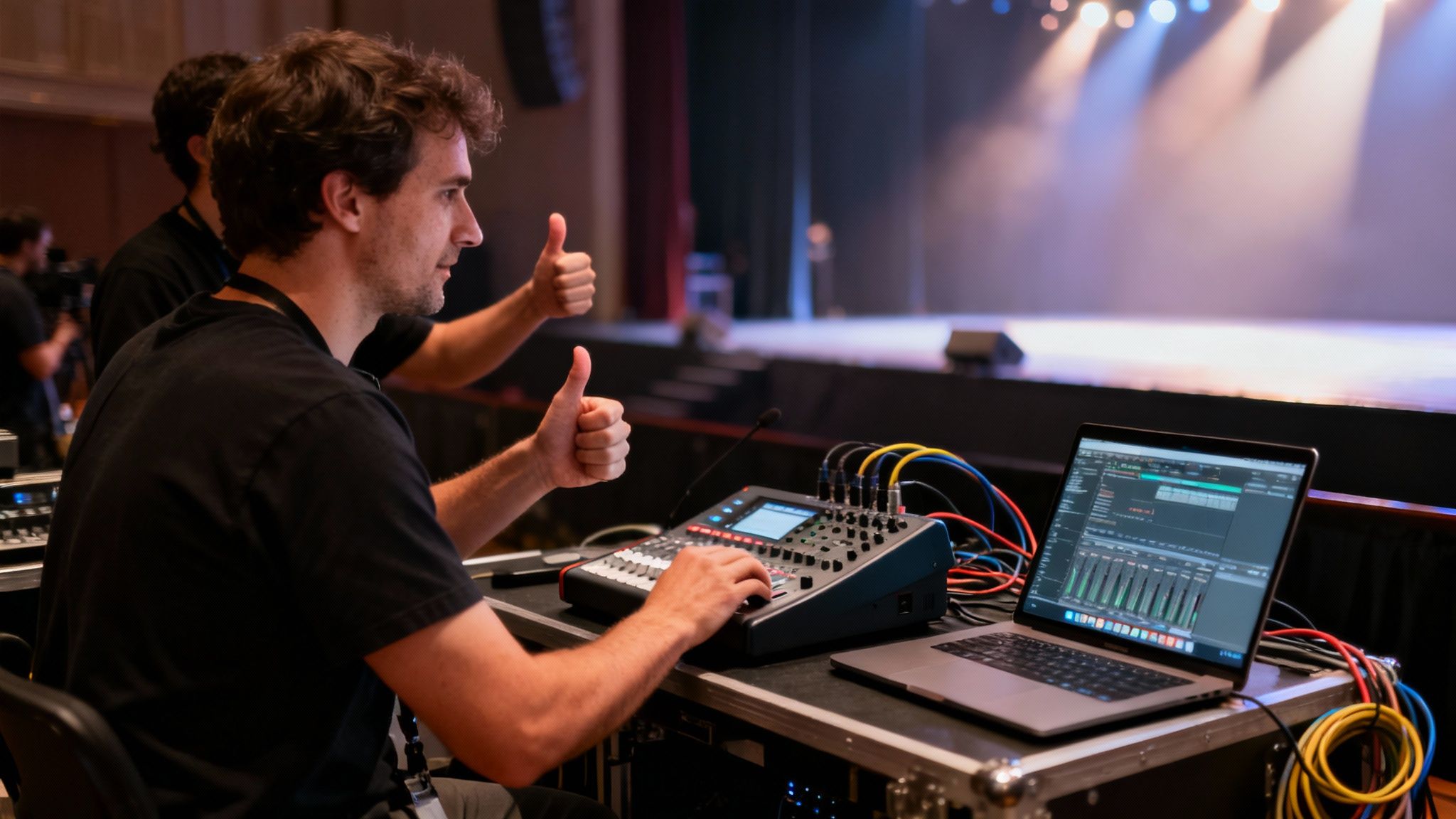
After extensive planning and briefing, everything comes down to the live event. This is the moment a professional AV partner demonstrates their value, transforming your carefully laid plans into a seamless, real-world experience.
Success on the day of the event depends on methodical on-site management, clear communication, and the calm confidence of an experienced technical crew.
On-site production is more than just connecting cables. It is a carefully orchestrated performance managed by key personnel, including a dedicated project manager and lead technicians for audio, video, and lighting. Their role is to ensure every technical element works in perfect harmony, from the first sound check to the final blackout.
This is the true test for any audio visual hire london company. A professional team arrives not just with a plan but with the experience to adapt and solve problems in real-time, ensuring the audience sees only a flawless show.
The Importance of Rehearsals and Sound Checks
Pre-event rehearsals are not optional extras; they are an essential part of any professionally run event. This is your opportunity to resolve any issues with presentation slides, test microphone levels for every speaker, and run through complex video or lighting cues.
A full technical run-through is the best insurance against on-stage errors.
A thorough sound check is particularly vital. The audio engineer needs to hear each presenter speak from the stage to fine-tune the EQ and levels, ensuring their voice carries clearly and naturally to every part of the room. This process is even more critical for events with panel discussions or live music.
This dedicated rehearsal time also allows presenters to become comfortable with the stage setup. When they are confident their slides will work and their microphone will be on, they can focus on delivering an excellent presentation.
An old industry saying states: "fail to prepare, prepare to fail." This is never more true than in live events. Even a short rehearsal slot minimises stress for everyone involved and dramatically increases the chances of a polished delivery.
Communication and Key Personnel On-Site
During the event, communication between your team and the AV crew must be instant and effortless. Your main point of contact will be the AV project manager, who acts as the central hub for all technical matters. They coordinate the crew and are the person to approach with any last-minute changes.
Knowing who is on the technical team makes everything run more smoothly:
- Project Manager: Your primary contact, overseeing the entire technical production and keeping it synchronised with your event schedule.
- Sound Engineer (FOH): Located at the main mixing desk, responsible for everything the audience hears, from microphones to music.
- Video Technician: Manages all visual content, including presentations, pre-recorded videos, and camera feeds for screens or live streams.
- Lighting Designer/Operator: Executes lighting cues to create atmosphere, build energy, and focus attention where it is needed.
For more complex events, such as a live-streamed awards show, the team expands. You would likely have a dedicated stream engineer managing the online broadcast. This is where a company like London Audio Visual Hire excels, providing the specialist crew needed for sophisticated events, including hybrid and virtual event streaming.
Adapting to Challenges with Contingency Plans
Even with meticulous planning, live events can be unpredictable. A speaker might arrive with an updated presentation moments before going on stage, or you might need a last-minute change to the running order. The mark of a professional crew is how they handle these pressures.
An experienced team incorporates contingency into their setup from the beginning. This means having backup laptops for presentations, spare microphones ready, and redundant cabling for critical connections. This preparation allows them to resolve unexpected issues quickly and discreetly, often without the audience being aware of any problem.
The UK's professional AV market is a significant industry, demonstrating how much conferences and brand events rely on robust, reliable technical support. For event planners, this means dependable, scalable AV hire services are available to provide the professional backing needed for success.
Your London AV Hire Questions, Answered
As you finalise the technical details for your event, questions are likely to arise. This is completely normal. Drawing on years of experience in London's events industry, we have compiled answers to the most common queries from event managers and marketing teams.
How Far in Advance Should I Book My AV?
The answer depends on the scale of your event.
For large-scale events, such as multi-day conferences, complex awards shows, or high-profile brand activations, you should begin the conversation three to six months in advance. This allows sufficient time for proper venue site visits, detailed technical planning, and booking the best specialist crew for the job.
For smaller events, like a corporate meeting or a single-day product launch, four to six weeks is usually a safe window. However, London's event calendar becomes very crowded, especially during the peak spring and autumn seasons. The best advice is to book as early as possible to guarantee you secure the equipment and technicians you need.
An experienced AV partner can be a valuable asset early in the planning process. Involving them before you have signed a venue contract can prevent future problems. A good project manager can identify potential logistical issues or offer insights on a venue's suitability that you might have overlooked.
What is the Difference Between a 'Dry Hire' and a Full Production Service?
Understanding this distinction is key for both your budget and your peace of mind. They are two different service models designed for different situations.
A 'dry hire' is exactly as it sounds: you are only renting the equipment. You or someone on your team is responsible for collecting it, setting it up, operating it, and returning it safely. This is only a viable option if you have a qualified, in-house technical team who is familiar with the specific equipment. For most, it is a high-risk approach.
A 'full production service' is the comprehensive, end-to-end solution that we at London Audio Visual Hire provide. It covers everything:
- All the audio visual equipment required.
- The project managers, engineers, and technicians to operate it.
- The entire process: planning, transport, setup, on-site operation, and de-rigging.
For any event where technical reliability is critical, which applies to most corporate or public-facing events, a full production service is the industry standard. It removes the technical stress, allowing you to focus on your guests.
What Insurance and Safety Certificates Should I Ask For?
In the live events industry, health and safety are paramount. When choosing an audio visual hire London supplier, there are essential documents you must request. This is not just about compliance; it is about ensuring they operate responsibly.
First, your AV company must have comprehensive Public Liability Insurance. Do not hesitate to ask for a copy of their policy document. Second, all of their mains-powered equipment must be regularly PAT tested for electrical safety.
If your event involves staging, rigging, or crew working at height, ensure their team holds the appropriate industry certifications. A professional supplier will be transparent about their safety procedures and provide all necessary paperwork, such as risk assessments and method statements (RAMS), as a standard part of their service. This diligence protects you, your guests, and the venue.
Can You Work With a Venue's In-House AV Team?
Yes, absolutely. This is a common arrangement, especially in London’s large hotels and conference centres.
Typically, the venue's in-house team manages the building's integrated systems, such as ceiling speakers and built-in projectors. An external partner like us is brought in to handle more specialised or ambitious elements, like a large LED video wall, a sophisticated lighting design, or a complex microphone setup for a panel of speakers.
Our project managers are experienced in collaborating with venue staff to create a single, unified technical team. The key to a seamless partnership is clear communication and a joint planning meeting before the event. This ensures everyone understands their responsibilities and the technical delivery on the day is flawless.
At London Audio Visual Hire, we believe clear communication and meticulous planning are the foundations of a successful event. If you need expert support from a team that knows London's event scene inside out, get in touch with us at https://londonaudiovisualhire.co.uk.